

Long flights in economy class can turn simple rest into a real challenge, especially when neck discomfort sets in after hours spent upright. Travelers often grab traditional neck pillows, hoping for relief, but research shows these designs rarely offer the right support for every situation. By exploring space-saving and ergonomic solutions that go beyond basic neck-only support, you can discover smarter ways to arrive at your next European or Asian destination without unwanted strain.
Table of Contents
- What Are Traditional Neck Pillows?
- Types And Common Designs Explained
- How Traditional Pillows Fail In Real Travel
- Risks Of Neck-Only Support On Flights
- Smart Alternatives For Upright Sleep Support
Key Takeaways
| Point | Details |
|---|---|
| Traditional Neck Pillows Limit Support | Conventional neck pillows often provide inadequate neck-only support, leading to discomfort and potential musculoskeletal issues during travel. |
| Smart Support Alternatives Enhance Comfort | Innovative travel support products focus on overall body alignment, distributing weight to reduce strain on the neck and shoulders. |
| Heat Retention and Movement Restriction Problems | Many traditional neck pillows trap heat and restrict movement, contributing to increased tension and discomfort during extended use. |
| Prioritize Body Support in Selection | When choosing a neck pillow, select one that supports the entire upper body and allows for natural movement rather than isolating the neck. |
What Are Traditional Neck Pillows?
Traditional neck pillows are travel and sleep support devices designed to help travelers and sleepers maintain head and neck alignment during rest. These products typically come in various shapes, materials, and designs aimed at reducing neck strain and promoting comfort. Research on neck support design reveals significant variations in their effectiveness and structural approaches.
Most traditional neck pillows share several common characteristics:
- U-shaped fabric designs
- Memory foam or inflatable construction
- Compact, portable sizes
- Intended to wrap around or cradle the neck
- Limited adjustability
Neck Support Limitations emerge when examining these conventional designs. While marketed as comfort solutions, these pillows often fail to provide comprehensive upper body support. Academic studies demonstrate that pillow materials and shapes play crucial roles in actual neck pain reduction and spinal alignment.
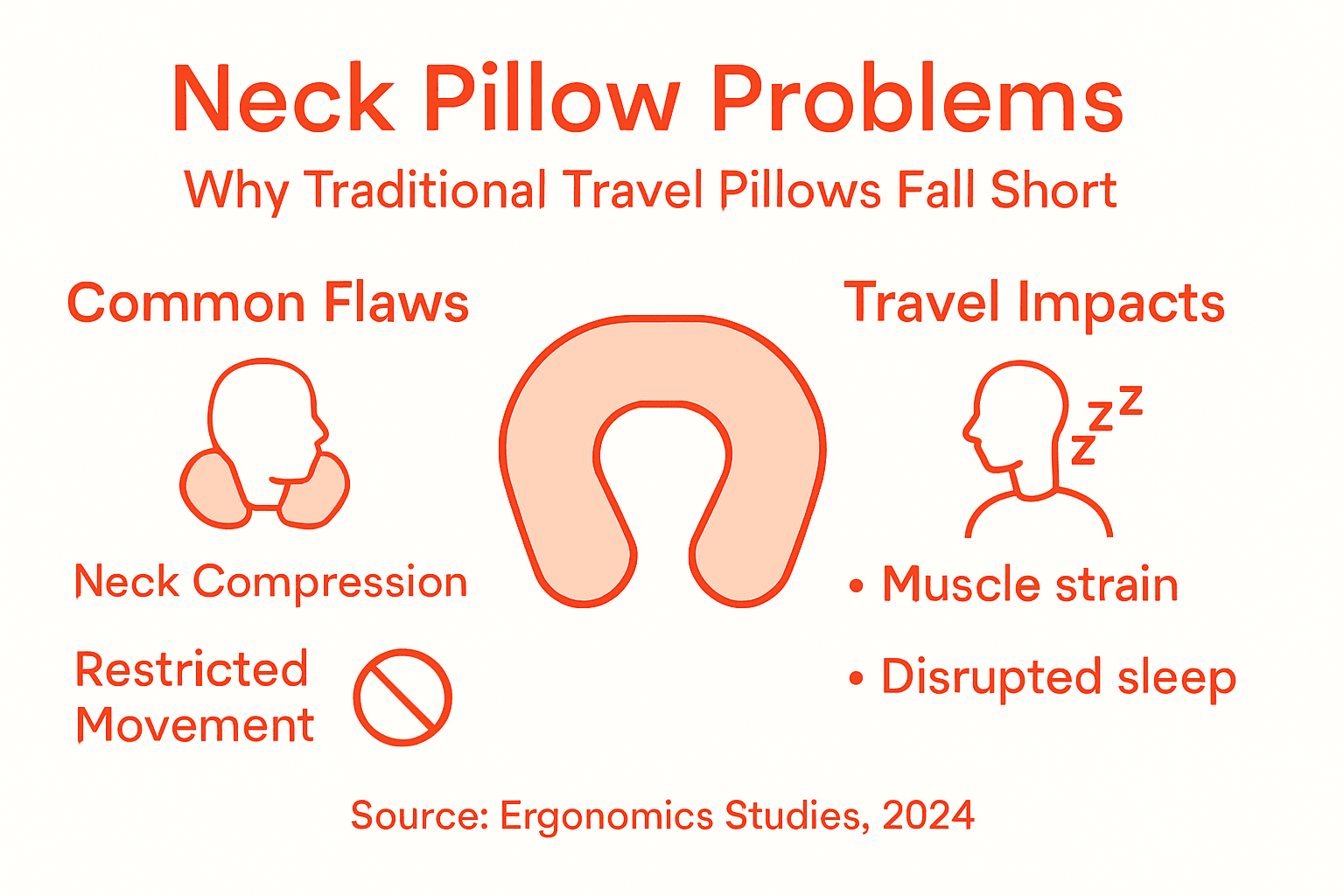
Traditional neck pillows typically struggle with several fundamental design issues. They compress and restrict neck movement, trap heat, and create artificial neck angles that can increase muscular tension instead of relieving it. Most designs force the head into unnatural positions, causing more discomfort during extended travel periods.
Pro Tip: When selecting a neck pillow, prioritize designs that support your entire upper body’s natural resting position, not just the neck itself.
Types And Common Designs Explained
Traditional neck pillows exist in numerous variations, each designed with specific materials and structural approaches to address traveler comfort. Pillow design research indicates that shape, material, and construction significantly impact neck support and overall traveler experience.
Common neck pillow designs include:
- U-Shaped Pillows: Wrap around the neck, intended to prevent head dropping
- Inflatable Cylindrical Pillows: Compact and easily portable
- Memory Foam Contoured Pillows: Molded to approximate neck curvature
- Rectangular Travel Cushions: Versatile rectangular designs
- Compression Neck Wraps: Tight-fitting fabric supports
Material Variations play a critical role in pillow performance. Academic studies highlight that different materials like rubber, spring, memory foam, and wool each produce unique support characteristics. Some materials provide better heat management and muscular strain reduction than others.
However, most traditional designs share fundamental flaws. They typically create artificial neck positions, restrict natural movement, and fail to provide comprehensive upper body support. The narrow focus on neck isolation means travelers often experience increased muscular tension rather than genuine comfort.
Pro Tip: When evaluating neck pillows, test the design’s ability to support your entire upper body posture, not just isolated neck regions.
How Traditional Pillows Fail In Real Travel
Research on travel comfort reveals that traditional neck pillows systematically fail travelers by providing inadequate support for real-world travel scenarios. These supposedly ergonomic designs often create more problems than they solve, leaving travelers with increased discomfort and potential neck strain.
The primary failure points of traditional neck pillows include:
- Inability to adapt to individual body shapes
- Poor heat management and airflow
- Restrictive designs that limit natural movement
- Inconsistent support across different seating positions
- Rapid degradation of support materials
Comfort Challenges become immediately apparent during long-distance travel. Uncomfortable pillow designs frequently compromise travelers’ ability to rest effectively. Most U-shaped and wrap-around pillows trap heat, create artificial neck angles, and fail to provide genuine upper body support.
Most traditional neck pillows fundamentally misunderstand human anatomy. They compress delicate neck muscles, restrict blood circulation, and force the head into unnatural positions. The result is increased muscular tension, potential strain, and a complete inability to achieve meaningful rest during travel. Most travelers don't realize that headrests on airplanes and trains are already angled to push the head forward. Adding extra padding behind the neck or head only exaggerates this position, forcing the head even further forward rather than providing true support.

Pro Tip: Test any travel pillow by simulating your actual travel posture, paying close attention to how it supports your entire upper body, not just your neck.
Risks Of Neck-Only Support On Flights
Neck-only support risks reveal significant potential for long-term musculoskeletal damage during air travel. Travelers who rely on traditional neck pillows expose themselves to chronic pain, muscle strain, and potential spinal alignment issues that extend far beyond a single uncomfortable flight.
The most critical risks include:
- Sustained muscular tension in neck and shoulder regions
- Increased likelihood of chronic neck pain
- Potential long-term cervical spine disorders
- Reduced blood circulation in neck muscles
- Unnatural head and neck positioning
Biomechanical Stress becomes particularly pronounced during extended travel periods. Flight-related neck strain occurs because neck-only supports force muscles to work overtime, stabilizing the head in an unsupported environment. The upright airplane seat creates additional challenges, compelling neck muscles to maintain posture without proper structural assistance.
Traditional neck pillows essentially abandon travelers’ complex musculoskeletal needs. By focusing exclusively on the neck, these designs ignore the interconnected support requirements of the head, shoulders, and upper torso. The result is a cascading series of potential health complications that can transform a simple flight into a source of prolonged physical discomfort.
Below is a summary of major risks linked to neck-only support on flights:
| Risk Category | Health Impact | Potential Result |
|---|---|---|
| Muscular Tension | Extended muscle engagement | Soreness, chronic discomfort |
| Spinal Alignment | Poor cervical support | Misalignment, long-term disorders |
| Circulation | Reduced neck blood flow | Temporary numbness, tissue strain |
| Posture Maintenance | Unnatural head angling | Fatigue, postural issues |
Pro Tip: Always prioritize travel support systems that distribute weight across multiple muscle groups, not just isolate the neck.
Smart Alternatives For Upright Sleep Support
Intelligent sleep support solutions go far beyond traditional neck pillows, focusing on comprehensive body alignment and comfort during travel. These innovative designs recognize that effective rest requires more than just neck stabilization - they address the entire upper body’s support needs.
Key characteristics of smart travel support alternatives include:
- Distributed weight across head, neck, and shoulders
- Breathable, adaptive materials
- Adjustable structural support
- Multidirectional stability mechanisms
- Temperature-regulating fabrics
- Compact and portable designs
Ergonomic Innovations are transforming travel comfort. Advanced pillow technologies now incorporate sensor-based systems that dynamically adjust support based on individual sleeping positions. These cutting-edge solutions move beyond the restrictive, one-size-fits-all approach of traditional neck pillows.
The most effective alternatives prioritize natural body mechanics, allowing travelers to maintain spinal alignment without artificial constraints. By supporting the entire upper body’s interconnected muscle groups, these designs prevent the muscular strain and discomfort associated with conventional neck-only supports.
Here’s a comparison of traditional neck pillows and smart travel support alternatives:
| Aspect | Traditional Neck Pillows | Smart Support Alternatives |
|---|---|---|
| Targeted Body Support | Neck only | Head, neck, and shoulders |
| Adaptability | Fixed shape, minimal adjust | Adjustable to posture |
| Heat Management | Often traps heat | Breathable, temp-regulating |
| Movement Allowance | Restricts natural movement | Supports dynamic positioning |
| Long-Term Comfort Impact | May increase tension | Reduces muscular strain |
Pro Tip: When selecting travel support, simulate your actual seated posture and test how the product moves with your body, not against it.
Upgrade Your Travel Comfort Beyond Traditional Neck Pillows
The article highlights how traditional neck pillows often limit neck movement, create unnatural head angles, and fail to provide full upper body support leading to discomfort and potential long-term pain during travel. If you struggle with neck strain, heat buildup, or restricted posture on planes or trains you are not alone. Many travelers share your goal of finding real comfort that adapts to the body instead of forcing it into awkward positions.
Bolstie Travel Pillow addresses these exact challenges by supporting your natural diagonal resting position to stabilize your head, jaw, chest, and upper torso in harmony. Unlike conventional U-shaped or memory foam pillows that isolate the neck Bolstie provides a smarter full-body alignment solution. It also compresses small when empty and doubles as a packing cylinder to save space and reduce luggage bulk.
Discover how you can experience upright sleep support without neck squeeze or heat trap by exploring the innovative design and practical benefits of the Bolstie Travel Pillow collection. This brand champions comfort without bulk and body-first design for economy travelers, frequent flyers, and parents who want better rest on any trip.
Looking to leave behind the discomfort and risks associated with traditional neck pillows?
Make your next flight or road trip smoother now with the smarter support that respects your body and your carry-on space.
Explore Bolstie Travel Pillow solutions today and experience travel comfort that truly works with you.

Frequently Asked Questions
Why should I avoid traditional neck pillows when traveling?
Traditional neck pillows often provide inadequate support, leading to increased muscular tension, neck strain, and discomfort during travel. Their design focuses on the neck alone, neglecting the need for broader upper body support.
What are the limitations of traditional neck pillows?
Traditional neck pillows commonly compress neck muscles, restrict natural movement, trap heat, and create unnatural angles for the head, which can worsen discomfort instead of relieving it.
How do smart travel support alternatives differ from traditional neck pillows?
Smart travel support alternatives distribute weight across the head, neck, and shoulders, use breathable materials, and feature adjustable support, allowing for natural positioning and reduced muscular strain.
What risks are associated with relying solely on neck support during long flights?
Relying solely on neck support can lead to sustained muscular tension, increased likelihood of chronic neck pain, poor spinal alignment, and reduced blood circulation, resulting in discomfort and potential long-term health issues.
Recommended
- Short Necks? Long Necks? Why You Can’t Win with Neck Wrapping Travel P – BOLSTIE TRAVEL PILLOW
- It’s Time We Say Goodbye to Neck Pain on Any Flights – BOLSTIE TRAVEL PILLOW
- How I Sleep on My Side in a Plane Seat, Even in Basic Economy – BOLSTIE TRAVEL PILLOW
- Why Traditional Neck Pillows Fail (and How Bolstie Solves the Real Pro – BOLSTIE TRAVEL PILLOW
- Why Use Camping Pillows: Comfort and Health Impact – Hazli Collection
- Best Anti Snoring Neck Pain Orthopedic Pillow - Stop Snore - Apnea Relief and Solution – Armageddon Sports
- 14 Natural and Relaxing Remedies for Neck Pain from Sleeping - Home Remedies

