

Long flights and crowded trains leave many frequent travelers worldwide searching for real relief from persistent neck discomfort. What seems like a simple neck pillow often results in more pain than comfort, as traditional designs allow your neck unnaturally bend and promote muscle strain, according to Harvard Health research. This article explains why so many common travel pillows fail and unveils more compact, body-friendly solutions for staying comfortable without sacrificing your precious carry-on space.
Table of Contents
Key Takeaways
| Point | Details |
| Neck Wrap Pillows Can Cause Discomfort | Traditional neck wrap pillows often provide inadequate support, leading to neck strain and discomfort during travel. |
| Consider Alternative Designs | Prioritize travel pillows that allow for natural movement and distribute weight across the body instead of restricting neck support. |
| Hygiene is a Concern | Many neck wrap pillows are bulky and difficult to clean, trapping moisture and bacteria that could pose health risks. |
| Innovative Solutions Exist | Ergonomic designs like Bolstie provide better overall support by understanding the body’s mechanics and promoting natural positioning. |
The Problem With Neck Wrap Travel Pillows
Traditional neck wrap travel pillows might seem like a comfortable solution, but they often create more problems than they solve. These seemingly convenient accessories frequently fail travelers by providing inadequate support and potentially causing physical strain.
Neck wrap pillows fundamentally misunderstand human body mechanics. Their primary design flaw involves creating artificial constraints around the neck that disrupt natural movement and alignment. By restricting neck muscle flexibility, these pillows can lead to significant muscular stress during travel.
The key issues with neck wrap travel pillows include:
-
Unnatural neck positioning that bends cervical vertebrae uncomfortably
-
Insufficient support for head weight distribution
-
Limited airflow and heat retention around neck area
-
Potential to increase neck muscle strain during long journeys
-
Inability to prevent uncontrolled head motion
Medical research highlights the potential risks. Harvard Health experts note that improperly shaped neck pillows can lead to significant discomfort by bending the neck unnaturally during extended periods of rest. The cervical curve requires consistent, gentle support - something most wrap-style pillows fail to provide.
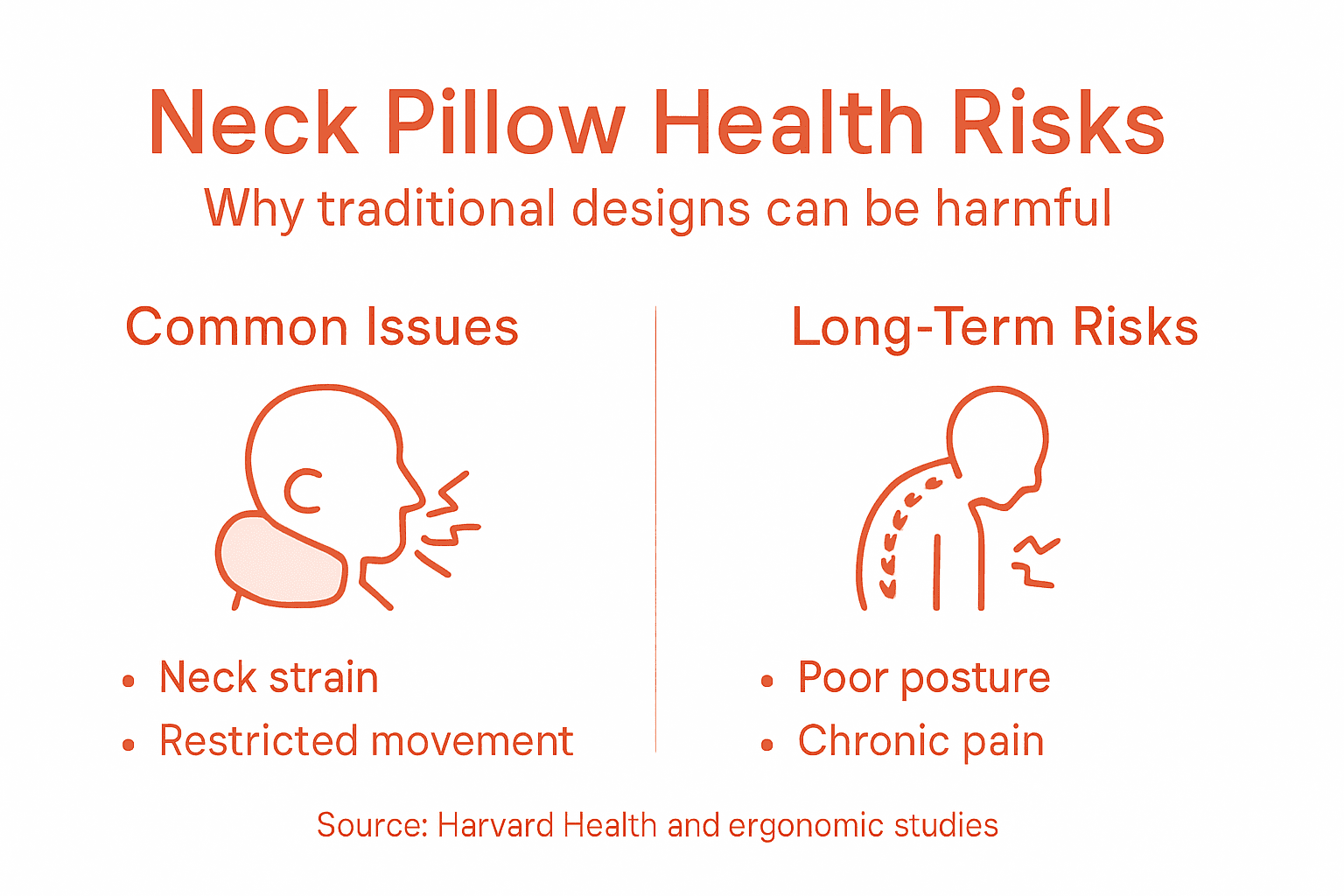
Moreover, these pillows often create a false sense of comfort. Travelers mistakenly believe that any neck support is good support, when in reality, these devices can exacerbate existing neck tension and potentially contribute to long-term postural issues.
Pro tip: When selecting travel support, prioritize designs that distribute weight across multiple body structures, not just isolate pressure on your neck.
Common Types and How They Function
Travel pillows have evolved into multiple designs, each attempting to solve the complex challenge of providing comfort during long journeys. Travel pillow varieties range from traditional U-shaped wraps to more innovative solutions, each promising to deliver neck support and prevent uncomfortable sleeping positions.
The most common neck pillow types include:
-
U-shaped neck wraps: The classic design that curves around the neck
-
Memory foam pillows: Molding to individual neck contours
-
Inflatable designs: Compact and adjustable for travel convenience
-
Stuffed fiber-filled pillows: Soft and traditional support option
-
Side-support pillows: Designed for lateral head positioning
Neck support research reveals that these pillows typically aim to maintain the natural cervical spine curvature during travel. However, most designs fundamentally misunderstand human body mechanics, focusing narrowly on neck support rather than holistic body alignment.
Each pillow type operates with different mechanisms. Memory foam versions attempt to create personalized support by conforming to individual neck shapes. Inflatable models offer adjustable firmness but often lack consistent structural integrity. Fiber-filled options provide traditional cushioning but can quickly lose shape and support during extended use.
Here is a concise comparison of major travel pillow types and their distinctive support mechanisms:
| Pillow Type | Primary Support Mechanism | Portability |
| U-shaped Neck Wrap | Wraps around neck, restricts movement | Bulky, low foldability |
| Memory Foam | Molds to neck shape, firm support | Moderate, compressible |
| Inflatable | Air-filled, adjustable firmness | Highly compact, lightweight |
| Stuffed Fiber-Filled | Traditional cushioning, loses shape | Bulky, hard to pack |
| Side-Support | Supports head laterally | Varies, typically moderate |
Pro tip: Consider your typical sleeping position and travel duration when selecting a travel pillow, as no single design works perfectly for all body types and travel scenarios.
Ergonomic Drawbacks and Health Risks
Neck wrap travel pillows pose significant ergonomic challenges that extend far beyond momentary discomfort. Neck alignment research demonstrates that these seemingly helpful accessories can actually contribute to serious musculoskeletal problems during and after travel.
The primary ergonomic risks associated with neck wrap travel pillows include:
-
Cervical spine misalignment: Forcing unnatural neck positioning
-
Muscle strain: Creating unnecessary tension in neck and shoulder muscles
-
Reduced blood circulation: Compressing critical neck blood vessels
-
Limited range of motion: Restricting natural head movement
-
Potential nerve compression: Risking temporary or chronic nerve irritation
Clinical studies on neck pain reveal that improper pillow design can escalate into long-term health complications. These generic neck wraps frequently fail to accommodate individual body mechanics, potentially transforming a temporary travel inconvenience into a persistent pain syndrome.
The biomechanical issues stem from a fundamental design flaw: most neck pillows attempt to immobilize the neck entirely, which contradicts the body’s need for subtle, adaptive movement. This rigid approach can trigger muscle guarding, where neck and shoulder muscles become unnecessarily tense, creating a cascading effect of discomfort and potential injury.

Pro tip: Always prioritize pillows that allow natural neck movement and support your spine’s inherent curvature, rather than those that force rigid, unnatural positioning.
Space, Hygiene, and Practical Concerns
Travel pillows are more than just comfort accessories - they’re practical tools that must balance convenience, cleanliness, and functionality. Travel pillow research reveals significant challenges with traditional neck wrap designs that go beyond mere comfort considerations.
Practical limitations of neck wrap travel pillows include:
-
Bulky storage: Consuming excessive carry-on space
-
Difficult cleaning: Challenging to sanitize between trips
-
Material absorption: Trapping sweat and bacteria
-
Limited durability: Quick degradation with frequent use
-
Poor portability: Awkward to pack and transport
Hygiene studies highlight critical concerns about direct skin contact and potential microbial transmission. These pillows often become breeding grounds for bacteria, especially when stored in humid, enclosed spaces like carry-on bags or overhead compartments.
The material composition of most neck wrap pillows compounds these issues. Synthetic fabrics and memory foam tend to retain moisture, creating an environment conducive to bacterial growth. Unlike washable, breathable alternatives, these pillows become increasingly unhygienic with repeated use, potentially exposing travelers to unnecessary health risks.
Pro tip: Always pack a lightweight, washable pillow cover and consider replacing your travel pillow every few months to maintain proper hygiene standards.
Bolstie’s Body-First Support Approach
Traditional neck travel pillows fundamentally misunderstand human body mechanics, but innovative ergonomic designs are challenging these outdated approaches by focusing on holistic body support rather than isolated neck restraint.
The body-first support philosophy centers on key principles:
-
Diagonal weight distribution: Supporting entire upper body structure
-
Dynamic movement allowance: Permitting natural head and neck motion
-
Adaptable support: Customizing to individual body mechanics
-
Torso-centered design: Stabilizing from chest through shoulder regions
-
Unrestricted airflow: Preventing heat and moisture buildup
Sleep ergonomics research demonstrates that personalized support strategies significantly reduce neck strain by understanding each traveler’s unique anatomical requirements. Instead of forcing the body into a rigid position, Bolstie’s approach allows the body to find its most comfortable and sustainable resting state.
The fundamental difference lies in understanding body mechanics as a connected, dynamic system. Traditional neck pillows create artificial constraints, whereas Bolstie’s design works with the body’s natural inclination to seek balanced, comfortable positioning. By distributing weight across larger muscle groups and supporting the body’s diagonal resting position, this approach transforms travel rest from a necessary inconvenience to a genuinely restorative experience.
Pro tip: Think of your travel support as an extension of your body, not a restrictive device - choose designs that move with you, not against you.
Comparing Bolstie to Traditional Neck Pillows
Cervical spine support research reveals a stark contrast between traditional neck pillows and innovative body-first designs like Bolstie. While conventional neck wraps create artificial constraints, Bolstie fundamentally rethinks travel support by understanding how the human body naturally seeks comfort.
Key comparative differences include:
-
Weight Distribution: Bolstie spreads support across torso, traditional pillows isolate neck
-
Movement Flexibility: Dynamic design versus rigid neck constraint
-
Breathability: Open airflow compared to heat-trapping fabric wraps
-
Customization: Adaptable structure versus one-size-fits-all approach
-
Ergonomic Alignment: Diagonal support versus vertical neck compression
Ergonomic design studies demonstrate that Bolstie’s approach dramatically reduces musculoskeletal discomfort. Traditional neck pillows create pressure points and restrict natural movement, whereas Bolstie works harmoniously with the body’s biomechanical tendencies.
The fundamental philosophy differs dramatically. Traditional neck pillows treat the neck as an isolated system, attempting to immobilize it completely. Bolstie recognizes the neck as part of an interconnected muscular network, providing support that allows natural, comfortable movement while preventing strain.
This table outlines how Bolstie and traditional neck pillows differ in comfort and ergonomic impact:
| Characteristic | Traditional Neck Pillows | Bolstie Body-First Support |
| Weight Distribution | Isolates neck area | Spreads across torso |
| Neck Mobility | Tends to restrict movement | Allows adaptive positioning |
| Heat and Airflow | Retains heat and moisture | Promotes fresh airflow |
| Customization Potential | One-size-fits-most | Adapts to user anatomy |
| Alignment Focus | Forces vertical positioning | Supports natural diagonal rest |
Pro tip: Think of travel support as a dynamic system that moves with your body, not a restrictive device that fights against your natural positioning.
Discover Smarter Neck Support That Respects Your Body
If you have struggled with uncomfortable and restrictive neck wrap travel pillows that fail to support your natural body mechanics during flights, it is time to try a better solution. Traditional neck wraps often cause neck strain, block airflow, and create unnecessary tension by wrapping tightly around your neck. Instead, experience the comfort of the Best Long Haul Travel Pillow by Bolstie, designed to support your entire upper body in its natural diagonal resting position. This means no more forward head drop or muscle strain while you rest upright.
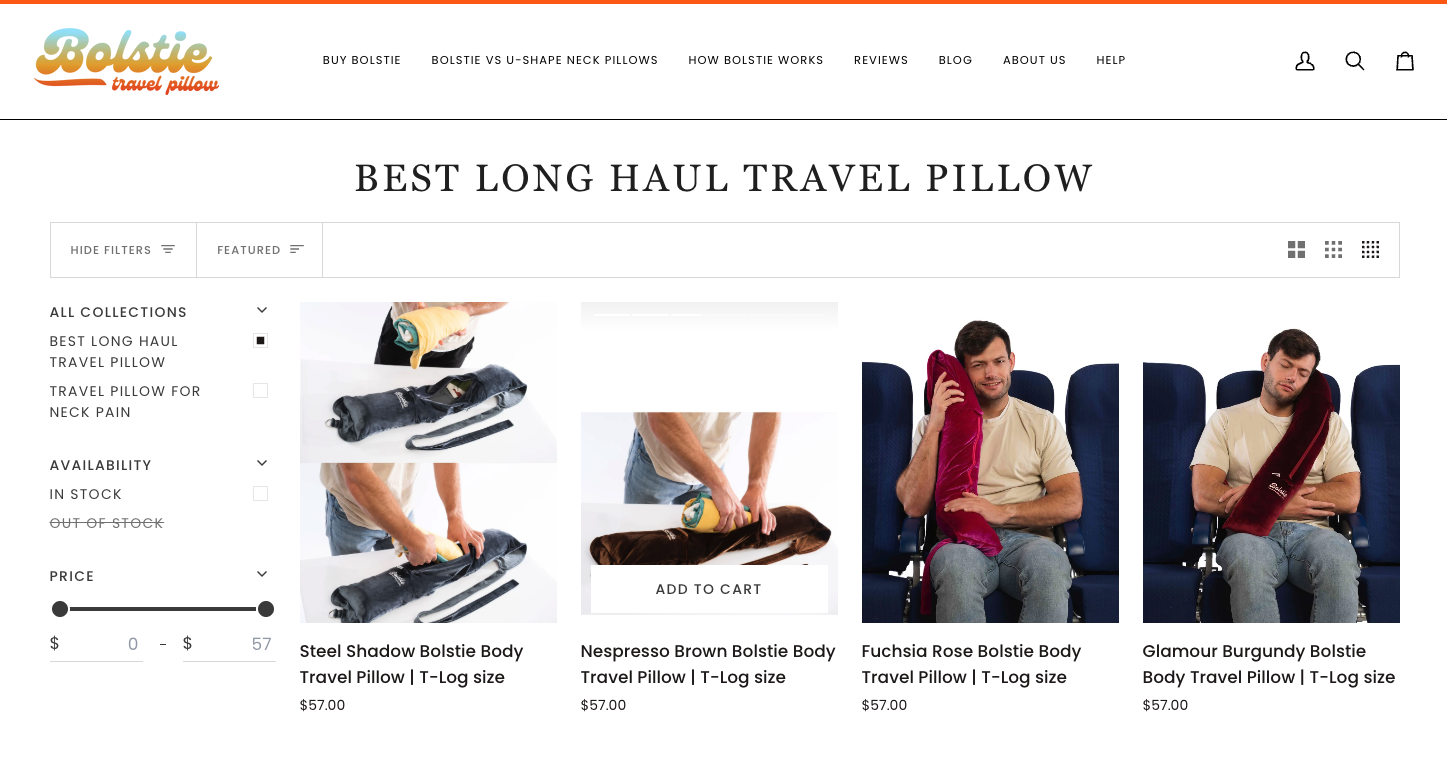
Take control of your travel comfort today with Bolstie’s innovative body-first design that allows natural movement, improves airflow, and saves valuable luggage space when packed. Don’t settle for bulky neck wraps that trap heat and limit motion. Choose a travel pillow that works with your body not against it. Explore our collection including travel pillows made for those seeking relief from neck pain at Travel Pillow for Neck Pain | Bolstie Smart Comfort and find your perfect support solution now at https://bolstietravelpillow.com/collections/bolstie-best-neck-travel-pillow.
Upgrade your travel rest and feel the difference on your next trip.
Frequently Asked Questions
Why should I avoid using neck wrap travel pillows for flights?
Neck wrap travel pillows can restrict natural neck movement and lead to cervical spine misalignment, causing discomfort and potential musculoskeletal issues during and after travel.
What are the ergonomic risks associated with neck wrap travel pillows?
The primary risks include muscle strain, reduced blood circulation, limited range of motion, and the potential for nerve compression due to improper neck positioning.
How do traditional neck wrap pillows differ from more ergonomic designs like Bolstie?
Traditional neck wrap pillows isolate the neck area and may restrict movement, while ergonomic designs like Bolstie offer diagonal weight distribution and allow for natural head movement, promoting better comfort and support.
What should I consider when choosing a travel pillow for longer flights?
Look for pillows that provide holistic support across the upper body, allow for dynamic movement, and maintain the natural alignment of the cervical spine, rather than those that force rigid neck constraints.
Recommended
-
It’s Time We Say Goodbye to Neck Pain on Any Flights – BOLSTIE TRAVEL PILLOW
-
Short Necks? Long Necks? Why You Can’t Win with Neck Wrapping Travel P – BOLSTIE TRAVEL PILLOW
-
How I Sleep on My Side in a Plane Seat, Even in Basic Economy – BOLSTIE TRAVEL PILLOW
-
The Biggest Hidden Cause Of Neck Pain Mid-Flight — Poor Posture – BOLSTIE TRAVEL PILLOW

