

Long-haul flights often leave travelers battling stiff necks and restless hours in cramped seats. Neck discomfort is a common struggle for those flying economy, especially when trying to achieve quality sleep upright. Research reveals that standard neck-based travel pillows aim to limit head motion and reduce muscular strain, yet most fail to offer the necessary support for proper cervical spine alignment. This article breaks down how these pillows work, their limitations, and introduces practical alternatives for compact, effective travel comfort.
Table of Contents
Key Takeaways
| Point | Details |
| Neck Pillow Limitations | Traditional neck pillows often lead to increased muscle tension and discomfort due to their inherently flawed designs. |
| Whole-Body Support Importance | Effective support during upright sleep requires stabilizing the entire upper body, not just the neck. |
| Alternative Pillow Designs | Innovative alternatives focus on comprehensive body stabilization, promoting comfort and reducing strain. |
| Economy Travel Strategies | Maximizing comfort in economy travel involves personalized support solutions and strategic seating choices. |
What Neck-Based Travel Pillows Actually Do
Traditional neck-based travel pillows are designed with a singular, deceptively simple goal: stabilize the human neck during extended periods of sitting. These U-shaped cushions aim to prevent uncontrolled head motion and reduce muscular strain by limiting neck movement.
Most neck pillows operate through a few standard mechanisms:
-
Attempting lateral head support
-
Attempting to prevent forward head drop
-
Attempting to maintain cervical spine alignment
-
Attempting to reduce continuous muscular tension
The fundamental problem emerges when these pillows attempt to solve neck discomfort through collapsing foam and constrictive design. Instead of supporting natural body mechanics, they create artificial constraints that often generate more problems than they resolve.
Neck Pillow Mechanics involve trapping the neck in a fixed position without addressing the 10-12 lbs weight of the head, which paradoxically increases muscle tension rather than relieving it. By forcing the neck into an unnatural angle, these pillows prevent the body from finding its own comfortable resting position.
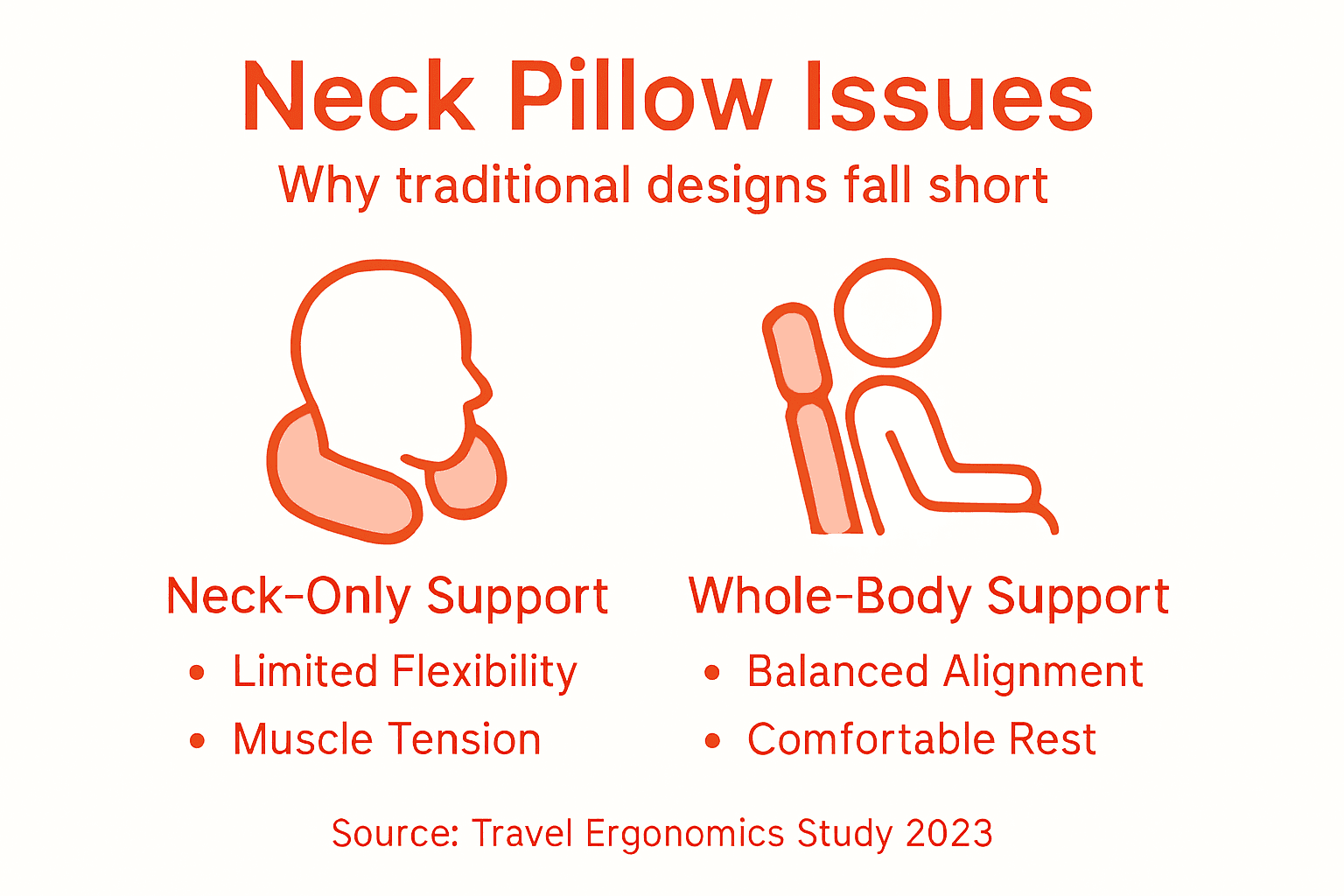
Research indicates that proper neck support requires understanding individual anatomical variations. Cervical spine alignment research demonstrates that one-size-fits-all approaches rarely accommodate diverse body structures effectively, especially since we all sleep differently.
Pro tip: When selecting travel neck support, prioritize designs that allow natural movement and do not completely immobilize your neck muscles.
Drawbacks of Traditional Neck-Only Support
Traditional neck-only travel pillows come with significant ergonomic challenges that can transform what should be restful travel into a painful experience. Neck support devices frequently cause more harm than comfort, creating potential nerve impingement and muscular strain during extended journeys.
The primary drawbacks of these neck-focused pillows include:
-
Insufficient structural support
-
Forcing unnatural head positioning
-
Can’t prevent muscle fatigue
-
Restricting natural body movement
-
Causing potential nerve compression
Biomechanical Problems arise because these pillows assume all travelers have identical neck structures and sleeping preferences. By constraining movement, they actually increase muscular tension instead of alleviating it.
Inadequate pillow design frequently leads to several serious comfort issues. These include not being able to prevent the chin downward fall, allowing excessive head flopping, and providing cushioning after the fall rather than prevent it from the start - all of which fails to support proper spinal alignment.
Traditional neck pillows create more problems than they solve by imposing rigid, one-size-fits-all solutions on complex human anatomy.
Physiological Risks extend beyond immediate discomfort. Prolonged use of ineffective neck support can potentially lead to chronic pain, reduced blood circulation, and increased muscle strain during and after travel.
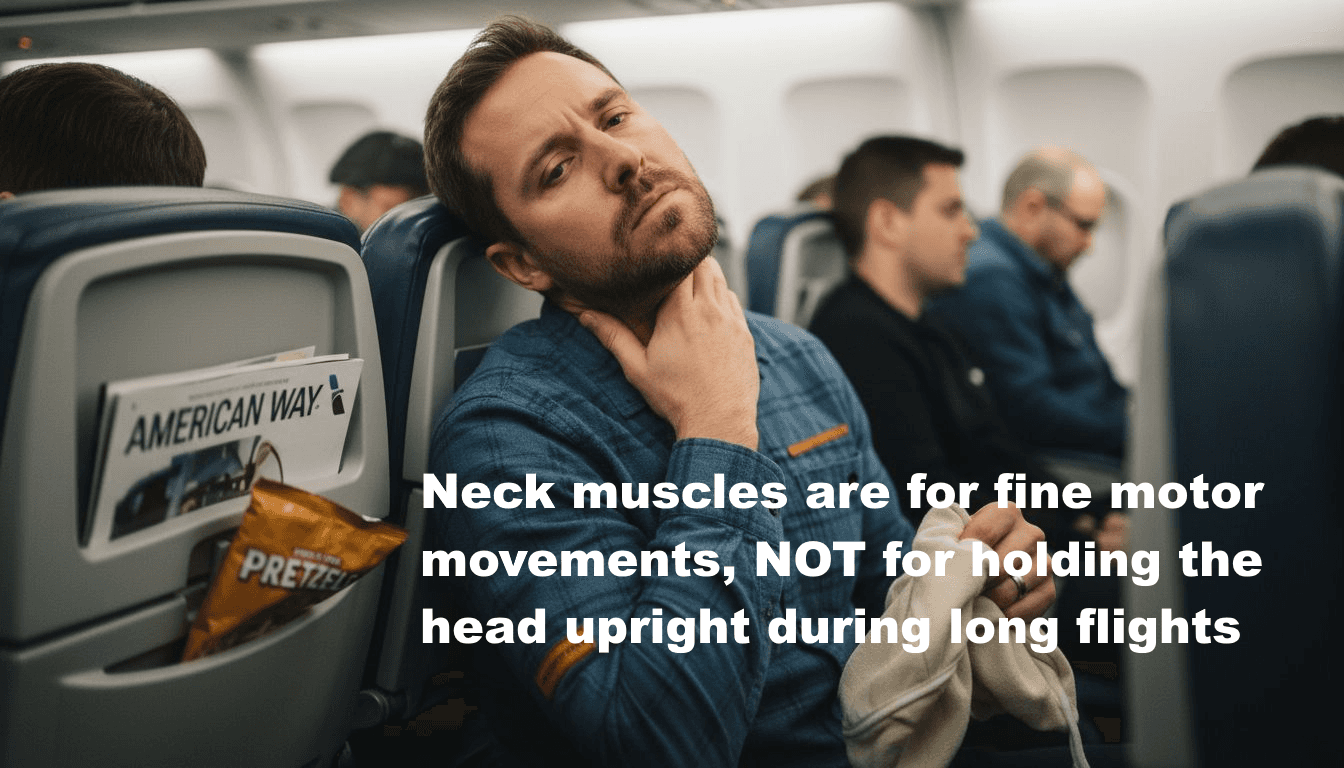
Pro tip: Always test travel neck support for flexibility and individual comfort before committing to long-duration use.
Why Upright Sleep Needs Whole-Body Stability
Physiological constraints of upright sleeping reveal that human bodies are fundamentally not designed for sustained rest in vertical positions. Our muscular and circulatory systems require comprehensive support to achieve any semblance of quality sleep while sitting.
The critical components of whole-body stability during upright rest include:
-
Balanced weight distribution
-
Consistent spinal alignment
-
Reduced muscular tension
-
Minimized cardiovascular strain
-
Preventing uncontrolled body movement
Postural Challenges emerge because traditional neck pillows ignore the intricate biomechanics of human resting positions. Without full torso engagement, the body constantly fights gravitational forces, leading to increased muscle fatigue and potential discomfort.
Sleep foundation research demonstrates that effective upright sleeping demands more than isolated neck support. The entire upper body must be strategically stabilized to create a sustainable resting environment that mimics the body’s natural horizontal sleep preferences.
Successful upright sleep requires thinking beyond neck support and considering the body as an interconnected system.
Physiological Adaptations are crucial for managing the unnatural vertical sleeping position. By supporting the entire torso, travelers can reduce the physical stress associated with maintaining an upright posture during extended periods of rest.
Pro tip: Choose travel support solutions that distribute weight across multiple body regions, not just the neck.
Alternatives: Diagonal and Torso-Support Pillows
Modern travel pillow alternatives represent a significant breakthrough in addressing the fundamental limitations of traditional neck supports. These innovative designs recognize that effective rest requires comprehensive body stabilization, not just isolated neck cushioning.
The most promising alternative support options include:
-
Diagonal wrap designs
-
Inflatable torso pillows
-
Adjustable multi-directional cushions
Biomechanical Design shifts from restricting neck movement to supporting the entire upper body’s natural resting geometry. By distributing support diagonally or vertically across the torso, these alternatives allow more natural muscle relaxation and postural alignment.
Alternative travel supports demonstrate that effective rest requires thinking beyond traditional neck-focused solutions. The most advanced designs incorporate ergonomic principles that stabilize the head while simultaneously supporting the chest, shoulders, and upper back.
Effective travel rest is about full-body support, not neck compression.
Comfort Engineering has evolved to understand that human bodies require holistic support during seated rest. These new pillow designs create a stable foundation that mimics the body’s preferred horizontal sleeping position, reducing muscle strain and improving overall travel comfort.
Pro tip: Look for travel support solutions that offer multi-directional flexibility and distribute weight across multiple body regions.
Here’s a side-by-side comparison of traditional neck-based pillows versus modern alternative travel pillow designs:
| Aspect | Traditional Neck Pillows | Modern Alternative Pillows |
| Support Focus | Isolated neck stabilization | Whole upper body stabilization |
| Comfort Over Time | Often leads to muscle fatigue | Promotes muscle relaxation |
| Flexibility in Movement | Restricts head/neck movement | Allows natural body adjustments |
| Customization | One-size-fits-all approach | Adapts to individual anatomy |
| Risk of Discomfort | High potential for pain/strain | Reduced risk with ergonomic design |
Choosing Supportive Comfort for Economy Travel
Strategic economy seat comfort requires a holistic approach that goes beyond simply selecting a standard travel pillow. Successful economy travel comfort demands understanding your body’s support needs and creating a personalized rest strategy.
Key elements for optimizing economy travel comfort include:
-
Strategic seat selection
-
Ergonomic portable supports
-
Proper postural alignment
-
Temperature regulation
-
Flexibility in movement
Seat Selection Strategies play a crucial role in creating a comfortable travel environment. Bulkhead and exit row seats offer extra legroom and provide more opportunities for adjusting your sitting position, which can significantly reduce physical strain during long flights.
Portable travel support solutions are essential for maintaining comfort in cramped aircraft environments. The most effective supports offer adjustable firmness, compact design, and the ability to distribute weight across multiple body regions without restricting natural movement.
Comfort in economy travel is about creating a personal microenvironment of support and adaptability.
Physiological Comfort goes beyond physical cushioning. It involves understanding how different body regions interact and require nuanced support during extended seated periods. The most successful travelers approach economy seating as an opportunity to customize their rest experience.
Pro tip: Pack a versatile, multi-functional support that can adapt to different seating configurations and your body’s changing comfort needs.
Use this quick reference to understand key factors for maximizing comfort in economy travel:
| Strategy | Purpose | Example Implementation |
| Seat Choice | Minimize physical strain | Select exit or bulkhead row |
| Portable Support Selection | Enhance customized ergonomics | Use flexible, adjustable pillow |
| Temperature Regulation | Maintain thermal comfort | Bring a breathable travel blanket |
| Movement Opportunities | Reduce stiffness and fatigue | Take aisle walks periodically |
Discover a Smarter Alternative to Traditional Neck-Based Travel Pillows
If you have struggled with neck strain and discomfort from using standard travel pillows that squeeze or immobilize your neck, you are not alone. This article explains how rigid neck-only supports can increase muscle tension and lead to fatigue or pain during flights. The key to comfortable upright sleeping is whole upper body stabilization without restricting natural movement.
Bolstie Travel Pillow answers this problem with a thoughtful design that supports your head, jaw, chest, and upper torso in a natural diagonal resting position. Unlike traditional neck pillows, Bolstie does not wrap around or compress the neck, allowing airflow and reducing heat buildup. It also transforms into a compact packing cylinder when empty, helping you save luggage space and avoid bulky gear.

Stop enduring discomfort and start traveling smart today. Experience how the Best long haul travel pillow can upgrade your economy-class travel comfort with ergonomic, body-first design. If neck pain has been holding you back, see how the Travel Pillow for Neck Pain | Bolstie Smart Comfort supports your needs without sacrifice. Explore the full range of solutions at Bolstie Travel Pillow and transform your next trip into a pain-free experience.
Frequently Asked Questions
Why should I avoid traditional neck-based travel pillows when flying?
Traditional neck-based travel pillows can create more problems than they solve by imposing rigid support that restricts natural neck movement, leading to increased muscle tension and discomfort during travel.
What are the drawbacks of using neck-only travel pillows?
Neck-only travel pillows often provide insufficient support, force unnatural head positioning, promote muscle fatigue, and can result in nerve compression, making them less effective for long-term comfort during flights.
How can I ensure proper neck support while flying?
Look for travel support solutions that allow natural movement and distribute weight across multiple body regions. Designs that stabilize the head and torso together are generally more effective for comfort and spinal alignment.
What alternatives to neck-based travel pillows provide better support?
Modern alternatives such as diagonal wrap designs, inflatable torso pillows, and memory foam body supports offer comprehensive upper body stabilization, reducing muscle strain and improving overall comfort during flights.
Recommended
-
How I Sleep on My Side in a Plane Seat, Even in Basic Economy – BOLSTIE TRAVEL PILLOW
-
Short Necks? Long Necks? Why You Can’t Win with Neck Wrapping Travel P – BOLSTIE TRAVEL PILLOW
-
It’s Time We Say Goodbye to Neck Pain on Any Flights – BOLSTIE TRAVEL PILLOW
-
Why The Window Seat On Planes is Not As Neck Friendly As You Think – BOLSTIE TRAVEL PILLOW

