

Long flights in economy often leave travelers tossing and turning, fighting stiff necks and restless nights. Compact travel pillows promise relief, but choosing the right one means understanding your unique sleep disruptions and how long-haul travel changes your body. This guide helps you pinpoint personal sleep challenges and match them to pillow features that actually improve comfort, so you wake up refreshed instead of sore.
Table of Contents
-
Step 2: Compare Traditional Vs. Full-Body Support Pillow Designs
-
Step 3: Evaluate Size, Packability, And Fill Options For Efficiency
-
Step 5: Confirm Fit Within Your Personal Item And Travel Routine
Quick Summary
| Key Point | Explanation |
| 1. Identify Your Sleep Challenges | Recognize your personal sleep disruptions before choosing a travel pillow for effective relief during flights. |
| 2. Differentiate Pillow Types | Understand the contrast between traditional and full-body pillows to select the best option for your travel needs. |
| 3. Evaluate Packability | Ensure your chosen pillow fits comfortably in your carry-on without sacrificing space for other essentials. |
| 4. Test for Comfort and Alignment | Simulate upright seating conditions to assess how well a pillow supports your head and neck during long flights. |
| 5. Confirm Practical Usage | Check if the pillow integrates smoothly into your travel routine and doesn’t create packing hassles during your journey. |
Step 1: Assess your personal travel sleep challenges
Before you pick a travel pillow, you need to understand what actually happens to your sleep when you fly. Everyone’s body responds differently to travel, and what keeps one person awake might not bother another at all.
Start by identifying your specific sleep disruptions. Do you wake up too early before your flight? Does your sleep feel shorter during the flight itself? Do you struggle to fall asleep at all, or do you wake up every few minutes? Travel-related sleep disruption involves early awakening before travel, decreased sleep duration during flights, and delayed recovery afterward—but the exact pattern varies from person to person.
Think about your usual sleep position. Are you a side sleeper who needs lateral support? Do you tend to lean forward when exhausted? Does your head drop to one side without support? Your natural sleeping position matters because trying to sleep in an unnatural position on a plane creates more stress, not less.
Consider what happens to your body during the flight itself. Does your neck get stiff after an hour? Do you overheat easily? Does your jaw clench from tension? Does sitting upright cause your lower back to ache? These physical sensations tell you exactly what kind of support you need.
Also evaluate your jet lag response. If you’re crossing multiple time zones, your circadian rhythm gets disrupted differently depending on your individual habitual sleep patterns. Some people recover quickly; others struggle for days. Knowing your pattern helps you choose a pillow that supports both your immediate comfort and your post-flight adjustment.
Use a simple checklist to document your challenges:
-
Neck stiffness or tension
-
Head dropping without support
-
Forward head collapse from fatigue
-
Overheating at the head and shoulders
-
Jaw clenching or TMJ discomfort
-
Lower back or spine discomfort in upright positions
-
Difficulty staying upright in economy seating
-
Shoulder or upper torso tension
Once you understand your baseline sleep challenges, you can evaluate travel aids that address your specific needs rather than guessing what might work.
Use this table to match your sleep challenge with essential pillow features:
| Common Sleep Issue | Impacts On Flight | Pillow Features To Prioritize |
| Neck stiffness | Muscle tension, poor rest | Ergonomic head support |
| Forward head collapse | Interrupted sleep, pain | Front/side stabilization, body anchor |
| Overheating | Discomfort, restlessness | Breathable fabric, ventilated panels |
| Lower back ache | Long-standing soreness | Extended-length, lumbar support option |
Your real challenges during flight determine which pillow features actually matter to you—neck support alone won’t fix everything.
Pro tip: Record your sleep disruptions for one full flight before shopping for a pillow. Note when you wake up, what position you’re in when discomfort hits, and where your body feels unsupported. This real data beats guessing about what you need.
Step 2: Compare traditional vs. full-body support pillow designs
Now that you know your specific sleep challenges, it’s time to understand the difference between pillow types. Not all travel pillows are built the same, and choosing the wrong design means wasting money on something that won’t actually help you sleep.
Traditional U-shaped and C-shaped pillows focus almost entirely on neck support. They wrap around your neck and cradle your head from the sides. This works fine for short car rides or brief naps because you can tolerate the discomfort, but during long flights, your body needs more than just neck cushioning.
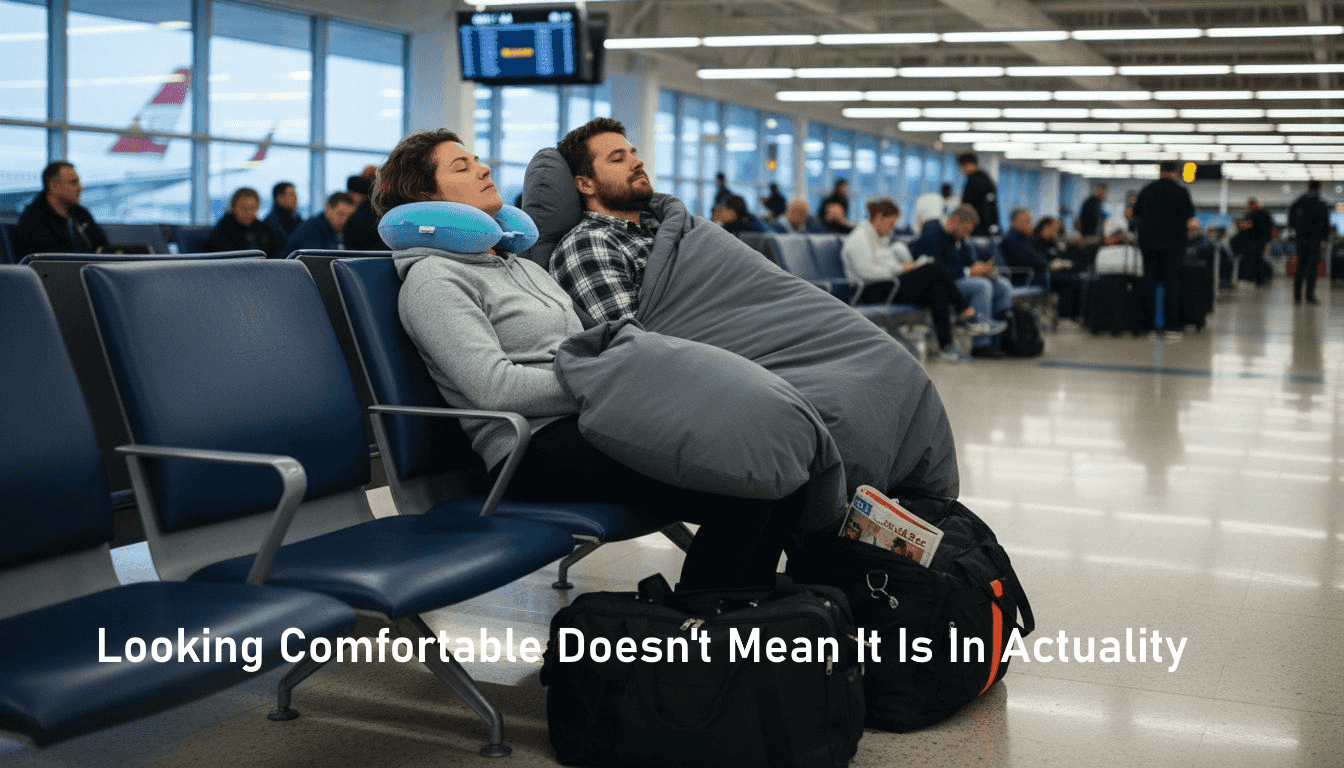
The problem with neck-only support becomes obvious after an hours. Your head’s weight is taking a toll on your neck muscles, not to mention your shoulders, upper torso, and jaw have nothing to lean into. Without that foundation, your neck still strains because it’s trying to hold up your entire head weight without anchoring support from below. You end up adjusting constantly, waking up every 20 minutes because nothing feels stable.
Full-body support pillows work differently. Instead of wrapping around your neck, they support your entire upper body posture. They stabilize your shoulders, upper back, and torso, which then naturally supports your head and jaw alignment. Research on travel pillow design shows that traditional U-shaped pillows fail to provide 360-degree support necessary for true long-haul comfort, while full-body designs reduce muscle strain across multiple areas simultaneously.
Compare the two approaches with this breakdown:
-
Traditional pillows: Neck-focused, lightweight, easy to pack, but limited to short rest periods
-
Full-body support pillows: Torso-anchored, stabilize head through shoulder and chest support, prevent forward collapse, work for short and extended sleep periods
Your choice depends on flight length and your sleep position. Short flights under four hours might work with traditional support. Anything longer requires a pillow that prevents your whole upper body from collapsing forward as fatigue deepens.
Full-body support works because it stabilizes your foundation first, not just your neck.
Pro tip: If you’re comparing pillows, sit upright in a chair and lean back gently. A good pillow should prevent your head from dropping forward and your shoulders from rolling inward, not just cradle your neck.
Step 3: Evaluate size, packability, and fill options for efficiency
Your pillow needs to work in two places: on the plane and in your carry-on bag. Size and packability aren’t luxuries—they’re deal breakers for economy travel where space is everything.
Start by measuring your personal item limit. Most airlines allow a carry-on bag around 22 by 14 by 9 inches. Your pillow needs to fit inside without forcing you to check luggage or abandon other essentials. A pillow that won’t compress to fit your space is worthless, no matter how comfortable it is.
Fill materials directly impact both comfort and packability. Travel pillow designs use memory foam and inflatable chambers to balance compactness with support. Each option trades off differently. Memory foam , at the end of the day, is a one size fits all and doesn’t compress as easily as you may think. Inflatable designs pack down to nearly nothing but require air maintenance and may feel less stable during a full eight-hour flight.
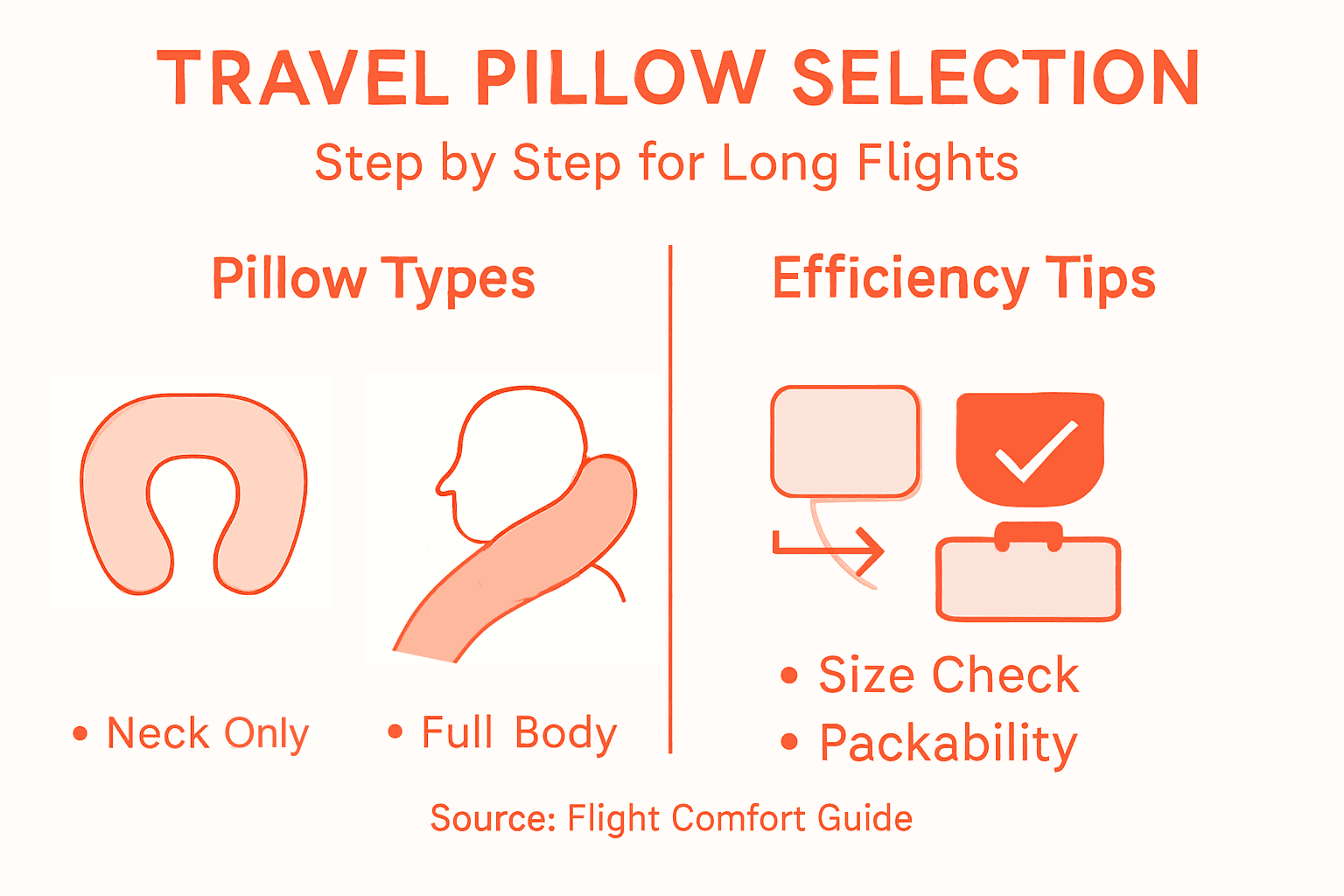
Some pillows solve this problem differently. A fillable design lets you use your own clothing as the pillow fill. You pack your clothes anyway, so the pillow becomes a packing cylinder that also doubles as support. This eliminates the compression problem entirely—your pillow takes up almost no extra space.
Think about your fill preference by considering these factors:
-
Memory foam: Good to cushion rather than prevent the head from falling, harder to packdepending on it’s density, ideal if you can sacrifice some space
-
Inflatable: Compresses completely flat, lightweight, requires hand inflation, less structural support for extended sleep
-
Clothing-fillable: Uses items you’re already packing, zero extra luggage space, customizable firmness based on what you stuff inside
Test how much space your chosen pillow occupies when compressed. If it doesn’t fit comfortably in your personal item with everything else, it’s not practical for economy travel. Real-world packability beats theoretical comfort every time.
Here’s how different travel pillow fills compare for economy travelers:
| Fill Type | Comfort Level | Packability | Maintenance Needs |
| Memory Foam | Contours to neck, firm | Bulky, resists compression | Collapse under real pressure |
| Inflatable | Supports, less firm | Extremely compact, flat | Needs inflation, may leak |
| Clothing-Fillable | Variable, customizable | Uses no extra space | Packed with clothes |
A pillow that won’t fit in your carry-on is a pillow you’ll leave behind.
Pro tip: Measure your pillow’s compressed dimensions before buying, then physically test it against your actual carry-on bag at home. Don’t estimate—actually pack it with your other travel items to see if you have breathing room.
Step 4: Test comfort by simulating upright long-haul use
Buying a pillow online means you can’t feel it in person. So before you commit, you need to test it in conditions that match real airplane seating. A pillow that feels fine for 20 minutes won’t tell you anything about how it performs during an eight-hour flight.
Start by setting up a test scenario at home. Sit upright in a firm chair without leaning back. This mimics economy-class seating where your back stays relatively straight and your only resting option is forward or to the side. This is the position you’ll actually be in during a flight.
Now place the pillow and settle into it. Ergonomic design maintaining cervical alignment and head stability prevents neck strain during extended upright use. Notice if your head stays neutral or if it drops forward. Does your jaw feel supported or does it jut out? Do your shoulders stay relaxed or do they tense up from compensating?
Spend at least 30 minutes in this position. Not five minutes. Thirty. Your neck will start complaining around minute 15 or 20, and that’s when you discover whether the pillow actually solves your problem or just postpones it. Real fatigue reveals what comfort gimmicks hide.
During your test, evaluate these specific sensations:
-
Head position stays neutral and supported without forward droop
-
Jaw and neck feel stable and relaxed, not strained
-
Shoulders and upper back don’t compensate with tension
-
Support feels consistent throughout the test period
-
You can shift positions slightly without losing support
Try different head positions too. Lean slightly left, then right. Tilt forward. Move how you’ll actually move on a plane. A pillow that works perfectly straight-on but collapses when you shift is hiding a design flaw.
If the pillow passes the 30-minute home test, it’s worth trying on a shorter flight before committing to a long-haul journey. Real airplane conditions add turbulence, temperature changes, and fatigue that testing at home can’t fully replicate.
If a pillow fails your home test, it will definitely fail at 35,000 feet.
Pro tip: Record a video of yourself during the test, or have someone observe your posture. You can’t always feel whether your head is dropping forward—you need visual confirmation that your alignment stays true throughout the full 30 minutes.
Step 5: Confirm fit within your personal item and travel routine
You’ve tested the pillow for comfort and packability in theory. Now you need to confirm it actually works within your real travel setup. A pillow that fits in your bag at home might not fit when you’re also carrying a phone, wallet, boarding pass, and everything else you stuff into your personal item mid-flight.
Gather everything you actually carry on a plane. Your phone, wallet, laptop, headphones, medications, snacks, a book or tablet. Pack it all into your personal item the way you normally would. Now try to add the pillow. Does it fit comfortably or are you cramming it in? Does adding the pillow force you to leave something else behind?
This matters because access during the flight is part of your routine. You need to be able to grab the pillow without dumping your entire bag into the aisle. Fitment to traveler routines includes dimensions fitting within carry-on luggage and ease of deployment during travel. If your pillow is wedged at the bottom under your laptop, you won’t use it. You’ll sit there uncomfortable rather than dig through your bag.
Think about the sequence of your flight. When do you actually pull out the pillow? On the jetway before sitting down? Once you’re in your seat? After takeoff when you’ve settled in? Your routine determines whether quick-access placement works or if you need the pillow to stay packed longer.
Test these specific scenarios:
-
Boarding process: Can you access the pillow without disrupting other passengers or your carry-on organization?
-
Seat setup: Does the pillow stay in place once deployed, or do you need to fidget with it constantly?
-
Storage between uses: Can you repack it easily if you need to move around the cabin or use the restroom?
-
Multi-leg trips: If you’re flying multiple segments, does the pillow survive repeated packing without degrading?
-
Personal item pocket access: Can you still reach essentials like your phone without removing the pillow?
If your pillow creates friction with your actual travel routine, you won’t keep using it on future flights. Comfort matters, but convenience keeps you coming back.
A pillow that works perfectly but ruins your carry-on organization will become dead weight in your closet.
Pro tip: Pack your full personal item exactly as you would for a real flight, including the pillow, and keep it packed for three days. Live with it. Try to access things you’d normally need mid-flight. This real-world routine test reveals practical problems that theoretical packing won’t.
Find Your Perfect Travel Pillow for Long Flights with Bolstie
Struggling with neck stiffness, forward head collapse, or lack of full-body support during your flights? This article breaks down how to identify your unique travel sleep challenges and why traditional neck-only pillows often fall short on long-haul journeys. If you want a travel pillow that supports your head, jaw, chest, and upper torso all together, discover how Bolstie’s innovative design provides ergonomic, body-first comfort without the bulk or wasted luggage space.
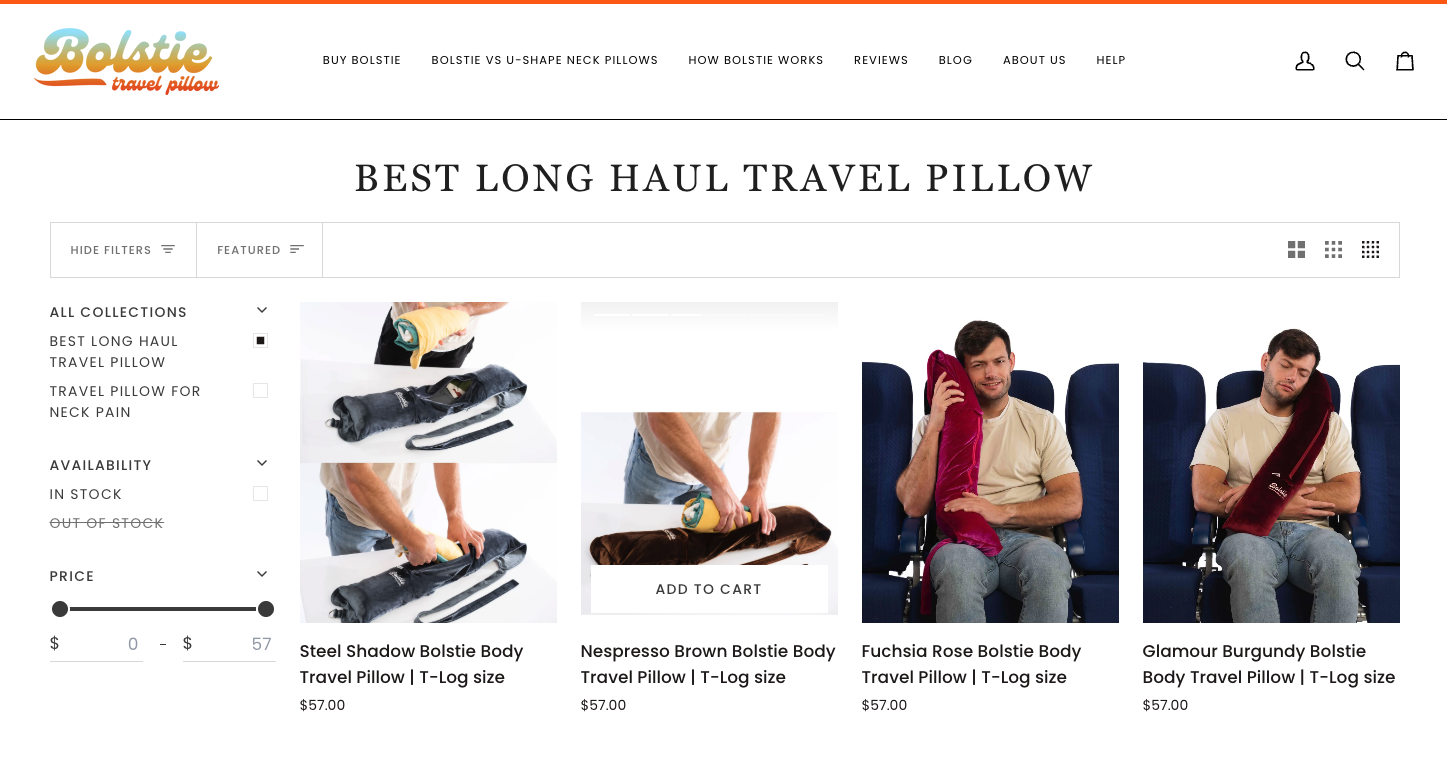
Explore our collection of the Best Long Haul Travel Pillows engineered for travelers who refuse to compromise on comfort or packability. Take control of your next trip and stop settling for pillows that only support your neck. Visit the Travel Pillow for Neck Pain | Bolstie Smart Comfort page to see why frequent flyers and economy travelers alike trust Bolstie to eliminate forward head drop and tension from upright sleeping. Experience how thoughtful design and space-saving solutions make it easier than ever to rest well during long flights. Order now at Bolstie Travel Pillow and upgrade your economy-class rest today.
Frequently Asked Questions
How do I assess my personal travel sleep challenges before selecting a travel pillow?
Understanding your specific sleep disruption patterns during flights is essential. Start by evaluating factors like neck stiffness, difficulty staying asleep, or discomfort in your usual sleeping position. Keep a checklist of your challenges to guide your selection process effectively.
What are the differences between traditional and full-body support travel pillows?
Traditional travel pillows primarily focus on neck support, while full-body support pillows stabilize the entire upper body, preventing forward collapse. If you anticipate a long flight, consider a full-body support pillow for improved overall comfort and reduced muscle strain throughout the journey.
How should I consider size and packability when choosing a travel pillow?
Your travel pillow must fit comfortably in your carry-on bag without sacrificing space for other essentials. Measure your personal item dimensions and check that the pillow can compress sufficiently. A good travel pillow should maintain comfort while fitting easily alongside your other items in your luggage.
What should I evaluate during a comfort test for a travel pillow?
To ensure a travel pillow is suitable, test it while sitting upright in a firm chair to simulate airplane seating. Spend at least 30 minutes in this position to assess if your head, neck, and shoulders remain stable and relaxed without discomfort. Adjust your head position during the test to confirm consistent support.
How do I confirm a travel pillow fits within my travel routine?
After testing the pillow’s comfort, check if it fits well with your usual travel setup. Pack your personal items as you typically would and assess whether the pillow is easily accessible during your journey. Ensure that it does not disrupt your organization or require you to sacrifice access to other essentials.
What features should I prioritize in a travel pillow based on my sleep challenges?
Identify which specific aspects of support—such as neck support, overheating prevention, or lumbar support—are most critical for your comfort. Use the checklist you developed earlier to match your sleep challenges with suitable pillow features like ergonomic foam, breathable fabric, or full-body stabilization. Prioritize the features that will address your most significant discomforts.
Recommended
-
Top 5 Ostrichpillow.com Alternatives in 2026 for Comfortable Travel So – BOLSTIE TRAVEL PILLOW
-
Solving The Middle Seat Nightmare Made Any Seat Anywhere Better – BOLSTIE TRAVEL PILLOW
-
How I Finally Fixed The Worst Part of My Vacation: Flying Comfort – BOLSTIE TRAVEL PILLOW
-
A Travel Hack You Never Expected: From Elbow to Knee Pads to Total Pea – BOLSTIE TRAVEL PILLOW

