

If you are flying economy, you know the struggle of sharing cramped space on an international flight, hoping for a few hours of real rest. The pursuit of comfort in economy class means every inch and accessory counts, especially for minimalists who pack light and travel often. Choosing the right travel pillow and support setup makes the difference between waking refreshed or dealing with aches for days—this guide reveals compact, practical strategies for upright comfort, all backed by tips real travelers use.
Table of Contents
Quick Summary
| Essential Insight | Clear Explanation |
| 1. Choose the right pillow type | Select a travel pillow based on comfort, support, and portability to prevent discomfort during your flight. |
| 2. Optimize your seat position | Position your body correctly with support for your neck, back, and feet to minimize strain during long flights. |
| 3. Layer clothing for comfort | Wear loose, breathable layers to adjust to cabin temperatures and improve overall comfort while sitting. |
| 4. Use accessories for better sleep | Earplugs, sleep masks, and scarves enhance your comfort and block disturbances for a more restful flight. |
| 5. Test your setup before flying | Practice your flight position and adjustments at home to identify and fix discomforts before your trip. |
Step 1: Select the right travel pillow and packing setup
Your choice of travel pillow makes or breaks long-haul rest. Not all pillows support the same way, and picking the wrong one leaves you stiff, uncomfortable, and disappointed. Let’s walk through how to find what actually works for your body and your luggage.
Start by understanding the main pillow types available.
-
Memory foam pillows can be stiff and rigid, one size fits all, more horizontal cushion then vertical seated support
-
Inflatable pillows compress small and pack light, though they require inflation and can deflate mid-flight
-
Microbead pillows can be weighty, more horizontal cushion then vertical seated support
Each type has trade-offs. Memory foam feels supportive when you are lying down and takes up space. Inflatables pack small but feel less stable. The best choice depends on how you sleep and how much luggage room you have.
Here is a comparison of common travel pillow types to help you choose the best fit for your needs:
| Pillow Type | Comfort and Support | Portability and Packing | Best For |
| Memory Foam | Firm, conforming, stable | Bulky, hard to compress | Laying flat on long trips |
| Inflatable | Adjustable, basic support | Ultra-light, packs flat | Minimalist and light packers |
| Microbead | Soft, molds to body shape | Heavy, takes up space | Short trips, car travel |
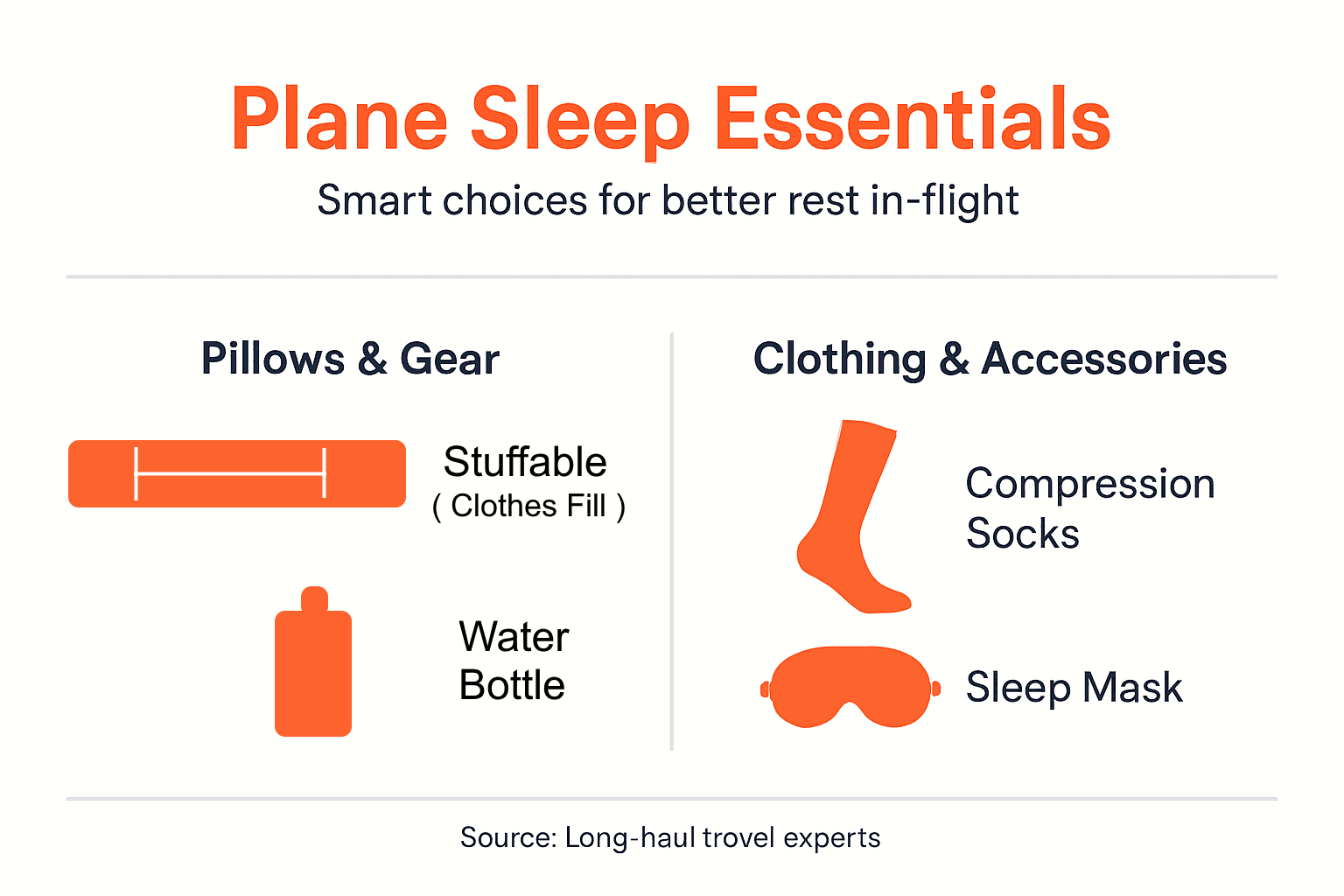
| Stuffable (Clothing Fill) | Customizable, varies by fill | Compressible when empty | adaptable anywhere |
When you’re evaluating options, look for support that covers more than just your neck. Your jaw, chest, and upper back also need stability when you’re sitting upright for hours. Travel pillows that support multiple areas keep your whole upper body aligned, not just your neck, which prevents the forward head drop that wakes you up.
The right pillow supports your diagonal resting position without restricting airflow or causing heat buildup—two things that keep you from actual sleep on planes.
Consider your packing strategy alongside pillow selection. Economy travelers and minimalist packers benefit from pillows that double as packing tools. A pillow that fills with your own clothing converts wasted space into support, eliminating the need for a separate carry-on item. This approach saves luggage weight and keeps your setup compact.
For families or parents on long flights, space efficiency matters. Avoid bulky pillows that consume precious carry-on real estate. Instead, choose something designed for real travel constraints—pieces that compress when empty and firm up when stuffed with clothing.
Before you buy, check the return policy. What feels supportive in a store might not feel right on an actual flight. Some people need more neck support; others need chest and torso stability. You won’t know your preference until you test it across a real flight.
Pro tip: Fill your pillow with clean socks, a sweater, or lightweight layers before boarding—this firms up the support and eliminates one item from your personal bag, freeing space for your carry-on essentials.
Step 2: Arrange your seat and position for optimal comfort
Your seat choice and how you position your body determine whether you actually rest or just sit awake for eight hours. The right setup prevents your neck from cramping, your back from screaming, and your legs from going numb. Let’s get this part right.
Start by selecting your seat strategically. Window seats offer wall support for your head and shoulders, which helps when you lean sideways to rest. Aisle seats give you freedom to stretch your legs and move without climbing over a neighbor. Bulkhead and exit row seats sometimes provide extra legroom, though they typically don’t recline, which limits your ability to tilt back.
Seat maps showing legroom and recline options help you make informed choices before booking. Check where you have the most space and understand which seats actually recline versus which ones are fixed.
Once seated, position your body with intention. Your feet should be flat on the floor or footrest, with knees and hips aligned. Roll your shoulders back and keep your spine naturally aligned against the seat back. Avoid twisting or leaning forward, which strains your neck and back over time.
Use your pillow to support this alignment. Position it at the base of your neck and upper back, not just your neck alone. Your jaw, chest, and torso need support together to prevent forward head drop and the constant micro-adjustments that wake you up.
Proper body alignment prevents muscle strain and keeps you comfortable enough to actually fall asleep instead of just resting uncomfortably.
Lay out these positioning steps before sleeping:
-
Adjust your seat recline as far back as the row allows
-
Place your pillow behind your head and upper back for multi-point support
-
Keep feet flat on the floor or use the footrest to maintain hip alignment
-
Rest your head naturally against your pillow without forcing it into awkward angles
Your posture matters more than you think. A slumped spine or twisted neck prevents real sleep and leaves you exhausted when you land. The effort to position yourself correctly takes two minutes now and saves you hours of discomfort later.
Pro tip: Recline your seat slightly as soon as you settle in, then adjust your pillow to fill the gap between your head and the seat back—this prevents your head from tilting forward and wakes you up every few minutes.
Step 3: Utilize clothing and accessories to enhance support
What you wear and what you bring to the cabin directly affect how well you sleep. Smart clothing choices and the right accessories prevent circulation problems, temperature swings, and the discomfort that keeps you alert for hours. This step is about working with your body’s needs, not against them.
Start with your base layer. Wear loose, comfortable clothing that doesn’t squeeze your waist, thighs, or calves. Tight jeans, fitted leggings, or anything that constricts blood flow will leave your legs feeling numb and swollen by the time you land. Loose pants, soft layers, and stretchy fabrics let your body relax and blood circulate normally.
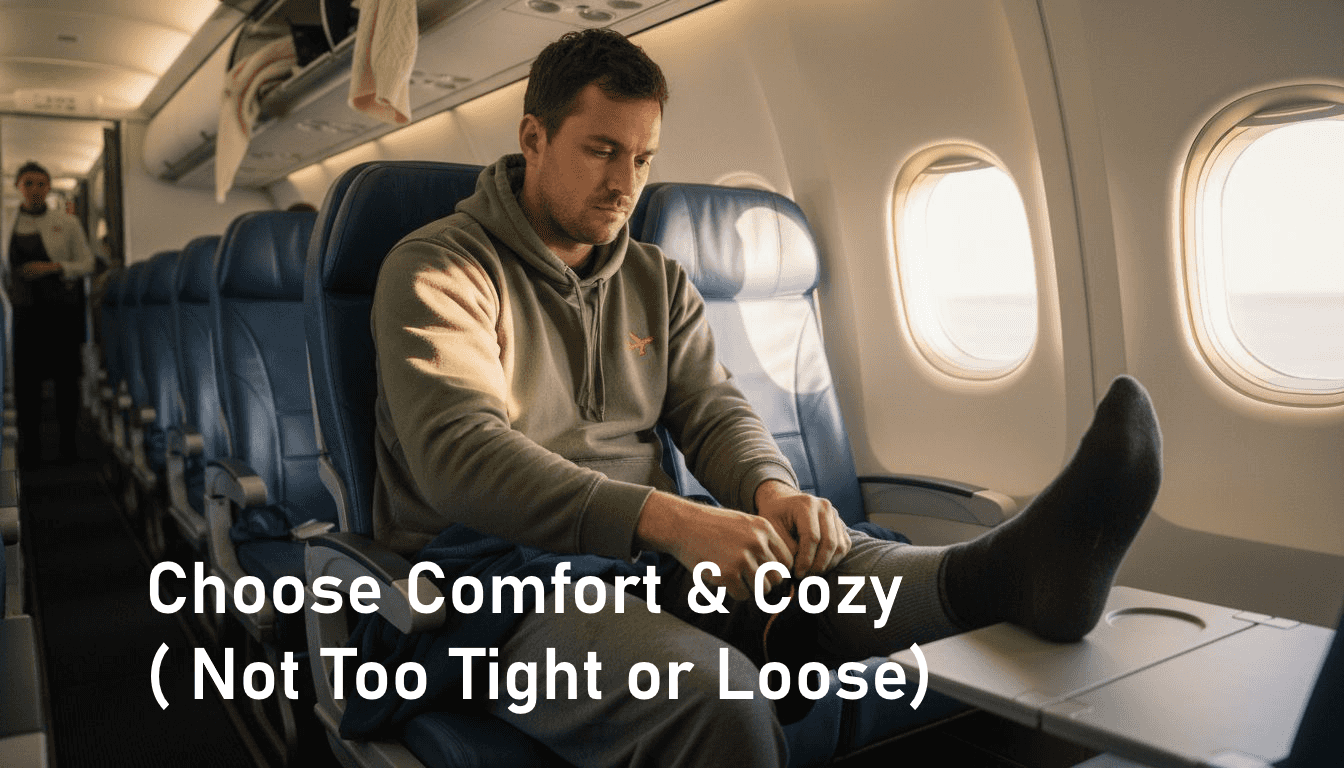
Temperature control matters more than most people realize. Cabins swing between freezing and stuffy within a single flight. Pack multiple thin layers you can add or remove without getting up. A light sweater, a cardigan, or a zip-up hoodie gives you flexibility without bulk.
Compression socks that promote blood circulation prevent your legs from swelling and reduce the risk of clots on ultra-long flights. They’re especially helpful if you’re sitting still for eight or more hours. Choose ones that feel snug but not painful.
Accessories handle the things your pillow cannot. Earplugs block the constant hum of the engines and crying babies. A sleep mask keeps cabin lights from disrupting your rest. A lightweight scarf or blanket provides extra warmth and doubles as a makeshift pillow support if needed.
Comfort accessories work together with your pillow to create the conditions for real sleep, not just sitting quietly with your eyes closed.
Build your support accessories strategically:
-
Earplugs reduce ambient noise and help your brain shift into sleep mode
-
Sleep mask blocks overhead lights and the surrounding cabin activity
-
Lightweight scarf or blanket adds warmth and provides neck and shoulder support
-
Compression socks keep your legs from swelling during long immobility
-
Loose layers allow temperature adjustment without removing your shoes or pillow setup
Don’t underestimate the power of having the right clothes and accessories within arm’s reach. You’re not adding weight if you’re wearing these items already. Pack your sleep mask and earplugs in an easy-access pocket so you can deploy them quickly once the cabin dims.
Below is a summary of essential travel accessories and their unique benefits for in-flight comfort:
| Accessory | Main Benefit | Added Value |
| Compression Socks | Improves blood circulation | Reduces swelling risk |
| Earplugs | Blocks noise and engine sounds | Supports deeper sleep |
| Sleep Mask | Shields from light and movement | Prevents sleep disruption |
| Scarf/Blanket | Adds warmth, can support neck/shoulder | Flexible comfort, doubles use |
| Layered Clothing | Adjusts to varying cabin temperatures | Enhances relaxation, no bulk added |
Pro tip: Wear your compression socks during the flight and remove them after landing—they prevent swelling that would otherwise leave your feet puffy and uncomfortable for hours after you arrive.
Step 4: Adjust body alignment and maintain airflow
Your body alignment and breathing work together to determine whether you actually sleep or just suffer through eight hours. Poor alignment crushes your chest, restricts airflow, and triggers that constant waking sensation. Proper airflow keeps you oxygenated and comfortable. Let’s fix both.
Body alignment starts with your head and neck positioning. Your head should rest against your pillow without tilting forward or twisting sideways. Tilting forward compresses your chest and makes breathing harder. Twisting strains your neck and prevents deep sleep. Keep your spine in a neutral line from head to hips.
Your shoulders should be relaxed and rolled slightly back, not hunched forward. Hunched shoulders compress your lungs and reduce the oxygen you’re getting with each breath. When you roll back naturally, your chest opens and airflow improves immediately.
Your feet need support too. Keep them flat on the floor or a footrest, not dangling or crossed. Dangling legs cut off circulation. Crossed legs twist your spine and restrict your core muscles. Flat feet with knees aligned keep your whole body in balance.
Maintaining proper body alignment during flights prevents muscle strain and improves breathing capacity during sleep. Your body relaxes faster when it’s not fighting to hold an awkward position.
Airflow matters because cabin air is incredibly dry. Low humidity irritates your nasal passages and throat, making breathing uncomfortable. Stay hydrated throughout the flight by drinking water regularly. Water keeps your mucous membranes moist from the inside, improving airflow without forcing you to use sprays or other products.
Good alignment opens your airways and lets your whole body relax into sleep instead of bracing against discomfort.
Check your alignment every 30 minutes with this quick checklist:
-
Head rests naturally against your pillow without forward tilt
-
Shoulders rolled back and relaxed, not hunched
-
Chest open and unrestricted so breathing feels easy
-
Feet flat with knees and hips aligned
-
Spine neutral from head to hips without twisting
Drink water every hour, even if you don’t feel thirsty. The cabin moisture is so low that your body loses hydration faster than you notice. Proper hydration keeps your nasal passages open and your breathing easy all night long.
Pro tip: Adjust your pillow position if you notice your head tilting forward—move it slightly higher or angle it so your head rests naturally without any effort, and you’ll stop waking yourself up with forward head drop.
Step 5: Test your setup to ensure restful upright sleep
Don’t wait until you’re 30,000 feet in the air to discover your pillow doesn’t work or your seat position causes neck pain. Testing your setup at home saves you from hours of discomfort and wasted flight time. A quick rehearsal now prevents regret later.
Start by simulating your actual flight position at home. Sit upright in a chair or on your couch exactly as you would on a plane. Recline slightly, position your pillow, adjust your clothing layers, and put on your earplugs and sleep mask. Spend 20 to 30 minutes in this exact setup while reading or watching something calm.
Notice what bothers you. Does your neck hurt after five minutes? Does your pillow shift? Does your lower back feel unsupported? Does your head tilt forward no matter what you do? These are the problems you’ll face on a plane, but you can fix them now instead of suffering through a flight.
Adjust one thing at a time. If your neck hurts, try repositioning your pillow slightly higher or lower. If your head tilts forward, angle your pillow differently or add more fill. If you’re too cold, add a layer. Test each change for another 20 minutes to see if it actually helps.
Testing your sleeping position before travel helps reduce discomfort and increases your ability to rest upright during actual flights. You’re identifying problems in an environment where you can fix them instantly.
Take notes. Write down what worked and what didn’t. Note the exact pillow position, clothing layers, and accessories that kept you comfortable. When you board your flight, you already know your formula.
A 30-minute test at home prevents eight hours of misery on a plane.
Run through this testing checklist before your trip:
-
Sit upright in your exact flight position for 20 to 30 minutes
-
Wear your actual flight clothing and accessories
-
Position your pillow and adjust it until it feels right
-
Notice any discomfort in your neck, back, shoulders, or legs
-
Make one adjustment and test again for another 20 minutes
-
Document what works so you can replicate it on the plane
If you discover problems during testing, you have time to solve them. Buy a different pillow. Try another seat type at a friend’s house. Adjust your clothing strategy. You can’t fix these things at 35,000 feet.
Remember that plane seats vary slightly from airline to airline, but your body’s needs stay the same. If something feels uncomfortable in your test, it will feel uncomfortable on the plane.
Pro tip: Test your setup in the evening when you’re actually tired—this shows you whether your position actually helps you rest, not just whether it feels tolerable while you’re alert.
Sleep Better on Planes with Smarter Support
If you struggle with uncomfortable upright sleep on long flights, this article’s insights about supporting your entire upper body and maintaining proper alignment hit the mark. Many travelers find traditional neck pillows leave them stiff or cause forward head drop but Bolstie Travel Pillow breaks that pattern by stabilizing not just your neck but also your jaw, chest, and upper back for true rest during economy-class travel. Designed to compress small when empty and become firm when filled with clothing, it also saves precious carry-on space while eliminating bulky gear.
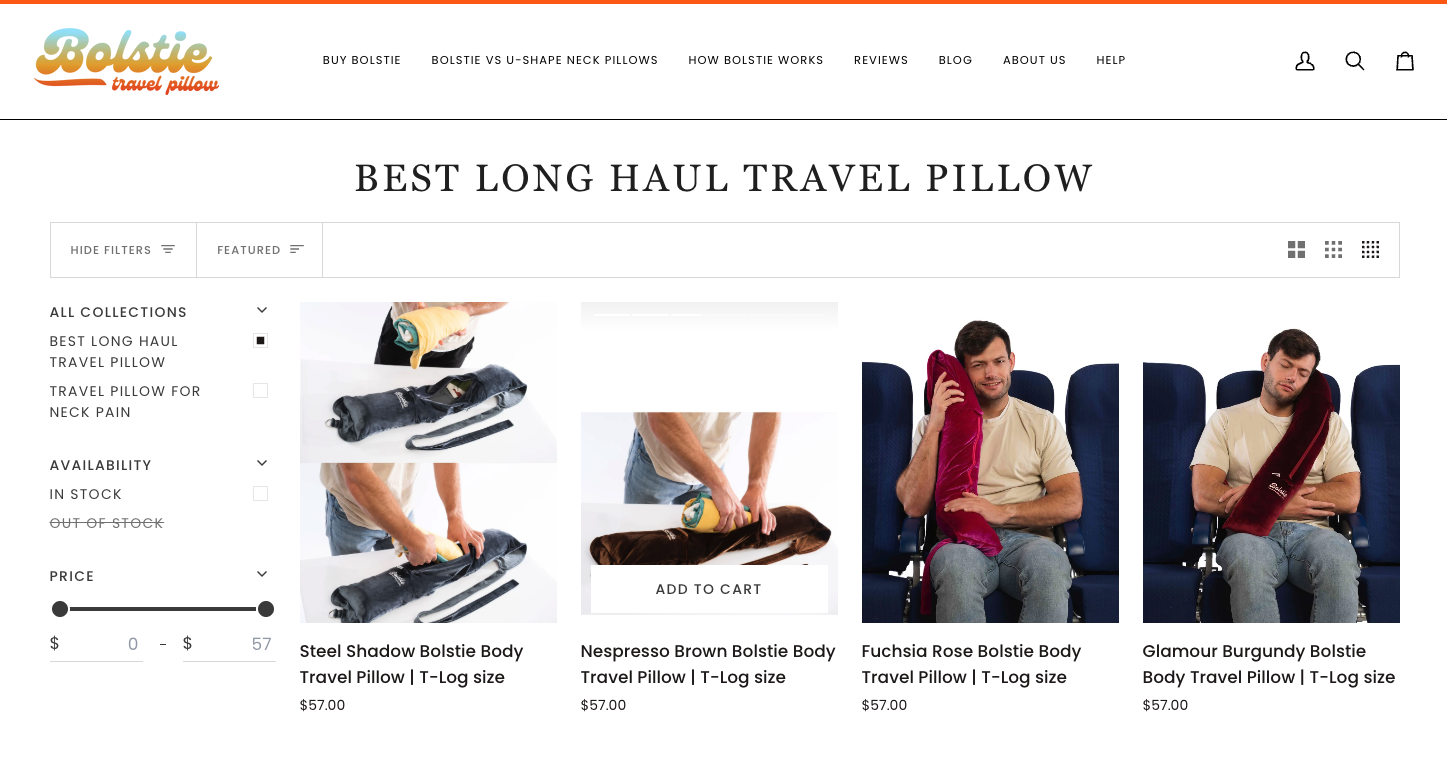
Ready to upgrade your travel comfort with the Best long haul travel pillow – BOLSTIE TRAVEL PILLOW that supports your natural resting position and fits your packing needs? Discover more about how it alleviates neck pain at Travel Pillow for Neck Pain | Bolstie Smart Comfort – BOLSTIE TRAVEL PILLOW. Don’t wait for another flight full of discomfort. Visit Bolstie Travel Pillow now and experience upright sleep support that transforms your journey.
Frequently Asked Questions
What is the best type of travel pillow for long flights?
Choosing the right travel pillow can enhance your comfort significantly. Opt for a memory foam pillow if you’re looking for firm, customized support or an inflatable pillow for easy packing—just ensure it inflates properly before use.
How can I arrange my seat for optimal comfort while sleeping on a plane?
Select a window seat to lean against the wall, or an aisle seat for easy access to stretch. Position your body with feet flat on the floor and shoulders back to promote proper alignment, which aids in relaxation.
What should I wear to sleep comfortably on a plane?
Wear loose, comfortable clothing that allows for good circulation, like soft pants and a breathable top. Layer your clothing to adjust to changing cabin temperatures while avoiding tight-fitting items that might restrict blood flow.
How do I maintain proper body alignment and airflow when sleeping upright on a plane?
Keep your head supported by your pillow without tilting forward or twisting, while ensuring your shoulders are relaxed. Align your feet flat on the floor to prevent circulation issues and stay hydrated by drinking water regularly.
What accessories can help improve my sleeping experience on a long-haul flight?
Use earplugs to block noise, a sleep mask to shield from light, and a lightweight scarf or blanket for added warmth. These items enhance your comfort and create a better environment conducive to sleep.
How can I test my sleeping setup before my flight?
Simulate your flight position at home by sitting upright in a chair with your travel clothing and pillow. Adjust your setup to relieve any discomfort and document what works well to replicate it during your flight.
Recommended
-
How to Sleep Comfortably While Traveling in Economy Class – BOLSTIE TRAVEL PILLOW
-
Step by Step Travel Pillow Selection for Long Flights – BOLSTIE TRAVEL PILLOW
-
How I Sleep on My Side in a Plane Seat, Even in Basic Economy – BOLSTIE TRAVEL PILLOW
-
6 Travel Comfort Tips for Economy-Class Flights in 2026 – BOLSTIE TRAVEL PILLOW

