

Economy travelers know the struggle: you board a long flight, settle into your cramped seat, and pull out a bulky travel pillow that barely fits in your bag and offers little real support. Your neck aches, your head drops forward, and restful sleep remains out of reach. Packing a clothing-fill travel pillow solves both problems at once, saving roughly 25% of your carry-on space while delivering ergonomic support that can boost sleep duration by up to 40%. This guide walks you through the exact steps to pack your travel pillow effectively, avoid common mistakes, and transform your next flight into a comfortable journey.
Table of Contents
-
What You Need Before You Start: Prerequisites For Packing Your Travel Pillow
-
Alternative Travel Pillow Packing Methods And Their Tradeoffs
-
Discover The Best Clothing-Fill Travel Pillow For Your Next Flight
Key Takeaways
| Point | Details |
| Space Efficiency | Packing a clothing-fill pillow saves approximately 25% of carry-on space compared to traditional bulky pillows. |
| Sleep Quality | Following proper packing steps improves sleep duration by up to 40% on long flights. |
| Pain Prevention | Avoiding common packing mistakes like uneven fill reduces neck pain by 30%. |
| Support Superiority | Clothing-fill pillows provide superior ergonomic support versus inflatable and traditional neck pillows. |
What You Need Before You Start: Prerequisites for Packing Your Travel Pillow
Successful pillow packing starts with gathering the right materials and understanding what works best. Choose a travel pillow specifically designed for clothing-fill compatibility with a compressible cover that can handle firm packing without losing shape. Not all pillows work with this method, so selecting the right design matters.
Your clothing choices determine comfort and compression quality. Soft, lightweight items like t-shirts, thin sweaters, and leggings work best because they compress easily while maintaining enough structure to support your head and torso. Avoid bulky items like heavy jackets, thick pants, or jeans that resist compression and create uncomfortable pressure points.
Timing matters too. Allocate at least 5 to 10 minutes to pack your pillow carefully before your trip. Rushing leads to uneven filling and poor compression, which defeats the purpose. Check your airline’s carry-on size limits before packing to ensure your filled pillow meets regulations. Most clothing-fill pillows compress small enough to fit standard carry-on requirements, but verification prevents gate-check surprises.
Before you begin, gather these essentials:
-
A compressible travel pillow with clothing-fill capability
-
10 to 15 soft, lightweight clothing items
-
A clean, dry packing surface
-
5 to 10 minutes of uninterrupted time
-
Knowledge of your airline’s carry-on dimensions
Understanding these prerequisites sets you up for packing success. The right pillow design paired with appropriate clothing creates the firm, structured support your body needs during upright sleep. For help choosing the best pillow type, explore our travel pillow selection guide for detailed comparisons.
Step-by-Step Travel Pillow Packing Process
Packing your travel pillow correctly makes the difference between restful sleep and wasted carry-on space. Follow these steps precisely to achieve optimal ergonomic support and maximum compression.
-
Select Your Clothing: Choose 10 to 15 soft, lightweight items like t-shirts or 3 to 5 thin sweaters. Lay them flat and smooth out wrinkles to ensure even distribution inside the pillow.
-
Open the Pillow Cover: Unzip or open the pillow completely. Check inside for any debris or previous fill material before proceeding.
-
Bundled Rolls Packing Method: This is one of the best packing method out there. You don’t need any packing cubes to organize your clothes. It secures everything within the roll so nothing can fall out.
Fold: For tops/shirts/sweaters - lay each item flat on the floor or bed, fold the sides and sleeves toward the center. For Pants/shorts - fold then simple in half lengthwise.
Stack: Start with stacking 2 folded tops , 1 pants or 2 shorts, 2 underwear, and 1 pair of socks. Stand alone items such as thick sweaters or big dresses don’t need to be stack with other items.
Roll: Begin at one end of the stack with the waist band and start the tightest rolling you can do. Tight gives you a firm fell , where as loose roll gives you a softer feel.
Stiff/Fill: Test each roll thickness to make sure it fits into the travel pillow as it should slide into easily without over stretching the pillow and is able to be zipped up. Start at the bottom end, then top end, and finish with the middle section.
The science behind this method is clear. Using clothing to fill a travel pillow creates firm, structured support mimicking ergonomic shapes, reducing neck strain by up to 50%. This approach works because evenly distributed clothing maintains consistent pressure across your head, jaw, and chest, supporting your body’s natural diagonal resting position instead of forcing your neck into unnatural angles.
Pro Tip: Pack clothing you’ll wear at your destination inside your pillow. This eliminates packing redundancy and ensures you’re carrying items you actually need, not just filler material.
Proper packing transforms your pillow into a multifunctional tool that serves as both a space-saving packing cylinder and an ergonomic support system. The key is even distribution and firm compression. Uneven filling creates pressure points that cause discomfort, while loose packing fails to provide adequate support. When done correctly, you’ll notice improved comfort immediately. Learn more about maximizing rest with our guide on how to sleep comfortably in economy class.
For travelers seeking comprehensive strategies, our travel comfort optimization guide covers additional techniques that work alongside proper pillow packing. The combination of correct packing technique and strategic sleep positioning creates the foundation for restful flight experiences.
Common Packing Mistakes and How to Fix Them
Even with clear instructions, certain errors trip up first-time packers. Recognizing these mistakes helps you avoid discomfort and maximize your pillow’s effectiveness.
Uneven filling ranks as the most common mistake. Don’t just stiff the clothes haphazardly as it creates bunching in one area, it creates lumps that press uncomfortably against your head or jaw. Uneven filling causes lumps and neck strain in 35% of users; correcting this improves comfort significantly. Fix this by spreading each clothing item completely before adding the next layer. Take time to smooth out wrinkles and ensure even distribution throughout the pillow cavity.
Overstuffing seems logical but backfires quickly. Packing too many clothes makes your pillow rigid and impossible to compress properly, creating jaw pressure during use and taking up more carry-on space than necessary. Fix overstuffing by removing one or two items and testing firmness again. You want resistance, not rigidity.
Using bulky clothing reduces the pillow’s ergonomic benefits. Heavy jackets or thick pants don’t compress well and create hard spots that interfere with comfort. Always choose soft, thin items that maintain structure without excessive bulk. If you need to pack bulky items, store them separately in your luggage or use as your blanket on the plane rather than forcing them into your pillow.
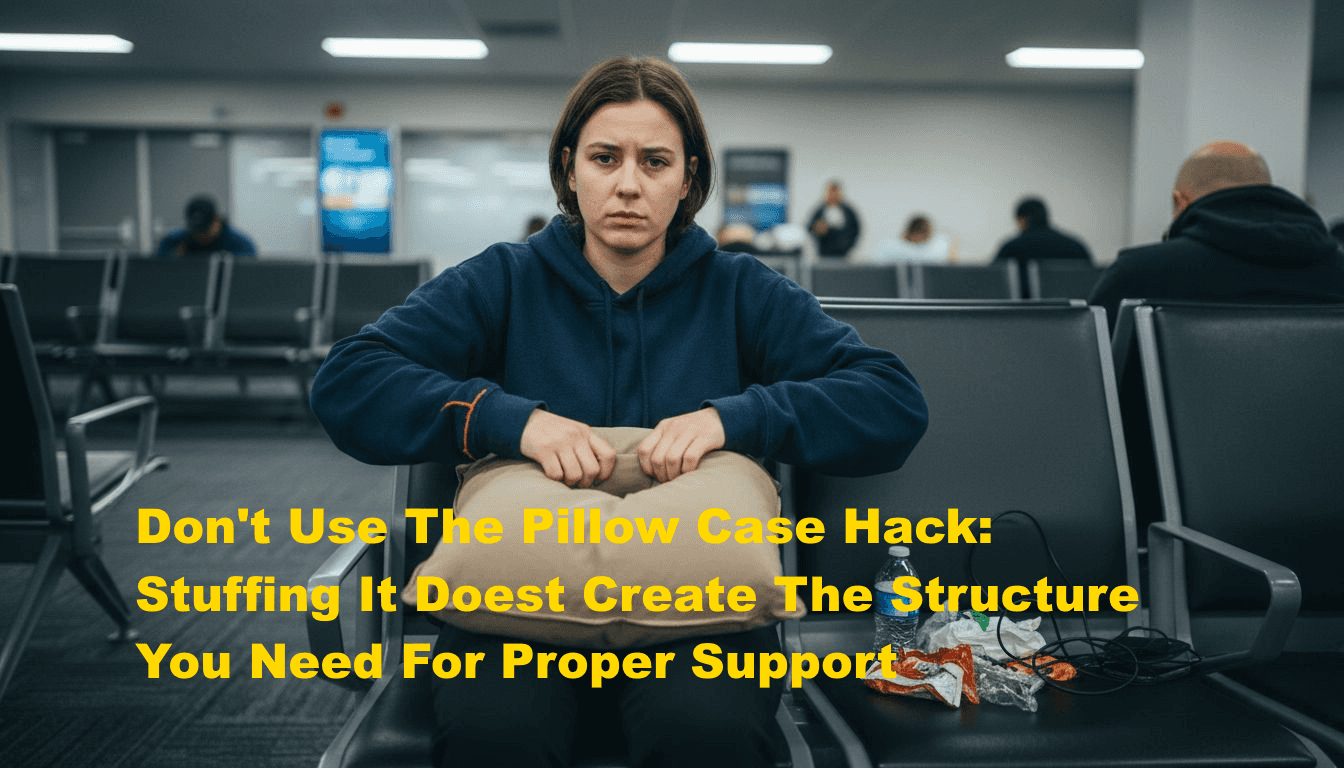
Ignoring your pillow’s specific design reduces effectiveness. Different pillows have different filling capacities and compression methods. Follow manufacturer instructions for best results, as generic packing advice may not suit your specific pillow model. Stuffable travel pillow are designed to hold clothes in a certain manner. Don’t try this with a regular bed pillow case as it will lack the structure required to support you.
Skipping the compression step leaves your pillow loose and floppy, eliminating the firm support that makes clothing-fill pillows effective. Always roll tightly and compress fully, removing as much air as possible to create structured support.
Pro Tip: After packing, let your pillow sit for 5 minutes, then compress again. Clothing often expands slightly after initial compression, and a second squeeze ensures maximum firmness.
Mistakes to avoid:
-
Rushing through the filling process without checking for even distribution
-
Packing clothing you won’t wear, wasting space on unnecessary items
-
Using dirty or damp clothing that creates hygiene issues
-
Failing to test firmness before sealing the pillow
-
Storing the packed pillow where you can’t access it during boarding
Avoiding these errors ensures your packed pillow delivers the comfort and space savings you expect. For deeper insights into why traditional approaches fail, read the truth about travel pillows to understand what separates effective designs from marketing gimmicks.
Expected Comfort Outcomes and Travel Benefits
Understanding realistic results helps you evaluate whether the packing method works for your needs. Properly packed clothing-fill pillows deliver measurable improvements across multiple comfort and convenience factors.
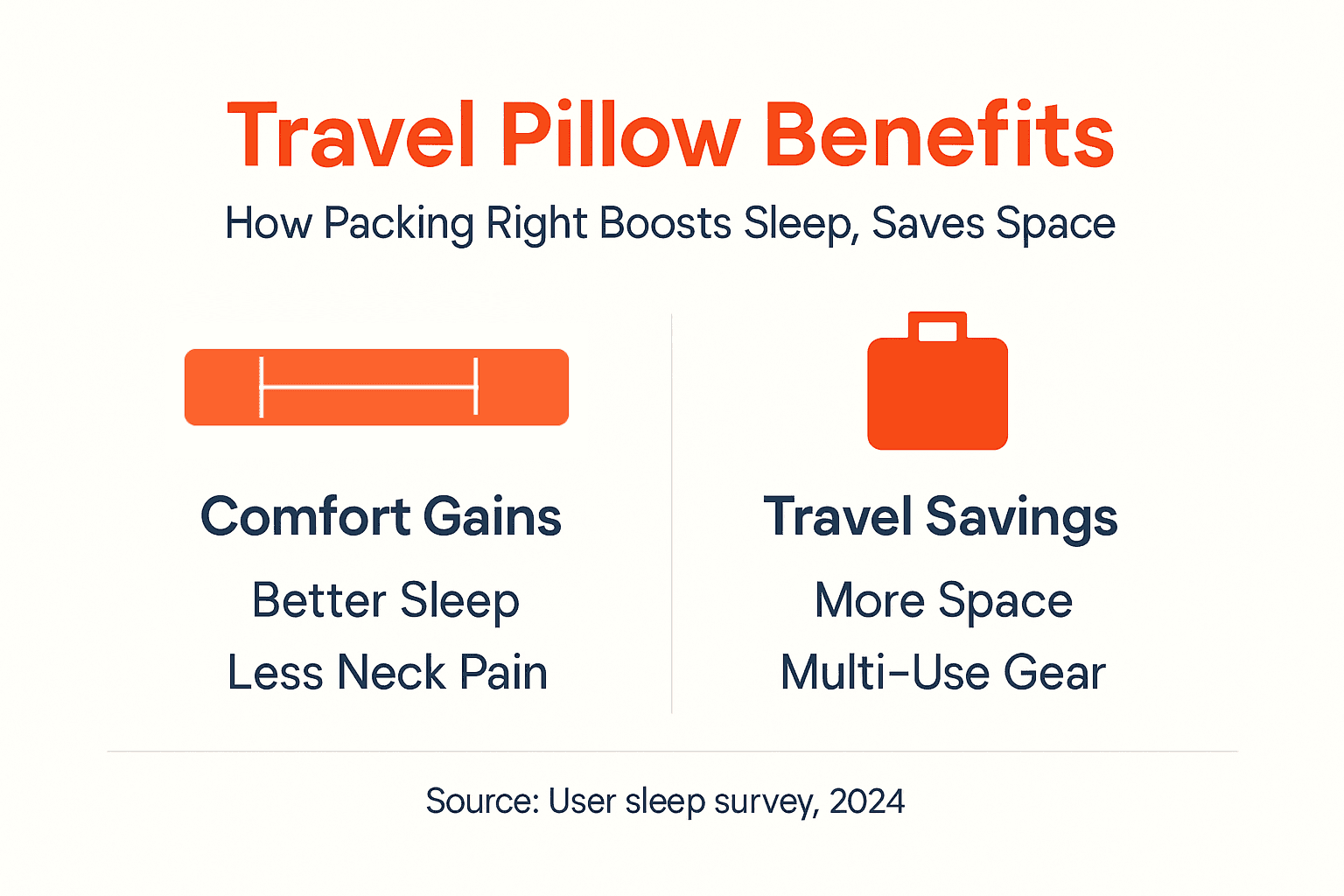
Users report up to 40% longer sleep duration and 30% less neck pain with clothing-fill travel pillows. These numbers reflect real-world testing with economy-class travelers on flights lasting 6 hours or more. The improvement comes from supporting your head, jaw, and chest together, maintaining proper alignment without forcing your neck into uncomfortable positions.
Posture support represents another key benefit. Traditional neck pillows collapse under head weight, causing forward head drop and muscle strain. Clothing-fill pillows maintain their shape throughout the flight, providing consistent support that helps you stay upright without constant readjustment. This steady support reduces the fatigue that comes from fighting to keep your head up while trying to rest.
Space savings matter just as much as comfort. By filling your pillow with clothing you’ll wear at your destination, you effectively eliminate one packing category from your luggage. The roughly 25% space savings compared to traditional bulky pillows can mean the difference between fitting everything in a carry-on or paying checked bag fees.
| Benefit Category | Improvement | Measurement Context |
| Sleep Duration | Up to 40% longer | Flights 6+ hours |
| Neck Pain | 30% reduction | Post-flight surveys |
| Carry-on Space | 25% savings | vs traditional pillows |
| Posture Support | Consistent firmness | Throughout flight |
| Heat Buildup | Reduced airflow restriction | vs neck-wrap designs |
The combination of these benefits creates a noticeably better flight experience. You arrive at your destination more rested, with less neck stiffness, and without having paid extra for checked luggage. The investment of 5 to 10 minutes packing your pillow before departure pays off in improved comfort and convenience throughout your journey.
For economy flyers seeking every possible advantage, explore the full range of ergonomic travel pillow benefits to understand how proper support affects not just sleep, but overall travel wellness.
Alternative Travel Pillow Packing Methods and Their Tradeoffs
Understanding how clothing-fill pillows compare to other options helps you make informed decisions based on your specific travel needs and priorities.
Inflatable pillows offer maximum space savings when deflated, compressing down to nearly nothing in your bag. However, they provide minimal ergonomic support because air compresses easily under head weight, offering little resistance. Puncture risk creates another concern, as a single sharp object in your luggage can render the pillow useless. Inflatable designs work best for occasional travelers who prioritize packing space over comfort quality.
Traditional neck pillows wrap around your neck, focusing support on that single area while ignoring the rest of your upper body. Most designs are bulky, taking up significant carry-on space, and many restrict airflow, causing heat buildup during long flights. The neck-only focus often fails because your head’s weight exceeds what the pillow can support, leading to forward collapse and the exact neck strain these pillows claim to prevent. For detailed analysis of why this approach falls short, see our explanation of why you should avoid neck-based travel pillows.
Clothing-fill pillows balance the advantages of both approaches. They compress smaller than traditional pillows while providing far better support than inflatables. The firm, structured support comes from evenly distributed clothing that maintains shape under pressure, supporting your head, jaw, and chest together. This multi-area support aligns your body naturally without forcing unnatural neck angles.
| Pillow Type | Space Savings | Support Quality | Durability Risk | Best For |
| Clothing-fill | High | Excellent | Low | Regular travelers prioritizing comfort and space |
| Inflatable | Maximum | Poor | Puncture risk | Minimalist packers, short flights |
| Traditional neck | Low | Limited | Medium | Occasional travelers, car travel |
| No pillow | Total | None | N/A | Budget travelers, daytime flights |
Your choice depends on flight duration and personal priorities. Short flights under 3 hours may not justify any pillow at all. Flights between 3 to 6 hours benefit from basic support. Long-haul flights lasting 6 hours or more demand quality ergonomic support that only clothing-fill or premium designed pillows can provide. The space savings and dual functionality of clothing-fill designs make them particularly valuable for international travel where carry-on limits are strict and packing efficiency matters most.
Safety and Usage Tips for In-Flight Comfort
Using your packed pillow safely and effectively ensures you get maximum benefit without discomfort or health issues. These guidelines address the most important considerations for in-flight use.
Avoid overstuffing your pillow, as excessive firmness creates jaw pressure points that cause discomfort during extended use. Your pillow should support your head without pushing your jaw uncomfortably. If you feel pressure on your jaw after 10 minutes of use, remove one clothing item to reduce density.
Maintain airflow around your neck to prevent heat buildup. Unlike neck-wrap pillows that surround your throat and restrict ventilation, properly designed pillows should allow air circulation. Position your pillow to support your head and upper torso without covering your neck completely. This prevents the sweaty, uncomfortable feeling common with traditional designs.
Use your pillow to support natural diagonal resting positions. When seated upright, your body naturally wants to lean slightly to one side. Fighting this instinct causes muscle tension. Instead, position your pillow to support this natural lean, allowing your head to rest comfortably without forcing your neck straight up.
Safety Reminder: Never pack medication, electronics, or valuables inside your travel pillow. Use only clean, dry clothing to prevent hygiene issues and ensure easy security screening.
Store your pillow accessibly in your carry-on so you can retrieve it quickly after boarding. Adjusting your pillow’s position during flight helps prevent stiffness from holding one position too long. Make small adjustments every hour or so, shifting your pillow slightly to redistribute pressure.
Follow airline regulations regarding carry-on items. Most airlines allow travel pillows as personal items separate from your carry-on bag, but policies vary. Verify your specific airline’s rules before departure to avoid gate-check surprises. Keep your pillow clean by washing the cover regularly and only using freshly laundered clothing as fill.
Key safety practices:
-
Test pillow firmness before boarding to ensure comfort
-
Position pillow to support natural body alignment
-
Adjust position periodically during flight
-
Keep pillow cover clean and use fresh clothing only
-
Follow airline carry-on regulations
-
Remove pillow if you experience any jaw pain or discomfort
For comprehensive advice on maximizing rest during flights, review our tips for upright sleeping, which covers positioning strategies that work alongside proper pillow use.
Discover the Best Clothing-Fill Travel Pillow for Your Next Flight
Now that you understand proper packing technique, choosing a pillow designed specifically for clothing-fill use maximizes your results. Bolstie Travel Pillow was created to solve the exact problems this guide addresses: wasted carry-on space and inadequate neck support in economy class. The design supports your natural diagonal resting position by stabilizing your head, jaw, chest, and upper torso together, not just your neck. When empty, it compresses down small. When filled with your clothing, it becomes a firm, structured support that maintains its shape throughout your flight.
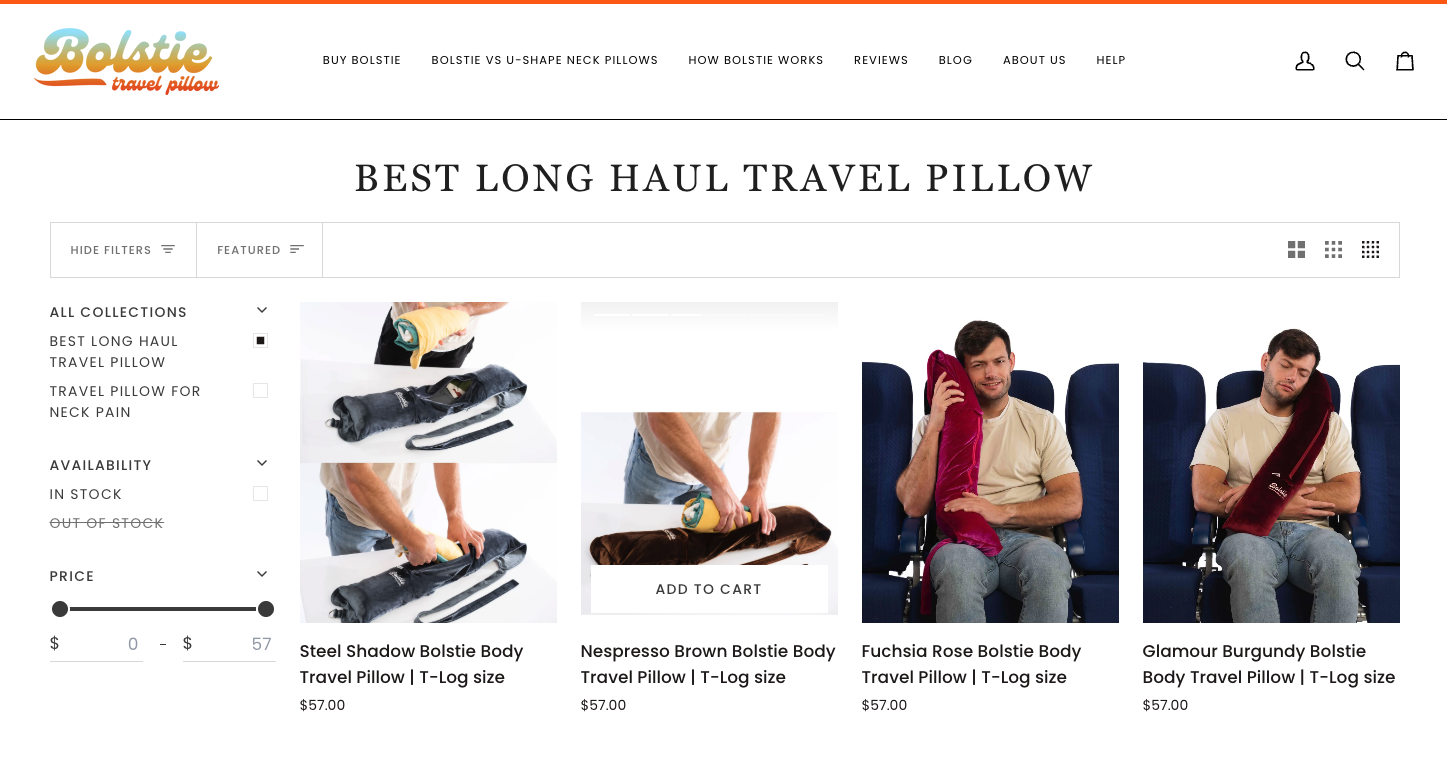
Explore the best neck travel pillow stuffed with clothes to see how proper design transforms packing efficiency and comfort. For travelers seeking options tailored to long flights, browse our collection of the best long haul travel pillow solutions. If you need help deciding which design suits your travel style, our step-by-step pillow selection guide walks you through choosing based on your specific needs.
Frequently Asked Questions
How do I choose the right clothing to fill my travel pillow?
Select soft, lightweight items like t-shirts, thin sweaters, or leggings that compress easily while maintaining structure. Avoid bulky items such as heavy jackets or thick pants that resist compression and create uncomfortable hard spots. Choose clothing you’ll actually wear at your destination to eliminate packing redundancy.
Can I use any travel pillow with the clothing-fill packing method?
Only pillows designed with compressible covers and appropriate interior space work effectively with this method. Standard neck pillows and most inflatable designs aren’t built for clothing fill. Check manufacturer specifications or consult our travel pillow selection guide to identify compatible designs.
How long should I spend packing my travel pillow before a flight?
Allocate 5 to 10 minutes to pack your pillow carefully for optimal results. This time investment ensures even clothing distribution and proper compression, which directly affects comfort during your flight. Rushing through packing creates uneven fill and reduces effectiveness.
What common mistakes should I avoid when packing my travel pillow?
Avoid uneven filling that creates lumps and pressure points. Don’t overstuff your pillow, as excessive firmness causes jaw discomfort and prevents proper compression. Never use bulky clothing that reduces ergonomic support. Always follow rolling and compression guidelines to achieve firm, comfortable packing. For detailed mistake analysis, see our guide on common travel pillow mistakes.
Recommended
-
Step by Step Travel Pillow Selection for Long Flights – BOLSTIE TRAVEL PILLOW
-
Complete Guide to Upright Sleeping During Travel – BOLSTIE TRAVEL PILLOW
-
7 Tips for Upright Sleeping During Travel Comfortably – BOLSTIE TRAVEL PILLOW
-
The Secret to a Great and Amazing Travel Pillow: More Than Just Sleep – BOLSTIE TRAVEL PILLOW

