

Long economy flights test your packing skills like nothing else. You need items that deliver real comfort without eating up precious luggage space or adding weight. This guide walks you through a proven packing checklist designed specifically for economy travelers who want to arrive refreshed, not exhausted. We’ll cover what to bring, how to organize it, and why each item matters for your journey.
Table of Contents
-
Personal Carry-On Survival Kit: Must-Haves For Comfort And Convenience
-
Enhance Your Long Flight Comfort With Bolstie Travel Pillows
Key takeaways
| Point | Details |
|---|---|
| Prioritize smart essentials | Focus on comfort items and versatile layers over excess clothing to maximize limited space |
| Use organizational tools | Packing cubes can still take up space while compression bags don’t reduce the weight. A third alternative that doesn’t cost any money is the Bolstie Packing Method ( fold, stack, roll, & secured with a modified army/ranger roll) |
| Build a carry-on survival kit | Keep comfort essentials like neck support, hydration items, and entertainment within easy reach |
| Choose strategic seating | Window and aisle seats offer distinct advantages for rest and movement during long flights |
| Layer and prep footwear | Slip-on shoes and breathable layers help you adapt quickly to temperature changes and security checks |
Criteria for packing smart for long flights
Before you start throwing items into your bag, you need a framework. Optimal packing for long flights prioritizes comfort and efficiency over everything else. Think about what you actually need during 8, 12, or even 15 hours in the air.
Start by asking yourself these questions:
-
Will this item help me sleep, stay clean, or stay entertained?
-
Can I wear it in multiple situations or temperatures?
-
Does it take up too much space for the value it provides?
-
Can I access it easily without digging through overhead bins?
Comfort beats style on long flights. Your goal is to arrive feeling human, not to impress strangers. Pack items that directly improve your physical comfort, like travel comfort essentials designed for economy seating constraints.
Hygiene matters more than you think. Cabin air dries out your skin and sinuses fast. Entertainment keeps you sane during delays or when you can’t sleep. Organizational tools prevent the stress of hunting for items mid-flight.
The best packers think in systems, not individual items. Group things by when you’ll need them: security line, takeoff, mid-flight, landing. This mental framework transforms random stuff into a strategic survival kit.
Essential clothing and footwear for long-haul flights
Your clothing choices make or break your comfort level. Cabin temperatures swing wildly, sometimes from 65°F to 80°F. You need layers that adapt without bulk.
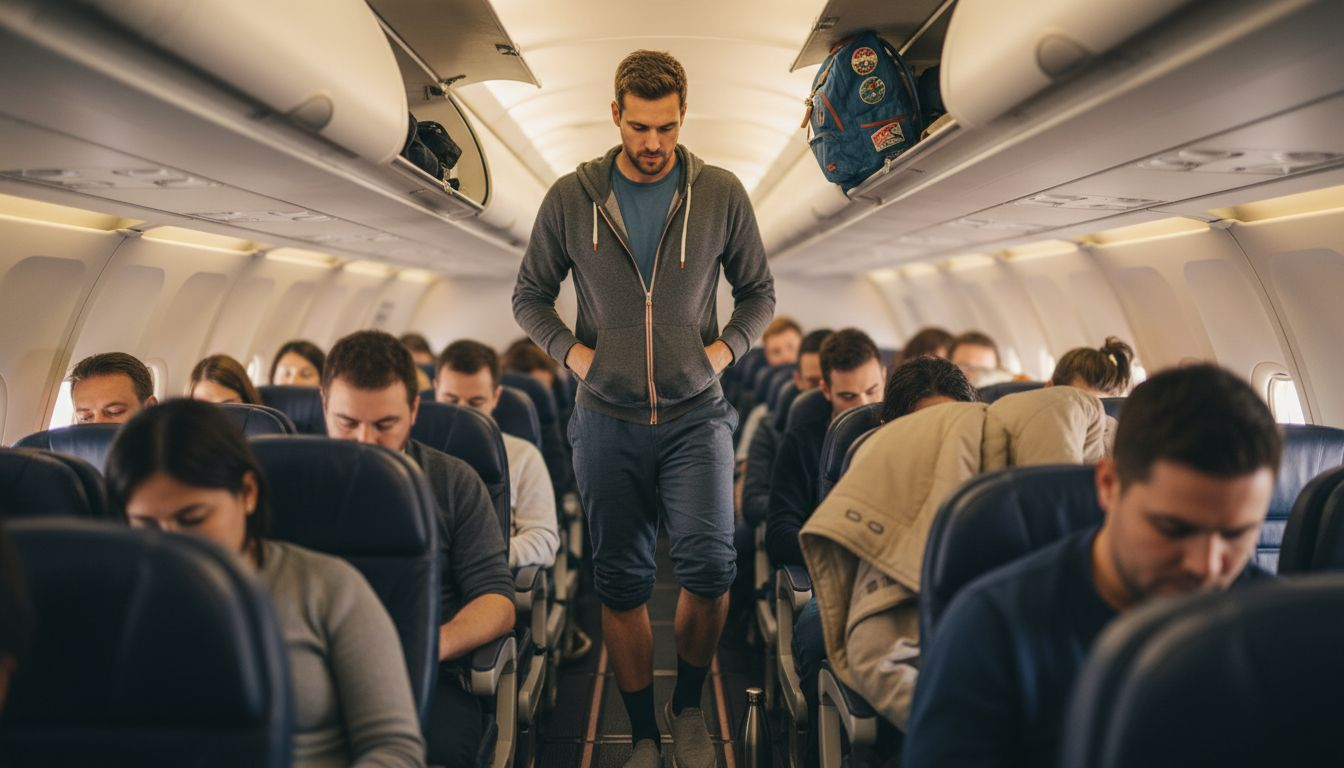
Pack loose, breathable fabrics that resist wrinkles. Cotton blends work better than pure synthetics, which trap sweat. Rolling clothes saves roughly 30% more space compared to folding, and it reduces wrinkles dramatically.
Here’s your core clothing strategy:
-
Base layer: breathable t-shirt or moisture-wicking top
-
Middle layer: long-sleeve shirt or light sweater
-
Outer layer: hoodie or cardigan you can remove easily
-
Bottoms: stretchy pants with elastic waistband, never jeans
-
Socks: compression socks during flight, cozy socks for warmth
Footwear deserves special attention. Wearing comfortable clothing includes shoes you can slip on and off without hands. TSA lines move faster, and your feet will swell during the flight. Slip-on sneakers or comfortable loafers beat lace-up boots every time.
Compression socks improve circulation on flights over 6 hours, reducing swelling and DVT risk. Wear them during the flight, then switch to regular cozy socks once you’re settled. Your ankles will thank you.
Pro Tip: Wear your bulkiest items through security to save luggage space. That hoodie and sneakers don’t count against your bag weight if they’re on your body.
Research shows that lightweight, versatile layers significantly reduce luggage weight, which is critical when every pound matters in economy class. Skip the extra outfit. You can rinse basics in a hotel sink if needed. Focus on items that serve multiple purposes and climates. For more guidance on resting comfortably during your journey, explore how to sleep while traveling.
Packing tools and organization strategies
Random packing leads to chaos. Smart organization transforms your luggage into an efficient system where everything has a place and purpose.
Packing cubes separate items by category or family member. Assign each person a color to eliminate confusion when everyone’s digging through shared bags. Electronics in one cube, toiletries in another, clothing in a third.
Compression bags deliver serious space savings. Independent tests show compression bags reduce volume by up to 50% for soft items like sweaters and jackets. Roll the air out, seal it, and watch your suitcase capacity double.
A third alternative is the Bolstie Packing Method. You fold, stack, roll, and enclose each bundle with a modified army/ranger roll. Everything within the bundle stays together and nothing can fall out. When you place them into your carry-on, the tension between the rolls actually lock them into place so it’s keeps the roll from falling out. It’s a unique approach and it’s cost nothing.
| Tool | Best Use | Space Saved |
|---|---|---|
| Packing cubes | Organization, quick access | 15-20% |
| Compression bags | Bulky soft items | 40-50% |
| Bolstie Packing Method | Organization, eco-friendly | 50-60% |
| Shoe bags | Protect clean clothes | Minimal |
Organize by priority, not just by type. Keep items you’ll need during the flight in your personal bag, not buried in overhead storage. Think about the last time you climbed over seatmates to grab something. Not fun.
Limit yourself to one carry-on and one personal item. More bags mean more hassle at security, boarding, and baggage claim. You’ll move faster through airports and reduce stress significantly.
Pro Tip: Pack a complete outfit in your carry-on if you’re checking bags. Lost luggage happens, and having fresh clothes for day one saves your trip if your main bag goes missing.
For travelers seeking even smarter space solutions, consider packing cube alternatives like clothing-fillable pillows that eliminate dead space entirely. If you want to explore sustainable packing methods, check out eco-friendly organization options that reduce environmental impact, such as the Bolstie Packing Method
Personal carry-on survival kit: must-haves for comfort and convenience
Your personal item bag is your lifeline during the flight. Pack it strategically with items you’ll actually use, not things you might need.
Essential items for long flights include a head/body travel pillow, snacks, medications, earplugs, sleep mask, neck pillow, cozy socks, skincare kit, power cords, adapter, and entertainment devices. Notice what’s missing from that list: things you can’t use on a plane.
Break down your survival kit into categories:
-
Sleep and comfort: head/body travel pillow, eye mask, earplugs, light blanket
-
Hydration and skincare: lip balm, face moisturizer, hand lotion, empty water bottle
-
Entertainment: fully charged tablet or e-reader, headphones, downloaded content
-
Health essentials: prescription meds, pain relievers, motion sickness remedies
-
Snacks: protein bars, nuts, dried fruit (nothing smelly or messy)
-
Tech support: charging cables, portable battery, outlet adapter
Skip the fancy travel pillow that wraps around your neck. Most travel neck pillows are useless; they collapse under head weight or restrict airflow. Look for options or structured designs that actually support your upper body and your head.
Cabin air is brutally dry, with humidity around 10-20%. Your skin, eyes, and sinuses will feel it within hours. Pack a small toiletries bag with lip balm, moisturizer, and eye drops. Skip the heavy bottles; transfer products into TSA-approved containers.
Keep your charging setup simple but complete. Bring cables for every device, plus a portable battery pack. Some economy seats lack power outlets, and airports gates fill up fast. A fully charged battery pack means you’re never hunting for outlets during layovers.
Pro Tip: Download entertainment before you leave home. In-flight WiFi costs money and runs slowly. Offline movies, podcasts, and books give you hours of reliable entertainment without depending on airline systems.
For a complete breakdown of comfort essentials, review this travel comfort checklist designed specifically for economy-class long-haul flights.
Choosing the best seat and practical in-flight tips
Your seat choice dramatically affects your comfort level. Economy doesn’t offer luxury, but some seats beat others significantly.
Window seats give you control over the shade and a wall to lean against for sleeping. Strategic seat selection significantly improves comfort; windows offer environment control while aisles ease movement. You won’t get bumped by passing carts or people heading to lavatories.
Aisle seats provide easy access for stretching, bathroom trips, and overhead bin access. Choose this if you need to move around frequently or have a small bladder. The trade-off is less privacy and more interruptions.
Middle seats are universally disliked. No window, no easy aisle access, and you’re sandwiched between strangers. Avoid these unless you’re traveling with companions and want to sit together. As for comfort, the right head/body travel pillow is essential.
Exit row seats offer precious extra legroom but often lack recline. Check your airline’s seat map carefully before selecting. Some exit rows are near galleys or lavatories, which means noise and traffic all flight long.
| Seat Type | Pros | Cons | Best For |
|---|---|---|---|
| Window | Privacy, wall to lean on, shade control | Trapped for bathroom trips | Sleepers, introverts |
| Aisle | Easy access, legroom, freedom to move | Cart bumps, less privacy | Frequent movers, tall people |
| Exit row | Extra legroom, easier standing | Often no recline, responsibility | Tall travelers, those needing space |
| Middle | None | Squeezed, no benefits | Last resort, flying with companions |
Once you’re seated, adopt smart habits that improve your experience:
-
Buckle your seatbelt over blankets so crew can see it during turbulence checks without waking you
-
Keep shoes on after takeoff but keep socks on for hygiene and warmth
-
Set your watch to destination time immediately to start adjusting
-
Stand and stretch every 2 hours to maintain circulation
-
Stay hydrated but limit alcohol, which dehydrates you faster at altitude
Wear layers you can adjust without standing up. Cabin temperature control is unpredictable. One minute you’re freezing, the next you’re sweating. Zip hoodies and cardigans let you adapt instantly.
Pro Tip: Slip-on shoes make bathroom visits and security checks effortless. You’ll be taking shoes on and off multiple times during your journey. Make it easy on yourself.
For comprehensive strategies on maximizing economy-class comfort, read this guide on surviving long-haul flights in economy.
Enhance your long flight comfort with Bolstie travel pillows
Even with perfect packing, long flights demand proper support for genuine rest. Bolstie travel pillows address the core problem traditional neck pillows ignore: supporting your entire upper body, not just your neck.
Unlike wrapping designs that collapse under weight, Bolstie stabilizes your head, jaw, chest, and torso together. This maintains your natural diagonal resting position without forward head drop or neck strain. The design allows airflow, reducing heat buildup during long wear.
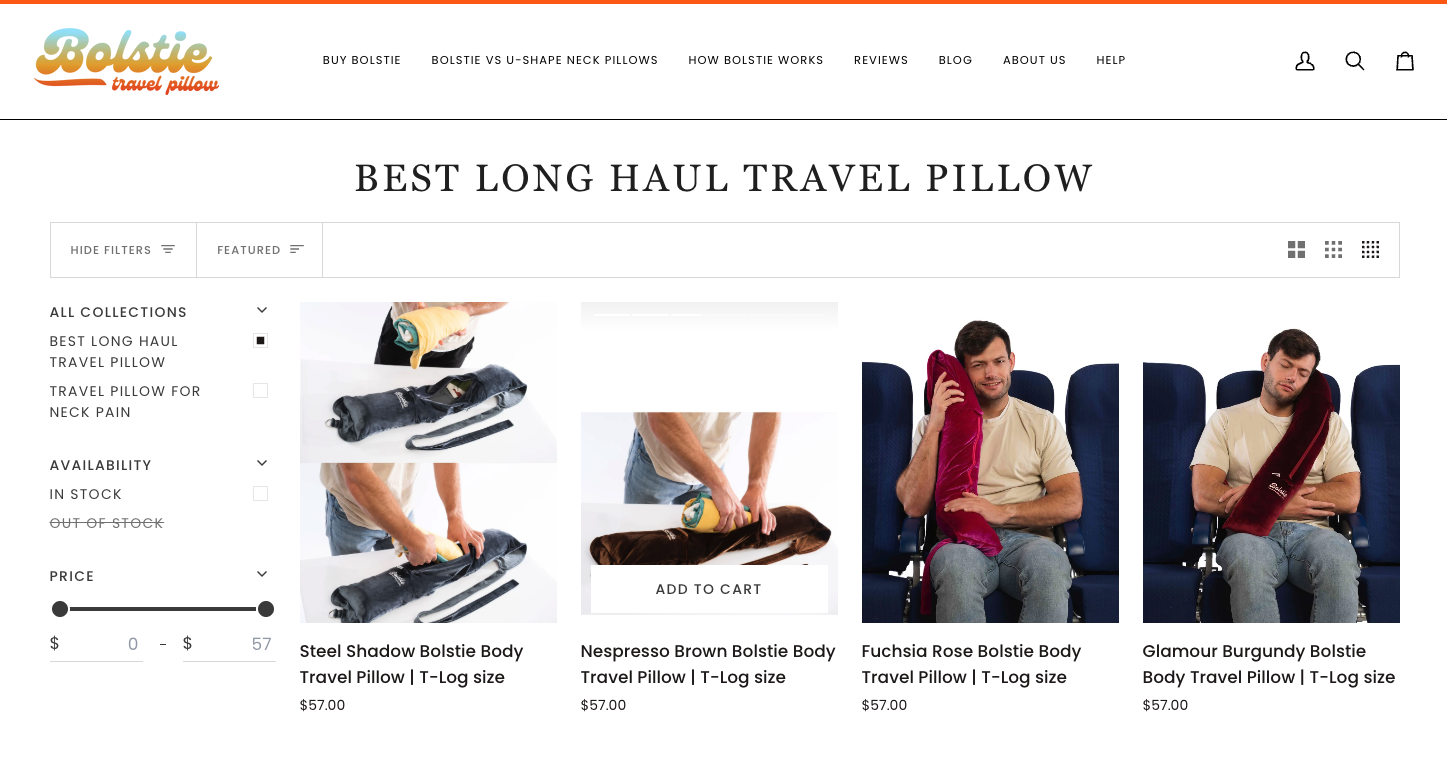
What makes Bolstie uniquely practical for economy travelers is its dual function. Empty, it compresses small. Filled with clothing, it becomes a firm support pillow while doubling as a packing cylinder. You save carry-on space, eliminate bulky pillows, and pack smarter without sacrificing comfort. Browse the complete range of Bolstie travel comfort solutions designed specifically for economy-class constraints and long-haul flight challenges.
FAQ
What are must-have comfort items to pack for a long flight?
Comfort items like a structured neck pillow, earplugs, sleep mask, and compression socks reduce fatigue significantly during long flights. Include a lightweight scarf or blanket for temperature control and skincare items like lip balm and moisturizer to combat cabin air dryness.
How can I save space and stay organized in my luggage?
Use packing cubes to separate items by category or family member, and compression bags to reduce bulky items by up to 50%. Rolling clothes instead of folding saves roughly 30% space and minimizes wrinkles. Color-coding cubes helps families locate belongings quickly without unpacking everything.
Which seats are best for comfort on long economy flights?
Window seats provide privacy and a surface to lean against for sleeping, while aisle seats offer easy movement access. Middle seats lack advantages and should be avoided when possible. Exit rows provide extra legroom but sometimes lack recline, so check seat maps carefully before selecting.
What should I include in my carry-on bag for a long flight?
Pack medications, healthy snacks, a quality neck pillow, entertainment devices with downloaded content, and essential toiletries. Include items for hydration and dryness like lip balm, moisturizer, and an empty water bottle. Keep charging cables, portable battery, and outlet adapters easily accessible for devices.
Recommended
-
Step by step travel comfort: 50% less stress & neck strain – BOLSTIE TRAVEL PILLOW
-
How to Sleep Comfortably on Planes for Long Flights – BOLSTIE TRAVEL PILLOW
-
7 Essentials for Your Travel Comfort Checklist 2026 – BOLSTIE TRAVEL PILLOW
-
Travel Pillow Packing Guide: Boost Sleep Comfort 40% – BOLSTIE TRAVEL PILLOW
-
How to Travel with Cork Bags for Eco-Friendly Journeys – The Cork Store
-
7 Onmisbare ondersteunende accessoires stoel voor meer comfort – Finlandic

