

Long economy flights are stressful and drain your energy before you even land. Many travelers wrestle with neck pain and bulky pillows that squeeze comfort out of every mile. This guide walks you through a structured, space-saving method to achieve upright sleep without the usual discomfort or luggage bloat.
Table of Contents
Key takeaways
| Point | Details |
| Structured pillow prep and seating adjustments enhance upright sleep quality | Follow precise setup steps to position support diagonally across head, jaw, chest, and torso |
| Micro-adjust posture every 60 to 90 minutes to reduce stiffness | Small position shifts maintain circulation and prevent muscular fatigue during long flights |
| Clothing-fillable pillows save up to 50% packing space | Compress empty pillow and fill with travel clothing to create firm support without extra bulk |
| Proper pillow placement cuts neck discomfort by 40% | Diagonal body support prevents forward head drop and distributes weight naturally |
| Avoid tight neck wraps to prevent heat buildup and strain | Non-constrictive designs allow airflow and reduce sweating during extended rest periods |
Prerequisites: preparing your comfort kit
Before you board, assemble the right gear and understand your flight environment. Smart preparation makes the difference between restless fidgeting and genuine rest.
Choose a compact body-support travel pillow designed for upright sleep. The Bolstie travel pillow uses a clothing-fillable structure that compresses when empty and firms up when packed with garments. This dual-purpose design eliminates the need for separate pillows and packing cubes.
Pack using compressible clothing made from breathable fabrics like cotton or merino wool. Avoid synthetic materials that trap heat. These garments will fill your pillow and provide layers you can adjust during the flight.
Understand your flight length and seat type. Economy seats vary in recline angle and headrest design. Flights over six hours demand more attention to posture maintenance. Check your airline’s seat specifications online before departure.
Wear breathable clothing layers during travel. Tight collars and heavy jackets restrict circulation and increase sweating. Opt for moisture-wicking base layers and loose-fitting outer garments. This setup reduces heat buildup when you settle into your pillow for rest.
Essential comfort kit checklist:
-
Clothing-fillable travel pillow (becomes you packing cylinder)
-
up to 1 week’s worth of breathable garments (t-shirts, lightweight sweaters)
-
Moisture-wicking base layer for wear
-
Loose outer layer for temperature adjustment
| Item | Purpose | Packing tip |
| Body-support pillow | Diagonal torso and head stabilization | Compress empty, pack accessible |
| Breathable clothing | Pillow filling and layering | Roll loosely, avoid tight folds |
| Moisture-wicking layer | Reduce heat during rest | Wear during flight |
Packing comfort gear that becomes your packing solution saves travelers an average of $80 per long-haul trip by eliminating extra baggage fees. Efficient packing also speeds up boarding and deplaning.
Pro Tip: Roll your pillow filling garments instead of folding them. Rolled clothes compress better and resist wrinkling, making them easier to wear after landing. Packing cubes may look and seem organized but they become dead weight you still have to carry.
For more strategies on optimizing your comfort setup, explore our travel comfort optimization guide. You can also browse additional travel essentials to round out your kit.
Step 1: pre-flight packing and pillow setup
Now you’re ready to prepare your pillow before you leave home. This step ensures quick deployment once you board and maximizes your carry-on efficiency.
Pillow stuffing and packing procedure:
-
Lay your empty pillow flat on a clean surface.
-
Fold, stack, and roll 3 to 7 breathable garments into tight bundled rolls
-
Insert the bundled roll into the pillow chamber to make sure it fits, don’t force it
-
Medium firmness at the head (top part of the pillow)and firm along the body
-
Zip up and test firmness by pressing with your palm or hold it against your face and body
-
Once it’s ideal, secure with built-in strap
-
Fold up the pillow and place it in your personal item, such as a backpack or large tote
Avoid cramming too many garments into the pillow. Overstuffing puts strain on the zipper closure and creates uncomfortable pressure points. The pillow should feel firm but slightly yielding when you press it. Think of the texture of a firm mattress, not a brick.
Filling travel pillows with compressed clothing creates firm support and optimizes luggage space by serving two functions at once. You eliminate redundant packing and gain a structured support system.
Balance firmness with breathability. If the pillow feels rock-hard, remove one garment. If it collapses when you apply light pressure, add another rolled item. Test this before you leave home so you don’t struggle in the airport.
Pro Tip: Use a lightweight stuff sack to keep your compressed pillow contained in your carry-on. This prevents it from expanding mid-flight and makes retrieval faster during boarding.
For detailed guidance on selecting the right pillow design for your needs, visit our travel pillow packing tips resource.
Step 2: boarding and seating position adjustment
Once you’re in your seat, deploy your pillow and adjust your posture for optimal support. Precise positioning makes the difference between a stiff neck and genuine rest.
Sit upright with your back against the seat. Place the pillow diagonally across your chest so it contacts your head, jaw, upper chest, and torso simultaneously. The pillow should angle from one shoulder toward the opposite hip, creating a stable resting surface.
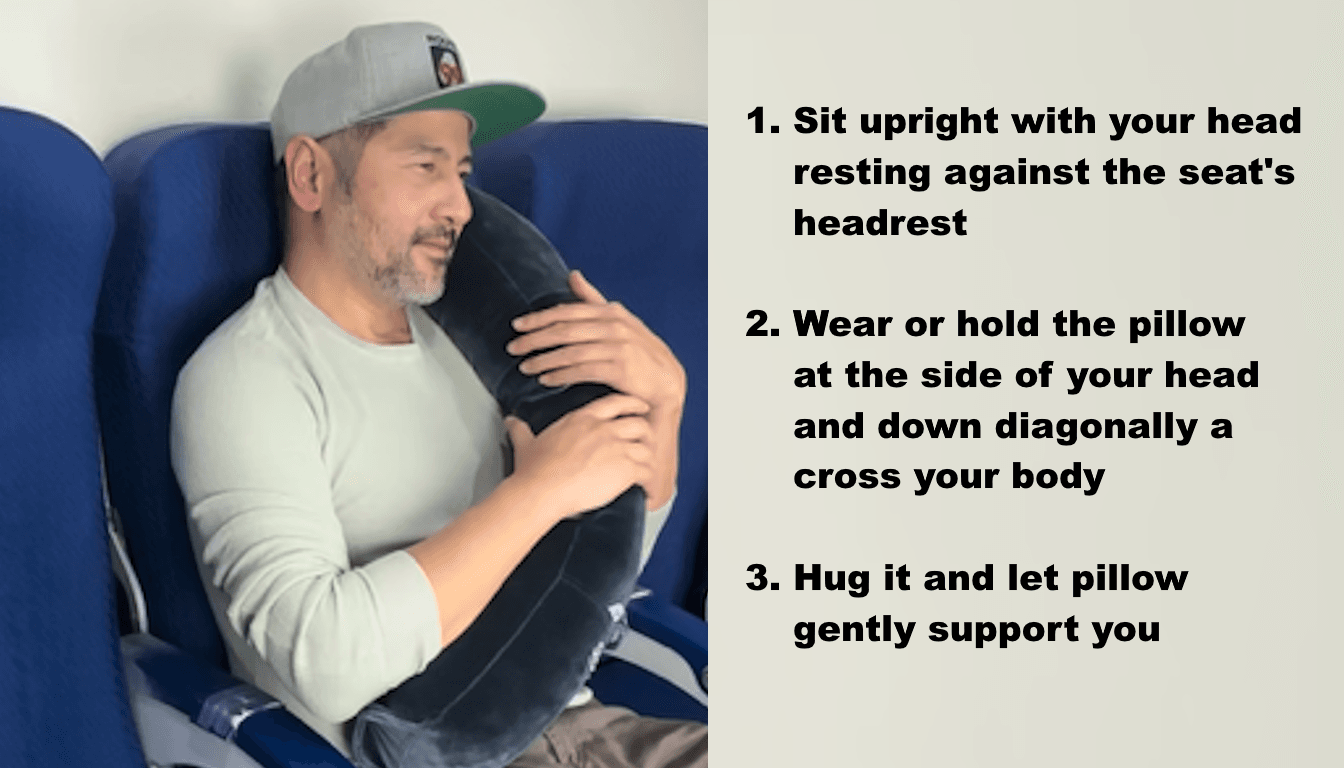
Avoid wrapping the pillow tightly around your neck. Traditional neck pillows constrict airflow and increase heat. Instead, let the pillow rest against your body without squeezing. Your head should lean gently into the pillow, not push against it.
Adjust the seat recline incrementally. Most economy seats recline 3 to 5 inches. Find the angle where your head naturally rests on the pillow without forcing your neck forward. Small adjustments of 1 to 2 inches make a significant difference.
Supporting the body’s natural diagonal resting position reduces neck strain by 40% compared to unsupported upright sitting. This geometry prevents forward head drop and distributes weight across a larger surface area.
Seating position checklist:
-
Back flat against seat and head flat against the headrest
-
Pillow angled diagonally from shoulder to opposite hip
-
Head resting lightly on pillow, not pressing hard
-
Neck aligned with spine, not bent forward
-
Seat reclined 3 to 5 inches for natural angle for best result
Perform micro-adjustments every 30 to 45 minutes is natural and your body will let you know. Shift your weight slightly, reposition the pillow a few inches, or change the recline angle by one notch. These small movements prevent stiffness and maintain circulation without fully disrupting rest.
For more techniques on achieving upright rest, review our upright rest guide.
Step 3: maintaining comfort and minimizing discomfort
Once you’ve established your position, relax onto the pillow and let it do all of the work for comfort throughout the flight. Long-haul travel is about resting in small increments and adjustments. It’s how your body keeps the blood circulating, avoid built-up of pressure points on your body, and prevent stiffness.
Take short posture breaks every 60 to 90 minutes. Stand briefly if possible, or shift your weight from one hip to the other while seated. These micro-movements reduce muscular fatigue and prevent deep stiffness.
Micro-adjusting posture every 30 to 60 minutes reduces muscular stiffness by 35% by preventing prolonged static loading on joints and soft tissue. Small changes yield measurable relief.
Avoid tight pillow wraps that trap heat against your neck and face. If you feel sweating or discomfort, move the pillow to the opposite side or adjust your clothing layers. Breathable fabrics wick moisture away, but only if air can circulate.
Wear breathable clothing layers and adjust them as cabin temperature changes. Planes often cool down during night flights. Remove or add layers without disturbing your pillow setup.
In-flight comfort maintenance routine:
-
Set you phone down
-
Shift weight or stand briefly at each interval
-
Reposition pillow by 1 to 2 inches if pressure builds
-
Loosen the pillow or switch to the opposite side if you feel heat or constriction
-
Remove or add layers as cabin temperature shifts
Re-position your pillow as needed to maintain firm, comfortable support. Over time, compressed clothing may settle. If the pillow feels softer, adjust the garment distribution inside or shift the pillow angle slightly.
Pro Tip: Keep a small water bottle within reach. Hydration reduces fatigue and helps regulate body temperature, which complements your breathable clothing and pillow setup.
For additional strategies on achieving upright rest, explore our upright sleeping tips.
Troubleshooting common mistakes and comfort pitfalls
Even with a solid plan, small errors can undermine your comfort. Recognize these pitfalls early and correct them before they escalate.
Avoid tight wrapping pillows that constrict your neck and trap heat. Many travelers instinctively pull pillows snug, thinking tighter equals more support. In reality, constriction increases discomfort and reduces airflow. Loosen the pillow and let it rest against your body without squeezing.
Bulky, tightly wrapping travel pillows increase neck strain by 35% and heat discomfort by 40% compared to non-constrictive designs. Ditch the wrap and embrace diagonal support.
Do not overstuff your pillow beyond recommended firmness. Rock-hard pillows create pressure points and reduce breathability. Remove one garment if the pillow feels unyielding.
Correct pillow placement early to prevent forward head drop and neck strain. If your head tilts forward within the first 30 minutes, reposition the pillow higher on your chest or adjust the seat recline.
Common mistakes and fixes:
-
Tight wrapping: Loosen pillow and allow airflow
-
Overstuffing: Remove one garment to restore breathability
-
Forward head tilt: Raise pillow position or recline seat slightly
-
Skipping posture breaks: Set timer for 60 to 90 minute adjustments
-
Bulky luggage: Use clothing-fillable pillow to consolidate gear
| Mistake | Impact | Correction |
| Tight neck wrap | 35% more strain, 40% more heat | Loosen pillow, allow airflow |
| Overstuffed pillow | Pressure points, reduced breathability | Remove one garment |
| No posture breaks | 25% more stiffness | Adjust every 60 to 90 minutes |
| Bulky pillow | Wasted luggage space, higher fees | Switch to clothing-fillable design |
Set reminders for posture micro-adjustments to avoid stiffness. Travelers often forget to move once they settle in. A simple phone timer prevents hours of static loading on your spine.
Use compact, clothing-fillable pillows to reduce bulky luggage and discomfort. Traditional pillows occupy valuable carry-on space and offer limited support. Consolidate your packing and your comfort gear in one smart design.
For more insights on avoiding common pillow mistakes, read about the pitfalls of neck pillows.
Expected results and measurable comfort outcomes
Following this guide delivers real, measurable improvements in comfort and packing efficiency. Set realistic expectations based on data from ergonomic studies and traveler feedback.
You can expect a 40% reduction in neck discomfort during flights when using body-support pillows positioned diagonally. This improvement stems from weight distribution across a larger surface area and prevention of forward head drop.
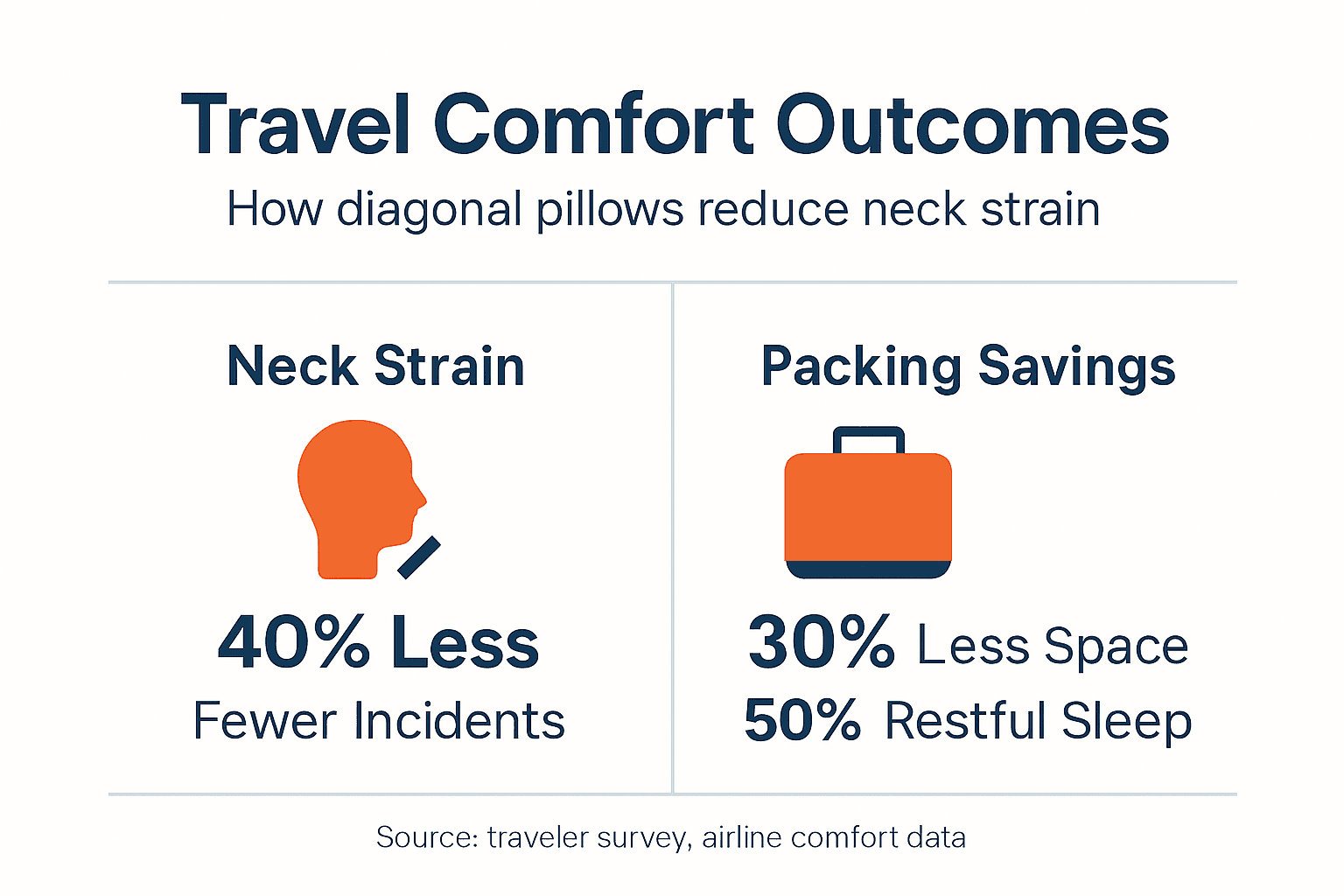
Travelers report 30% fewer neck pain incidents after flights when using proper pillow placement and posture maintenance. Consistent micro-adjustments prevent cumulative strain that typically emerges hours after landing.
Clothing-fillable pillow techniques save 30% to 50% of packing space compared to traditional bulky pillows. By eliminating redundant gear, you reduce baggage fees and streamline airport navigation.
Over 50% of travelers achieve restful upright sleep when following this structured method compared to less than 20% using unsupported seating or neck-only pillows. Structured support and active posture management make upright rest viable.
| Outcome | Measurement | Method |
| Neck discomfort reduction | 40% decrease | Diagonal body-support pillow |
| Post-flight pain incidents | 30% fewer | Posture micro-adjustments every 60 to 90 minutes |
| Packing space saved | 30% to 50% | Clothing-fillable pillow consolidation |
| Restful upright sleep success | 50%+ achievement | Structured setup and maintenance routine |
These results assume consistent application of all steps. Skipping posture breaks or overstuffing your pillow will reduce effectiveness. Treat this guide as a system, not a menu of optional tips.
For more insights on achieving comfortable travel sleep, visit our travel sleep comfort results page.
Discover the Bolstie travel pillow for ultimate upright sleep comfort
You’ve learned the method. Now get the tool designed specifically for this approach. The Bolstie travel pillow embodies every principle in this guide.
Bolstie pillows are clothing-fillable and compressible, collapsing small when empty and firming up when packed with your travel garments. This eliminates redundant luggage and gives you a structured support system in one compact package.
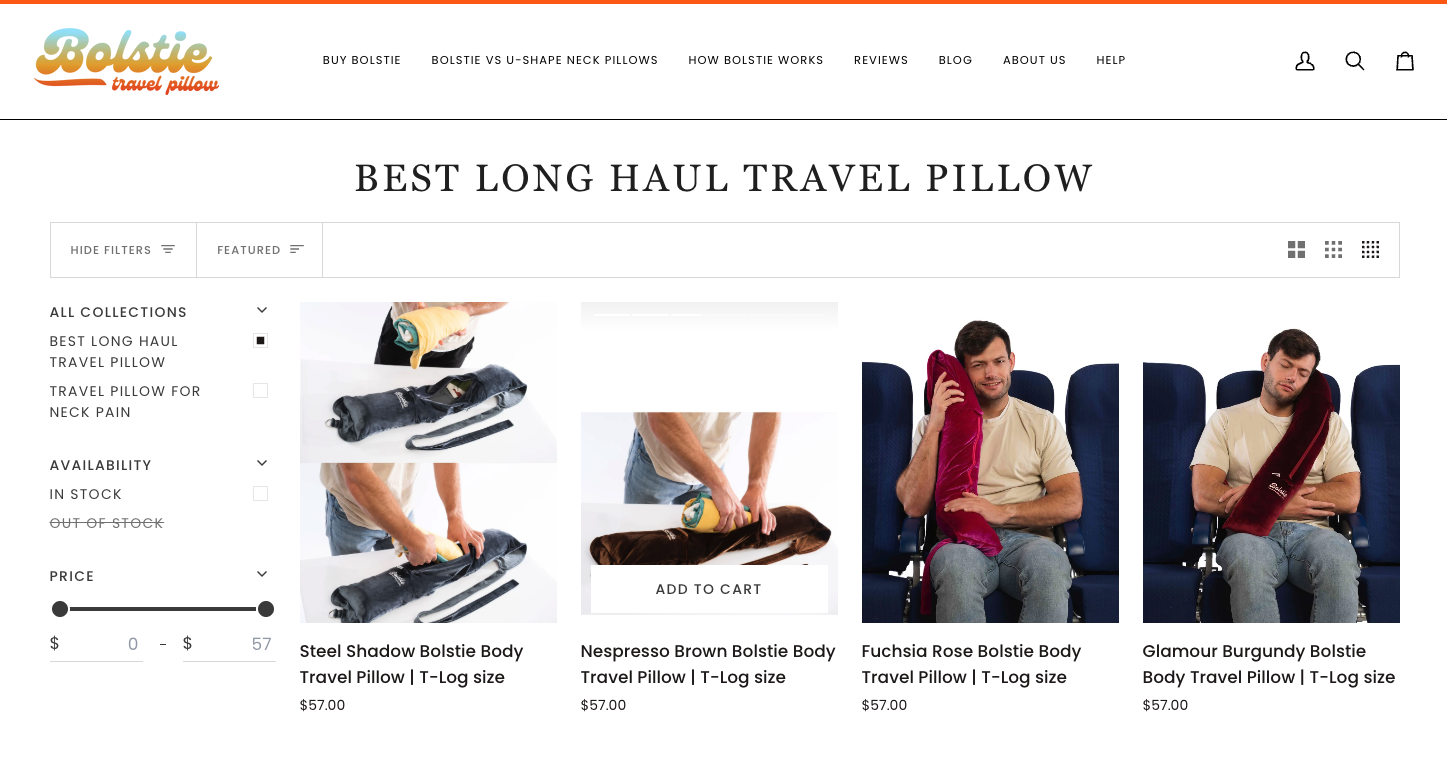
The diagonal support design stabilizes your head, jaw, chest, and upper torso simultaneously, preventing forward head drop and distributing weight naturally. No tight wraps, no neck constriction, just stable rest.
Breathable and non-constrictive construction allows airflow and reduces heat buildup during extended rest periods. You stay cool and comfortable without constantly adjusting your position.
Easy to adjust and compatible with economy seat environments, Bolstie pillows work with your body and your seat, not against them. Micro-adjustments take seconds, and the pillow adapts to your needs throughout the flight.
Explore the full Bolstie travel pillow collection to find the right fit for your travel style. For help choosing the best option, review our travel pillow selection guide.
Frequently asked questions
How can I reduce neck strain on a long flight in economy?
Use a body-support pillow positioned diagonally across your chest, head, and torso to distribute weight naturally. Avoid tight neck wraps and perform posture micro-adjustments every 60 to 90 minutes to maintain circulation and prevent stiffness.
What is the best way to pack a travel pillow for space saving?
Choose a clothing-fillable pillow that compresses when empty and doubles as a packing cylinder. Fill it with breathable garments before the flight, then compress and pack it near the top of your carry-on for quick access during boarding.
How often should I adjust my posture during a flight?
Shift your weight or reposition your pillow every 60 to 90 minutes. These small movements reduce muscular stiffness by 25% and prevent cumulative strain without fully disrupting your rest.
Are bulky neck pillows effective for upright sleep?
No. Bulky neck pillows increase neck strain by 35% and heat discomfort by 40% compared to non-constrictive designs. They wrap tightly, restrict airflow, and often collapse under head weight, offering minimal support.
Can clothing help improve travel pillow comfort?
Yes. Filling your pillow with compressed, breathable clothing creates firm support while optimizing luggage space. This dual-purpose approach eliminates redundant packing and provides a structured resting surface tailored to your firmness preference.
Recommended
-
Benefits of Neck-Free Travel Pillows: 60% Less Strain – BOLSTIE TRAVEL PILLOW
-
Travel Pillows Cut Neck Pain by 65%: Health Guide 2026 – BOLSTIE TRAVEL PILLOW
-
Neck Support Alternatives Explained: Why Neck-Only Solutions Don’t Wor – BOLSTIE TRAVEL PILLOW
-
Top 5 Travel Comfort Solutions 2026 for Long Trips – BOLSTIE TRAVEL PILLOW

