

Economy-class seats weren’t designed for sleep. 65% of frequent flyers report neck pain linked to inadequate support during flights. The right travel pillow can transform your comfort by supporting your body’s natural posture, reducing strain, and helping you rest upright without the forward head drop that plagues most travelers. This guide explains how ergonomic travel pillows protect your neck and upper back health, debunks common myths about pillow design, and offers practical advice for choosing support that actually works during long-haul flights.
Table of Contents
-
Understanding Neck and Upper Back Pain in Economy-Class Travel
-
Comparing Travel Pillow Designs: Features That Matter for Health
-
Summary: Enhancing Health and Comfort on Long-Haul Flights with Travel Pillows
Key Takeaways
| Point | Details |
| Neck pain affects 65% of frequent flyers | Poor support in economy seating causes widespread discomfort during flights. |
| Multi-point pillows reduce strain by 40% | Supporting head, jaw, chest, and torso together cuts muscle tension significantly. |
| Traditional pillows fail 55% of users | Neck-only designs often collapse or restrict airflow, reducing effectiveness. |
| Non-restrictive designs boost sleep 20% | Breathable pillows that don’t wrap the neck improve rest duration and quality. |
| Proper pillow choice enhances posture | Ergonomic support maintains neutral spine alignment during upright sleep. |
Understanding Neck and Upper Back Pain in Economy-Class Travel
Your neck wasn’t built to hold your head at awkward angles for hours. Yet that’s exactly what happens when you try sleeping upright in economy seating. Forward head posture increases cervical spine loading by up to 3x compared to neutral posture, creating enormous stress on neck muscles and vertebrae.
Limited seat recline compounds the problem. When your head is pushed forward by 2 to 4 inches, your head has nowhere to rest comfortably. Cramped legroom forces your body into compressed positions that pull your shoulders forward and your head down. These biomechanical stresses explain why most economy travelers wake with stiff necks and upper back tension.
“The combination of restricted movement, limited recline, and inadequate head support creates a perfect storm for musculoskeletal discomfort during flights lasting more than 4 hours.”
Three primary factors drive neck pain during flights:
-
Unsupported head weight creating downward pull on cervical muscles
-
Forced forward posture from cramped seating compressing the spine
-
Muscle fatigue from maintaining static positions without proper stabilization
Understanding these causes of neck pain in economy-class travel reveals why choosing the right support matters. Your pillow needs to work with your body’s natural geometry, not against it. Generic neck pillows often ignore the interconnected nature of head, jaw, chest, and torso positioning, leaving gaps in support that let pain develop over hours of travel.
How Travel Pillows Support Natural Body Posture
Effective travel pillows don’t just cushion your neck. They create a support structure that holds multiple body points in proper alignment simultaneously. When your head, jaw, chest, and upper torso receive coordinated support, your muscles can relax instead of working constantly to keep you from toppling forward.
Multi-point support pillows reduce neck muscle strain by 30 to 40% compared to unsupported upright sleeping. This happens because distributing support across several contact points prevents any single muscle group from bearing excessive load. Your sternocleidomastoid muscles, trapezius, and deep cervical flexors all benefit when a pillow stabilizes your diagonal resting position naturally.
Traditional neck-only pillows often fail because they address just one piece of the posture puzzle. A U-shaped pillow might cushion your neck, but it does nothing to prevent your head from dropping forward as you drift off. Without chest or torso support, gravity pulls your head down, stretching neck muscles and compressing vertebrae despite the pillow’s presence.
Key benefits of comprehensive body support:
-
Head stabilization prevents forward collapse during sleep
-
Jaw support reduces temporomandibular joint stress and tension headaches
-
Chest contact maintains upright torso position without slouching
-
Combined support allows muscle relaxation rather than constant tension
Pro Tip: Position your pillow so it contacts your sternum or upper chest area, not just your chin or jaw. This lower anchor point creates leverage that keeps your head from dropping forward while allowing natural breathing and head movement.
The ergonomic travel pillow benefits extend beyond immediate comfort. Proper support during flights reduces the lingering stiffness and soreness that can ruin the first day of your trip or leave you exhausted after returning home.

Common Misconceptions About Travel Pillows and Neck Support
Many travelers choose pillows based on appearance or price rather than biomechanical function. These misconceptions lead to continued discomfort and wasted money on products that can’t deliver real support during long flights.
Myth one: bigger pillows provide better support. Bulky doesn’t equal effective. Oversized pillows often lack structural integrity, compressing flat under head weight and providing little actual stabilization. They also consume valuable carry-on space without delivering proportional comfort benefits.
Myth two: wrapping around the neck prevents pain. 55% of users report dissatisfaction with common neck pillows due to inadequate support and restricted airflow. Wrap-around designs trap heat against your skin, making you sweaty and uncomfortable during extended wear. They also compress the neck from all sides, which can feel restrictive rather than supportive.
Myth three: memory foam guarantees comfort. Material matters less than geometry. A memory foam pillow with poor structural design will conform to your head but still allow forward collapse. The pillow’s shape and support points determine effectiveness far more than foam density or material composition.
Myth four: one-size-fits-all works for travel pillows. Body dimensions vary significantly. A pillow that stabilizes a 5’2" person might not provide adequate reach for someone 6’3". Adjustable or adaptable designs accommodate different torso lengths and seating positions more effectively than rigid single-size options.
Five evidence-based truths about effective travel pillows:
-
Support geometry matters more than size or softness
-
Breathability prevents heat buildup during long-duration use
-
Compressibility saves luggage space without sacrificing function
-
Multi-point contact provides superior stability over neck-only designs
-
Non-restrictive positioning allows natural movement and circulation
Understanding these travel pillow misconceptions helps you evaluate products based on biomechanical function rather than marketing claims. The right pillow works with your body’s natural resting position instead of forcing you into unnatural contortions.
Comparing Travel Pillow Designs: Features that Matter for Health
Not all travel pillows deliver equivalent ergonomic benefits. Understanding key design differences helps you select support that protects your musculoskeletal health rather than just providing superficial cushioning.
| Feature | Traditional U-Shaped | Ergonomic Multi-Point |
| Support Scope | Neck only | Head, jaw, chest, torso |
| Forward Head Prevention | Minimal | Excellent |
| Airflow | Restricted | Open |
| Compressibility | Limited | High |
| Heat Buildup | Significant | Minimal |
| Packing Efficiency | 40-60% of space | 15-25% of space |
Travel pillow design matters because your body needs coordinated support, not isolated cushioning. Traditional U-shaped pillows encircle your neck, creating a collar effect that restricts airflow and traps heat against your skin. After an hour or two, you’re sweating and uncomfortable despite the initial soft feel.
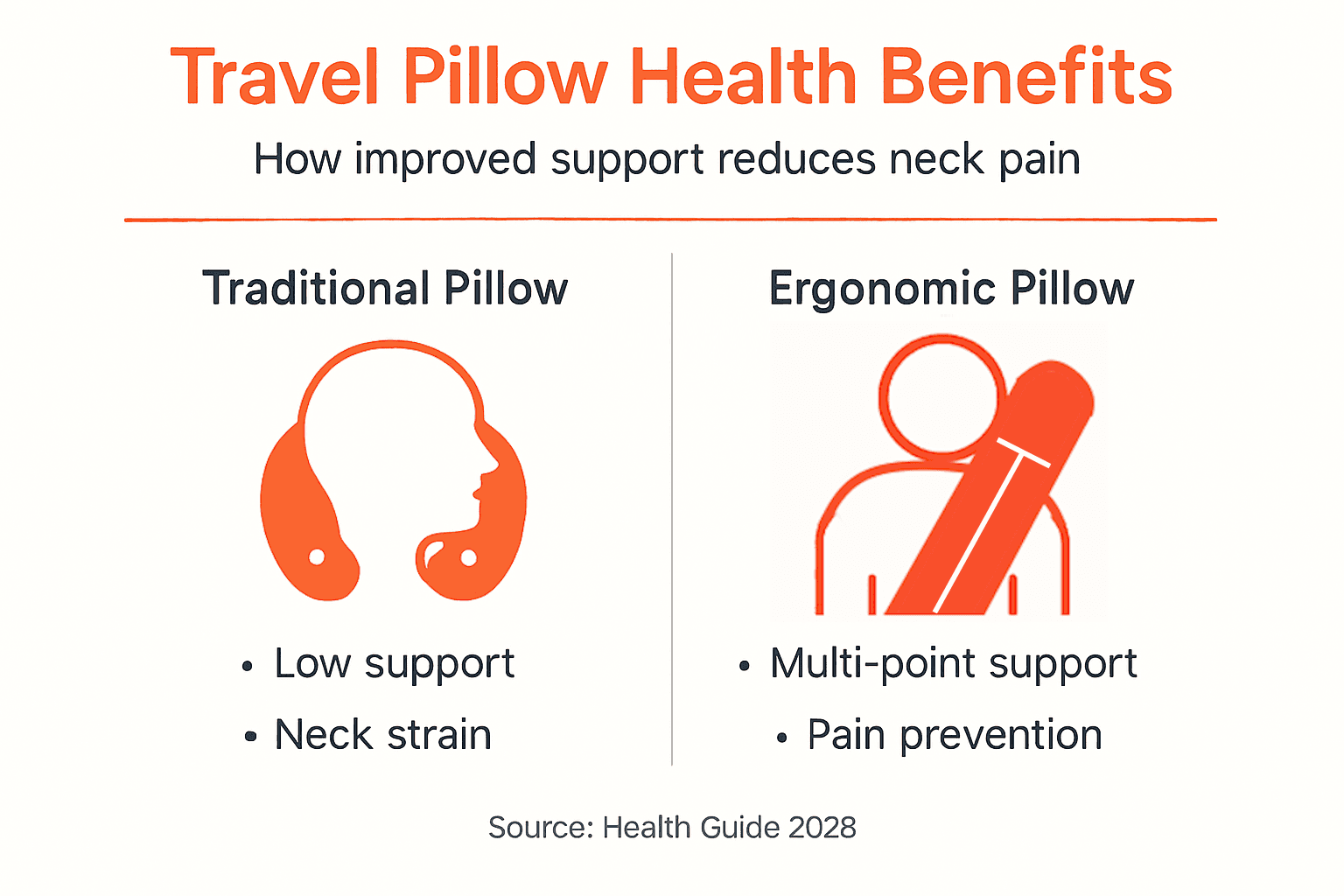
Ergonomic multi-point pillows take a different approach. They stabilize your diagonal resting position by contacting strategic body points: head, jaw, chest, and upper torso. This distributed support prevents forward collapse without wrapping or restricting your neck.
Critical features for health-focused pillow selection:
-
Structural integrity that maintains shape under head weight
-
Open design allowing air circulation around the neck
-
Compressible construction for space-efficient packing
-
Adjustable positioning to accommodate different body sizes
-
Materials that remain comfortable against skin for 6+ hours
Pro Tip: Test a pillow’s structural integrity by pressing down firmly with your palm. If it compresses completely flat, it won’t support your head weight effectively during sleep. Look for pillows that compress partially but maintain core structure.
The best pillow design depends on your specific travel patterns. Red-eye flights demand maximum sleep quality, so prioritize support geometry over packing size. Day flights might allow lighter, more compressible options. Parents traveling with children benefit from non-restrictive designs that allow you to rest while remaining accessible to kids.
Practical Guidance for Choosing and Using Travel Pillows
Selecting the right travel pillow requires evaluating your specific needs against ergonomic principles. Here’s how to choose and use support that actually improves your flight experience.
Choose pillows offering multi-point body support, not just neck cushioning. Your pillow should contact your chest or sternum area to create the lower anchor point that prevents forward head drop. This positioning allows your neck muscles to relax completely rather than working constantly to hold your head up.
Prioritize breathable, non-restrictive designs. Non-restrictive pillows increase sleep duration by 20% because they prevent the heat buildup and confined feeling that wake you frequently. Open designs allow air circulation and give you freedom to shift positions naturally without fighting your pillow.
Seek compressible options that save luggage space. Quality travel pillows can reduce carry-on volume by 25 to 40% when compressed compared to traditional foam pillows. Some innovative designs double as packing organizers, letting you fill them with clothing to create firm support while maximizing luggage efficiency.
Consider parent-friendly features if traveling with children. 75% of surveyed traveling parents reported improved comfort with non-restrictive ergonomic pillows that allow simultaneous parent rest and child accessibility. Wrap-around neck pillows create barriers that make it harder to attend to kids during flights.
Practical tips for optimal pillow use:
-
Position the pillow before takeoff to establish proper support early
-
Adjust height so your head rests naturally without chin-to-chest compression
-
Place the lower edge against your sternum or upper chest for maximum stability
-
Keep your shoulders back and relaxed rather than hunched forward
-
Shift positions slightly every hour to maintain circulation
Follow manufacturer care instructions to maintain pillow hygiene and structural integrity. Most quality pillows feature removable, washable covers that should be cleaned after 3 to 4 flights. Proper maintenance extends product life and prevents bacterial buildup that can cause skin irritation.
Explore detailed travel pillow selection guidance and upright sleeping strategies to refine your approach. Small adjustments in positioning and timing can dramatically improve comfort during long-haul flights.
For travelers prioritizing both ergonomic support and packing efficiency in 2026, modern travel pillow options combine body-geometry support with compressible designs that respect carry-on space constraints.
Summary: Enhancing Health and Comfort on Long-Haul Flights with Travel Pillows
Ergonomic travel pillows address the biomechanical causes of neck pain that affect 65% of frequent economy travelers. Multi-point support systems stabilize head, jaw, chest, and torso positions simultaneously, reducing muscle strain by 30 to 40% compared to neck-only designs or no support.
Key health benefits from proper pillow selection include reduced cervical spine loading, prevention of forward head posture, decreased muscle fatigue, and improved sleep quality during upright rest. Non-restrictive, breathable designs outperform traditional wrap-around pillows by allowing air circulation and natural movement without heat buildup.
Space-efficient, compressible pillows deliver ergonomic benefits without consuming excessive luggage volume. The most effective designs work with your body’s natural diagonal resting position rather than forcing your neck into unnatural angles or restricted positions.
Choosing the right travel pillow based on biomechanical principles rather than marketing claims transforms long-haul flight comfort and protects your musculoskeletal health trip after trip.
Discover the Bolstie Travel Pillow Collection for 2026
Ready to experience the difference multi-point ergonomic support makes? Bolstie Travel Pillow designs embody the biomechanical principles outlined in this guide, offering head, jaw, chest, and torso stabilization that reduces neck strain and improves upright sleep posture.
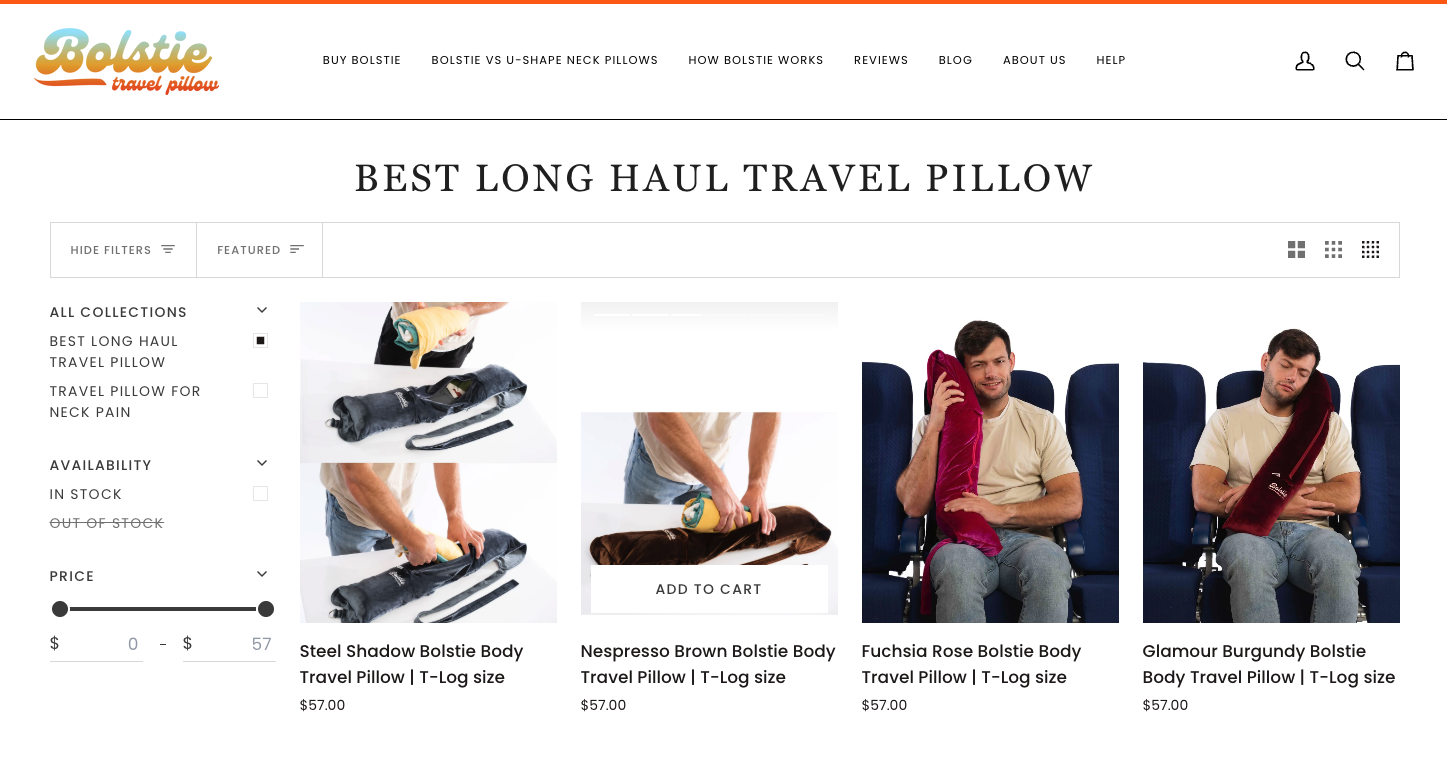
Our compressible, breathable pillows pack efficiently without sacrificing the structural support your body needs during long flights. They’re engineered to prevent forward head drop while maintaining airflow that traditional wrap-around designs can’t match.
Explore the Bolstie best neck travel pillow collection to find ergonomic support tailored to economy-class travel realities. Use our detailed travel pillow selection guide to match your specific needs with the right support geometry. For comprehensive strategies beyond pillows, check out our travel comfort optimization guide covering posture, hydration, and movement techniques that enhance your flight experience.
Frequently Asked Questions About Travel Pillows and Health
What makes a travel pillow ergonomic?
Ergonomic travel pillows support multiple body points simultaneously rather than cushioning the neck alone. They stabilize head, jaw, chest, and torso positions to maintain neutral spine alignment during upright sleep. This coordinated support prevents forward head collapse and reduces muscle strain by working with your body’s natural diagonal resting position.
Can travel pillows really prevent neck pain on long flights?
Yes, when properly designed. Multi-point ergonomic pillows reduce neck muscle strain by 30 to 40% by distributing support across several contact points rather than leaving your neck muscles to work constantly. However, neck-only pillows often fail to prevent pain because they don’t address forward head drop, the primary cause of flight-related neck discomfort.
How do I choose the right pillow size and shape?
Match pillow geometry to your torso length and typical seating position. The pillow should contact your chest or sternum area to create a lower anchor point that stabilizes your head. Test structural integrity by pressing firmly; it should compress partially but maintain core shape. Prioritize adjustable or adaptable designs over rigid single-size options if you’re significantly shorter or taller than average.
Are multi-point pillows better than traditional U-shaped ones?
Multi-point pillows provide superior support for most travelers because they prevent forward head drop, not just cushion the neck. Traditional U-shaped designs often restrict airflow, trap heat, and lack the structural support needed to stabilize your head during sleep. 55% of users report dissatisfaction with neck-only pillows due to these limitations, while non-restrictive multi-point designs improve sleep duration by 20%.
How can parents improve comfort for kids during flights?
Choose non-restrictive pillow designs that allow you to rest while remaining accessible to children. Avoid wrap-around neck pillows that create physical barriers or limit your ability to shift positions quickly. 75% of traveling parents report better comfort with ergonomic pillows that support their own rest without isolating them from kids. Consider compressible designs that pack efficiently when traveling with the extra gear families require.

