

Trying to get comfortable enough to sleep in an airplane seat can feel nearly impossible, especially when your travel pillow makes things worse instead of better. If you’ve ever arrived on a long flight with a stiff neck or aching shoulders, you know that choosing the right neck support is more than a matter of personal style—it directly impacts how you feel at your destination.
With so many shapes, materials, and designs promising a good night’s sleep in the sky, it’s easy to feel overwhelmed or disappointed by pillows that look appealing but fall short in practice. The right choice can offer real relief and make those hours in economy far more bearable. In the list below, you’ll discover practical pros and cons, hidden pitfalls, and smart strategies so you can find neck support that truly fits your body and your travel needs.
Table of Contents
Quick Summary
| Takeaway | Explanation |
| 1. Traditional U-shaped pillows often fail to provide proper support. | Most travelers are side sleepers, yet U-shaped pillows are designed for back sleepers, which leads to discomfort. |
| 2. Consider inflatable pillows with caution. | Inflatable pillows can leak air and provide inconsistent support, making them less effective for long flights. |
| 3. Choose between wraparound and open-sided designs based on need. | Wraparound pillows offer some stability, while open-sided designs prioritize comfort and airflow; select according to your flight duration. |
| 4. Diagonal and torso-supporting pillows maximize comfort. | These designs support your entire upper body, aligning it naturally for better rest during long flights. |
| 5. Multifunctional pillows solve packing and comfort issues. | Packing cylinder pillows double as a compression bag and supportive pillow, maximizing luggage efficiency while providing comfort. |
1. Traditional U-Shape Pillows and Common Drawbacks
Traditional U-shaped travel pillows have been around for decades, and they promise one thing: neck support during upright rest. But after years of economy-class flying, I can tell you the reality doesn’t match the marketing.
These pillows wrap around your neck like a collar, using fixed foam to hold your head in place. The idea sounds solid. The execution? That’s where problems start.
Why They Sound Good (But Aren’t)
U-shaped pillows appeal to travelers because they’re simple and familiar. You see them everywhere—in airport shops, online reviews, travel magazines. Manufacturers market them as the solution to neck pain on flights.
Here’s the catch: most travelers aren’t back sleepers. Research shows that 60–70% of adults are side sleepers, yet traditional U-pillows are designed exclusively for upright, forward-facing rest. If you naturally lean to one side during a flight, a U-pillow forces your head into an unnatural angle.
A pillow designed for one sleeping position can’t serve travelers with different body types and sleep preferences.
The Real Problems You’ll Face
When you actually use a traditional U-pillow, several issues emerge:
-
Fixed height and firmness: You get what’s in the package. No adjustability. If it’s too tall, your neck bends awkwardly. Too short, and your head drops forward.
-
Neck wrapping and heat buildup: The design squeezes your neck and restricts airflow. On an 8-hour flight, this becomes uncomfortable and can trap sweat.
-
Limited torso support: Your head sits balanced on your neck, but your shoulders, chest, and spine get nothing. Specialty U-shaped travel pillows often lack proper spinal alignment, which can worsen neck pain instead of relieving it.
-
Forward head drop and body slump: Without support for your entire upper body, your head slides forward when you relax. You wake up sore.
-
Bulky and space-consuming: Traditional U-pillows take up real luggage space. For economy travelers counting every ounce, this is a genuine cost.
Why Design Matters
Orthopedic pillows designed for travel attempt to solve neck problems, but they solve only part of it. Your neck doesn’t rest in isolation. Your head, shoulders, and torso work together. When a pillow ignores this, you struggle.
Economy seats recline just 0–2 inches. That means you’re resting upright, not at an angle. A U-pillow can’t adapt to this constraint. You need something that supports your whole upper body, not just your neck.
Pro tip: If you currently use a U-pillow and it leaves your neck sore, the problem isn’t you—it’s the design. The next pillow you try should support your head, jaw, chest, and shoulders together, not squeeze your neck in isolation.
2. Inflatable and Compressible Neck Support Solutions
Inflatable neck pillows have become popular with travelers who prioritize luggage space. They deflate small, pack easily, and promise adjustable firmness. On paper, they solve a real problem. In practice, they create new ones.
These pillows work by trapping air in a chamber around your neck. You control firmness by adding or releasing air through a valve. The appeal is obvious: maximum compression, minimal weight. But comfort on a long flight tells a different story.
How Inflatable Pillows Work
An inflatable pillow starts as a flat nylon or PVC shell. You blow it up before use, adjust the air pressure, and wrap it around your neck. When you arrive, you deflate it and fold it flat.
The concept sounds ideal for economy travelers. Space efficiency, adjustability, and portability check every box on a packing list. But there’s a significant gap between promise and reality.
Convenience and comfort rarely go hand in hand—and inflatable pillows prove this repeatedly.
The Problems You’ll Actually Face
Once you’re in the air, inflatable pillows reveal their limitations:
-
Air leaks during flight: A slow leak leaves you waking with a deflated pillow and a stiff neck. You can’t reinflate it discreetly on a crowded plane.
-
Inconsistent support: Unlike foam pillows that maintain uniform firmness, air pressure fluctuates. As cabin pressure changes, your pillow’s firmness shifts. Temperature drops make air denser. You’re constantly adjusting.
-
Neck wrapping and restricted airflow: Like U-shaped pillows, inflatables squeeze your neck. The airtight material traps heat and sweat, creating discomfort on long flights.
-
No torso support: An inflatable neck collar still ignores your shoulders and chest. Your upper body gets nothing. Neck support alternatives that focus only on the neck fail to address full-body alignment on upright flights.
-
Limited height adjustment: Even with adjustable air, you’re working within fixed dimensions. If the collar is too wide for your frame, firmness adjustments can’t fix the fit.
Why Portability Isn’t Enough
Saving luggage space means nothing if you can’t sleep. An inflatable pillow might weigh 5 ounces, but if it leaves you sore and exhausted, you’ve lost the real benefit of a long flight: rest.
Research shows that inflatable travel pillows offer compactness and customizable firmness, but users consistently report inconsistent support and the need for periodic reinflation. The portability advantage doesn’t outweigh the comfort cost.
Economy travelers face a hard truth: you’re stuck upright for hours. Your pillow needs to work with your body, not against it. Inflatable solutions prioritize packing efficiency over the support you actually need.
Pro tip: If you choose an inflatable pillow, test it on a short flight first and carry a manual pump. Air leaks happen, and a hand pump is lighter than dealing with a deflated pillow across an Atlantic flight.
3. Wraparound vs. Open-Sided Designs: Pros and Cons
When shopping for travel neck support, you’ll notice a fundamental design split. Some pillows wrap completely around your neck like a collar. Others sit loosely on your shoulders, supporting just the sides. This choice matters more than you might think.
Both designs promise neck support, but they work in opposite ways. Understanding the tradeoff helps you pick what actually works for your body and flight style.
Wraparound Designs
Wraparound pillows encircle your entire neck, offering 360-degree support. They prevent your head from rolling in any direction and keep your chin elevated. Manufacturers argue this keeps your spine aligned during upright rest.
The reality is more complicated. A wraparound design does prevent head lolling, but it also restricts airflow and traps heat around a sensitive area. On an 8-hour flight, this becomes a genuine problem. Your neck sweats. The foam or fabric stays damp. Discomfort builds.
Wraparound pillows are also bulkier. They don’t compress as much as open designs, which matters when luggage space is limited.
Open-Sided Designs
Open-sided pillows provide support on the sides and back of your neck but leave the front and sides of your throat exposed. They’re lighter, less restrictive, and allow airflow. You can move your head more freely without the feeling of being encircled.
The downside is reduced support consistency. Your head can lean forward or drift to the side more easily. On longer flights, this becomes a problem. Without comprehensive support, your neck muscles work harder to keep your head upright.
The choice between wraparound and open-sided isn’t about which is objectively better—it’s about which compromise fits your flight length and body.
Comparing the Real Experience
Here’s what matters on an actual flight:
-
Wraparound: Firm stability, full neck coverage, but heat buildup and bulk
-
Open-sided: Lightweight, breathable, better airflow, but less support on longer flights
Research shows that wraparound travel pillows provide firm support and prevent painful head bends, while open-sided designs sacrifice some stability for portability and comfort with less restraint.
For short flights (under 4 hours), open-sided designs work fine. Your neck doesn’t need hours of full support. For long-haul flights, wraparound designs offer more stability—if you can tolerate the heat.
But both approaches miss the real problem. Your neck doesn’t rest alone. Your shoulders, chest, and spine are part of the equation. A pillow that wraps only your neck ignores 70% of your upper body.
Pro tip: Test your pillow on a 2-3 hour flight before committing to a long journey. Heat buildup or forward head drift become obvious quickly, and minor discomfort on a short flight becomes unbearable on a 12-hour haul.
4. Diagonal and Torso-Supporting Travel Pillows
Most travel pillows focus on your neck. This one is different. Diagonal and torso-supporting designs recognize a simple truth: your neck doesn’t rest alone. Your entire upper body does.
When you sit upright in an economy seat for hours, your head, shoulders, chest, and spine work as one system. A pillow that ignores this is fighting your body instead of helping it.
Why Diagonal Support Matters
Your body naturally wants to rest at an angle when sitting upright. Economy seats don’t recline much, so your body seeks a diagonal position to distribute weight more evenly. Traditional pillows force your head straight up, fighting this natural instinct.
Diagonal support works with your body’s geometry instead of against it. Your head tilts slightly, your shoulders settle back, and your chest relaxes. This alignment reduces strain across your entire upper body.
How Torso Support Changes Everything
Torso-supporting pillows extend beyond your neck to stabilize your shoulders and chest. They distribute the weight of your head and upper body across a larger surface area instead of concentrating all pressure on your neck.
This matters because your neck muscles aren’t meant to hold your head up for 30 minutes, and now they are forced to overwork for 8 to 14 hours straight. They fatigue, tighten, and create pain. When your shoulders and chest receive support too, your neck muscles can actually relax.
Your neck is just one piece of the puzzle. Without supporting your torso, you’re asking the smallest, most vulnerable muscles in your upper body to do all the work.
The Real Benefit on Long Flights
Diagonal and torso-supporting designs reduce muscle strain from upright sleeping by supporting your head and torso in a slightly reclined angle. Research shows that pillows with these features help distribute weight along your upper body, relaxing your neck, shoulders, and back simultaneously.
This means several practical benefits:
-
Full upper-body alignment: Your head, neck, shoulders, and spine stay in a natural relationship
-
Reduced muscle fatigue: Pressure spreads across multiple muscle groups instead of concentrating on your neck
-
Better airflow: Because support extends through your torso, the design doesn’t need to wrap and squeeze your neck. it’s leverages the strength of they body to wrap around and keeps it in place
-
Longer comfort windows: You can rest for hours without pain building up
Understanding how side sleeping in economy works reveals why traditional neck-only pillows fail so many travelers. Your body wants to rest sideways, but economy seats force you forward. Diagonal torso support bridges this gap.
This Is Different From Traditional Pillows
Wedge pillows elevate your body diagonally and can support your head, neck, and torso together, making them useful for extended seated rest. But most travel wedges are too bulky for flights. The key is finding a design that provides full-body support while staying compact.
Pro tip: On your next flight, notice where you feel tension after 2-3 hours. If it’s only in your neck, your pillow is doing its job poorly. If pain is distributed across your shoulders and upper back too, your pillow isn’t supporting your torso enough.
5. Multifunctional Packing Cylinder Support Pillows
Here’s a question most travel pillow companies won’t ask: what if your pillow could do two jobs at once? Traditional pillows sit in your carry-on taking up space. You pack them, use them, repack them. That’s one job, done inefficiently.
Multifunctional packing cylinder pillows flip this logic. When empty, they’re a compression bag. When filled with clothing, they become a structured support pillow. You’re not carrying extra luggage. You’re carrying clothes and comfort in the same space.
How Packing Cylinder Pillows Work
These pillows have a cylindrical or semi-cylindrical shape with a fabric shell. The shell is designed to hold clothing bundles, keeping them compressed and organized. When filled with folded clothes and positioned against your body during flight, the bundle becomes firm, structured support.
No air to leak. No foam that compresses over time. Just your own clothes providing the stability and firmness you need. When you land, you pull out your clothes, and your pillow collapses back to nothing.
This solves a real problem for economy travelers. Every ounce in your carry-on matters. Airlines charge for checked bags. You’re already packing clothes anyway. Why not make them do double duty?
A pillow that also solves your packing problem is a pillow that actually fits into your real travel life.
The Space Efficiency Advantage
Traditional travel pillows consume dedicated luggage space. Packing cylinders replace space you’re already using for clothes. The math is simple: same weight and volume, but two functions instead of one.
This principle applies to how efficient packing optimizes space while maintaining organization. Multifunctional designs let you eliminate redundant items and travel lighter without sacrificing comfort.
Here’s what you gain:
-
Zero extra luggage weight: Your clothes weigh the same whether compressed in a pillow or loose in your bag
-
Better organization: Clothes stay bundled and compressed instead of getting wrinkled and scattered
-
Actual firmness: Your own folded clothes provide more consistent support than foam that compresses over 12 hours
-
Cost savings: No checked baggage fees because you’ve optimized carry-on space
-
Full-body support potential: A cylinder filled with clothes can support your head, neck, and torso simultaneously
Why Traditional Pillows Fall Short
Standard travel pillows are single-purpose items. They take space. They provide so-called"support". That’s it. Multifunctional designs recognize that your luggage and your comfort aren’t separate problems. They’re the same problem, solved once instead of twice.
When you’re flying economy on a tight budget, every ounce matters. When you’re traveling internationally and facing baggage restrictions, space is precious. A pillow that becomes your packing solution eliminates the false choice between comfort and efficiency.
Pro tip: Pack your packing cylinder pillow with heavier items like jeans and sweaters, not light fabrics. Denser clothes create firmer support, and the weight distribution helps the pillow settle naturally against your torso during rest.
6. Tips for Choosing the Best Neck Support for Your Needs
You’ve read about five different types of neck support. Now comes the hardest part: picking one that actually works for you. There’s no universal answer. Your body, your flight length, and your sleeping style all matter.
Choosing the right pillow means understanding what you need, then matching it to a design that delivers. Skip this step, and you’ll end up with another expensive piece of luggage that gathers dust at home.
Understand Your Sleeping Position
How you sleep on planes matters more than how you sleep in bed. Most people shift positions during a flight. But you likely have a default position where you spend the most time resting.
Are you a forward leaner? Do you tilt sideways toward the window? Do you try to recline backward? Your dominant position determines what support you need. A pillow designed for one position won’t work for another.
Research emphasizes that choosing a pillow matching your sleeping position and adapting to your neck contours reduces pain and improves sleep quality. Test your pillow on short flights before committing to long ones.
Consider Flight Length
A 3-hour flight has different comfort requirements than a 12-hour flight. Short flights forgive less-than-perfect support. Long flights punish it.
For short flights, prioritize portability and ease of use. For long-haul flights, prioritize comprehensive support and airflow. These are competing priorities, so you must choose based on your typical travel pattern.
The pillow that works for transatlantic flights might be overkill for regional hops, and vice versa.
Match Pillow Type to Your Real Travel Situation
Here’s what matters for each scenario:
-
Short flights (under 4 hours): Lightweight, compact pillows work fine. Portability beats perfect support.
-
Long-haul flights (8+ hours): Full-body support and airflow matter more than weight. You need to actually rest, not just nap.
-
Frequent travelers: Durability and adjustability matter. You need a pillow that adapts to different seats and planes.
-
Budget-conscious travelers: Multifunctional designs that solve packing and comfort together save money and luggage space.
-
Side sleepers: Look for designs that support your torso and allow your head to rest at a diagonal angle.
Avoid Pillows That Force Unnatural Positions
This is the clearest red flag. If a pillow wraps your neck tightly, restricts your head movement, or forces your chin into an awkward angle, it’s fighting your body instead of helping it.
Neck pillows should support, not squeeze. The best designs work with your body’s natural resting position, not against it. Test this before buying: can you move your head naturally? Does the pillow restrict airflow? Does heat build up?
Test Before You Buy
If possible, try a pillow on a short flight or even at home while reading. Pay attention to how it feels after 30 minutes, 2 hours, and 4 hours. Pain and discomfort might not appear immediately.
Read reviews from people with your sleeping position and flight length. Generic five-star ratings mean nothing. Specific experiences matter.
Pro tip: Before your next long flight, rent or borrow a pillow from a travel gear company instead of buying. One short flight test run will reveal whether it works for you, saving money and preventing buyer’s remorse on something that ends up unused.
Below is a comprehensive table summarizing the key points and findings discussed throughout the article regarding travel pillows and support solutions.
| Category | Description | Key Features and Issues |
| Traditional U-Shape Pillows | Standard design prioritizing neck support through a fixed foam structure wrapping around the neck. | Lacks adaptability to side sleeping; may contribute to discomfort due to stiffness and inadequate full-body support. |
| Inflatable Support Solutions | Compact, portable pillows filled with air to provide adjustable firmness. | Tend to leak air during flights; inconsistent height adjustment; may create discomfort from heat and restricted airflow. |
| Wraparound vs Open-Sided | Comparison of fully enclosed versus partially supporting pillow designs. | Wraparound provides comprehensive neck security but may build heat; open-sided designs offer better ventilation and portability yet compromise support. |
| Diagonal, Torso-Supporting | Designs focusing on full-body alignment by supporting the neck, chest, and shoulders in coordination. | Reduces upper body strain; aids in maintaining natural positioning during extended flights. |
| Multifunctional Cylinders | Innovative concept of combining travel packing efficiency with neck and torso support through a cylindrical structure filled with clothing. | Dual-purpose: packing compression and structured support without extra storage requirement. |
| Selection Criteria | Selecting the appropriate pillow tailored to the individual’s sleeping position, flight duration, and personal preference. | Consider effectiveness during short vs long flights; test designs prior to use for assessing compatibility with natural rest positioning. |
Discover Smarter Support for Better Economy-Class Rest
Long hours in economy-class seating can leave your neck sore and your entire upper body strained. The article reveals the challenge of traditional travel pillows that focus solely on neck support while ignoring the natural diagonal resting position and torso alignment. Many travelers suffer from forward head drop, heat buildup, and bulky designs that do not adapt to how the body actually rests during flights. If you want to avoid discomfort and make the most of your travel rest, a smarter solution is essential.
Bolstie Travel Pillow offers precisely this kind of thoughtful design. By supporting your head, jaw, chest, and upper torso together, its innovative diagonal support reduces neck strain and muscle fatigue even on long-haul flights. Plus, it uniquely doubles as a packing cylinder, saving valuable luggage space, eliminating extra baggage, and fitting perfectly with your real travel needs. Experience comfort that works with your body rather than forcing unnatural positions.
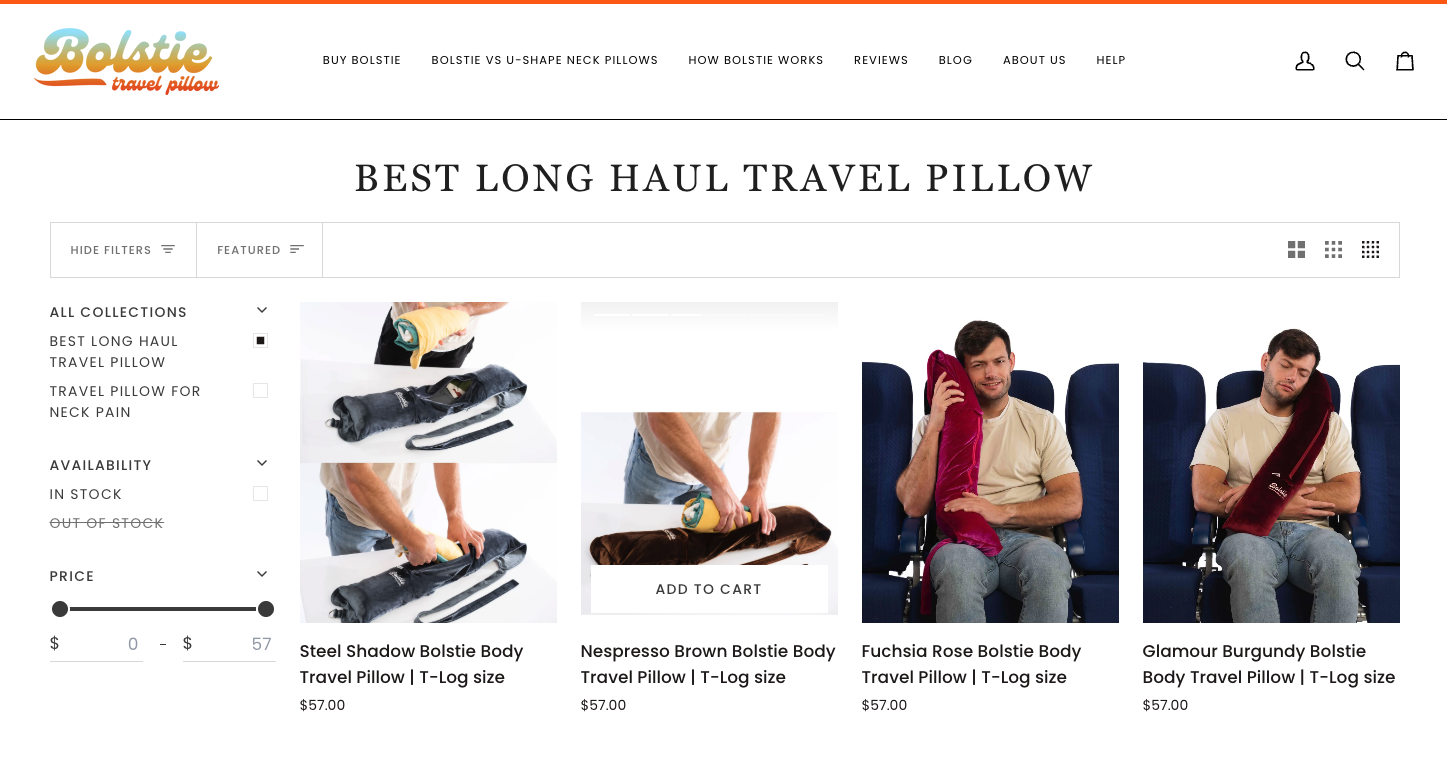
Ready to transform how you rest during travel Try the Best Long Haul Travel Pillow that redefines comfort for economy travelers. If neck pain holds you back explore our full selection of Travel Pillow for Neck Pain | Bolstie Smart Comfort and see why thousands trust Bolstie for smart, simple, and effective travel support. Visit https://bolstietravelpillow.com/collections/bolstie-best-neck-travel-pillow today and rest better on every journey.
Frequently Asked Questions
What are the main drawbacks of traditional U-shaped travel pillows?
Traditional U-shaped travel pillows often force your head into awkward angles, especially for side sleepers. They can also cause heat buildup and provide limited torso support, leading to discomfort on long flights. To avoid neck soreness, consider a pillow that offers more comprehensive upper body support.
How do inflatable neck pillows compare to traditional options?
Inflatable neck pillows are compact and adjustable, but they often lack consistent support and can deflate during use. If you choose inflatable, test it on a short flight first to ensure it holds its shape and offers sufficient comfort while you rest.
Why is diagonal support important in a travel pillow?
Diagonal support helps align your head, neck, and torso, making it easier for your body to rest comfortably in an upright position. Look for pillows that encourage a natural diagonal position, as they provide better support and reduce strain on your muscles during long flights.
What features should I consider for long-haul flights?
For long-haul flights, prioritize pillows that provide full upper body support and improved airflow. Aim to choose designs that help reduce muscle fatigue by distributing weight more evenly across your shoulders and neck to enhance comfort over extended periods.
How can multifunctional packing cylinder pillows benefit me?
Multifunctional packing cylinder pillows serve dual purposes: they act as compression bags for clothes and provide structured support for your head and neck. Pack your cylinder with heavier clothing items to ensure firm support and maximize space efficiency in your luggage.
What should I do if my travel pillow causes discomfort?
If you experience discomfort, re-evaluate your pillow’s design and fit. Make sure it supports not just your neck but also your shoulders and torso to allow for natural movement and airflow. Test the pillow for at least 30 minutes during your travels to assess its comfort level.
Recommended
-
Top 5 Travel Comfort Solutions 2026 for Long Trips – BOLSTIE TRAVEL PILLOW
-
Neck Support Alternatives Explained: Why Neck-Only Solutions Don’t Wor – BOLSTIE TRAVEL PILLOW
-
Why Are We Still Suffering on Planes? – BOLSTIE TRAVEL PILLOW
-
12-Hour Roadtrip to a Wedding to Discover This Neck-Saving Secret – BOLSTIE TRAVEL PILLOW

