

Economy class has a reputation for being a cramped, sleepless endurance test. But here’s the thing: seat pitch averages 31-33 inches on long-haul flights in 2026, and some airlines are actually pushing that number higher. The gap between a miserable flight and a restful one isn’t always about the seat itself. It’s about knowing what’s changed, what gear actually helps, and which habits move the needle. This guide breaks down the latest airline upgrades, science-backed comfort strategies, and space-saving solutions for economy travelers, frequent flyers, and parents who want real rest without extra bulk or cost. ✈️
Table of Contents
-
Space-smart airline upgrades: What practical travelers should know
-
Backed-by-science travel hacks: Comfort essentials for long flights
-
Why true comfort in economy class is a mindset, and the rules keep shifting
Key Takeaways
| Point | Details |
|---|---|
| Benchmark seat sizes | Economy seat pitch in 2026 averages 31-33 inches, with top airlines offering a bit more space. |
| Aim for space-efficient gear | Layered clothing, compression cubes, and ergonomic neck pillows maximize comfort without bulk. |
| Science-driven comfort wins | Habits like movement, hydration, and sleep routines matter more than most gadgets for feeling good aloft. |
| Family comfort needs planning | Choose airline-approved strollers and check device rules to avoid hassles at the gate. |
| Upgrades vs. self-prep | Airline features help, but traveler choices and routines make the biggest difference in comfort. |
Understanding the new comfort benchmarks in 2026
Let’s first break down what’s actually changed in seat design and comfort across leading airlines.
Not all economy seats are created equal, and the difference between a 31-inch pitch and a 34-inch pitch is something your knees will feel for the entire flight. Seat pitch (the distance from one seat back to the next) is the most talked-about spec, but it’s only part of the picture. Width and recline matter just as much, especially on overnight routes where you’re trying to actually sleep.
Here’s how the major carriers stack up in 2026:
| Airline | Seat pitch | Seat width | Recline |
|---|---|---|---|
| ANA | 34 in | 17.5 in | 5 in |
| JAL | 34 in | 17.5 in | 5 in |
| Emirates (A350) | 32 in | 18 in | 6 in |
| Qatar Airways (A380) | 32 in | 18 in | 7 in |
| Singapore Airlines | 32 in | 18 in | 6 in |
| JetBlue | 32-33 in | 17.8 in | 4 in |
ANA and JAL lead at 34 inches of seat pitch, which is a meaningful advantage on a 12-hour flight. Meanwhile, Qatar, Emirates, and Singapore offer 18 inches of seat width, which gives your shoulders real breathing room. Qatar’s A380 economy recline of 7 inches is the standout number here. Seven inches doesn’t sound like much until you’ve been upright for nine hours.
These benchmarks shape comfort in very practical ways. A traveler who is 6 feet tall will feel the difference between 31 and 34 inches of pitch immediately. A wider seat means less contact with your neighbor. More recline means your body can settle into a more natural resting angle. For economy comfort tips 2026, knowing these numbers before you book is one of the smartest moves you can make.
The key takeaway: seat specs vary significantly, and a few minutes of research before booking can translate into hours of better rest. Don’t assume all economy cabins are the same. They’re not.
Space-smart airline upgrades: What practical travelers should know
With a sense of the numbers, let’s look at the new features airlines are adding and which ones actually matter for frequent flyers and families.
Airlines are upgrading economy cabins with slimline seats, ergonomic headrests, larger in-flight entertainment screens, and power outlets as standard features. These aren’t luxury add-ons anymore. They’re becoming the baseline expectation on competitive long-haul routes.
Slimline seats are worth understanding. They’re thinner than traditional seats, which sounds like a downside, but the design actually creates more usable legroom in the same pitch. The padding is engineered differently, and many travelers find them just as comfortable for the first few hours. On very long flights, though, the lack of cushion depth can become noticeable.
Adjustable headrests are genuinely useful. A headrest that folds in on both sides lets you wedge your head in place, which reduces the dreaded forward-drop that wakes you up every 20 minutes. Not every airline offers this, but it’s worth checking seat reviews on tools like SeatGuru before you book.
“The best seat upgrade isn’t always an upgrade. Sometimes it’s just choosing the right row on the right aircraft.”
On the US domestic side, American, Delta, and United are adding power outlets and WiFi as standard on narrowbody aircraft. That’s a real quality-of-life improvement for frequent flyers who need to work or stay connected on shorter routes.
When is it worth paying for extra legroom? If you’re tall, traveling overnight, or on a flight longer than eight hours, the answer is usually yes. The price difference is often $30-$60, and that’s a reasonable trade for the ability to stretch your legs or exit the row without waking two people.
Pro Tip: Use SeatGuru or the airline’s own seat map to compare real specs, not just the cabin class label. Two seats in the same cabin can have very different legroom depending on their position near an exit row or bulkhead. These economy comfort upgrades are worth researching before you click “confirm.”
For travelers who want to go deeper on what actually works in-cabin, exploring practical comfort solutions can help you separate the genuinely useful from the marketing noise.
Backed-by-science travel hacks: Comfort essentials for long flights
Beyond airline amenities, there are passenger-driven strategies that truly move the needle. Let’s look at scientifically proven ways to make your seat feel roomier and more restful.
The science is clear on three things: circulation, sleep quality, and ergonomics. Get those right and a long-haul economy seat becomes manageable. Get them wrong and even a 34-inch pitch won’t save you.
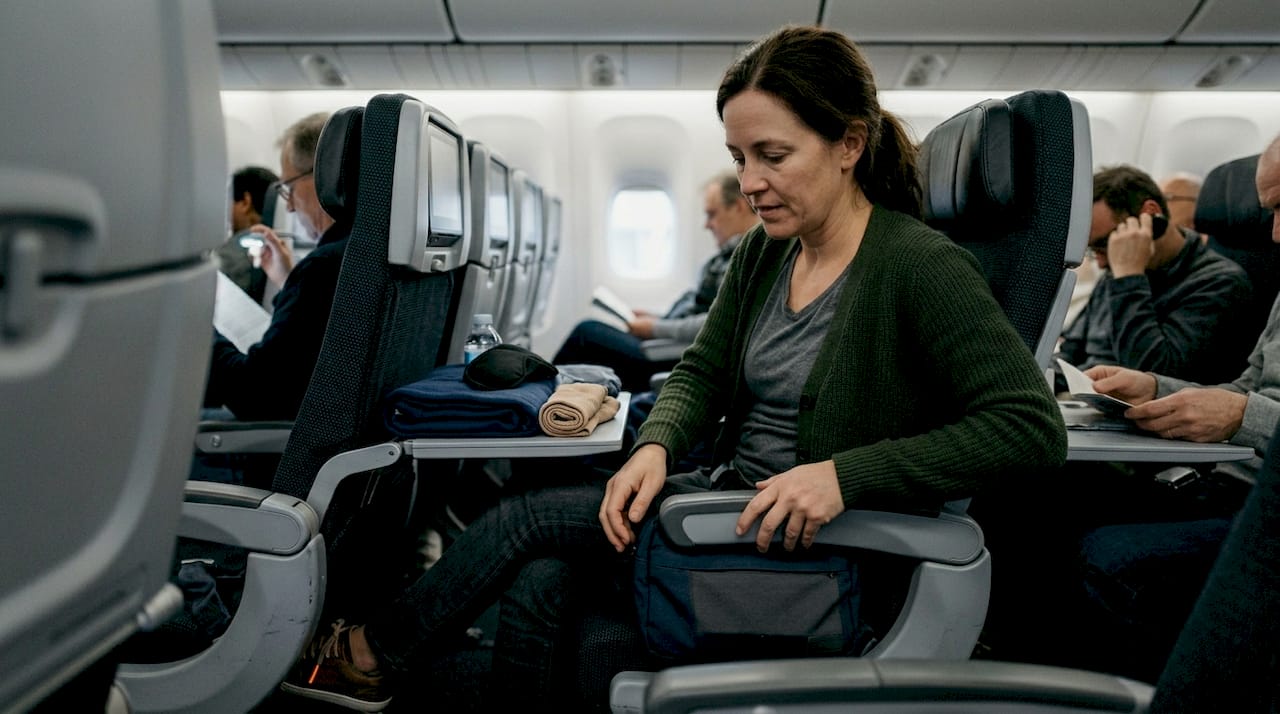
Compression socks prevent DVT (deep vein thrombosis, a blood clot risk from prolonged sitting), ergonomic neck pillows reduce pain by 60%, and smart sleep timing helps your body adjust to new time zones faster. These aren’t travel blogger opinions. They’re backed by research.
Here’s a practical routine that works:
-
Hydrate before boarding. Cabin air is extremely dry, and dehydration amplifies fatigue and headaches.
-
Move every two hours. Stand, stretch, or walk the aisle. Movement and layering strategies are among the most effective ways to stay comfortable.
-
Dress in layers. Cabin temperature swings wildly. A light zip-up or wrap gives you control.
-
Use noise-canceling headphones. Blocking ambient engine noise reduces mental fatigue significantly.
-
Wear an eye mask. Light disrupts melatonin production. An eye mask is a $10 solution to a real problem.
-
Time your sleep. Try to sleep when it’s nighttime at your destination, not just when you’re tired.
The gear list matters, but keep it lean. You don’t need every travel gadget on the market. You need a few things that actually work. A good comfort routine strategy built around these essentials will outperform a bag full of single-use gadgets every time.
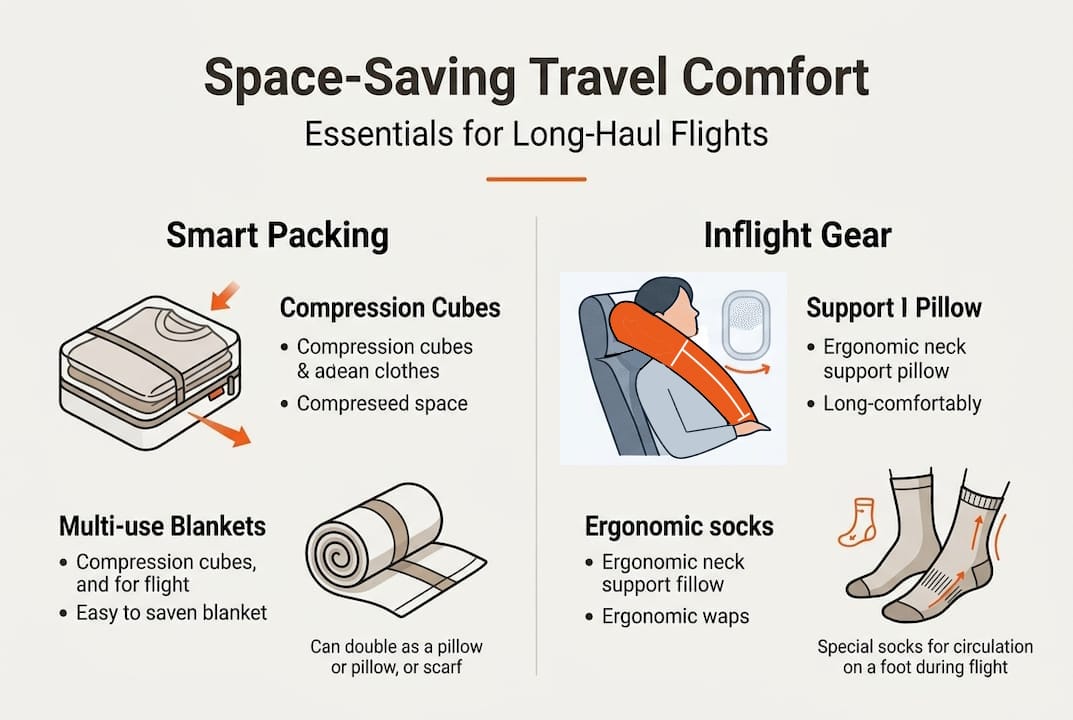
Pro Tip: Multi-purpose items win on space. A packing comfort checklist built around items that serve two functions (like a travel pillow that doubles as a packing cylinder) means less to carry without sacrificing comfort. Also, addressing neck pain prevention before it starts is far easier than managing it mid-flight.
Family and frequent flyer strategies for space and sanity
Practical comfort looks different for families and frequent travelers. Here’s how to keep your gear compact and your flight stress low.
Traveling with kids adds a layer of logistical complexity that solo travelers never have to think about. The gear gets bigger, the carry-on gets heavier, and the margin for error shrinks. The good news is that a few smart choices make a real difference.
Compact strollers like the Zoe Traveler and Miro fit in overhead bins and meet airline approval standards, which means no gate-checking, no delays, and no worrying about damage. That alone removes one of the biggest family travel stress points.
For frequent flyers, the approach is different but the principle is the same: less bulk, more function. Flight attendant picks for 2026 consistently include compression packing cubes, lightweight blankets, and avoiding full-size travel pillows that eat up overhead bin space.
Here’s a step-by-step sanity plan for parents flying with kids:
-
Check airline rules on all devices before you pack. Not every comfort device or car seat adapter is approved for cabin use. Verify before you arrive at the gate.
-
Pack a dedicated kid comfort kit. Noise-reducing headphones, a small blanket, and a familiar snack go a long way.
-
Choose your seats strategically. Bulkhead rows give extra floor space. Window seats help kids sleep without being disturbed.
-
Bring one multi-use item per person. A pillow that doubles as a packing tool saves space for the things kids actually need.
-
Board early and set up fast. Getting settled before the rush reduces stress for everyone.
Pro Tip: Always verify airline rules on inflight comfort devices for children before you travel. What works on one carrier may be flagged on another. Tips on surviving long flights with kids often come down to preparation, not perfection. For more economy traveler tips that work for the whole family, a little pre-trip research pays off big.
Why true comfort in economy class is a mindset, and the rules keep shifting
With all this practical advice in mind, there’s a deeper truth emerging about comfort that most guides miss.
Here’s what we’ve learned: hardware upgrades from airlines are valuable, but most of the real comfort gains come from traveler decisions. The seat is just the starting point. What you bring, how you prepare, and how you adapt in the moment determines the actual experience.
Following the herd on gear can backfire. Full-size U-shaped pillows look appealing in ads, but they take up overhead bin space, don’t support the body’s actual resting position, and can cause more neck strain than they prevent. Bigger doesn’t mean better when you’re working with 31 inches of pitch.
Airlines are prioritizing widebody upgrades for long-haul routes while increasing seat density on regional ones. That means comfort trends in 2026 are moving in two directions at once. Long-haul is getting better. Short-haul is getting tighter. Knowing which type of flight you’re on changes everything about how you should prepare.
The real mindset shift is this: comfort is about flexibility and preparation, not just ticket class. A traveler who understands why neck support fails on planes and packs accordingly will sleep better than someone in a more expensive seat who grabbed whatever pillow was on sale. Adapt to the trends. Don’t just react to them. ❤️
Discover real comfort solutions for your next flight
Ready to put these comfort trends into practice? The right gear makes all the difference, and it doesn’t have to take up half your carry-on.
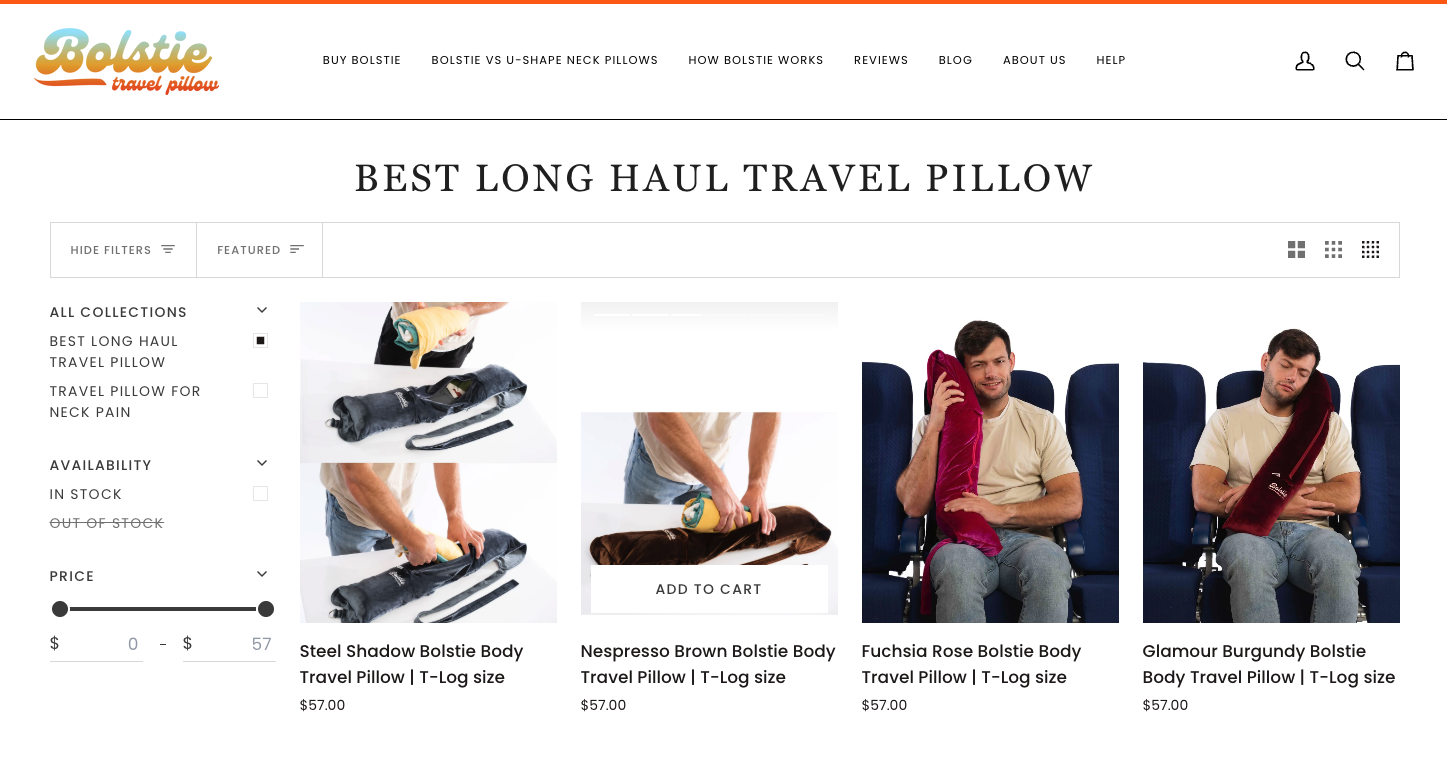
Bolstie Travel Pillow was designed specifically for economy travelers who want real support without the bulk. The Bolstie neck travel pillow stabilizes your head, jaw, and upper torso together, supporting your body’s natural resting angle instead of forcing it into an awkward position. And because it doubles as a packing cylinder, the travel pillow stuffed with clothes means you’re not adding bulk to your bag. You’re replacing it. Smart, simple, and built for the realities of economy travel.
Frequently asked questions
Which economy class airlines offer the most legroom in 2026?
ANA and JAL offer 34 inches of seat pitch in economy class for long-haul flights in 2026, making them the top choices for taller travelers or anyone prioritizing legroom.
What are space-saving essentials for frequent flyers?
Compression cubes and lightweight blankets are consistent favorites among frequent flyers, along with multi-charging cables that consolidate your tech needs into one item.
Are family travel comfort devices allowed onboard?
Only airline-approved devices are guaranteed to be allowed in the cabin. Compact overhead-bin strollers like the Zoe Traveler are airline-approved, but always verify your specific carrier’s rules before you fly.
Does a neck pillow really improve comfort on long flights?
Ergonomic neck pillows reduce pain by 60% on long-haul flights, especially when they support the full upper body rather than just wrapping around the neck.
Is it worth paying for extra legroom seats in economy?
Extra legroom seats offer up to 36 inches of pitch, which is a meaningful upgrade on flights over eight hours, particularly for taller travelers or anyone who struggles with circulation on long routes.
Recommended
-
Why travel comfort matters: practical solutions for economy flyers – BOLSTIE TRAVEL PILLOW
-
Step by step traveler comfort guide for long flights – BOLSTIE TRAVEL PILLOW
-
Packing checklist for long flights: comfort essentials – BOLSTIE TRAVEL PILLOW
-
How to survive long plane flights: comfort tips 2026 – BOLSTIE TRAVEL PILLOW

