

Long-haul economy flights test your patience and comfort limits. Cramped seats, fluctuating cabin temperatures, and limited luggage space make rest nearly impossible for most travelers. You need practical strategies that work within economy constraints without adding bulk to your carry-on. This guide delivers proven comfort tips backed by ergonomic research and real-world testing, helping you maximize rest while minimizing hassle. From selecting the right gear to timing your movements, these actionable insights transform your flying experience.
Table of Contents
-
Comparison Of Popular Travel Pillows For Economy-Class Comfort
-
Situational Recommendations: Choosing Comfort Tips Based On Travel Style And Luggage
-
Discover The Best Neck Travel Pillows For Your Long-Haul Flights
Key takeaways
| Point | Details |
|---|---|
| Support and portability balance | Choose lightweight comfort gear that compresses easily without sacrificing neck or become part of the packing solution and body support during flights. |
| Layered clothing strategy | Pack breathable layers to adjust quickly to unpredictable cabin temperatures throughout your journey. |
| Multipurpose packing approach | Select items that serve dual functions, like pillows that double as clothing storage cylinders. |
| Planned movement breaks | Schedule short standing or stretching intervals every two hours to prevent stiffness and improve circulation. |
| Ergonomic pillow investment | Quality neck support reduces strain significantly and improves sleep quality on overnight flights. |
Criteria for choosing comfort gear and packing efficiently
Selecting the right comfort products for economy-class travel requires balancing four essential criteria. Support quality determines whether gear actually reduces physical strain or just adds weight to your bag. Portability ensures items compress small enough to fit within strict carry-on limits. Multipurpose functionality means each item serves at least two roles, maximizing value per square inch. Durability guarantees your investment survives repeated trips without falling apart mid-journey.
Prioritize lightweight materials that compress to one-third their expanded size or become part of the packing solution. Memory foam sounds appealing but often stays bulky even when squeezed. Inflatable options pack smaller but rarely provide adequate neck stabilization during actual sleep. The balance between comfort support and luggage space determines whether you arrive refreshed or exhausted.
Economy seats offer minimal recline and tight dimensions, so generic comfort products designed for home use fail spectacularly at 35,000 feet. Look for gear specifically engineered for upright sleeping positions. Your pillow should stabilize your head without forcing unnatural neck angles. Your blanket should fold into a stuff sack smaller than a water bottle. Your eye mask needs total light blocking without pressure points.
Cabin temperatures swing wildly from freezing during boarding to stuffy mid-flight. Plan clothing layers you can add or remove without disturbing neighbors. A merino wool base layer regulates temperature better than cotton while taking half the space. A packable down vest provides core warmth without bulk. Compression socks improve circulation during long sits.
Pro Tip: Choose travel pillows that double as clothing storage cylinders. Fill them with soft garments to create firm support while eliminating a separate stuff sack from your packing list. This approach saves 20 to 30 percent of typical carry-on volume.
-
Select items weighing under one pound that compress to fist size
-
Verify products fit within personal item dimensions for underseat storage
-
Test comfort gear at home in an upright chair before your trip
-
Avoid single-purpose items that waste precious luggage capacity
Top comfort tips for long-haul economy flights
Ergonomic neck support stands as your most critical comfort investment. Ergonomic travel pillows reduce neck strain by supporting your head’s natural resting angle rather than forcing it forward or sideways. Traditional U-shaped pillows squeeze your neck and trap heat. Modern designs stabilize your entire upper body, preventing the forward head drop that causes morning stiffness.
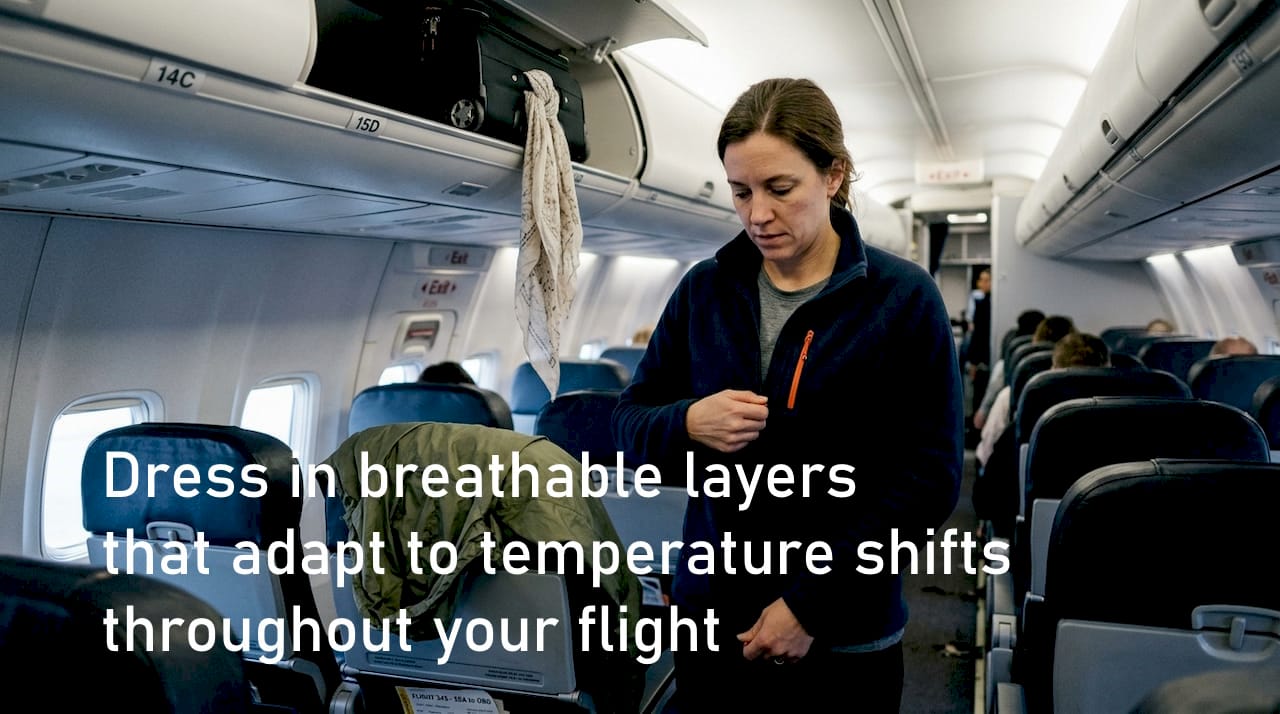
Dress in breathable layers that adapt to temperature shifts throughout your flight. Start with a moisture-wicking base layer that prevents sweat buildup during boarding chaos. Add a mid-layer fleece or cardigan you can remove once cabin heat kicks in. Keep a lightweight jacket accessible for the inevitable temperature drop during meal service. Natural fibers like merino wool regulate temperature better than synthetics while resisting odor during 12-hour flights.
Noise-canceling earbuds and a quality eye mask create your personal rest zone despite surrounding activity. Active noise cancellation blocks engine drone and chatty passengers without requiring loud volumes that damage hearing. Total blackout eye masks with contoured designs prevent pressure on your eyelids while blocking overhead reading lights. Together, these items cost less than $100 but deliver business-class rest quality.
Incorporate movement breaks every 90 to 120 minutes to maintain circulation and prevent deep vein thrombosis risk. Stand near your seat and perform gentle calf raises, shoulder rolls, and neck stretches. Walk to the lavatory even when you don’t need it, using the aisle time for hip flexor stretches. These micro-movements take under three minutes but dramatically reduce post-flight stiffness.
Hydration and meal choices impact comfort more than most travelers realize. Cabin air humidity drops to 10 to 20 percent, drying mucous membranes and causing headaches. Drink eight ounces of water per flight hour, avoiding alcohol and caffeine that accelerate dehydration. Choose light meals with lean protein and vegetables over heavy carbs that cause bloating at altitude. Pack healthy snacks like nuts and fruit to maintain energy between services.
-
Bring an empty water bottle to fill after security for unlimited hydration
-
Set phone reminders for movement breaks every two hours
-
Pack compression socks to wear during the entire flight
-
Avoid tight waistbands that restrict circulation when seated
Comparison of popular travel pillows for economy-class comfort
Travel pillow design varies dramatically in support quality, packing size, and real-world effectiveness. Understanding tradeoffs between pillow types helps you select the best option for your travel style and luggage constraints.
| Pillow Type | Neck Support | Packed Size | Weight | Price Range | Luggage Impact |
|---|---|---|---|---|---|
| Traditional U-shape | Minimal, collapses under head weight | Medium to large | 8 to 16 oz | $15 to $40 | Moderate bulk |
| Inflatable | Poor, lacks structure | Very small | 3 to 6 oz | $10 to $30 | Minimal space |
| Memory foam | Minimal, collapses under head weight | Large, minimal compression | 12 to 20 oz | $25 to $60 | Significant bulk |
| Clothing-stuffed cylinder | Excellent, firm adjustable support | Eliminates separate item | Varies with contents | $40 to $70 | Negative impact, saves space |
| Wrap-around scarf style | Poor, no stabilization | Small | 6 to 10 oz | $20 to $45 | Low bulk |
Inflatable pillows pack smallest but provide inadequate support once your head’s full weight presses down. The air shifts away from pressure points, leaving you with a deflated pouch and a sore neck. Memory foam collapse under pressure but refuses to compress meaningfully, consuming valuable carry-on real estate.
Clothing-stuffed designs revolutionize the packing equation by eliminating redundancy. Instead of carrying both a pillow and a stuff sack for clothes, you combine them into one firm support structure. Fill the pillow with soft garments like fleeces, hoodies, or pajamas to create custom firmness. This approach actually reduces total luggage volume while improving comfort quality.
Traditional U-shaped pillows wrap around your neck, trapping heat and restricting movement. Your head tilts forward as the filling compresses, creating the exact neck strain you’re trying to avoid. Modern ergonomic designs support your jaw, chest, and head together, maintaining natural spinal alignment during sleep.
Pro Tip: Match your pillow selection to your packing style. Minimalist travelers benefit most from clothing-stuffed options that eliminate separate storage needs. Those checking bags can afford bulkier memory foam if weight isn’t a concern. Test any pillow in an upright position at home before committing to a long flight.
Situational recommendations: choosing comfort tips based on travel style and luggage
Your ideal comfort setup depends on trip length, luggage restrictions, and personal tolerance for discomfort. Ultra-light travelers prioritizing minimal carry-on need different solutions than those with checked bags and flexible packing.
Minimalist travelers on short international trips under 10 hours should focus on core essentials only. Pack a clothing-stuffed pillow, compression socks, and a lightweight eye mask. Skip the blanket and rely on layered clothing for temperature control. This setup fits entirely within a personal item bag, leaving your carry-on free for work gear or shopping purchases. Total weight stays under two pounds while covering primary comfort needs.
Typical long-haul travelers on 10 to 16 hour flights with standard carry-on allowances benefit from moderate comfort kits. Add noise-canceling earbuds, a packable down vest, and a refillable water bottle to the minimalist base. Include a small toiletry kit with face wipes, lip balm, and hand cream for freshening up mid-flight. This configuration uses roughly 30 percent of a standard carry-on while significantly improving rest quality.
Enhanced comfort seekers on ultra-long routes exceeding 16 hours or those particularly sensitive to discomfort should invest in comprehensive gear sets. Include all moderate kit items plus a travel blanket, neck pillow with superior support, compression wear for legs, and a lumbar support cushion. Pack extra layers for cold cabins and consider a portable footrest for improved leg positioning. This setup consumes 50 percent of carry-on space but transforms brutal routes into manageable journeys.
| Travel Style | Luggage Space Used | Comfort Level Gain | Essential Items | Optional Additions |
|---|---|---|---|---|
| Ultra-light minimalist | 10 to 15% | Moderate improvement | Stuffed pillow, eye mask, compression socks | Earplugs |
| Standard long-haul | 25 to 35% | Significant improvement | Above plus earbuds, vest, water bottle | Face wipes, snacks |
| Enhanced comfort | 45 to 55% | Maximum improvement | Above plus blanket, lumbar support, footrest | Extra layers, full toiletry kit |
Cold-sensitive travelers should prioritize thermal layers over bulky blankets. A merino wool buff serves as neck warmer, hat, and eye mask in one compact package. Heated insoles provide toe warmth without adding luggage bulk. Those prone to swelling benefit most from compression wear and scheduled movement breaks rather than additional cushioning.
-
Match gear investment to your longest typical route, not occasional trips
-
Test comfort items on shorter flights before committing to long-haul use
-
Consider trip purpose when balancing comfort versus luggage space for work gear
-
Reassess your kit after each trip, eliminating unused items ruthlessly
Efficient packing with multi-use items reduces both physical bulk and mental stress during travel. Every item should justify its space through either comfort improvement or dual functionality.
Discover the best neck travel pillows for your long-haul flights
Bolstie travel pillows solve the fundamental challenge economy travelers face: achieving genuine rest without sacrificing precious luggage space. Unlike traditional neck pillows that squeeze and collapse, Bolstie supports your entire upper body in a natural diagonal resting position. Your head, jaw, and chest stay aligned, preventing the forward drop that causes neck pain and poor sleep.
The best long haul travel pillow designs allow you to stuff clothing inside, transforming soft garments into firm structural support. This eliminates redundant packing while creating customizable firmness based on your comfort preferences. The Nespresso Brown Bolstie offers premium materials and thoughtful design details for frequent flyers.
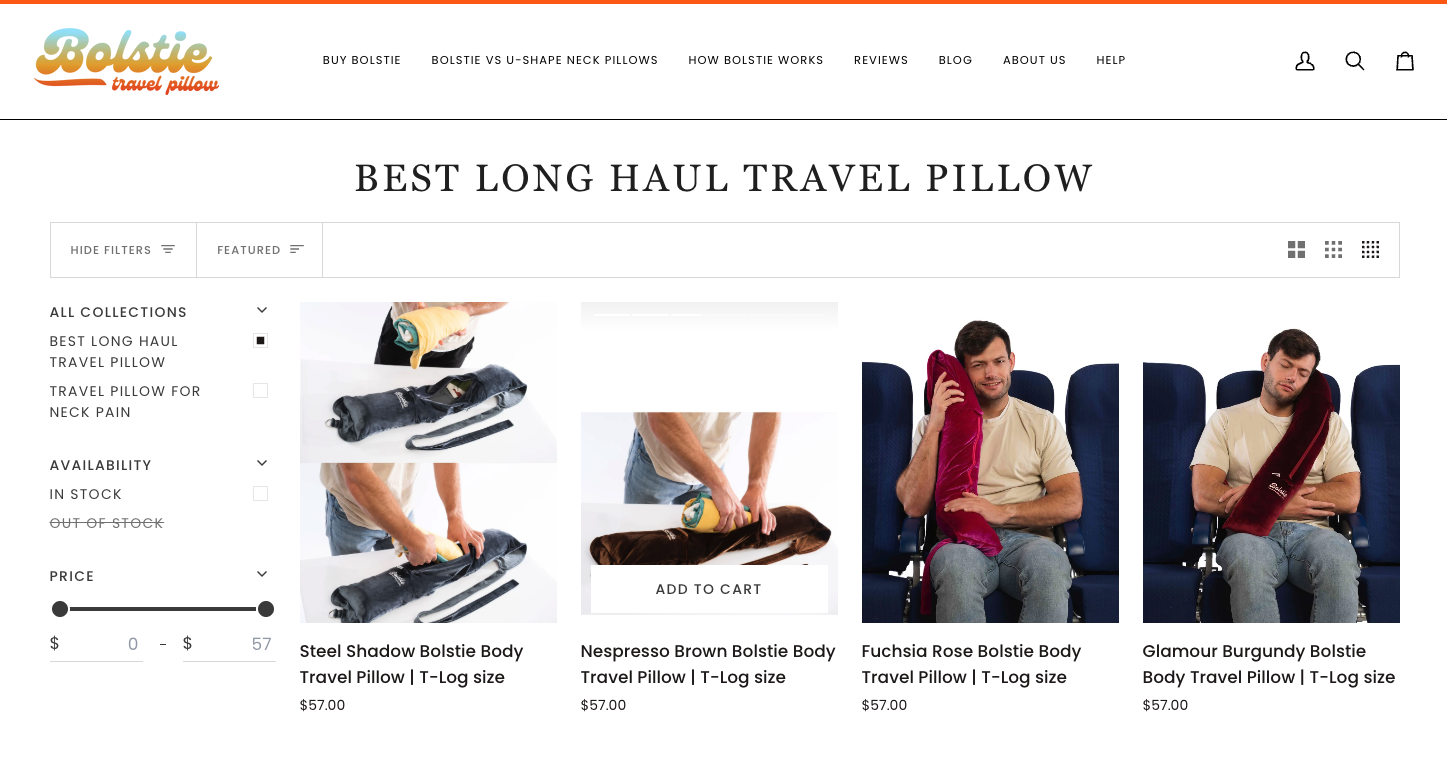
Explore our collection to find the perfect balance between support quality and packing efficiency. Each Bolstie pillow compresses small when empty but provides world-class comfort when stuffed with clothes, helping you arrive refreshed without checking bags or paying overweight fees.
Frequently asked questions
How can I stay comfortable on a long-haul economy flight?
Focus on three core strategies: maintain hydration by drinking water every hour, move regularly with brief standing breaks every two hours, and invest in quality neck support that stabilizes your head during sleep. Small habits compound over long flights to dramatically reduce discomfort.
Do ergonomic travel pillows really work better than regular ones?
Yes, ergonomic designs that support your entire upper body rather than just wrapping your neck provide measurably better rest. They prevent forward head drop and maintain spinal alignment, reducing strain by up to 50 percent compared to traditional U-shaped options.
What’s the best way to pack light while including comfort items?
Choose multipurpose gear that serves dual functions. Pillows that double as clothing storage eliminate redundant packing. Merino wool layers regulate temperature while taking half the space of cotton. Prioritize items under one pound that compress to fist size.
How do I adjust to cabin temperature changes during flights?
Dress in three removable layers: moisture-wicking base, insulating mid-layer, and lightweight outer shell. Keep all layers accessible in your personal item rather than overhead bin. This allows quick adjustments without disturbing neighbors or waiting for crew assistance.
What in-flight exercises help reduce stiffness on long flights?
Perform seated ankle circles, calf raises while standing, shoulder rolls, and gentle neck stretches every 90 to 120 minutes. Walk the aisle during beverage service for hip flexor stretches. These micro-movements take under three minutes but maintain circulation and flexibility throughout your journey.
Recommended
-
Minimize travel discomfort for economy flyers: 2026 guide – BOLSTIE TRAVEL PILLOW
-
6 Travel Comfort Tips for Economy-Class Flights in 2026 – BOLSTIE TRAVEL PILLOW
-
How to survive long plane flights: comfort tips 2026 – BOLSTIE TRAVEL PILLOW
-
How to Survive a Long-Haul Flight in Economy: Courtesy of Bolstie – BOLSTIE TRAVEL PILLOW

