

You settle into your economy seat for an eight-hour red-eye flight, ready to sleep. Within an hour, your neck aches, your head keeps dropping forward, and you realize rest won’t come easily. Economy seating restricts comfortable sleeping positions, leaving you tired and sore upon landing. A well-chosen plane travel pillow changes this experience dramatically. This guide shows you how to select and use a compact, functional travel pillow that enhances comfort without adding luggage bulk.
Table of Contents
-
Why sleep is challenging on economy-class flights and how a travel pillow helps
-
Choosing the right plane travel pillow: key features and types
-
How to properly use your plane travel pillow for maximum comfort
-
Troubleshooting common issues and maintaining your travel pillow
Key Takeaways
| Point | Details |
|---|---|
| Improved neck support | A well chosen travel pillow stabilizes the head, reducing forward collapse and neck strain during long flights. |
| 65 percent neck pain reduction | Research indicates proper travel pillows reduce neck pain by about 65 percent during flights. |
| Design options | Pillows come in neck wrap inflatable memory foam, each with tradeoffs for support, bulk, and portability, but neck free style that supports the head and body at the same time have the best results |
| Compact portable designs | Some pillows are designed to compress for easy packing, reducing luggage bulk in economy cabins. |
Why sleep is challenging on economy-class flights and how a travel pillow helps
Economy seats present unique obstacles to restful sleep. Limited recline angles force your body into upright positions that strain your neck and spine. Your head lacks stable support, causing it to bob forward or sideways as you drift off. This repetitive motion disrupts sleep cycles and creates muscle tension that worsens throughout the flight.
Common sleep challenges in economy class include:
-
Restricted seat recline limiting natural sleeping positions
-
Headrest actually pushes the head forward when seat is in upright position
-
Neck wrap styles add more head push causing further head drop repeated wake-ups
-
Shoulder and upper back tension from neck tightening and poor posture
-
Difficulty maintaining comfortable position for extended periods
Travel pillows address these problems through targeted support. They stabilize your head and neck, preventing the forward collapse that interrupts sleep. Quality pillows maintain proper spinal alignment even in upright positions, reducing strain on neck muscles and vertebrae. This support allows your body to relax more completely, improving both sleep duration and quality.
Research confirms the health benefits of proper travel pillow use:
Proper travel pillows cut neck pain by 65% during flights.
This dramatic reduction stems from how pillows distribute weight and maintain alignment. Instead of forcing neck muscles to hold your head upright for hours, the pillow provides structural support. Your muscles can relax, blood flow improves, and pressure points decrease. The result is noticeably less stiffness and discomfort both during the flight and after landing.
Beyond physical comfort, better sleep quality affects your entire travel experience. You arrive at your destination more alert and energized. Jet lag symptoms feel less severe. Your mood improves, and you’re ready to engage with your trip instead of recovering from the journey. For frequent flyers, these benefits compound over time, protecting long-term neck and spine health.
Choosing the right plane travel pillow: key features and types
Travel pillows come in several distinct designs, each offering different advantages for economy-class travelers. Understanding these differences helps you match a pillow to your specific needs and preferences.
| Pillow Type | Weight | Packability | Support Level | Durability |
|---|---|---|---|---|
| U-shaped foam | Medium | Low | Low | Medium |
| Inflatable | Light | Excellent | Low to Medium | Medium |
| Memory foam | Heavy | Low | Low | Medium |
| Neck-free torso support | Medium | Good | High | High |
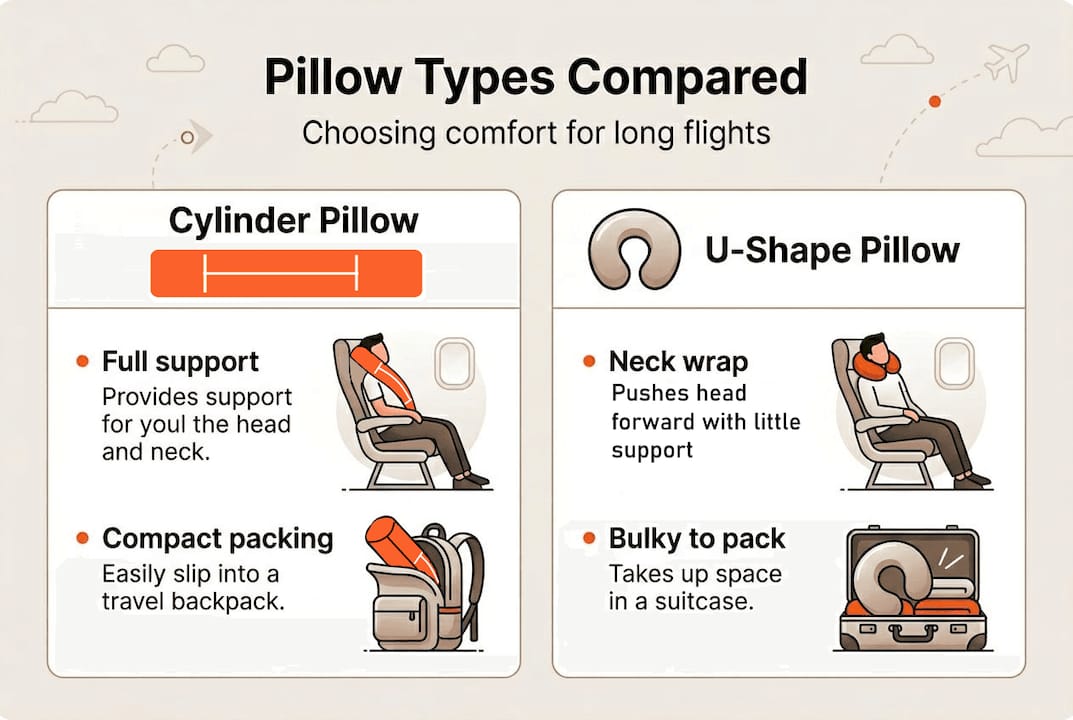
U-shaped pillows wrap around your neck are not the best choice for providing support from multiple angles. Just because they’re widely available and familiar to most travelers, don’t mean they work. Any frequent traveler will tell you this. They feel restrictive and trap heat against your skin. The wrap design also compresses your neck, which some people find uncomfortable during long flights.
Inflatable pillows offer maximum packability. They deflate to nearly flat, taking up minimal luggage space. You inflate them before use, adjusting firmness to your preference. The downside is less ergonomic support compared to structured foam designs. They can also develop leaks over time, though quality models minimize this risk.
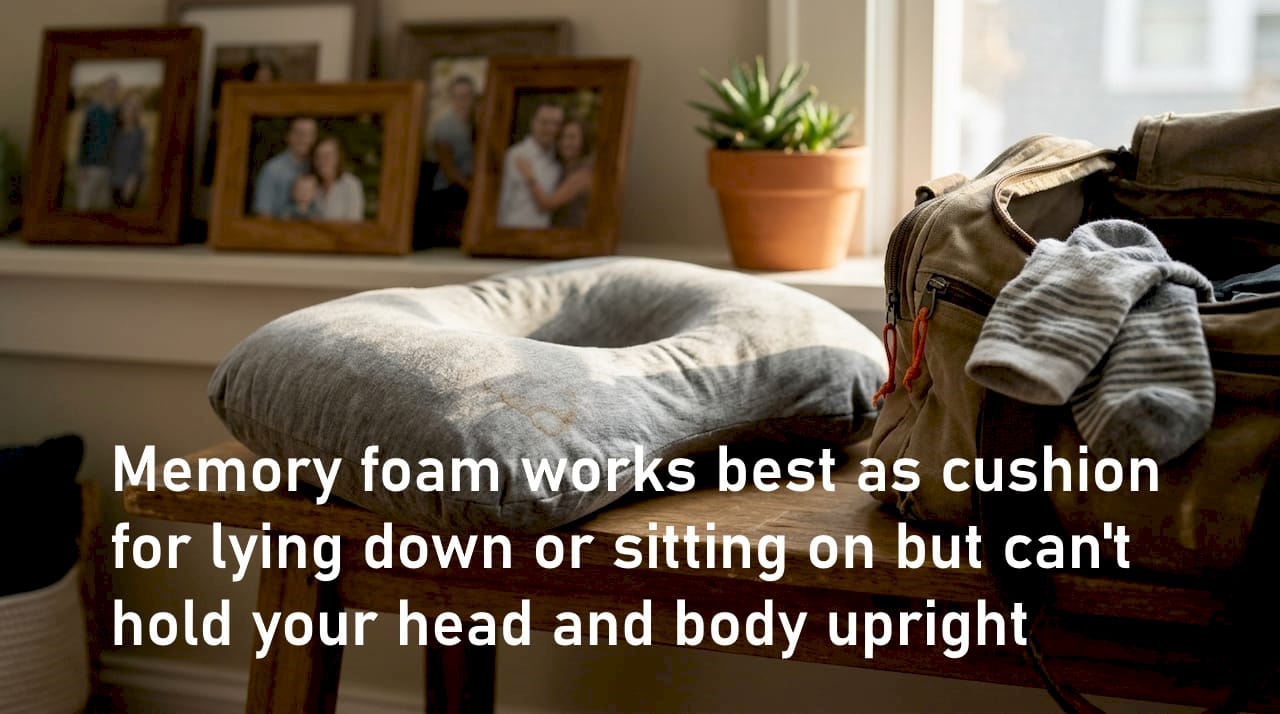
Memory foam pillows conform to your body shape, distributing pressure evenly when you are lying down but does little help when you are in a seated position. They actually don’t provide support nor maintain their shape throughout the flight as they compress under weight and pressure. Memory foam doesn’t compress much for storage, consuming valuable carry-on space. Weight is also higher than inflatable alternatives.
Neck-free designs take a different approach by supporting your torso and chest rather than wrapping your neck. These pillows allow natural head positioning while preventing forward collapse. They offer ergonomic travel pillow benefits including better airflow and reduced heat buildup.
Key features to evaluate when selecting your pillow:
-
Compactness when packed or compressed
-
Material breathability to prevent overheating because they never wrap the neck
-
Ergonomic shape matching your body geometry
-
100% machine washable for hygiene
-
Firmness level appropriate for your comfort preference
-
Become your packing system
Pro Tip: Measure your carry-on bag’s available space before purchasing. Even the best pillow loses value if it forces you to check luggage or leave other essentials behind.
Ergonomic design matters more than you might expect. Pillows that work with your body’s natural alignment reduce strain and improve circulation. Look for designs that support multiple contact points rather than focusing solely on the neck. The best pillows stabilize your position without forcing unnatural postures or restricting movement.
How to properly use your plane travel pillow for maximum comfort
Owning a quality travel pillow is just the first step. Proper positioning and use maximize its benefits and ensure comfortable sleep throughout your flight.
Follow these steps for optimal pillow placement:
-
Board early if possible to settle in without rushing your setup
-
Position the pillow before takeoff while you can still move freely
-
Adjust pillow placement to support your natural resting position
-
Test the setup by closing your eyes and relaxing your neck muscles
-
Make small adjustments until your head feels stable and supported
-
Keep the pillow in place during taxi and takeoff for immediate use
For U-shaped pillows, position the opening toward the front or side depending on which direction you prefer to lean. The thicker portion should support the heaviest part of your head. Avoid pulling the pillow too tight around your neck, as this restricts breathing and circulation.
Inflatable pillows require proper inflation levels. Too soft and they collapse under your head’s weight. Too firm and they create pressure points. Inflate to about 80% capacity, then adjust after testing. You can always add or release air mid-flight as your comfort needs change.
Torso-support pillows work differently. Place them against your chest and upper body, allowing your head to rest forward naturally. This diagonal position mimics how your body wants to rest when seated upright. The pillow prevents your head from dropping too far forward while keeping airways open. This approach follows guidance from experts on comfortable in-flight sleep.
Adjust for different seat configurations. Window seats let you lean against the wall for additional support. Combine your pillow with the window surface to create a stable resting position. Aisle seats offer less external support, making pillow quality more critical. Middle seats are most challenging but benefit from any pillow that prevents head bobbing.
Pro Tip: Pair your travel pillow with a light blanket and eye mask. The blanket adds warmth without bulk, while the eye mask blocks cabin lights. This combination creates a sleep-friendly environment even in bright, active cabins.
Store your pillow properly between uses. Compress it as much as possible to save space. Keep it in an accessible pocket so you can retrieve it easily during the flight. Clean storage prevents dirt and bacteria buildup, maintaining hygiene for your next trip.
Troubleshooting common issues and maintaining your travel pillow
Even quality pillows can present challenges during use. Recognizing common problems and knowing quick fixes keeps you comfortable throughout your journey.
Typical issues travelers encounter:
-
Pillow sliding out of position during sleep
-
Insufficient support causing continued neck strain
-
Allergic reactions to pillow materials or covers
-
Overheating from poor breathability
-
Difficulty finding comfortable positioning
-
Pillow losing shape or firmness mid-flight
For sliding pillows, secure them against stable surfaces. Window-seat travelers can wedge the pillow between their body and the wall. All passengers can tuck pillows under seatbelts or position them so body weight holds them in place. Some pillows include attachment straps or clips designed to prevent movement.
Insufficient support usually means the pillow doesn’t match your body geometry. Try repositioning before concluding the pillow is inadequate. Small adjustments in angle or height often make significant differences. If repositioning fails, consider whether a different pillow type would serve you better on future flights.
Allergic reactions require immediate attention. Remove the pillow and use airline-provided alternatives if available. Note which material triggered the reaction so you can avoid it when purchasing your next pillow. Many travelers with sensitivities choose hypoallergenic memory foam or natural fiber covers.
| Maintenance Method | Washing Instructions | Drying Time | Care Rating |
|---|---|---|---|
| Machine wash cover | Cold water, gentle cycle | 1 hour | Excellent |
| Spot clean foam | Damp cloth with mild soap | 4-6 hours | Good |
| Hand wash inflatable | Warm soapy water | 1-2 hours | Excellent |
| Wipe exterior only | Disinfectant wipe | 10 minutes | Fair |
Regular cleaning extends pillow life and maintains hygiene. Remove covers after each trip and wash according to manufacturer instructions. Most covers tolerate machine washing on gentle cycles. Air drying prevents shrinkage and material damage.
Foam pillows require more careful cleaning. Spot clean stains immediately with mild soap and water. Avoid soaking foam, as it absorbs moisture and takes days to dry completely. Some foam types degrade when exposed to harsh detergents or high heat.
Pro Tip: Choose pillows with removable, machine-washable covers. This feature dramatically simplifies maintenance and ensures your pillow stays fresh and hygienic trip after trip.
Inflatable pillows are easiest to clean. Deflate them fully, then wash with warm soapy water. Rinse thoroughly and air dry before storing. Check for leaks periodically by inflating and submerging in water. Bubbles indicate holes that need patching.
Space-saving designs offer particular value for economy travelers. These pillows compress significantly when not in use, fitting into small carry-on pockets. Some models double as packing organizers, letting you fill them with clothing to create firm support while maximizing luggage efficiency. This dual purpose eliminates the bulk problem entirely, making the pillow a net space saver rather than an additional item.
Store pillows in cool, dry locations between trips. Avoid leaving them compressed for months, as this can permanently deform foam materials. Allow foam pillows to fully expand between uses to maintain their supportive properties.
Discover the best plane travel pillows for economy comfort
Finding the right travel pillow transforms your economy-class experience from uncomfortable to restful. The best options combine ergonomic support with practical packability, addressing both comfort and space constraints.

Modern travel pillows are engineered specifically for economy-class realities. They provide professional-grade support without the bulk of traditional designs. Look for pillows that support your body’s natural resting position rather than forcing your neck into restrictive wraps.
The best long haul travel pillow designs prioritize full-body stability over single-point neck support. These pillows work with your torso and chest to keep you comfortably upright throughout overnight flights. They compress down when empty and expand to full support when filled, giving you flexibility based on your packing needs.
For travelers seeking both style and function, options like the nespresso brown bolstie neck pillow combine sophisticated design with practical comfort features. These pillows look professional while delivering the support your body needs during long flights.
FAQ
What is the best travel pillow type for economy-class flights?
U-shaped and memory foam pillows remain popular for their neck support and widespread availability. However, ergonomic designs that support your torso and chest often provide superior comfort for long flights. These newer designs prevent forward head drop while allowing natural breathing and movement, reducing the strain and heat buildup common with neck-wrapping styles.
How do I clean and maintain my plane travel pillow?
Use removable machine-washable covers whenever possible for easiest maintenance. Wash covers in cold water on gentle cycles after each trip, then air dry completely. For the pillow itself, spot clean memory foam with a damp cloth and mild soap, avoiding full saturation. Inflatable pillows can be hand-washed with warm soapy water and air-dried quickly.
Can a travel pillow really reduce neck pain on long flights?
Yes, research confirms that proper travel pillows significantly reduce neck discomfort. Studies show travel pillows cut neck pain by 65% during flights by maintaining spinal alignment and preventing muscle strain. This benefit comes from how quality pillows distribute your head’s weight and stabilize your position, allowing neck muscles to relax instead of working constantly to hold your head upright.
Are inflatable travel pillows a good choice for economy travelers?
Inflatable pillows excel at packability, compressing to nearly flat when deflated. This makes them ideal for minimalist packers with strict luggage limits. However, they typically provide less ergonomic support than structured foam designs. Consider your priorities: if space saving is paramount and you can sleep with moderate support, inflatables work well. If neck pain is a concern, structured ergonomic designs offer better long-term comfort despite taking more space.
Recommended
-
How to Sleep Comfortably While Traveling in Economy Class – BOLSTIE TRAVEL PILLOW
-
Packing cylinder pillow guide for economy-class sleep – BOLSTIE TRAVEL PILLOW
-
Why choose multi-use travel pillows for economy comfort – BOLSTIE TRAVEL PILLOW
-
How to Sleep Comfortably on Planes for Long Flights – BOLSTIE TRAVEL PILLOW

