

Sleeping on red-eye flights in economy class is one of the most frustrating challenges for frequent travelers. Cramped seating, ambient noise, and poor support make rest nearly impossible for many passengers. Yet millions of economy-class travelers face overnight flights regularly, sacrificing comfort and arriving exhausted. This article delivers practical, space-efficient comfort tips designed specifically for economy-class red-eye flights. You’ll discover proven strategies to improve your sleep quality, from selecting the right travel gear to adopting simple relaxation techniques that work in tight spaces.
Table of Contents
-
Criteria for choosing travel comfort solutions on red-eye flights
-
Top travel comfort items to improve sleep on red-eye flights
-
Head-to-head comparison of travel pillows and sleep aids for economy flights
-
Choosing and applying comfort tips effectively for your next red-eye flight
-
Relax and sleep better on red-eye flights with Bolstie travel pillows
Key Takeaways
| Point | Details |
|---|---|
| Smart preparation | Strategic packing and habits improve sleep quality on red eye flights. |
| Space efficient gear | Choose multipurpose gear that fits carry on limits and still delivers comfort. |
| Body support design | Look for head and upper body support that stays firm in an upright position to prevent forward head drop. |
| Economy travel pillows | Travel pillows designed for economy seating provide upright rest and stabilize the head and upper torso. |
Criteria for choosing travel comfort solutions on red-eye flights
Understanding what makes a comfort solution effective helps you avoid wasting money on bulky or ineffective products. Economy-class constraints demand careful evaluation of every item you pack.
Space efficiency ranks as the top criterion for economy travelers. Your comfort gear must fit within strict carry-on limits while leaving room for essentials. How travel pillows improve upright rest for economy flyers shows that economy travelers must prioritize compact, multi-use gear for comfort due to limited space. Items that serve dual purposes, like pillows that double as packing organizers, maximize value without adding bulk.
Body support design determines whether you’ll actually rest or wake up with neck pain. Look for solutions that stabilize your head and upper body in economy’s upright position. Traditional neck wraps often compress under head weight, while body-support designs maintain structure throughout the flight. The sleep comfortably on planes guide explains proper support geometry for economy seating.
Material quality affects both comfort and hygiene during long flights. Breathable fabrics prevent heat buildup and sweat accumulation. Machine-washable materials let you maintain freshness between trips. Avoid synthetic materials that trap moisture or create uncomfortable hot spots during extended use.
Key selection criteria include:
-
Compressibility for easy packing and storage
-
Structural integrity that maintains support under body weight
-
Breathability to prevent overheating
-
Washability for hygiene maintenance
-
Multi-functionality to reduce total item count
Pro Tip: Test any travel comfort item at home in an upright position before your flight. Sit in a firm chair for 30 minutes to verify the support actually works when you’re not lying flat.
Relaxation capability matters as much as physical gear. The best equipment fails if you can’t mentally settle into sleep mode. Consider whether a solution helps you relax or creates new discomfort through restriction or awkward positioning.
Top travel comfort items to improve sleep on red-eye flights
The right gear makes the difference between arriving exhausted and landing refreshed. These items specifically address economy-class constraints while delivering genuine comfort improvements.
Travel pillows designed for economy seating provide the foundation for upright rest. Looking for the best long haul flight neck pillow? Bolstie has you covered from head to core demonstrates that using specialized travel pillows offers significant support for upright rest in economy seating. Unlike traditional neck wraps, body-support pillows stabilize your head, jaw, and upper torso together, preventing the forward head drop that disrupts sleep. The best long haul travel pillows compress small when empty but provide firm support when filled with clothing.
Light-blocking eye masks accelerate sleep onset by triggering your body’s natural darkness response. Choose contoured designs that don’t press on your eyelids or smudge makeup. Adjustable straps prevent the mask from sliding during sleep. Silk or soft foam materials feel comfortable against skin for hours.
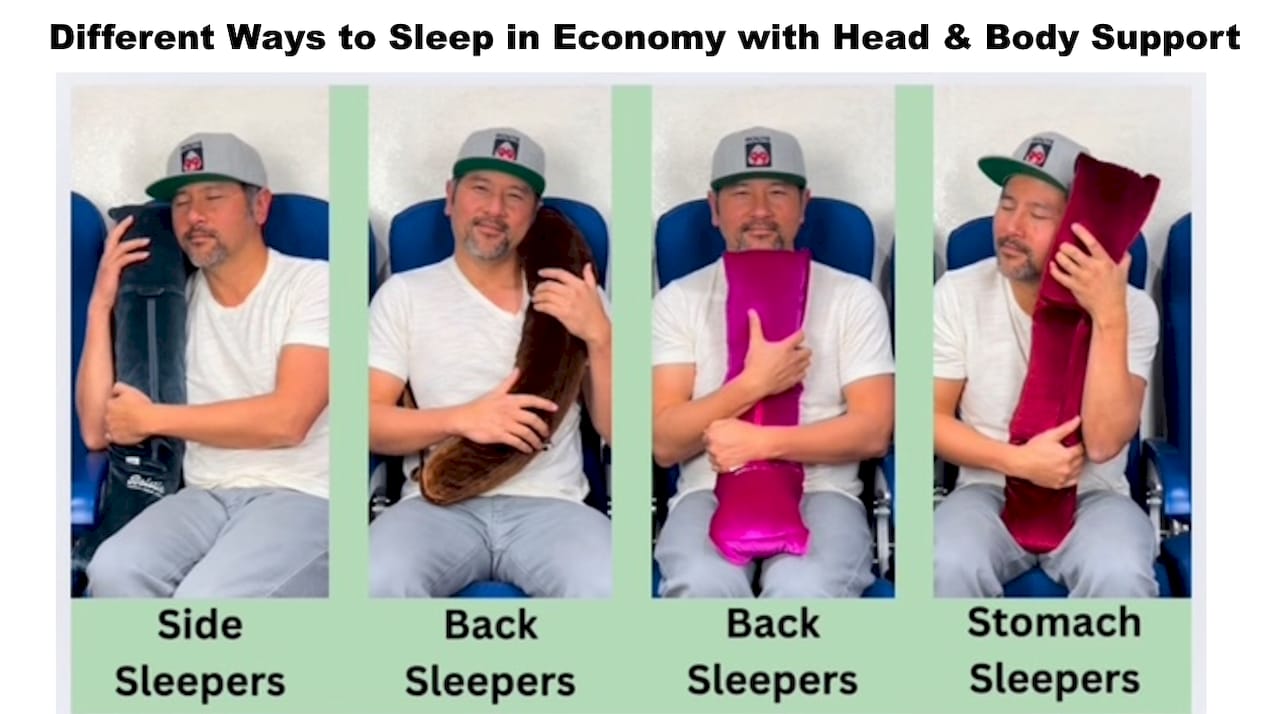
Noise management tools create a quieter environment in loud cabins. Noise-canceling headphones eliminate engine drone and passenger chatter. Foam earplugs offer a lighter, more compact alternative. Some travelers prefer white noise apps combined with regular earbuds for a middle-ground solution.
Essential comfort items comparison:
| Item Type | Primary Benefit | Packing Size | Typical Cost Range |
|---|---|---|---|
| Body-support pillow | Upright stability | Compresses to 6x8 inches | $40-$80 |
| Contoured eye mask | Light blocking | Fits in palm | $10-$25 |
| Foam earplugs | Noise reduction | Pocket-sized | $5-$15 |
| Noise-canceling headphones | Complete sound isolation | Foldable case | $100-$350 |
| Compact travel blanket | Temperature regulation | Rolls to water bottle size | $20-$50 |
Temperature regulation layers help you adapt to unpredictable cabin conditions. Bring a lightweight scarf or shawl that provides warmth without bulk. Merino wool regulates temperature naturally and resists odors. Avoid cotton, which holds moisture and loses insulating properties when damp.
Pro Tip: Pack a small stuff sack to compress your temperature layers into pillow filling. This multi-use travel pillows economy comfort approach eliminates the need for separate pillows and clothing storage.
Breathable clothing prevents overheating during sleep. Loose-fitting pants and tops allow air circulation. Remove shoes but keep socks on for hygiene and warmth. Compression socks improve circulation on long flights while maintaining comfort.
Head-to-head comparison of travel pillows and sleep aids for economy flights
Understanding the differences between comfort solutions helps you choose what actually works for your travel style. Not all highly-rated products suit economy-class constraints.
Memory foam pillows conform to your body but often lack structure for upright sleeping. They compress well for packing but may not provide adequate support when you need it most. Memory foam also retains heat, creating discomfort on longer flights. These work better for passengers who can recline significantly.
Inflatable pillows offer extreme compressibility but frequently deflate partially during use. The plastic surface feels clammy against skin and doesn’t breathe. Inflation requires effort, and valve failures strand you without support mid-flight. Budget airlines and occasional travelers often choose these for their low cost and tiny packed size.
Microbead pillows provide moldable support that adapts to position changes. The beads shift to fill gaps and maintain contact. However, microbeads settle to the bottom over time, reducing effectiveness. These pillows rarely compress small enough for efficient packing.
Step by step travel pillow selection for long flights shows that proper travel pillow selection enhances sleep quality and minimizes neck strain on long economy flights. Body-support designs that stabilize multiple contact points outperform single-purpose neck pillows for upright rest.
| Pillow Type | Support Quality | Compressibility | Breathability | Durability | Best For |
|---|---|---|---|---|---|
| Memory foam | Medium | Good | Poor | Excellent | Reclined sleeping |
| Inflatable | Poor | Excellent | Poor | Fair | Minimal packers |
| Microbead | Good | Fair | Good | Fair | Reclined sleeping |
| Body-support | Excellent | Very Good | Excellent | Excellent | Upright economy rest |
Eye mask quality varies dramatically by design. Flat masks press on eyelids and shift during sleep. Contoured masks with nose bridges block more light and stay in place. Weighted masks provide gentle pressure some travelers find soothing. The best long haul flight neck pillows details explains how complete comfort systems work better than isolated solutions.
Noise-canceling technology has improved dramatically in recent years. Over-ear headphones provide superior noise reduction but add bulk. In-ear models save space but may cause ear fatigue during long wear. Passive foam earplugs block sound effectively without batteries or weight. Consider your typical flight duration and noise sensitivity when choosing.
Sleep aid combinations multiply effectiveness. Pairing a body-support pillow with an eye mask and earplugs creates a complete rest environment. The long plane flight comfort tips guide shows how layering solutions addresses multiple comfort barriers simultaneously.
Cleaning and maintenance requirements affect long-term value. Machine-washable items maintain freshness easily. Wipe-clean surfaces work for quick refreshes between flights. Avoid products that require special cleaning or degrade quickly with regular use.
Choosing and applying comfort tips effectively for your next red-eye flight
Implementing these strategies requires planning and personalization. The most effective approach combines multiple tactics tailored to your specific needs.
Identify your primary sleep obstacles first. Do you struggle with neck pain, light sensitivity, noise, or temperature? Rank these by impact on your rest quality. Invest in solutions for your top two barriers before addressing secondary issues. This focused approach prevents overpacking while maximizing comfort improvements.
Create a pre-flight comfort checklist:
-
Pack body-support pillow and compression bag for clothing fill
-
Include eye mask and noise management tools in accessible pocket
-
Wear loose, breathable layers you can adjust mid-flight
-
Select seat with optimal recline and minimal disturbances
-
Download relaxation audio or meditation apps before departure
-
Set phone to airplane mode to eliminate notification disruptions
-
Hydrate well before boarding but limit fluids two hours before sleep
How to sleep comfortably while traveling in economy class shows that combining the right gear with relaxation and seat selection improves red-eye flight sleep significantly. No single solution works alone. Layering strategies creates redundancy when one element underperforms.
Seat selection dramatically impacts rest potential. Window seats let you control shade and lean against the wall. Avoid seats near galleys or lavatories where activity continues throughout the flight. Exit rows provide legroom but often have fixed armrests and no under-seat storage. The travel comfort tips economy class 2026 guide details seat selection strategies for different aircraft types.
Relaxation techniques prepare your body for sleep in challenging environments. Practice relaxation techniques for better sleep before your trip so they feel natural during the flight. Progressive muscle relaxation releases tension systematically. Box breathing calms your nervous system. Visualization exercises distract from discomfort and noise.
Pro Tip: Establish a consistent pre-sleep routine you can replicate on flights. Your body learns to associate specific actions with sleep onset, making rest easier even in economy seats.
Timing matters for red-eye success. Adjust your sleep schedule two days before departure to align with flight timing. Avoid caffeine six hours before your target sleep time. Eat a light meal two hours before boarding to prevent hunger or discomfort. These small adjustments amplify the effectiveness of your physical comfort gear.
Test your complete system on a shorter flight first. This reveals gaps in your strategy without the consequences of arriving exhausted for an important event. Adjust based on what worked and what created new problems. Refine your approach over several trips to develop your optimal comfort system.
Relax and sleep better on red-eye flights with Bolstie travel pillows
Transforming red-eye flights from exhausting ordeals into restful journeys requires the right support system. Bolstie travel pillows solve the core challenge economy travelers face by providing structured, body-centered support that works with upright seating.
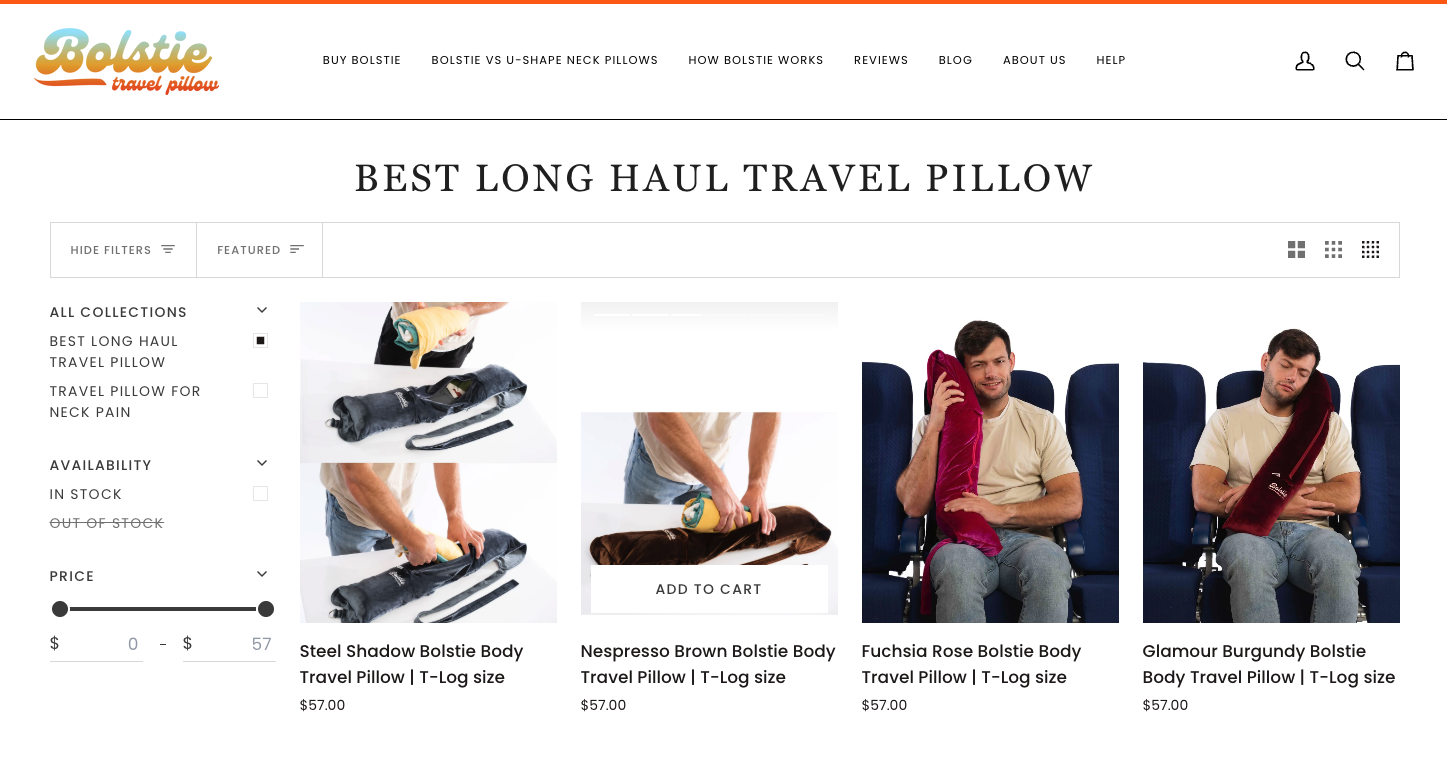
Unlike traditional neck pillows that focus on a single contact point, Bolstie stabilizes your head, jaw, chest, and upper torso together. This diagonal support prevents forward head drop and maintains your natural resting position throughout the flight. The design allows airflow around your neck, eliminating the heat buildup and restriction common with wrap-around styles.
The multi-use design maximizes your carry-on efficiency. Pack the pillow empty for minimal space, then fill it with clothing at your destination for firm support. This eliminates the choice between comfort gear and packing space. Frequent flyers appreciate how Bolstie reduces total luggage while improving rest quality. Explore the best long haul travel pillow options designed specifically for economy-class constraints.
Business travelers and frequent flyers find Bolstie particularly valuable for maintaining productivity across time zones. Arriving rested means starting work immediately instead of losing a day to recovery. The travel pillow for business owners collection addresses the specific needs of professionals who can’t afford to waste time on jet lag.
What are the best travel comfort tips for red-eye flights?
What type of travel pillow works best for sleeping upright in economy class?
Body-support pillows that stabilize your head and upper torso together work best for upright economy rest. These prevent forward head drop and maintain natural alignment without restricting your neck or trapping heat.
How can I block out light and noise effectively on overnight flights?
Combine a contoured eye mask with either foam earplugs or noise-canceling headphones. Contoured masks block light without pressing on your eyelids, while layered noise management handles both steady engine drone and sudden passenger sounds.
What clothing works best for sleeping on red-eye flights?
Wear loose, breathable layers in natural fibers like merino wool that regulate temperature and resist odors. Avoid cotton, which holds moisture and loses warmth when damp. Keep compression socks on for circulation while removing restrictive shoes.
Should I choose a window or aisle seat for better sleep on red-eye flights?
Window seats provide wall support for leaning and let you control the shade without depending on neighbors. You also avoid being disturbed by passengers accessing the aisle. The trade-off is less freedom to stand and stretch without climbing over others.
How do I pack travel comfort items without exceeding carry-on limits?
Choose multi-use items like pillows that compress when empty and fill with clothing for support. Pack temperature layers that double as pillow filling. Select compact versions of essentials and test your complete system before departure to eliminate unnecessary items.
What relaxation techniques help you fall asleep faster on planes?
Box breathing, progressive muscle relaxation, and visualization exercises calm your nervous system in noisy, uncomfortable environments. Practice these techniques at home first so they feel automatic during flights. Consistency matters more than complexity for in-flight relaxation.
Recommended
-
How to Sleep Comfortably While Traveling in Economy Class – BOLSTIE TRAVEL PILLOW
-
How I Survive Any Red-Eye Flights Without Upgrading My Seat – BOLSTIE TRAVEL PILLOW
-
Minimize travel discomfort for economy flyers: 2026 guide – BOLSTIE TRAVEL PILLOW
-
6 Travel Comfort Tips for Economy-Class Flights in 2026 – BOLSTIE TRAVEL PILLOW

