

How travel pillows improve upright rest for economy flyers
Many economy travelers believe neck pain during flights is unavoidable, accepting stiff necks and poor sleep as part of the journey. This misconception stems from using the wrong support or none at all. Travel pillows designed for upright rest can dramatically change your flight experience by preventing your head from falling forward and keeping your body from slumping. The right pillow distributes gravity’s constant pull across your torso instead of concentrating it on your neck and lower spine, transforming how you rest in economy seats.
Table of Contents
-
Understanding The Challenges Of Upright Rest In Economy Class
-
How Travel Pillows Support Upright Rest And Reduce Neck Strain
-
Comparing Travel Pillow Types: Finding The Ideal Fit For You
-
Maximizing Comfort On Long-Haul Flights: Practical Tips For Using Travel Pillows
-
Discover Comfort With Bolstie Travel Pillows For Your Next Flight
Key takeaways
| Point | Details |
| Proper support prevents head drop | Effective travel pillows stabilize your head and upper body together, stopping forward collapse that causes neck strain. |
| Neck-only designs fail long-term | Pillows that only cushion the neck fatigue quickly because they don’t address gravity’s pull on your entire upper body. |
| 100% machine washable | If the cover is washable and not the core, you are just covering up dirt and bacteria |
| Compressible designs save space | Choosing pillows that compress small helps economy travelers avoid baggage fees while maintaining comfort. |
| Combined accessories maximize rest | Pairing pillows with eye masks and earplugs creates an optimal sleep environment on flights. |
Understanding the challenges of upright rest in economy class
Economy seats present a fundamental physics problem that most travelers don’t recognize. Gravity constantly pulls on everything above your waist and hips, compounding weight onto your lower spine when sitting upright. Limited recline angles, typically 3 to 4 inches in economy, offer minimal relief from this downward force. Your body naturally wants to collapse forward or sideways to find equilibrium, but confined seating prevents comfortable repositioning.
The neck becomes the primary victim of this battle against gravity. Your neck muscles aren’t designed to hold your head upright for hours, they’re meant to assist temporarily. After 10 to 20 minutes of constant effort, these muscles fatigue rapidly, leading to the familiar stiffness and pain travelers experience. Without proper support distributing the load, your neck bears the entire burden of preventing your head from falling forward.
Many travelers underestimate how much targeted support can transform their experience. Common misconceptions include believing any cushion helps or that toughing it out builds resilience. The reality is simpler: your body needs mechanical support to counteract gravity’s effects. Without it, you’re fighting a losing battle that guarantees poor sleep quality and morning stiffness.
Consider these specific challenges economy travelers face:
-
Seats designed for short-haul flights used on long-haul routes
-
Minimal personal space restricting natural sleep positions
-
Headrests, in the upright seat position, actually push your head forward instead of supporting it
-
Armrests preventing sideways leaning without discomfort
Understanding these obstacles helps you see why generic solutions fail. Your body needs support that works with gravity, not against it. Explore tips for upright sleeping during travel to learn positioning strategies that complement proper pillow support.
How travel pillows support upright rest and reduce neck strain
Effective travel pillows function as structural support systems, not just soft cushions. They must prevent your head from falling forward while simultaneously keeping your body from slumping. This dual action is what separates functional designs from decorative neck wraps. When a pillow only addresses the neck, it’s cushioning the head after it has already dropped, which defeats the entire purpose of support.
Proper ergonomic design distributes gravity’s pull throughout your upper body instead of concentrating it on your neck. Think of it like a building’s foundation: spreading the load across multiple support points prevents any single area from bearing excessive stress. A pillow that stabilizes your head, jaw, chest, and upper torso together creates this distributed support network. Your neck can finally relax because it’s no longer the sole structure fighting gravity.
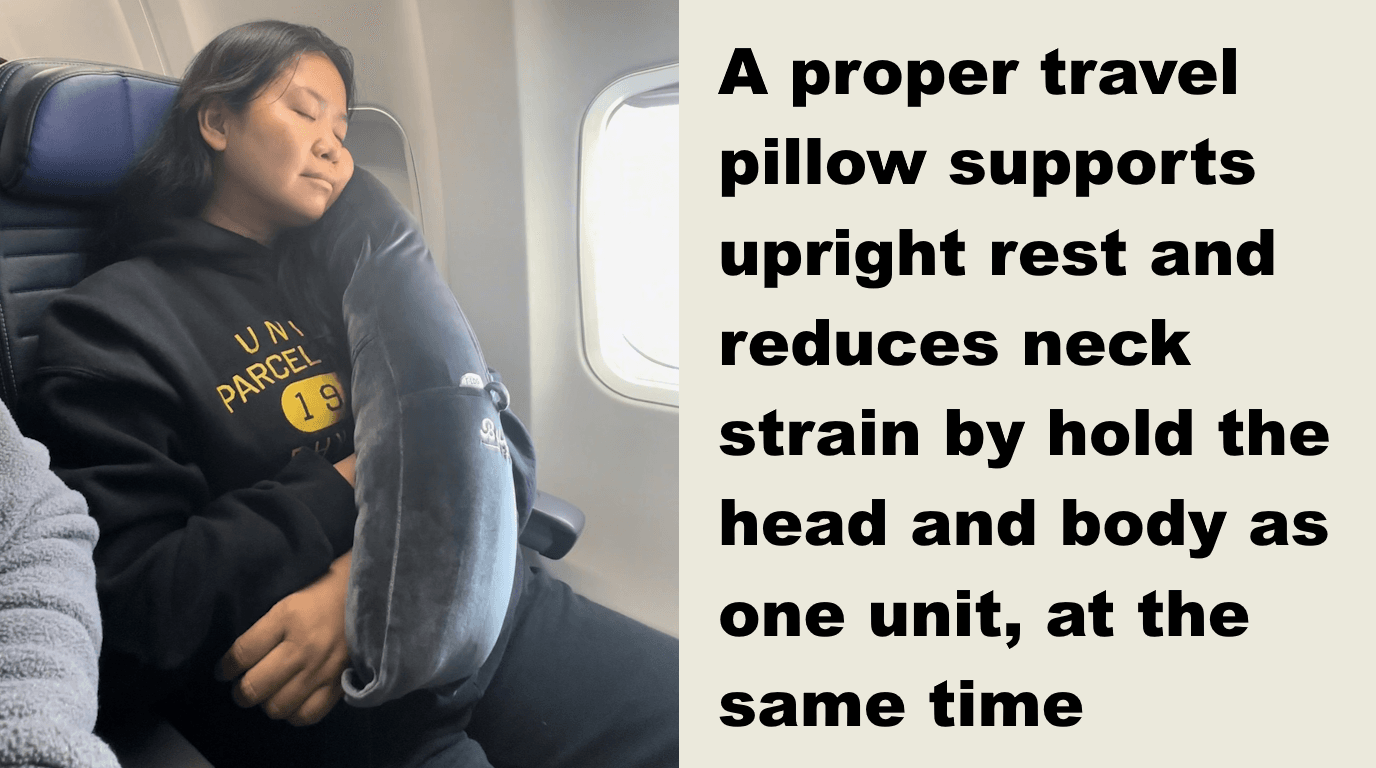
The modern-day neck wrapping travel pillow designs are often marketed as new and innovative, but the simple fact stills remains…they continue to wrap the neck and use it as an anchor point. This demonstrates the lack of knowledge and understanding of the human body and it’s biomechanics. A proper travel pillow should adapt to various body types, sleep preferences, and individual anatomy works the best. Some travelers need firmer support, others prefer softer cushioning. The key is finding a design that maintains your head position without requiring constant muscle engagement.
Traditional U-shaped pillows wrap around your neck, creating high walls that squeeze your face and restrict airflow. This compression might look supportive, but it actually traps heat and becomes uncomfortable during long flights. Worse, these designs still allow your head to fall forward because they only cushion, they don’t stabilize. Your neck muscles continue working overtime, leading to the same fatigue and pain you’re trying to avoid.
Pro Tip: Test your travel pillow at home by sitting upright in a firm chair for 30 minutes. If you feel neck strain or need to readjust frequently, the pillow isn’t providing adequate support for flight conditions.
Consider these support features that matter most:
-
Structured core that maintains shape under head weight
-
Positioning that prevents forward head drop
-
Breathable materials reducing heat buildup
-
Adjustability for different body sizes and preferences
No single design works for everyone, which is why understanding support mechanics helps you evaluate options critically. Learn more about benefits of ergonomic travel pillows to identify features that match your specific needs.
Comparing travel pillow types: finding the ideal fit for you
Different pillow designs approach upright support from varying angles, each with distinct advantages and limitations. Understanding these differences helps you select based on your travel patterns, storage constraints, and comfort priorities. The comparison below highlights key factors economy travelers should evaluate.
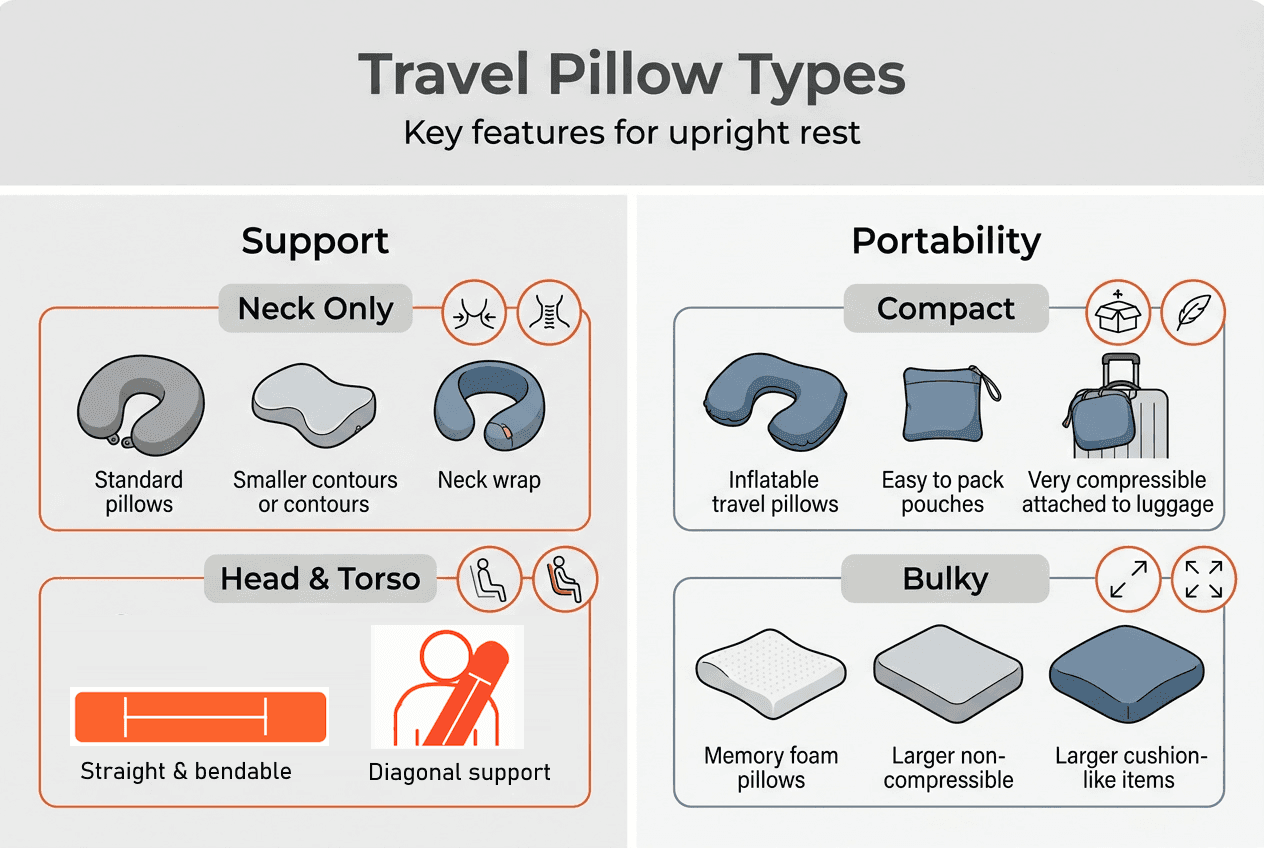
| Pillow Type | Support Level | Portability | Storage Size | Best For | ||
| Fleece wrap with internal frame | Moderate, head still tilts & fall forward | Moderate, requires compression bag | Medium when compressed | Short flights, frequent flyers needing a quick fix | ||
| Traditional U-shape | Low, cushions the head after it already fallen | Moderate, requires compression bag | Medium when compressed | Short flights, travelers prioritizing minimal luggage | ||
| Body support pillow | Very high, full torso & head stabilization | 100% when part of packing system | Zero storage when part of packing system | Overnight flights, long hauls, international, frequent travelers | ||
| Inflatable neck pillow | Low, minimal structural support | Very high, deflates completely | Very small | Budget travelers, emergency backup option | ||
Pro Tip: For flights longer than 3 hours, prioritize support level over portability. The discomfort from inadequate support far outweighs the minor inconvenience of carrying a slightly larger pillow.
Your ideal choice depends on balancing multiple factors. Business travelers flying weekly might prioritize durability and consistent performance over size. Families need options that work for multiple body types without requiring separate purchases for each person. Occasional vacationers might emphasize packability for their once-yearly trip.
Explore travel pillow design matters to understand how construction details impact real-world performance. Additionally, check travel pillow design trends 2026 to see how newer innovations address traditional design limitations.
Maximizing comfort on long-haul flights: practical tips for using travel pillows
Even the best pillow delivers suboptimal results without proper usage techniques. Strategic positioning and complementary accessories multiply the effectiveness of your support system. These expert-recommended practices help you extract maximum value from your travel comfort investment.
-
Position your pillow before takeoff to establish proper alignment from the start. Waiting until you’re tired means settling for whatever feels comfortable in the moment, which often isn’t optimal for sustained rest. Adjust height, angle, and firmness while you’re alert enough to evaluate objectively.
-
Combine your pillow with noise-canceling earplugs and a contoured eye mask. Properly supportive pillows combined with eye masks and earplugs help maximize comfort and minimize distractions on long flights, creating a sensory cocoon that promotes deeper sleep. Light and noise are major sleep disruptors at altitude.
-
Take brief stretching breaks every 45 to60 minutes to prevent overall stiffness. Even perfect support can’t eliminate the effects of prolonged immobility. Stand, reach overhead, and roll your shoulders to maintain circulation and flexibility.
-
Adjust pillow firmness based on seat recline availability. If your seat reclines more than expected, you may need less aggressive support. Conversely, completely upright positions require maximum stabilization to prevent slumping.
-
Layer a lightweight scarf or a soft tee shirt between your pillow and skin on very long flights. This barrier prevents moisture buildup. adds extra cushioning, and maintains freshness, especially important on overnight journeys where you’ll be using the pillow for eight-plus hours.
Pro Tip: Pack a small stuff sack to compress your pillow during ground portions of your journey. This keeps it clean and out of the way until boarding, then provides organized storage when you’re moving through the airport post-flight.
These techniques work synergistically with quality pillow design to create genuinely restful flight experiences. The difference between arriving exhausted versus refreshed often comes down to these seemingly small optimizations. Review the expert guide to upright rest on flights for additional positioning strategies specific to different aircraft seat configurations.
For comprehensive preparation covering all aspects of economy comfort, consult travel comfort tips 2026 economy class to stay current with the latest evidence-based recommendations.
Discover comfort with Bolstie travel pillows for your next flight
Now that you understand how proper support transforms upright rest, it’s time to experience the difference firsthand. Bolstie travel pillows are engineered specifically for economy-class realities, addressing the core challenge of preventing head drop and body slump simultaneously. Our designs distribute gravity’s effects across your upper body, giving your neck the relief it desperately needs on long flights.

Unlike traditional neck pillows that only cushion after your head falls, Bolstie provides structural stabilization that prevents collapse before it starts. The unique clothing-fillable design means you’re not wasting precious carry-on space on air, you’re using clothes you’re already packing to create firm, customized support. Explore our best long haul travel pillow collection to find options engineered for your specific travel patterns. Check out the best neck travel pillow stuffed clothes for our signature space-saving design, or discover the glamour burgundy bolstie travel pillow for extended torso support on overnight flights.
Frequently asked questions
What makes a travel pillow effective for upright rest?
Effective travel pillows prevent your head from falling forward while keeping your body from slumping, distributing gravity’s pull across your upper torso. Neck-only designs fail because they cushion after collapse rather than preventing it. Look for structured support that stabilizes your head, jaw, chest, and upper body together.
Can travel pillows help prevent waking with neck pain on long flights?
Yes, when designed properly. Pillows that distribute weight across your torso remove the burden from your neck muscles, which aren’t meant to hold your head upright for hours. Without this support, your neck fatigues within 20 minutes, causing the stiffness and pain you feel upon waking. Proper stabilization lets your neck truly rest.
Are there travel pillows recommended specifically for children?
Absolutely. Children need pillows scaled to their smaller frames and developing spines. Adult pillows position incorrectly on kids’ shorter necks, providing inadequate support or creating pressure points. Properly sized children’s pillows maintain spinal alignment and significantly reduce discomfort complaints during travel. Learn more about benefits of ergonomic travel pillows designed for various body types.
How compact should a travel pillow be for economy-class travel?
Balance support quality with portability based on flight length. For trips under four hours, highly compressible designs work fine. For long-haul flights exceeding six hours, prioritize support level over minimal size because inadequate rest creates far more problems than carrying a slightly larger pillow. Many effective designs compress to medium size, fitting easily in carry-on bags.
What other accessories improve upright sleeping comfort on planes?
Contoured eye masks block ambient light more effectively than flat designs, while quality earplugs reduce engine noise and passenger sounds. Compression socks prevent leg swelling on long flights, and a lightweight blanket maintains comfortable body temperature in variable cabin conditions. These items work synergistically with your travel pillow to create an optimal rest environment.
Do inflatable travel pillows provide adequate support for upright sleeping?
Inflatable pillows prioritize portability over support, offering minimal structural stabilization. They cushion but don’t prevent head drop or body slump, meaning your neck muscles continue working throughout the flight. Consider them emergency backup options rather than primary support solutions, especially for flights longer than three hours where fatigue becomes significant.
Recommended
-
7 Benefits of Ergonomic Travel Pillows for Economy Flyers – BOLSTIE TRAVEL PILLOW
-
Role of Support Pillows in Economy Travel Comfort – BOLSTIE TRAVEL PILLOW
-
Why Travel Pillow Design Matters for Real Comfort – BOLSTIE TRAVEL PILLOW
-
Travel pillow ergonomics: improve economy-class comfort – BOLSTIE TRAVEL PILLOW

