

Over 60% of travelers report neck pain caused by traditional travel pillows, yet most still pack the same bulky neck-only designs that fail to deliver real comfort. These neck-only pillows use the same outdated and flawed design , re-package and market to you as "new " but still wraps the throat and straps the head down at the end of the say. Economy-class flyers deserve better. Modern ergonomic pillows now offer multi-point support, space-saving compactness, and breathable materials that transform long flights from uncomfortable endurance tests into restful journeys.
Table of Contents
-
Discover Ergonomic Travel Pillows That Enhance Economy Class Comfort
-
Frequently Asked Questions About Travel Pillow Design Trends
Key takeaways
| Point | Details |
| Traditional neck pillows cause discomfort for most economy travelers | Over 60% of users experience neck pain from inadequate support. |
| Ergonomic multi-point designs reduce neck strain by up to 35% | Supporting head, jaw, chest, and torso together prevents forward head drop. |
| Compact pillows save about 30% of luggage space | Compressible and clothing-fillable designs consolidate carry-on items efficiently. |
| Breathable materials lower pillow heat by 5°C during use | Never wrapping around the neck is the best way |
| Misconceptions about bulky pillows lead to poor travel comfort | Larger wrap-around designs often increase heat without adding support. |
Why traditional travel pillows often fail
Traditional neck-only pillows look like the obvious solution for economy travel, but they create more problems than they solve. These designs focus exclusively on wrapping or supporting the neck while ignoring the rest of your upper body. The result? Your head still drops forward during sleep, straining muscles and ligaments.
60% of users report discomfort or neck pain with traditional neck pillows during long flights. Forward head drop remains the primary culprit. When your neck lacks stable multi-point support, gravity pulls your head down regardless of how much padding wraps around your neck.
Here’s what goes wrong with conventional designs:
-
Neck-only support fails to stabilize head weight properly
-
Bulky materials add luggage weight without solving core discomfort issues
-
Wrap-around styles restrict airflow and trap heat
-
Pressure concentrates on small neck contact points instead of distributing across upper body
Bulky pillows compound the problem by consuming precious carry-on space. Economy travelers already juggle tight luggage limits and baggage fees. A pillow that takes up room without delivering comfort becomes dead weight. Understanding why neck pillows fail helps you avoid repeating common mistakes when shopping for better solutions.
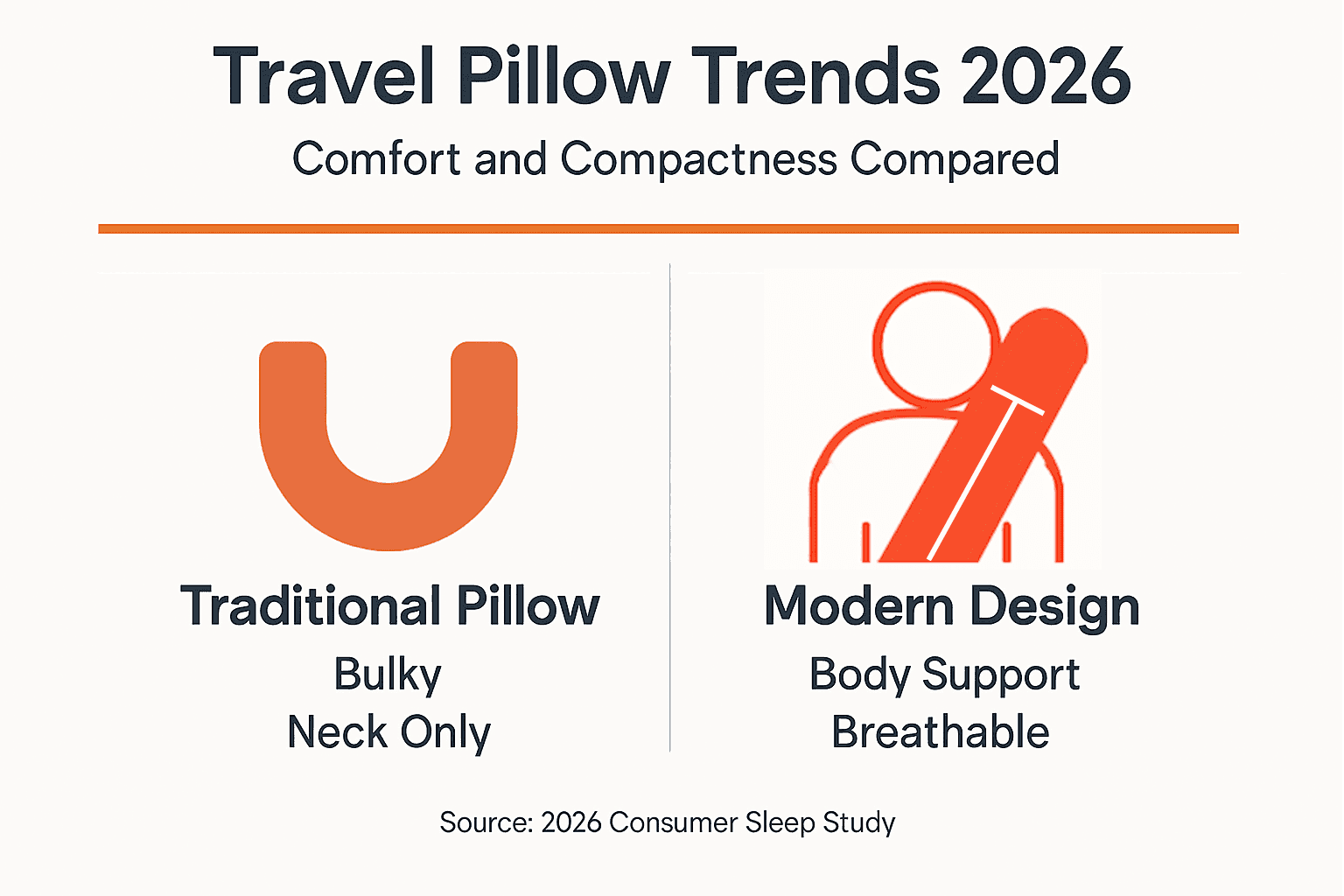
The fundamental flaw lies in treating neck support as isolated from the rest of your body. Your head, jaw, chest, and upper torso work together to maintain upright posture. Supporting only one point in this system guarantees the others will compensate poorly, leading to the strain and pain most economy flyers endure unnecessarily.
Ergonomic principles in modern travel pillow design
Modern ergonomic pillows take a completely different approach by supporting your body’s natural diagonal resting position. Instead of squeezing your neck, these designs stabilize your head, jaw, chest, and upper torso simultaneously. This multi-point contact distributes pressure evenly and prevents the forward head drop that causes most travel neck pain.
Multi-point upper body support reduces neck strain by 35% compared to neck-only designs. The key lies in geometry. When you rest diagonally with support points across your upper body, your spine maintains better alignment. Your neck muscles don’t have to fight gravity constantly.
Ergonomic designs deliver measurable improvements:
-
Support positioned to stabilize diagonal rest posture naturally
-
Pressure distributed across multiple body contact points
-
Sleep quality improves by up to 50% compared to traditional pillows
-
Airflow maintained around neck and head unlike restrictive wrap designs
-
Freedom to adjust position without losing support structure
Ergonomic principles proven in office seating now apply to travel comfort. The same biomechanics that reduce desk workers’ back pain by 48% translate directly to upright sleeping on planes. Your body needs support that works with natural movement patterns, not against them.
Pro Tip: Test any pillow by checking whether it keeps your head stable when you lean into diagonal rest position. If your head still tilts forward significantly, the design lacks proper multi-point support geometry.
The beauty of ergonomic design lies in its simplicity. Rather than adding bulk or complicated features, these pillows position support exactly where your body needs it. They work with your anatomy instead of forcing unnatural postures. Understanding the benefits of ergonomic travel pillows helps explain why travelers who switch from traditional neck pillows report dramatically better rest quality.
Many economy flyers assume bigger pillows provide better support. The opposite proves true. Excess material creates heat buildup and restricts movement. Smart ergonomic design achieves superior stability through precise support placement, not through adding more foam. This principle explains why compact multi-point pillows outperform bulky alternatives consistently.
Compactness and multi-functionality in pillow design
Space constraints define economy travel reality. Every cubic inch of carry-on capacity matters when airlines charge fees for checked bags and limit overhead bin access. Modern travel pillows address this challenge through intelligent compression and multi-functional design that merges comfort with packing practicality.
Compressible pillows save about 30% of luggage space compared to bulky alternatives. Some designs compress when empty, flattening down to slip into laptop compartments or jacket pockets. Others function as clothing-fillable cylinders, transforming packed garments into structured support pillows. This dual-purpose approach eliminates the choice between comfort gear and luggage capacity.
Key compactness features in 2026 designs:
-
Compression capability when not in use
-
Clothing-fillable structures that double as packing organizers
-
Cylinder shapes that consolidate carry-on items efficiently
-
Lightweight materials that reduce overall travel load
Pro Tip: Pack a clothing-fillable pillow with tomorrow’s outfit. You gain both overnight comfort and organized packing that speeds up hotel check-ins.
| Feature | Traditional Pillow | Compact Multi-Functional Pillow |
| Packed size | 12-15 inches diameter | 6-8 inches compressed or fillable |
| Weight | 10-14 oz | 4-7 oz empty |
| Luggage space used | 30-40% of personal item | 10-15% or consolidates with clothes |
| Additional function | None | Packing cylinder or compression bag |
Multi-functionality matters most for frequent flyers and long-haul travelers. When you fly monthly or take 12+ hour flights, every ounce and inch counts. A pillow that serves double duty as a packing solution pays dividends across dozens of trips. Space you save can hold souvenirs, business materials, or simply create breathing room in cramped bags.
The cylinder packing approach deserves special attention. By filling a structured pillow with clothing, you create firm support while organizing garments that would otherwise shift loose in your bag. This method prevents any article of clothing from falling out, speeds security checks, and ensures your pillow arrives properly shaped. Economy travelers gain world-class comfort without sacrificing the luggage efficiency that budget travel demands.
Material technologies for breathable travel pillows
Material science dramatically impacts travel comfort, yet most flyers never consider what’s inside their pillow. Temperature regulation separates tolerable flights from miserable ones. Traditional solid foam and synthetic fills trap heat against your skin, creating sweaty discomfort within hours. Modern breathable materials solve this problem through strategic airflow design. Here’s what most travelers don’t understand. If the outer cover is breathable but the core is not, it’s pointless, Heat is trapped by the core. It’s best to avoid any designs that wrap around the neck.

Airflow materials reduce pillow heat by 5°C during 8-hour use compared to solid foam. That temperature difference transforms overnight flights. When your pillow stays cool, you sleep deeper and wake refreshed instead of overheated and irritable.
Breathable material innovations include:
-
Mesh panels integrated into pillow surfaces
-
Perforated memory foam with ventilation channels
-
Moisture-wicking fabric covers that pull sweat away from skin
-
Open-cell foam structures that allow continuous air circulation
Memory foam remains popular but will still trap heat and get sweaty if the design wraps around the neck. S. Look for products specifically advertising ventilation features but most times it’s a marketing ploy. The material shouldn’t compress easily under weight while maintaining air passages that prevent heat buildup.
Fabric covers matter as much as interior fill. Cotton blends absorb moisture but dry slowly. Modern synthetic weaves wick moisture while staying dry to the touch. Some covers incorporate cooling gel particles or phase-change materials that actively regulate temperature. For 8+ hour flights, these advanced textiles make noticeable comfort differences.
Breathability connects directly to the ergonomic designs discussed earlier. Pillows that don’t wrap entirely around your neck naturally allow better airflow. Your skin can breathe. Heat escapes instead of building up in enclosed spaces. This synergy between open design and breathable materials multiplies comfort gains beyond what either feature achieves alone.
Selecting breathable pillow materials becomes especially critical for tropical destinations, summer travel, or anyone prone to sleeping warm. Temperature management isn’t a luxury, it’s fundamental to sustained comfort. A pillow that starts comfortable but becomes sweat-inducing after three hours fails the economy traveler who needs reliable support across entire journeys. Once again, breathable material is also just a marketing angles that does very little. Imagine a loosely woven scarf still traps heat when wrap around the neck.
Common misconceptions about travel pillows
Misconceptions about travel pillows lead millions of economy flyers to purchase products that worsen their discomfort. Sorting marketing claims from biomechanical reality helps you avoid expensive mistakes and choose designs that actually improve rest quality.
Misconception one: Bigger pillows provide better support. 65% of users report increased heat and discomfort with large wrap-around pillows. Extra bulk traps heat, restricts movement, and adds luggage weight without improving head stability. Support quality comes from geometry and positioning, not from volume of foam.
Misconception two: Neck-only support suffices for comfortable upright sleep. Your neck cannot stabilize your head weight alone during long periods. Without chest and torso support, forward head drop occurs regardless of neck padding thickness. This explains why traditional U-shaped pillows cause strain despite appearing supportive.
Misconception three: Soft, plush pillows offer superior comfort. Pillows that compress too easily under head weight collapse and lose support structure within hours. Proper support requires enough firmness to maintain shape while distributing pressure. Memory foam that’s too soft becomes useless as it flattens completely.
Misconception four: All memory foam pillows perform equally. Material quality varies dramatically. Cheap memory foam loses resilience quickly, developing permanent compression spots. It also lacks ventilation, causing heat buildup. Quality memory foam maintains shape across hundreds of uses and incorporates breathable design features.
Here are the facts that counter common myths:
-
Compact multi-point pillows outperform bulky neck-only designs
-
Firmness matters more than softness for sustained support
-
Breathability prevents discomfort as much as cushioning does
-
Support geometry trumps material volume every time
“The best travel pillow isn’t the softest or biggest. It’s the one that keeps your head stable in diagonal rest position while staying cool and taking up minimal luggage space.” — Sleep ergonomics research, 2026
Understanding these misconceptions about neck pillows protects you from wasting money on products that deliver short-term novelty but long-term disappointment. Economy travel demands practical solutions that work across multiple flights and packing scenarios. Marketing hype about revolutionary comfort often masks designs that ignore basic biomechanics.
The wrap-around pillow myth deserves special attention because these products dominate airport shops. They look supportive and photograph well for social media. Yet their enclosed design restricts neck movement, traps heat, and concentrates pressure on small contact areas. After two hours, most users feel worse than without any pillow. Smart travelers skip the airport impulse buy and research ergonomic alternatives before trips.
Body-support geometry over neck-only support
Comparing traditional neck-only pillows with modern body-support designs reveals why one approach succeeds where the other fails. The difference lies in understanding how your body actually maintains upright posture during rest versus forcing support onto isolated body parts.
Traditional U-shaped pillows wrap around your neck, attempting to prevent head movement through enclosure. This approach fails because your head weighs 10-12 pounds. Neck muscles alone cannot support that weight comfortably for hours. Forward head drop occurs as muscles fatigue, causing the strain most economy travelers endure.
Body-support pillows work differently. They stabilize your head, jaw, chest, and upper torso together through diagonal positioning. Your body rests against multiple support points simultaneously. Weight distributes across larger surface areas. No single muscle group bears excessive load.
Key differences in support approach:
-
Neck-only: Concentrates pressure on small cervical contact area
-
Body-support: Distributes load across head, jaw, chest, and torso
-
Neck-only: Restricts movement and traps heat through enclosure
-
Body-support: Allows natural position adjustments and maintains airflow
-
Neck-only: Fights against forward head drop through compression
-
Body-support: Prevents head drop through stable diagonal geometry
| Design Aspect | Neck-Only Pillow | Body-Support Pillow |
| Primary support area | Cervical neck region | Head, jaw, chest, upper torso |
| Comfort improvement | 10-15% over no pillow | 40-50% over no pillow |
| Heat buildup | High due to enclosure | Low with open airflow design |
| Movement freedom | Restricted by wrap design | Natural position adjustments allowed |
| Luggage efficiency | Bulky, 30-40% of personal item | Compact or multi-functional, 10-15% space |
Body-support geometry proves especially valuable on long-haul flights exceeding 4 hours. Initial comfort means little if support degrades after three hours. Pillows that maintain stable multi-point contact across entire flights deliver the rest quality economy travelers need.
The diagonal resting position deserves explanation. When you lean slightly to one side with support under your head and against your chest, your spine maintains better alignment than sitting bolt upright. This posture reduces muscle tension while allowing periodic position changes. You rest more naturally than traditional pillows permit.
Understanding why to avoid neck-only pillows comes down to biomechanics. Your body functions as an integrated system. Supporting one component while ignoring others creates imbalance and discomfort. Modern ergonomic designs succeed by working with your whole upper body structure rather than fighting against it through localized compression.
Applying travel pillow trends to your economy-class travel
Now that you understand what makes modern travel pillows effective, here’s how to select and use them for maximum comfort on your economy-class flights. These practical tips translate pillow technology into real travel improvements.
-
Choose pillows designed for upright diagonal rest posture rather than traditional neck wraps. Look for products that show support points across head, jaw, and chest areas in product photos.
-
Prioritize compact, compressible, or clothing-fillable designs that save luggage space. Calculate how much carry-on room the pillow consumes versus how much comfort it delivers over flight duration.
-
Select breathable materials with mesh panels, perforated foam, or moisture-wicking covers. Check product specifications for ventilation features explicitly mentioned.
-
Avoid bulky wrap-around pillows regardless of softness claims. Test firmness by pressing the pillow, it should compress slightly but maintain overall structure under pressure.
-
Verify stable multi-point upper body support by checking whether the pillow design prevents forward head drop when you lean diagonally. Read reviews mentioning specific support areas, not just general comfort.
-
Match pillow features to your typical flight profile. Short flights under 4 hours need less support than overnight 10+ hour journeys. Frequent flyers benefit more from multi-functional packing designs.
Pro Tip: Test your new pillow on a short flight first. This reveals comfort issues and usage techniques before committing to long-haul travel where poor pillow choice means hours of discomfort.
Many economy travelers overlook pillow break-in periods. Memory foam and structured designs perform better after 2-3 uses as materials conform slightly to your body shape. Don’t judge a pillow harshly after one flight, give it a couple trips to reach optimal comfort.
Packing strategy matters as much as pillow selection. If you choose a clothing-fillable design, pack clothes you’ll need soon after landing. This keeps your pillow properly filled during flights while organizing items for quick access. For compressible pillows, store them in easily accessible carry-on sections so you can deploy them immediately after boarding.
Consider your sleeping preferences too. Side sleepers need firmer support than back sleepers. If you tend to sleep hot, prioritize breathability over cushion thickness. If you’re a restless sleeper who changes positions frequently, choose designs that maintain support across multiple postures rather than locking you into one position.
Explore travel comfort tips that complement your pillow choice. Proper hydration, strategic meal timing, and clothing layers all interact with pillow comfort to determine overall flight rest quality. The best pillow in the world can’t overcome dehydration or restrictive clothing that prevents comfortable positioning.
Discover ergonomic travel pillows that enhance economy class comfort
Modern travel pillow design has moved far beyond bulky neck wraps that cause more problems than they solve. Ergonomic multi-point support, space-saving compactness, and breathable materials now define what economy-class comfort should feel like. You don’t need to upgrade seats to rest properly, you need smarter gear.
Bolstie Travel Pillow embodies these 2026 design trends through pillows engineered specifically for economy-class constraints. Our best long haul travel pillow supports your head, jaw, chest, and upper torso together, preventing the forward head drop that causes neck strain. When empty, it compresses small. Fill it with clothing and it becomes firm, structured support that doubles as a packing cylinder.
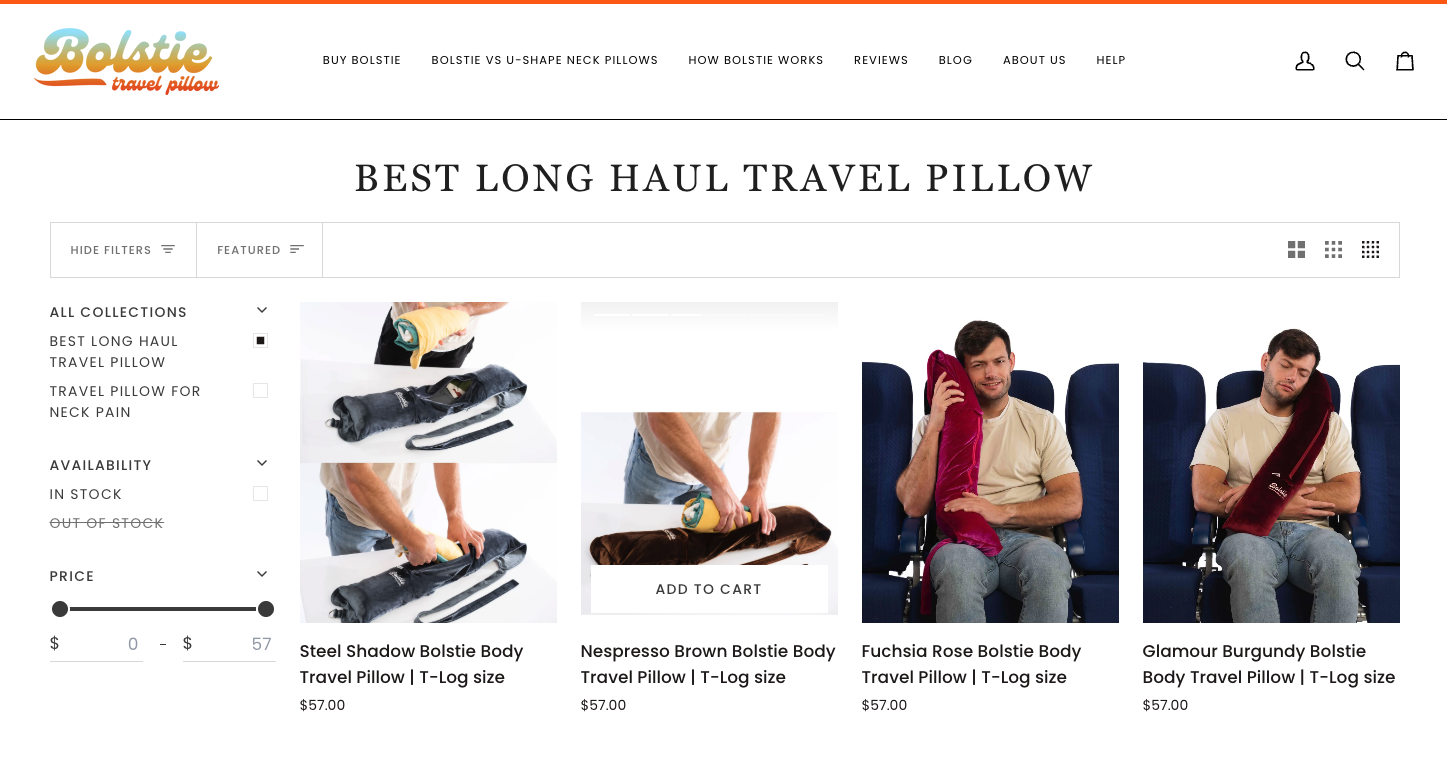
Save 30% of your luggage space while improving sleep quality by up to 50% compared to traditional pillows. Breathable materials keep you cool across 8+ hour flights. No bulk, no heat buildup, no wasted carry-on capacity. Just smart design that works with your body instead of fighting against it. Discover why travel pillow design matters and explore our collections crafted for real economy flyers who refuse to compromise comfort for practicality.
Frequently asked questions about travel pillow design trends
What makes a travel pillow ergonomic for economy class?
Ergonomic travel pillows support multiple upper body points simultaneously rather than just the neck. They stabilize your head, jaw, chest, and torso together through diagonal positioning, which prevents forward head drop and reduces neck strain by up to 35%. Look for designs that allow airflow and natural movement rather than restrictive wrap-around styles.
How much luggage space do compact travel pillows actually save?
Compact and clothing-fillable travel pillows save approximately 30% of luggage space compared to traditional bulky alternatives. Compressible designs flatten to 6-8 inches versus 12-15 inches for standard pillows. Clothing-fillable cylinders eliminate space waste entirely by consolidating garments you’re already packing into functional support structures.
Do breathable materials really improve overnight flight comfort?
Yes, breathable materials reduce pillow temperature by 5°C during 8-hour use compared to solid foam. Mesh panels, perforated memory foam, and moisture-wicking covers prevent the heat buildup and sweating that make traditional pillows uncomfortable on long flights. This temperature regulation proves especially valuable on overnight journeys exceeding 8 hours.
Why do wrap-around neck pillows cause discomfort for many travelers?
Wrap-around designs concentrate pressure on small neck contact areas while restricting movement and trapping heat. 65% of users report increased discomfort with large wrap-around pillows because they fight against natural body positioning rather than supporting it. They also fail to prevent forward head drop since neck muscles alone cannot comfortably support 10-12 pounds of head weight for extended periods.
Should I choose memory foam or inflatable travel pillows?
Neither material type matters as much as overall design geometry and breathability features. Quality memory foam with ventilation channels provides better long-term support and comfort than cheap inflatable options. However, poorly designed memory foam pillows perform worse than well-designed inflatables. Focus on multi-point support structure and airflow rather than filling material alone.
How do I test if a travel pillow will work before a long flight?
Lean into a diagonal rest position while holding the pillow against your head, jaw, and chest. Your head should stay stable without dropping forward significantly. The pillow should feel firm enough to maintain structure under your weight while allowing slight position adjustments. If possible, test the pillow on a short 2-3 hour flight before committing to long-haul travel.
Recommended
-
Why Travel Pillow Design Matters for Real Comfort – BOLSTIE TRAVEL PILLOW
-
Travel Pillow Packing Guide: Boost Sleep Comfort 40% – BOLSTIE TRAVEL PILLOW
-
Multi-Point Travel Pillows Save Luggage Space in 2026 – BOLSTIE TRAVEL PILLOW
-
Travel Pillows Cut Neck Pain by 65%: Health Guide 2026 – BOLSTIE TRAVEL PILLOW

