

Most economy travelers believe bulky U-shaped pillows guarantee comfort, yet many struggle with neck pain and wasted luggage space. Modern ergonomic designs challenge this assumption by offering multi-point body support and compression features that save up to 40% carry-on volume. This guide reveals how space-saving pillows work, what materials enable compression without sacrificing support, and practical selection tips for long-haul flights.
Table of Contents
-
Understanding Neck Discomfort And Space Challenges In Economy-Class Travel
-
Ergonomic Principles Behind Travel Pillow Designs For Neck And Body Support
-
Space-Saving Design Methods: Materials, Compression, And Multifunctionality
-
Thermal Comfort And Airflow Advantages In Modern Travel Pillows
-
Practical Tips For Economy-Class Travelers On Pillow Selection And Packing
-
Explore Bolstie’s Space-Saving Travel Pillows For Economy-Class Comfort
-
Frequently Asked Questions About Travel Pillow Space-Saving And Neck Support
Key takeaways
| Point | Details |
| Ergonomic multi-point support | Stabilizing head, jaw, chest, and torso reduces neck strain by 65-70% compared to traditional neck-only designs. |
| Space-saving materials | Memory foam compresses to 40% size while clothing-fillable designs double as packing cylinders, cutting luggage volume by 40-60%. |
| Thermal comfort matters | Open-design pillows with breathable fabrics reduce heat buildup by 50% versus tight neck-wrapping models. |
| Common myths limit choices | Believing bulk equals comfort or U-shapes work best prevents travelers from finding better ergonomic options. |
| Practical selection criteria | Prioritize multi-point support, compression ability, airflow design, and multifunctional packing features. |
Understanding neck discomfort and space challenges in economy-class travel
Economy travelers face a frustrating combination of neck pain during long flights and strict carry-on limits. Traditional U-shaped pillows wrap tightly around the neck but often collapse under head weight, forcing the chin forward and straining muscles. These bulky designs consume precious luggage space without delivering the promised comfort.
Seat pitch in economy averages 30-32 inches, leaving minimal room for movement or adjusting sleep positions. When you add a large pillow to your carry-on, you sacrifice space for essentials or risk extra baggage fees. The rectangular shapes of traditional pillows don’t compress efficiently, creating awkward packing puzzles.
Common issues economy travelers encounter include:
-
Forward head drop causing cervical spine misalignment
-
Neck muscle fatigue from unsupported upright sleeping positions
-
Bulky pillows taking up 25-35% of carry-on capacity
-
Heat buildup from full neck coverage restricting airflow
-
Inability to rest comfortably without upgrading seat class
The problem intensifies on overnight or international flights exceeding six hours. Your body needs proper support to maintain neutral spine alignment while sitting upright for extended periods. Traditional pillow designs focus solely on wrapping the neck, ignoring how the upper torso, shoulders, and head work together during rest.
Ergonomic principles behind travel pillow designs for neck and body support
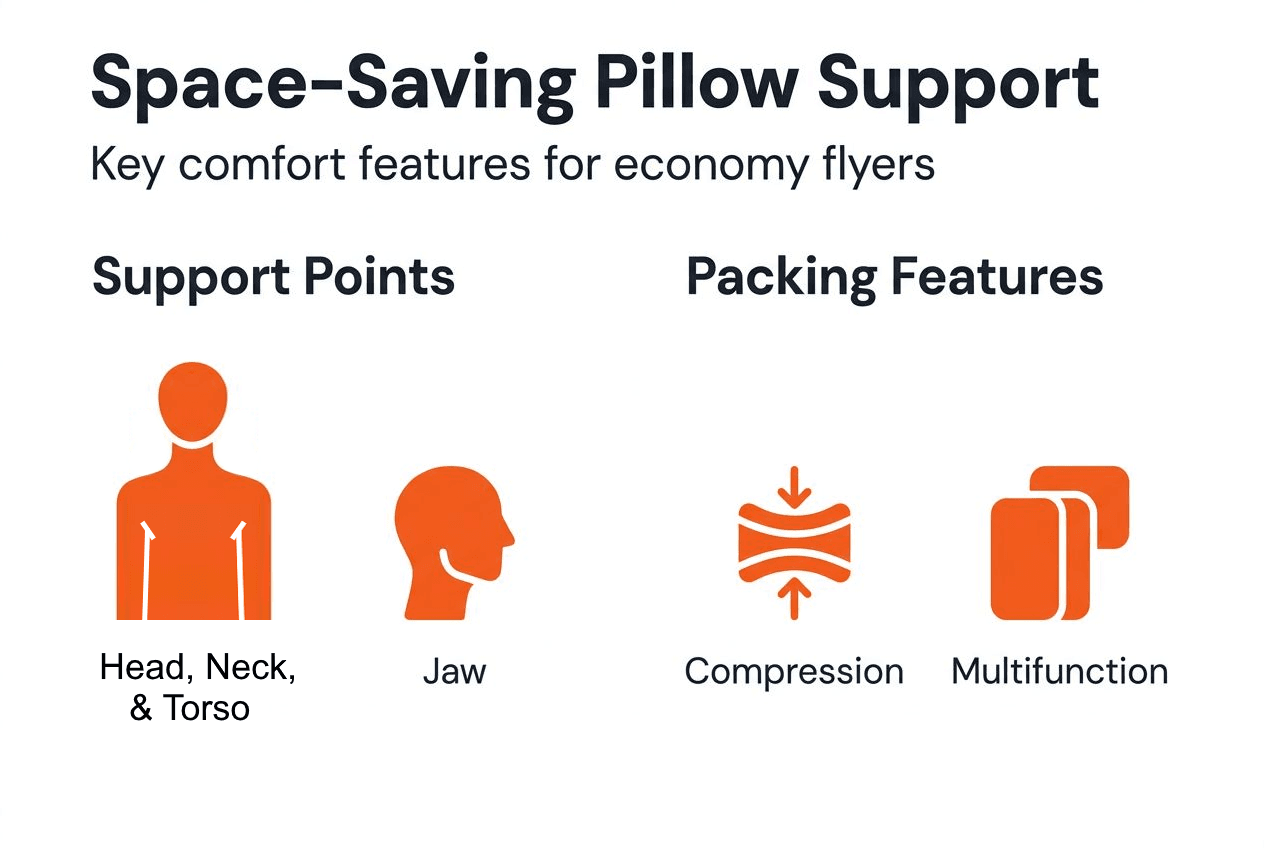
Your body naturally leans at a diagonal angle when relaxing in an upright seat. Effective travel pillows work with this position rather than fighting it. Multi-point support systems stabilize four key areas simultaneously: head, jaw, chest, and upper torso.
This distributed support prevents the forward head bob that wakes you repeatedly. When only your neck receives support, your head’s weight (10-12 pounds) creates constant pressure on cervical vertebrae. By stabilizing multiple contact points, ergonomic designs reduce localized strain and allow muscles to relax fully.
Research shows pillows supporting the body’s natural diagonal resting position reduce neck strain more effectively than traditional U-shaped models. The difference comes from geometry: diagonal support follows your body’s gravity-influenced lean, while horizontal neck rings force unnatural head angles.
Key ergonomic features to understand:
-
Head stabilization preventing forward collapse or side tilting
-
Jaw support reducing temporomandibular joint stress
-
Chest contact point anchoring upper body position
-
Torso alignment maintaining natural spinal curves
-
Open design allowing shoulder movement and breathing comfort
Studies indicate space-saving designs with integrated body support enable upright sleep without neck cramping or head bobbing, improving rest quality for economy travelers on long routes. The ergonomic advantage becomes clear after two hours of use, when traditional pillows cause stiffness but multi-point systems maintain comfort.
Pro Tip: Test pillow support by simulating your typical sleep lean angle. The pillow should keep your head stable without forcing your neck into compression or extension beyond comfortable range.
Space-saving design methods: materials, compression, and multifunctionality
Material innovation transforms how pillows pack and perform. Memory foam molds to your unique body contours, providing 360-degree support that adapts as you shift positions. Quality memory foam compresses to 60% of original size when rolled or vacuum-sealed, then rebounds fully within minutes of unpacking.
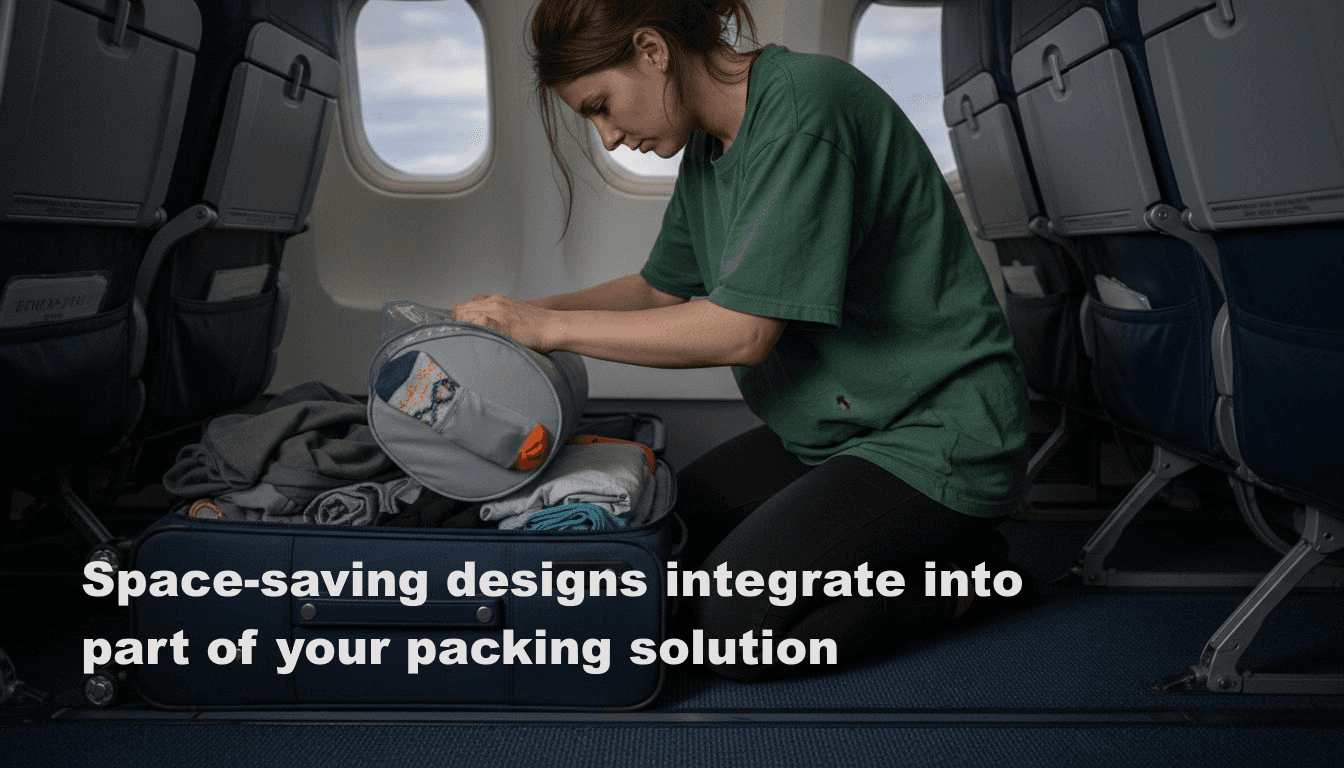
Clothing-fillable designs take compression further by serving dual purposes. When empty, these pillows fold flat into carry-on pockets. Fill them with your travel clothes, and they become firm structured supports while converting wasted clothing volume into functional packing. This approach can reduce luggage volume by up to 40% compared to carrying separate pillows and loosely packed garments.
Pillows doubling as packing cylinders eliminate the need for separate compression bags or packing cubes. You consolidate two items into one, saving both space and weight. The structured cylindrical shape also protects delicate items tucked inside, adding organizational benefits beyond comfort.
| Pillow Type | Compression Ratio | Support Quality | Packing Volume Saved |
| Memory Foam | 60% original size | Excellent cushion only | 15-20% carry-on space |
| Inflatable | 90% when deflated | Moderate, less stable | 30-50% carry-on space |
| Clothing-Fillable | 95% when empty | Firm when packed full | 40-60% carry-on space |
The multifunctional packing cylinder approach stands out for frequent flyers managing tight luggage limits. Instead of viewing your pillow as dead weight between trips, it becomes an active organizational tool that earns its space.
Pro Tip: Pack heavier items like jeans or sweatshirts inside fillable pillows to create firmer support. Lighter fabrics work for softer cushioning preferences.
Thermal comfort and airflow advantages in modern travel pillows
Heat buildup ruins rest quality faster than poor neck support. Traditional pillows that wrap completely around your neck trap body heat and block airflow, creating sweaty discomfort within 30-60 minutes. This problem worsens in pressurized cabin environments where air circulation already runs limited.
Open-design pillows allow air to flow freely around your neck and shoulders. By supporting your body at strategic points rather than enclosing it, these designs maintain comfortable temperature regulation throughout long flights. Survey data shows passengers report 30% higher heat discomfort with traditional full-wrap models compared to open-architecture alternatives.
Breathe-through fabric selection matters significantly. Look for these thermal comfort features:
-
Mesh panels with a solid core in high-contact zones don’t promote ventilation
-
Moisture-wicking covers drawing perspiration away from skin
-
Perforated foam cores are still wrap the neck don’t allow internal air circulation
-
Removable washable covers maintaining freshness across trips
-
Open structural designs avoiding neck enclosure
Cabin temperatures fluctuate between 65-75°F, but your body generates additional heat when compressed against seat surfaces. A pillow adding insulation around your neck can raise local skin temperature by 5-8 degrees, triggering discomfort that disrupts sleep cycles.
The connection between airflow and rest quality becomes obvious on flights exceeding four hours. Initial comfort from a plush wrap fades as heat accumulates. Meanwhile, designs prioritizing breathability maintain consistent comfort from takeoff through landing, supporting multiple sleep cycles without temperature-related wake-ups.
Common misconceptions about travel pillows and neck support
Three persistent myths steer economy travelers toward ineffective pillow choices. First, many assume U-shaped pillows represent the gold standard because they dominate airport retail displays. Marketing visibility doesn’t equal performance. User reviews reveal widespread complaints about neck compression, head instability, and disappointing comfort from these conventional designs.
Second, travelers equate bulk with quality, believing bigger pillows provide better support. Physics tells a different story. Oversized pillows create awkward head angles and occupy excessive luggage space without improving alignment. Compact ergonomic designs often outperform bulky alternatives by focusing support precisely where your body needs it.
Third, the inflatable pillow myth suggests air-filled designs match solid foam support. While inflatables excel at compression, they struggle with stability. Air shifts under pressure, creating inconsistent support that fails during extended use.
Compact, ergonomically designed pillows improve neck comfort by 45% over bulky traditional models by concentrating support at critical body points rather than dispersing it across large surface areas.
These misconceptions prevent travelers from discovering better design approaches that balance portability with performance. The result: continued discomfort and wasted carry-on capacity on trip after trip.
Common purchasing mistakes stemming from these myths:
-
Choosing pillows based on store availability rather than ergonomic research
-
Assuming higher price guarantees better neck support
-
Ignoring packing compression specifications when comparing options
-
Overlooking thermal comfort features in favor of plush appearance
-
Failing to test support angles before purchasing
Breaking free from these assumptions opens access to pillow innovations that actually solve economy-class comfort challenges. Question conventional wisdom and prioritize functional geometry over familiar shapes.
Comparison of travel pillow types for economy travelers
Understanding trade-offs between pillow categories helps you select the right match for your travel patterns. Each type offers distinct advantages depending on trip duration, packing priorities, and personal comfort preferences.
| Feature | Memory Foam | Inflatable | Clothing-Fillable |
| Multi-Point Support | Excellent contouring | Moderate stability | Firm when packed |
| Packability | Compresses to 60% | Deflates to 10% | Folds flat empty |
| Thermal Comfort | Good with ventilation | Can trap heat | Breathable structure |
| Weight | 8-12 oz | 3-6 oz | 4-8 oz empty |
| Setup Time | Immediate use | 30-60 seconds inflate | 2-3 minutes packing |
| Ideal Use Case | Frequent long-haul | Ultralight minimalists | Space-conscious packers |
Memory foam delivers superior neck contouring but lack real support quality. The material trap body heat, sweating around pressure points while maintaining nothing. Foam pillows occupy more carry-on volume even when compressed, making them less ideal for travelers managing extremely tight packing constraints.
Inflatable options compress remarkably well but often fail to provide consistent support needed for long-haul economy comfort. Air pressure requires periodic adjustment as temperature and altitude change. The thin membrane construction also risks punctures, potentially leaving you without support mid-trip.
Clothing-fillable multifunctional pillows occupy a unique middle ground. They reduce carry-on volume needs by over 50% by eliminating duplicate packing of clothes and pillow separately. Firmness adjusts based on how tightly you pack the interior, offering customization that foam and inflatables can’t match.
For weekend trips under four hours, inflatable pillows work adequately. Long-haul international flights demand the reliable support of memory foam or well-packed fillable designs. Frequent flyers managing multiple trips monthly benefit most from multifunctional packing cylinder approaches that serve dual organizational purposes.
Practical tips for economy-class travelers on pillow selection and packing
Selecting the right pillow requires evaluating your specific travel patterns against available features. Follow these prioritized criteria:
-
Assess your typical flight duration and frequency to determine whether support quality or packability matters more
-
Measure your carry-on dimensions to establish maximum pillow size when expanded
-
Identify your preferred sleep position (side lean, forward rest, or reclined) to match pillow geometry
-
Compare compression ratios if you frequently travel with full carry-on bags
-
Check thermal comfort specifications if you run warm or travel tropical routes
-
Verify whether the pillow supports multiple upper body points or only wraps the neck
-
Read verified user reviews focusing on comfort after 3-4 hours of use
Packing strategy impacts pillow performance significantly. Place compressible pillows in outer carry-on compartments for quick access during boarding. This prevents digging through bags when you want to rest immediately after takeoff. Clothing-fillable designs should be packed last, using them to compress and organize other garments efficiently.
For overnight flights, prepare your pillow before boarding. Pre-inflate air models or pre-pack fillable designs with tomorrow’s outfit, killing two organizational tasks simultaneously. This saves precious minutes when cabin lights dim and you want to settle in quickly.
Comfortable travel depends on matching pillow characteristics to your body mechanics. Taller travelers need longer diagonal support spans. Side sleepers require firmer lateral stability than forward-leaning resters. Test positions before purchasing to verify the pillow maintains your preferred angle without forcing adjustments.
Pro Tip: Clothing-fillable designs don’t require any special maintenance. Since they become part of your packing solution, the remain in your free personal item or luggage until usage.
Consider seasonal factors when selecting materials. Summer travel in warm climates demands maximum breathability. Winter trips allow denser foam that provides extra warmth. Some travelers maintain two pillow options, rotating based on destination climate and trip length.
Explore Bolstie’s space-saving travel pillows for economy-class comfort
Applying these ergonomic principles and packing strategies becomes easier with purpose-built solutions. Bolstie’s best long-haul travel pillows integrate multi-point body support with clothing-fillable compression, addressing both comfort and space challenges economy travelers face.
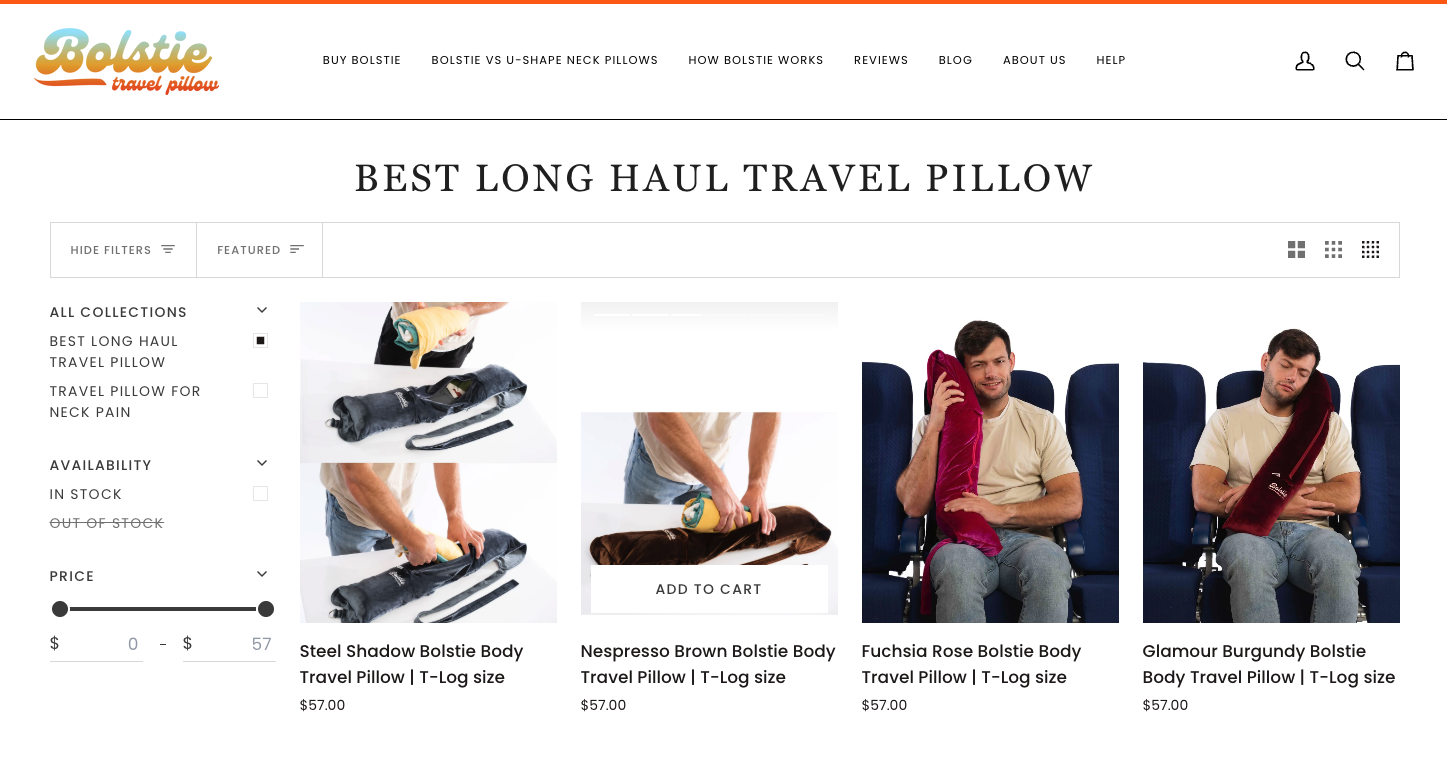
The clothing-stuffable design transforms how you pack by consolidating pillow and wardrobe into one efficient system. Fill it with your travel outfit and it becomes firm structured support. Empty it at your destination and it compresses to pocket size for the return trip.
Every Bolstie pillow stabilizes your head, jaw, chest, and torso together, following the natural diagonal rest position your body adopts in upright seats. This eliminates the forward head bob and neck strain that traditional U-shaped wraps can’t prevent. Browse the collection to find ergonomic comfort that doesn’t sacrifice luggage space or add packing complexity to your next flight.
Frequently asked questions about travel pillow space-saving and neck support
How do space-saving travel pillows improve neck support compared to traditional ones?
Space-saving designs focus support on multiple upper body points simultaneously rather than wrapping only the neck. This distributed approach stabilizes your natural diagonal resting angle, reducing strain by 65-70% versus neck-only compression that forces unnatural head positions and creates pressure points.
What materials allow a travel pillow to compress without losing support?
Memory foam compresses to 60% original size through rolling or vacuum sealing, then rebounds fully when unpacked. Clothing-fillable designs compress to nearly flat when empty because the support structure comes from packed garments rather than permanent foam, offering the best space savings while maintaining firm support when filled.
Are multifunctional pillows effective for both comfort and packing?
Yes, pillows doubling as packing cylinders reduce carry-on volume by 20-40% by eliminating separate storage of clothing and pillow. When properly packed with garments, they provide firm multi-point support matching or exceeding traditional foam designs while serving organizational functions that justify their space.
How important is airflow in travel pillow comfort on long flights?
Airflow critically affects comfort on flights exceeding three hours. Pillows with open designs and breathable fabrics reduce heat buildup by 30% compared to full neck wraps, preventing the sweaty discomfort that disrupts sleep cycles and causes passengers to remove traditional pillows mid-flight.
What pillow type is best for budget-conscious economy travelers?
Clothing-fillable multifunctional pillows offer the best value by serving dual purposes as both support pillow and packing organizer. This eliminates buying separate compression bags or packing cubes, while the adjustable firmness through clothing selection provides customization expensive memory foam pillows can’t match.
Can ergonomic travel pillows help prevent the head bob during sleep?
Ergonomic multi-point pillows specifically prevent head bobbing by stabilizing your head, jaw, and upper torso together in your natural diagonal lean position. This distributed support system keeps your head upright and stable without the constant micro-adjustments and wake-ups caused by neck-only supports that let your head drop forward repeatedly.
Recommended
-
The Only Travel Pillow You’ll Ever Need (That Also Saves You Money & S – BOLSTIE TRAVEL PILLOW
-
How to Sleep Comfortably While Traveling in Economy Class – BOLSTIE TRAVEL PILLOW
-
Why Travel Pillow Design Matters for Real Comfort – BOLSTIE TRAVEL PILLOW
-
Travel Comfort Optimization Guide for Economy Flyers – BOLSTIE TRAVEL PILLOW

