

Economy-class travelers know the struggle all too well: hours of sitting upright, limited legroom, and that persistent neck ache that follows you off the plane. Long flights can leave you feeling stiff, exhausted, and anything but refreshed. The good news? With the right preparation and smart, multi-functional gear, you can dramatically reduce discomfort and actually rest during your journey. This guide walks you through essential strategies, from selecting effective travel accessories to adopting simple techniques that work with your body, not against it.
Table of Contents
-
Essential Preparation: What You Need For Comfort In Economy Class
-
Step-By-Step Guide To Using Travel Gear And Techniques For Reduced Discomfort
-
Troubleshooting Common Mistakes And Maximizing Travel Comfort
-
What To Expect: Benefits And Signs Of Improved Flight Comfort
-
Explore The Best Travel Pillows To Enhance Your Flight Comfort
-
What Features Should I Look For In A Travel Pillow To Improve Comfort?
-
How Can Multi-Functional Travel Gear Benefit Economy-Class Travelers?
-
Why Do Traditional Neck Pillows Often Fail To Provide Real Comfort?
Key takeaways
| Point | Details |
| Head & body support reduces neck pain significantly | Effective travel pillows can cut neck pain by over 60% during flights. |
| Multi-functional gear saves space | Accessories that serve dual purposes optimize both comfort and luggage capacity. |
| Proper posture enhances circulation | Maintaining alignment and taking breaks improves blood flow and reduces stiffness. |
| Common mistakes worsen discomfort | Using poorly designed pillows or ignoring body signals exacerbates travel pain. |
| Preparation improves rest quality | Having the right items accessible ensures you can relax when fatigue hits. |
Essential preparation: what you need for comfort in economy class
Before you board, assembling the right travel kit makes all the difference between arriving refreshed or arriving in pain. Economy-class seating offers minimal support, so your gear needs to compensate. Focus on items that address the root causes of discomfort: poor neck alignment, restricted circulation, and sensory overload.
Start with an ergonomic travel pillow designed for upright rest. Traditional U-shaped pillows often collapse under head weight or force awkward neck angles. Look for designs that stabilize your head, jaw, and upper torso together, preventing the forward slump that causes strain. Research shows travel pillows cut neck pain by 65% when properly designed for body mechanics.
Compression socks are non-negotiable for flights over four hours. They promote circulation in your lower legs, reducing swelling and the risk of deep vein thrombosis. Pair these with a quality eye mask that blocks light completely, signaling your brain that it’s time to rest. Noise-cancelling earbuds or earplugs help create a quiet environment, which research confirms supports deeper, more restorative sleep than stimulating distractions.
Consider multi-functional gear that serves double duty. A space-saving travel pillow that compresses when empty but fills with clothing transforms into firm support while freeing up luggage space. This approach eliminates the need for bulky accessories that eat into your carry-on allowance.
Essential items checklist:
-
Ergonomic travel pillow with head and torso support
-
Compression socks for circulation
-
Complete light-blocking eye mask
-
Noise-cancelling earbuds or quality earplugs
-
Lumbar support cushion or rolled jacket
-
Hydration bottle to maintain fluid balance
| Item | Primary Benefit | Space Efficiency | Neck Support Rating |
| Ergonomic travel pillow | Prevents forward head drop | High (compressible) | Excellent |
| Compression socks | Improves leg circulation | Minimal | N/A |
| Eye mask | Blocks light for rest | Minimal | N/A |
| Lumbar cushion | Supports lower back alignment | Medium | Good (indirect) |
Pro Tip: Pack your comfort essentials in a small pouch at the top of your carry-on or personal item. You’ll want immediate access once seated, not dig through overhead luggage mid-flight when the cabin lights dim.
The key insight most travelers miss is this: gadgets and distractions keep your brain stimulated and engaged, stealing the very rest you’re trying to achieve. Your body needs to feel safe enough to let go and stop fighting gravity. Once your muscles relax, your mind can finally quiet down. This body-mind-rest chain reaction is what separates actual sleep from simply closing your eyes for hours.
Step-by-step guide to using travel gear and techniques for reduced discomfort
Having the right gear means nothing if you don’t use it correctly. Follow these steps to maximize comfort and minimize the neck pain that plagues economy travelers.
Step 1: Establish proper seating posture immediately. Sit fully back in your seat so your lower back contacts the seat back. If there’s a gap, fill it with a lumbar cushion or rolled jacket. Your spine should maintain its natural curve, not flatten or overarch. This foundation prevents the muscle fatigue that leads to slouching and pain.
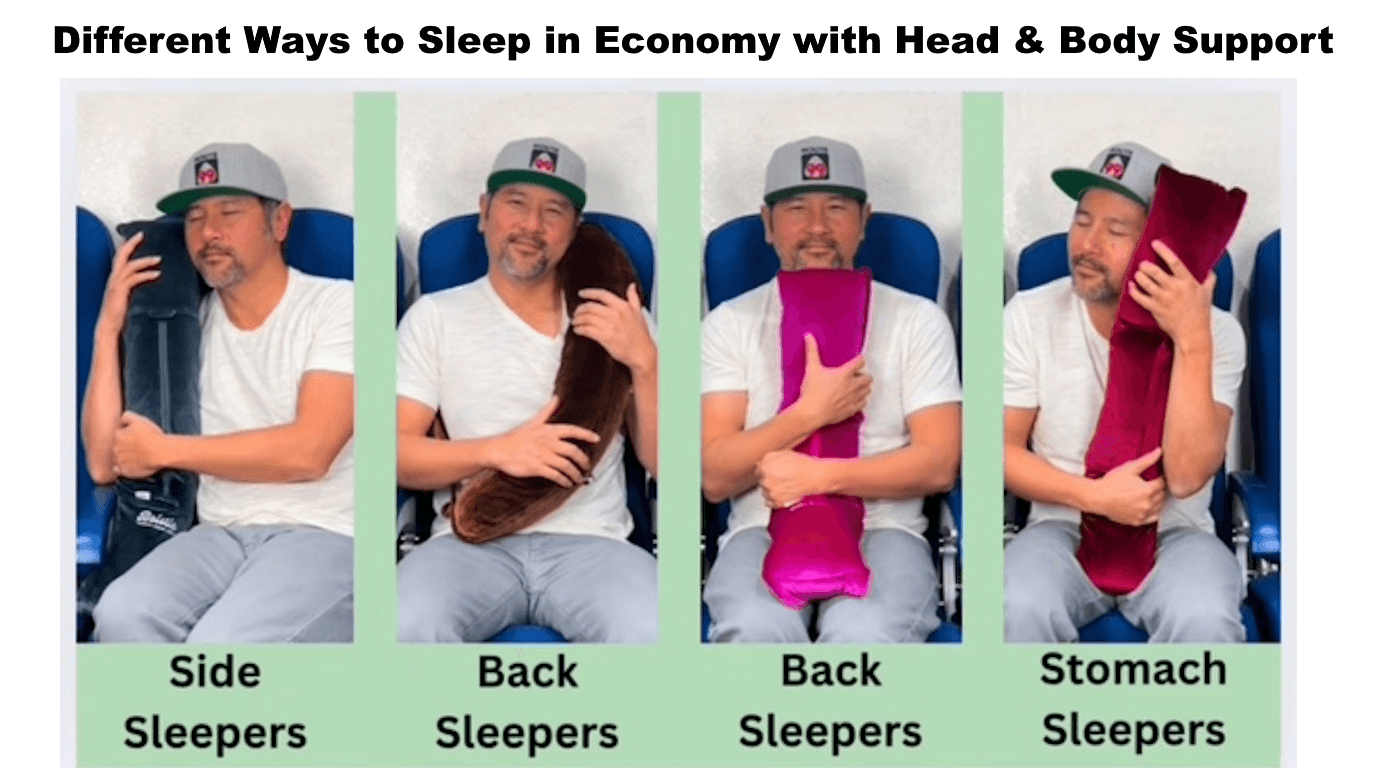
Step 2: Position your travel pillow for optimal support. Place your pillow to stabilize your head and upper body together, not just wrap around your neck. The goal is preventing forward head drop while keeping your airway open and unrestricted. Studies confirm proper use of travel pillows significantly improves upright rest quality for economy flyers. Adjust firmness if your pillow allows it, ensuring enough support without creating pressure points.
Step 3: Incorporate movement every 60 to 90 minutes. Set a mental timer to stand, stretch, or walk the aisle. Simple neck rolls, shoulder shrugs, and ankle circles boost circulation and prevent stiffness. Even seated movements like pressing your lower back into the seat and releasing help maintain muscle engagement.
Step 4: Layer your comfort tools strategically. Once settled, put on your eye mask only after dimming any personal screens. Insert earplugs or activate noise cancellation. Signal your body that stimulation is ending and rest is beginning. Avoid scrolling or watching videos if you genuinely want sleep. Silence or soft, constant sound creates the most restorative environment for deep rest.
Step 5: Adjust recline angle mindfully. If you recline your seat, do so gradually and pair it with pillow repositioning. The ideal angle supports your head without forcing your chin down onto your chest. Understanding types of travel neck support helps you match your pillow’s design to your seat’s limitations.
Pro Tip: Combine neck support with a slight seat recline for maximum effect. A 15 to 20 degree recline reduces spinal load while keeping you upright enough to avoid airway restriction or digestive discomfort.
The sequence matters. Posture first, support second, movement third, then sensory reduction. Skipping steps or reversing the order leaves gaps where discomfort sneaks in. Consistency across flights trains your body to recognize these cues and relax faster each time.
Troubleshooting common mistakes and maximizing travel comfort
Even well-intentioned travelers make errors that sabotage their comfort. Recognizing these pitfalls helps you avoid them and actually rest during your flight.
Common mistakes that worsen discomfort:
-
Using poorly designed pillows that collapse, squeeze the neck, or lack torso support
-
Ignoring posture and allowing prolonged slouching or forward head position
-
Neglecting circulation by staying immobile for entire flight durations
-
Relying on screens and stimulation instead of creating a restful environment
-
Overpacking bulky gear that ends up unused because it’s inaccessible
Many economy travelers assume any neck pillow will help, but research reveals many neck pillows fail due to poor fit or lack of multi-functionality. A pillow that only wraps around your neck without supporting your head’s weight will leave you in the same forward-slumped position that causes pain. Your body needs full stabilization, not partial solutions.
Proper pillow selection prevents pain before it starts. A travel pillow must work with your body’s natural resting position, not force you into unnatural angles that create strain.
Another frequent error is adjusting your seat belt too loosely or too tightly. A loose belt allows you to shift and lose your supported position during turbulence or sleep. A tight belt restricts breathing and circulation. Aim for snug but comfortable, positioned low across your hips, not your abdomen.
Ignoring your lower back is equally problematic. Without lumbar support, your pelvis tilts backward, flattening your spine and forcing your head forward to compensate. This domino effect guarantees neck pain within an hour. Fill that gap with something firm enough to maintain your curve.
Many travelers also make the mistake of waiting until they’re exhausted to try resting. By then, your body is tense, your mind is overstimulated, and falling asleep becomes nearly impossible. Start your rest routine early in the flight, even if you don’t feel tired yet. Creating the right conditions allows sleep to happen naturally when fatigue arrives.
Pro Tip: Customize your neck support by choosing a travel pillow that supports your head, jaw, and torso simultaneously. Adjustable designs let you fine-tune firmness and positioning for your unique body dimensions and seat configuration.
The truth is, you can carry hundreds of gadgets and hacks and still get no real rest. Rest starts with allowing your body and muscles to let go and relax. Tired eyes, an aroused mind, and body aches only make things worse if the body isn’t supported, kept upright, and cushioned at the same time. Address the foundation first, then layer in the extras.
What to expect: benefits and signs of improved flight comfort
When you apply these strategies consistently, the results are noticeable both during and after your flight. Your body will signal success through specific physical and mental improvements.
Physically, you’ll experience significantly less neck stiffness upon landing. The persistent ache that usually builds in your upper traps and cervical spine diminishes or disappears entirely. Your shoulders feel looser, your jaw less clenched. Many travelers report fewer headaches and reduced lower back pain as well, since proper support prevents the compensatory tension that radiates throughout your body.
Sleep quality improves dramatically. Instead of drifting in and out of uncomfortable half-sleep, you’ll achieve longer periods of genuine rest. You’ll wake feeling more refreshed, with better mental clarity and mood. The irritability and brain fog that typically follow long flights reduce noticeably.
| Typical Economy Discomfort | Expected Improvements |
| Severe neck stiffness and pain | Minimal to no neck discomfort |
| Fragmented, poor-quality sleep | Longer periods of restorative rest |
| Persistent lower back aching | Reduced or eliminated back pain |
| Arrival headaches and fatigue | Better energy and mental clarity |
| Leg swelling and circulation issues | Improved circulation, less swelling |
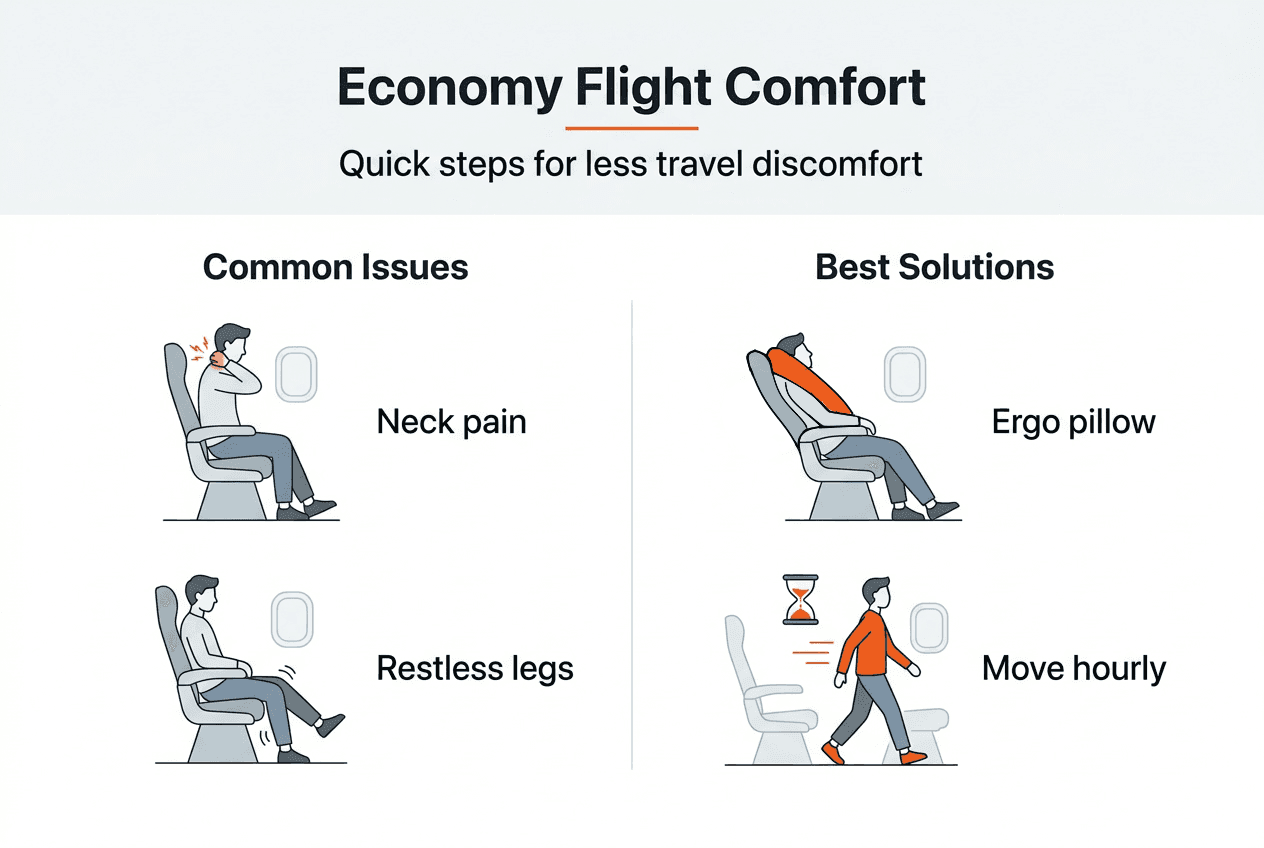
Mentally, reduced physical discomfort translates to lower travel stress. You’ll feel more positive about your journey and arrive in a better state to enjoy your destination or tackle business obligations. The dread of long flights diminishes when you know you have reliable strategies for staying comfortable.
Track your improvements by paying attention to how you feel at the two-hour, four-hour, and landing marks on future flights. Notice whether you’re adjusting your position less frequently, whether you’re actually sleeping instead of just resting your eyes, and how quickly you recover after deplaning. Effective travel comfort solutions in 2026 focus on these measurable outcomes, not just marketing promises.
The cumulative effect matters too. Each flight where you rest properly helps your body learn to relax faster on subsequent journeys. You’re building a positive association with air travel instead of reinforcing stress and discomfort patterns.
For best results, combine all elements: proper gear, correct usage, movement breaks, and sensory reduction. Skipping even one component reduces your overall comfort significantly. Think of it as a system where each piece supports the others.
Explore the best travel pillows to enhance your flight comfort
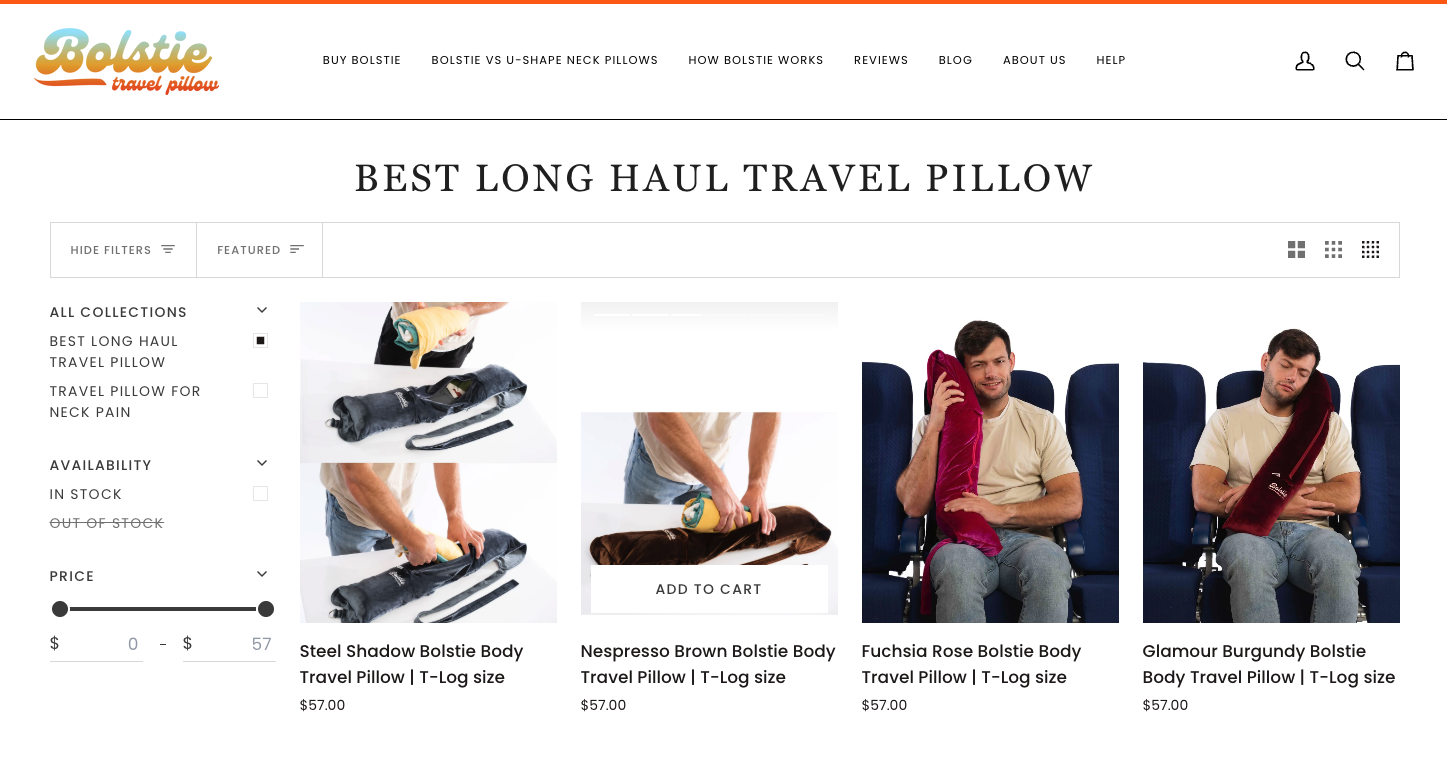
Ready to transform your economy-class experience? The right travel pillow makes the difference between arriving exhausted or arriving ready to go. Bolstie’s best long haul travel pillow collection features designs engineered specifically for upright rest without bulk or wasted space.
Unlike traditional neck pillows that squeeze or collapse, Bolstie supports your body’s natural diagonal resting position by stabilizing your head, jaw, chest, and upper torso together. This prevents forward head drop and neck strain while allowing airflow and reducing heat buildup. When empty, it compresses small. Fill it with clothing, and it becomes firm, structured support that doubles as a packing cylinder, saving precious carry-on space.
Explore options like the Nespresso Brown Bolstie, designed for travelers who value both function and style. Every Bolstie product focuses on smart design and body-first engineering, offering world-class rest without upgrading your seat or adding bulk to your luggage.
How can I reduce neck pain during long economy flights?
Use ergonomic travel pillows specifically designed to support your head and upper torso together, preventing the forward slump that causes strain. Maintain proper seating posture by sitting fully back with lumbar support, and take regular breaks every 60 to 90 minutes to stretch and move. Choose multi-functional gear that enhances both convenience and comfort without consuming luggage space. Research confirms travel pillows reduce neck pain by over 60% when designed with proper body mechanics in mind.
What features should I look for in a travel pillow to improve comfort?
Look for an ergonomic shape that stabilizes your head without wrapping tightly around your neck, which can restrict airflow and create pressure points. Adjustable firmness allows you to customize support for different seat configurations and personal preferences. Multi-functionality is key: pillows that compress when empty but fill with clothing save space while providing structured support. Materials should be breathable and durable enough for repeated use. Understanding types of travel neck support helps you identify designs that work with your body instead of forcing unnatural positions.
How can multi-functional travel gear benefit economy-class travelers?
Multi-functional gear reduces packing volume and weight, helping you avoid checked baggage fees and stay within carry-on limits. A pillow that doubles as a packing cylinder, for example, eliminates the need for separate compression bags while ensuring your comfort item is always accessible. This increases convenience and ensures consistent use of comfort aids since you’re not choosing between gear and luggage space. Economy travelers benefit most from space-saving travel gear that serves multiple purposes without compromising effectiveness.
Why do traditional neck pillows often fail to provide real comfort?
Traditional U-shaped neck pillows focus only on wrapping around the neck, which doesn’t address the root problem: supporting your head’s weight to prevent forward drop. Many collapse under pressure or create awkward angles that strain your cervical spine. They also trap heat and restrict movement, making long-term use uncomfortable. Effective travel pillows must stabilize your entire upper body, not just one area, allowing your muscles to fully relax and your spine to maintain natural alignment throughout the flight.
Recommended
-
6 Travel Comfort Tips for Economy-Class Flights in 2026 – BOLSTIE TRAVEL PILLOW
-
Travel Comfort Optimization Guide for Economy Flyers – BOLSTIE TRAVEL PILLOW
-
Fly in Comfort & Style: Discreetly Effortless In-Flight Rest & Relaxat – BOLSTIE TRAVEL PILLOW
-
7 Benefits of Ergonomic Travel Pillows for Economy Flyers – BOLSTIE TRAVEL PILLOW

