

Airlines have quietly removed reclining seats from economy to save weight and fuel costs, leaving passengers whaving to sit upright the entire flights. This design shift, combined with seats that ignore natural spine curvature and limited recline angles, forces travelers into awkward positions that strain neck muscles and cause stiffness. Traditional neck pillows often make the problem worse when used incorrectly, wrapping around the neck without addressing the root cause: preventing forward head drop and maintaining torso stability. This guide reveals why current solutions fail and shows you practical ways to achieve genuine neck comfort on your next flight.
Table of Contents
-
How Airline Seat Design Reduces Neck Support In Economy Class
-
Ergonomic Challenges Of Economy Class Seats Affecting Neck Comfort
-
Why Conventional Neck Pillows Often Fail To Relieve Neck Discomfort On Flights
-
Choosing And Using Effective Travel Pillows For Better Neck Support
-
Are Inflatable Neck Pillows Better Than Memory Foam For Flights?
Key takeaways
| Point | Details |
| Removal of reclining seat saves airlines money | Reducing maintenance costs and weight |
| Poor ergonomics increase muscle strain | Economy seats without proper support cause 41% more cervical muscle activation and neck stiffness. |
| Neck wrapping pillows miss the problem | Pillows that only wrap the neck fail because they don’t prevent forward head tilt or stabilize the torso. |
| Correct pillow design prevents head drop | Effective pillows must simultaneously stop head fall and keep your upper body upright to counteract gravity. |
| Adjustable pillows work best | Look for breathable designs that accommodate multiple sleeping positions and provide chin support to maintain alignment. |
How airline seat design reduces neck support in economy class
Airlines face constant pressure to reduce operating costs, and one of the most effective strategies involves cutting aircraft weight. Every kilogram removed from a plane translates directly into fuel savings, which explains why carriers have systematically stripped away features that add mass. Headrests, once standard in economy class, have become casualties of this efficiency drive.
Further more, the idea of removable or non-existent headrest saves up to 1.2 kg per seat, cutting annual fuel burn by 0.8 to 1.1%, worth $120,000 to $180,000 per plane. For a fleet of 200 aircraft, this represents tens of millions in annual savings. The financial logic is compelling from a business standpoint, but passengers pay the price in comfort and health.
Beyond fuel economics, headrests create maintenance challenges and limit how tightly airlines can pack seats together. Adjustable headrests require regular inspection and repair, adding to operational complexity. Fixed headrests occupy vertical space that could accommodate taller seat backs or allow for more aggressive recline angles in premium cabins. By eliminating these features entirely, airlines simplify manufacturing, reduce parts inventory, and gain flexibility in cabin configurations.
“The neck is designed for fine motor movements, not to hold up the head for hours. Without support, you’re forcing the weakest muscle groups to do the heavy lifting.”
This design philosophy creates a fundamental problem for passengers. Your head weighs approximately 5 kg, and holding it upright for hours without support exhausts the small muscles in your neck. These muscles evolved for precise movements like turning your head or nodding, not for sustained weight bearing. When headrests disappear, your neck muscles work overtime, leading to fatigue, pain, and stiffness that can last days after landing.
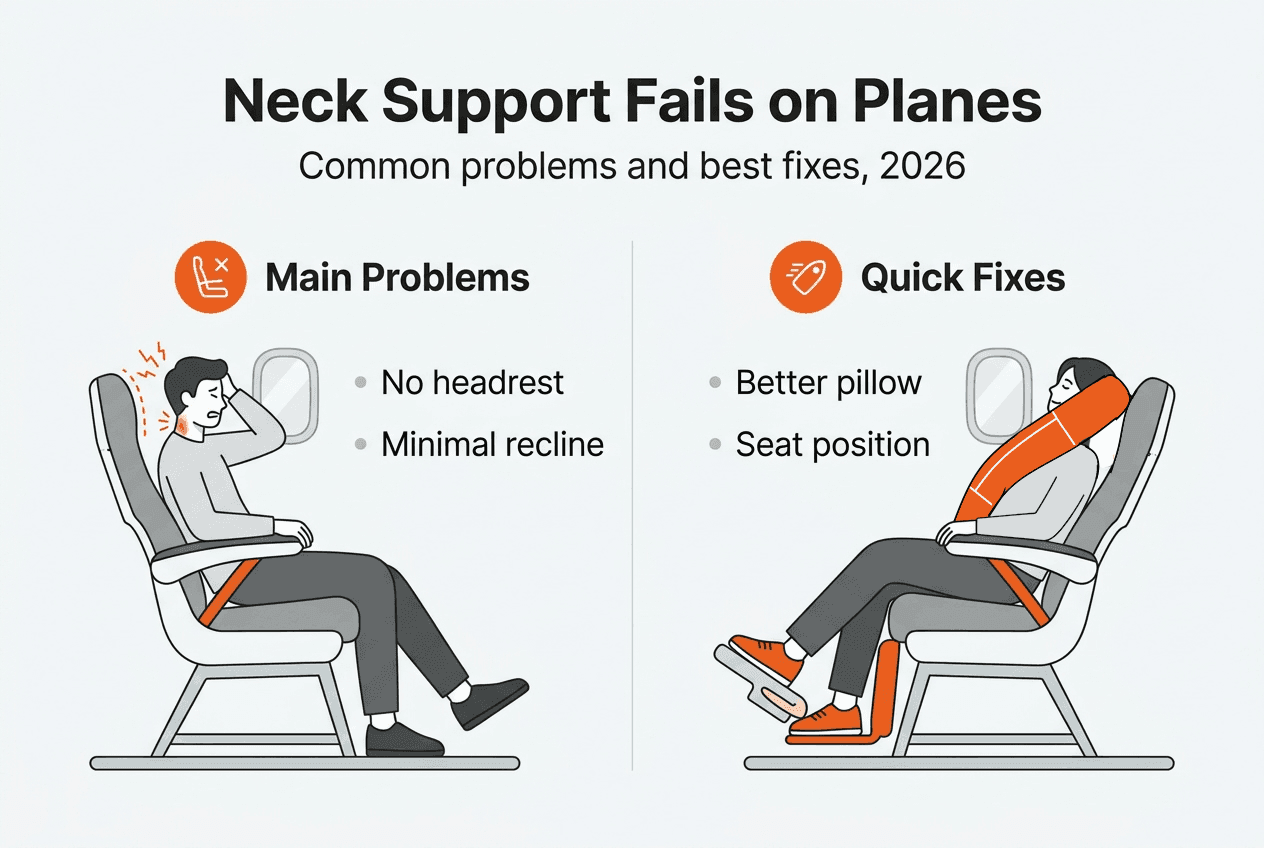
The consequences extend beyond individual discomfort. Airlines balance cost efficiency against passenger satisfaction, but the removal of headrests represents a tipping point where savings come at a significant health cost. Understanding why neck pillows fail in this context requires recognizing that seats themselves have become the primary problem.
Key factors driving down grading of the seats:
-
Weight reduction targets to decrease fuel consumption and emissions
-
Maintenance cost savings from fewer adjustable components
-
Increased seat density potential in economy cabins
-
Simplified manufacturing processes and parts management
-
Competitive pressure to match ultra-low-cost carrier efficiency
Ergonomic challenges of economy class seats affecting neck comfort
Economy seats fail to accommodate the natural S-curve of your spine, forcing your body into positions that increase muscle tension and joint stress. The human spine curves gently from neck to lower back, distributing weight efficiently when properly aligned. Standard airline seats flatten this curve, particularly in the cervical region where your neck meets your shoulders. This misalignment forces muscles to work constantly to prevent your head from falling forward.
Limited recline angles compound the problem. Most economy seats recline only 3 to 4 inches, barely enough to shift your center of gravity. This minimal adjustment fails to reduce the load on your neck muscles significantly. When you try to sleep upright or semi-reclined, gravity pulls your head forward or to the side, and without a headrest to catch it, your neck muscles must contract continuously to maintain position.
Research shows passengers on headrest-free seats experience 41% more cervical muscle activation and 2.7 times higher incidence of waking with a stiff neck. This data reveals the physiological cost of poor seat design. Your muscles never fully relax during the flight, leading to accumulated fatigue and inflammation in the soft tissues surrounding your spine.
The lack of ergonomic design for natural spine and neck curvature causes increased neck strain, a problem well documented in posture research. When your neck remains in a forward or laterally flexed position for extended periods, blood flow to muscles decreases, waste products accumulate, and nerve compression can occur. These factors explain why you often wake from airplane sleep feeling worse than when you dozed off.
| Criteria | Neck-Based Pillows | Head/Body Focused Pillow |
| Headrest | Push head even further forward | Zero head push |
| Gravity’s Pull | 100% Vulnerable | Counteracts Gravity 90% |
| Sleep quality rating | Poor to Low | High, Excellent |
| Resting Muscles | Zero rest, constantly engaged | 90% muscles relaxation |
Pro Tip: Adjust your seat position before takeoff by moving your hips as far back as possible and using the lumbar support if available. This simple change creates a more stable base for your torso, reducing the forward pull on your neck even without a headrest.
The ergonomic failures of economy seating create a cascade of problems. Poor initial design leads to muscle fatigue, which causes poor posture, which increases strain, creating a cycle that worsens throughout the flight. Understanding these mechanics helps explain why ergonomic travel pillows benefits become crucial for frequent flyers.
Common ergonomic issues in economy seats:
-
Seat backs too vertical for natural spine alignment
-
Inadequate lumbar support causing lower back compensation
-
Armrests positioned too low or high for shoulder relaxation
-
Seat cushions that slope forward, pushing hips out of position
-
No adjustability for different body types and heights
Why conventional neck pillows often fail to relieve neck discomfort on flights
Most travelers use neck pillows incorrectly, turning a potentially helpful tool into a source of additional strain. The most common mistake involves wearing the pillow backward, with the opening at the front of your neck. This position provides zero support for forward head drop, the primary cause of airplane neck pain. Your head falls forward into the gap, forcing your neck into flexion and straining the posterior muscles even more than having no pillow at all.
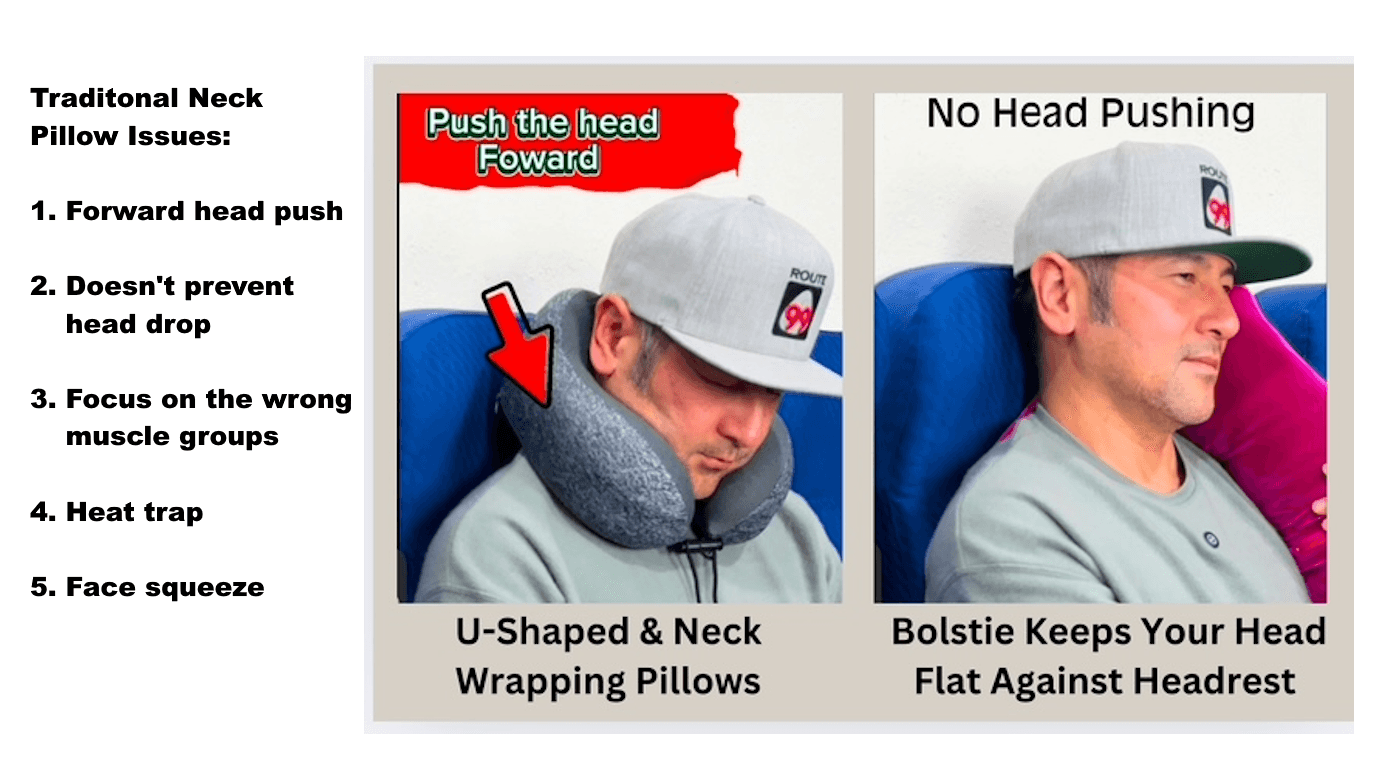
Using a neck pillow incorrectly can lead to worse neck pain than a middle seat on a red-eye flight. The pillow creates a false sense of support, encouraging you to relax muscles that should remain engaged to protect your spine. When those muscles release and your head drops, the sudden stretch can cause acute pain and muscle spasms.
Another critical error involves wearing pillows while standing or walking through the airport. Neck pillows are ineffective if used to compensate for poor posture; wearing them while walking causes strain by adding weight and bulk around your neck without providing functional support. The pillow becomes dead weight that pulls down on your shoulders and upper trapezius muscles, creating tension before you even board.
The fundamental flaw with neck wrapping pillows lies in their design philosophy. They attempt to support the neck directly, but the neck isn’t designed to bear the weight of your head for extended periods. These small muscles and delicate vertebrae need stability from below, not compression from around. Wrapping your neck restricts natural movement, traps heat, and fails to address the real problem: preventing your head from tilting forward or sideways while keeping your torso upright.
Unless a pillow stops your head from falling and maintains torso stability simultaneously, it cannot solve airplane neck pain. This dual action requirement explains why traditional U-shaped pillows disappoint. They might slow lateral head tilt slightly, but they do nothing for forward drop and provide zero torso support. Gravity constantly pulls on your seated body, and effective support must counteract this force on multiple planes.
Steps for correct neck pillow use:
-
Position the pillow with the thickest part under your chin to prevent forward tilt
-
Ensure the pillow supports your jaw and chest together, not just your neck
-
Adjust firmness so your head cannot drop forward even when fully relaxed
-
Verify your torso remains upright without active muscle engagement
-
Remove the pillow during active periods; only use it when attempting to rest
Pro Tip: Medium-rebound memory foam pillows better maintain neck alignment than ultra-soft options that compress too easily under head weight. The pillow should resist compression enough to hold your head position throughout the flight.
Recognizing these design flaws helps explain why you should avoid neck-only pillows and seek solutions that address the root biomechanical problem. The 40-year marketing history behind neck wrapping pillows has created strong habits, but understanding the science reveals why this knee-jerk reaction to a symptom never solved the underlying cause. Breaking free from this legacy requires rethinking what effective travel support actually means, which starts with avoiding neck-based travel pillows that focus on the wrong part of your anatomy.
Choosing and using effective travel pillows for better neck support
Selecting the right travel pillow requires understanding how different designs address the dual requirements of preventing head drop and maintaining torso stability. Three main pillow types dominate the market, each with distinct advantages and limitations for economy class travel.
| Pillow Type | Pros | Cons | Best For |
| Inflatable | Adjustable firmness, compact when deflated, lightweight | Can feel unstable, may leak, less durable | Minimalist packers, occasional travelers |
| Memory foam | Best as seat cushion | Bulky to carry, limited adjustability, retains heat | Short flights |
| Buckwheat hull | Natural materials, breathable, moldable | Heavy, noisy when shifting, takes up space | Eco-conscious travelers, car trips |
| Torso-stabilizing | Prevents forward drop, supports upper body, dual-function | Takes time to break old habits from neck-based designs | Long-haul flights, red eye, international flighst |
Inflatable pillows offer vertical adjustability that traditional designs lack. You can add or release air to match your exact support needs, accounting for seat angle, your body size, and how tired your muscles feel. This customization becomes crucial on long flights where your support requirements change as fatigue sets in. The compactness when deflated makes these pillows ideal for carry-on space optimization.
The best travel pillows combine adjustability, breathability, and accommodate various sleeping positions to maintain natural neck curvature and minimize strain. Look for designs that allow you to shift between upright and semi-reclined positions without losing support. Your sleeping position will change multiple times during a long flight, and your pillow should adapt rather than force you into one fixed posture.
Key features to prioritize when selecting a travel pillow:
-
Adjustable firmness or height to match different seat configurations
-
Breathable materials that prevent heat buildup during extended use
-
Support that extends beyond the neck to include jaw and upper chest
-
Stability that prevents the pillow from shifting during sleep
-
Compact storage that doesn’t consume valuable carry-on space
-
Machine-washable covers for hygiene on frequent trips
Usage tips for maximizing comfort and support:
-
Test pillow positioning before takeoff while you’re alert and can adjust properly
-
Place the pillow so it catches your chin and supports your chest simultaneously
-
Ensure you can fully relax your neck muscles without your head dropping forward
-
Adjust as needed when the seat in front reclines or your position changes
-
Remove the pillow during meals and active periods to avoid dependency
Pro Tip: Ensure the thickest pillow part supports your chin to prevent forward tilt, creating a physical barrier that stops head drop even when you’re deeply asleep. This positioning transforms the pillow from a neck wrapper into a genuine support structure.
Understanding these selection criteria helps you identify space-saving travel pillows that deliver real support without consuming your entire carry-on. The right pillow becomes a critical tool for maintaining health and comfort on economy flights, especially when combined with proper posture and seat positioning. Effective designs recognize that upright rest travel pillows must work with your body’s biomechanics rather than against them.
Discover the best neck travel pillows for economy flights
Now that you understand why traditional neck support fails and what features actually work, you’re ready to explore solutions designed specifically for economy-class challenges. Bolstie offers adjustable and ergonomic travel pillows that address the root causes of airplane neck pain by preventing forward head drop while maintaining torso stability. These products combine genuine support with space-saving design, functioning as both a comfort tool and a packing cylinder when filled with clothing.

Our best long haul travel pillow collection features designs that support your body’s natural diagonal resting position, stabilizing your head, jaw, chest, and upper torso together. This approach eliminates the neck strain caused by seats without headrests and limited recline angles. The Bolstie neck travel pillow compresses down small when empty and transforms into firm, structured support when filled, helping you travel lighter without sacrificing rest quality on your next flight.
Why does my neck hurt after a flight even with a pillow?
Neck pain despite using a pillow typically results from poor posture, improper pillow placement, or using a design that wraps the neck without preventing forward head drop. Your neck muscles remain active throughout the flight when the pillow fails to create a stable support structure for your head and torso together. Check that your pillow supports your chin and chest simultaneously, not just wraps around your neck. Adjust your seat position by moving your hips back and engaging any available lumbar support to create a more stable base that reduces forward pull on your neck muscles.
Are inflatable neck pillows better than memory foam for flights?
Inflatable pillows allow adjustable firmness and pack down to nearly nothing when deflated, making them ideal for travelers who prioritize luggage space and customization. Memory foam offers consistent support and conforms to your body shape but lacks adjustability and takes up significant carry-on room. Your choice depends on whether you value compactness and customization over consistent support and durability. For long-haul flights where support requirements change as fatigue sets in, inflatable options provide flexibility to adjust throughout the journey. Consider space-saving travel pillows that offer both compact storage and effective support geometry.
Can I improve neck support without a travel pillow?
Good posture and strategic seat adjustments help reduce strain even without a dedicated pillow. Move your hips as far back in the seat as possible, engage lumbar support if available, and avoid letting your head fall forward by staying semi-alert during rest periods. Using rolled jackets or extra clothing positioned under your chin can provide makeshift support that prevents forward head tilt. These alternatives work better than nothing but remain less effective than properly designed pillows because they shift during sleep and don’t provide structured torso stability. Understanding upright rest travel pillows reveals why purpose-built solutions outperform improvised options for frequent flyers.
Recommended
-
Neck Support Alternatives Explained: Why Neck-Only Solutions Don’t Wor – BOLSTIE TRAVEL PILLOW
-
Why Avoid Neck Wrap Travel Pillows for Flights – BOLSTIE TRAVEL PILLOW
-
Why Avoid Neck-Based Travel Pillows When Flying – BOLSTIE TRAVEL PILLOW
-
The Biggest Hidden Cause Of Neck Pain Mid-Flight — Poor Posture – BOLSTIE TRAVEL PILLOW
-
Travel seating guide for lightweight, comfortable gear – Sitpack

