

Long economy flights test your patience and your spine. Cramped seats, limited recline, and upright angles conspire to leave you stiff and exhausted. This guide reveals how to transform your economy seat into a restful space using smart pillow choices, strategic positioning, and simple lumbar hacks. You’ll learn which seats offer the best support, how to use compact travel pillows effectively, and actionable techniques to minimize neck and back strain without adding bulk to your carry-on.
Table of Contents
-
Executing Comfort Strategies: Optimal Positions And Pillow Usage
-
Verifying Comfort: Troubleshooting Common Mistakes And Maximizing Rest
-
Enhance Your Economy Travel Comfort With Bolstie Travel Pillows
Key takeaways
| Point | Details |
|---|---|
| Optimal sleeping positions | Window lean, forward lean, and side sleep reduce neck and back strain significantly |
| Adjustable compact pillows | Bolstie support multiple positions without bulk, machine washable for hygiene |
| Seat selection matters | Window , aisle, and middle seat (with the right pillow, middle is just as good) |
| Lumbar support hacks | Rolled clothing bundle works great as lumbar pillow to prevent lower back discomfort in any seat |
| Testing pillow fit | Pre-flight testing ensures proper ergonomic benefit and prevents mid-flight adjustments |
Understanding common discomforts in economy class travel
Economy seating forces your body into positions it wasn’t designed to hold for hours. Upright posture increases spinal disc pressure 140% compared to standing, compressing vertebrae and straining neck muscles. The typical 18-inch seat width and 31-inch pitch leave little room to shift weight or adjust posture naturally.
Your neck bears the brunt when your head drops forward during sleep attempts. Without lateral support, muscles work overtime to keep your head upright, creating tension that radiates down your shoulders and upper back. Limited legroom compounds the problem by preventing you from extending your legs to redistribute pressure.
The body’s natural response to discomfort is frequent position changes, but economy constraints block most adjustments. You’re stuck in a narrow vertical space where traditional sleeping positions feel impossible. Understanding these mechanical stressors explains why standard travel advice often fails and why targeted support solutions make such a dramatic difference.
Ergonomics research shows that maintaining upright seated posture for extended periods creates cumulative stress on cervical vertebrae, leading to chronic discomfort that persists long after landing.
This biomechanical reality underscores why minimizing travel discomfort requires more than willpower. You need tools and techniques that work with your body’s structure, not against it.
Preparing for comfort: selecting the right seat and pillow
Your comfort journey starts before boarding. Window seats in rows 6-20 offer the best combination of wall support and minimal disturbance from other passengers. These rows typically sit away from galley noise and bathroom traffic while providing stable surfaces for leaning.
Seat recline angle directly impacts spinal pressure. Reclining to 100-120 degrees reduces disc compression significantly compared to the standard 90-degree upright position. Even a modest recline shifts weight distribution and eases lower back strain during extended sitting.
Pillow selection determines whether you’ll rest comfortably or fight your support system all flight. Avoid wraparound pillows altogether when possible because they don’t adapt to multiple positions without occupying excessive carry-on space. Machine washable materials matter for hygiene on multi-leg journeys where you’ll use the same pillow repeatedly.
Consider these pillow features for economy travel:
-
Adjustable firmness that adapts as you shift positions
-
Compact storage when not in use
-
Dual-purpose design for neck and lumbar support
-
Breathable fabric to prevent overheating
-
Lightweight construction under 12 ounces
Pro Tip: Test your pillow at home in a dining chair before your flight. Sit upright for 30 minutes with the pillow positioned as you plan to use it. This reveals pressure points and fit issues you can address before you’re trapped at 35,000 feet.
These travel comfort strategies work best when you match pillow type to your preferred sleeping position. Side sleepers need different support geometry than those who lean forward. Multi-use travel pillows offer flexibility to experiment with positions as your body’s needs change during the flight.
Executing comfort strategies: optimal positions and pillow usage
Window seat passengers gain immediate advantage with the wall lean position. Place your pillow between your head and the cabin wall, angling your torso slightly toward the window. Note: free plane pillow might have cleanliness issues so try to use your own jacket, sweater, or a multi-use travel pillow between you and the plane wall instead. This natural support position stabilizes your neck laterally while reducing forward head drop that strains cervical muscles.
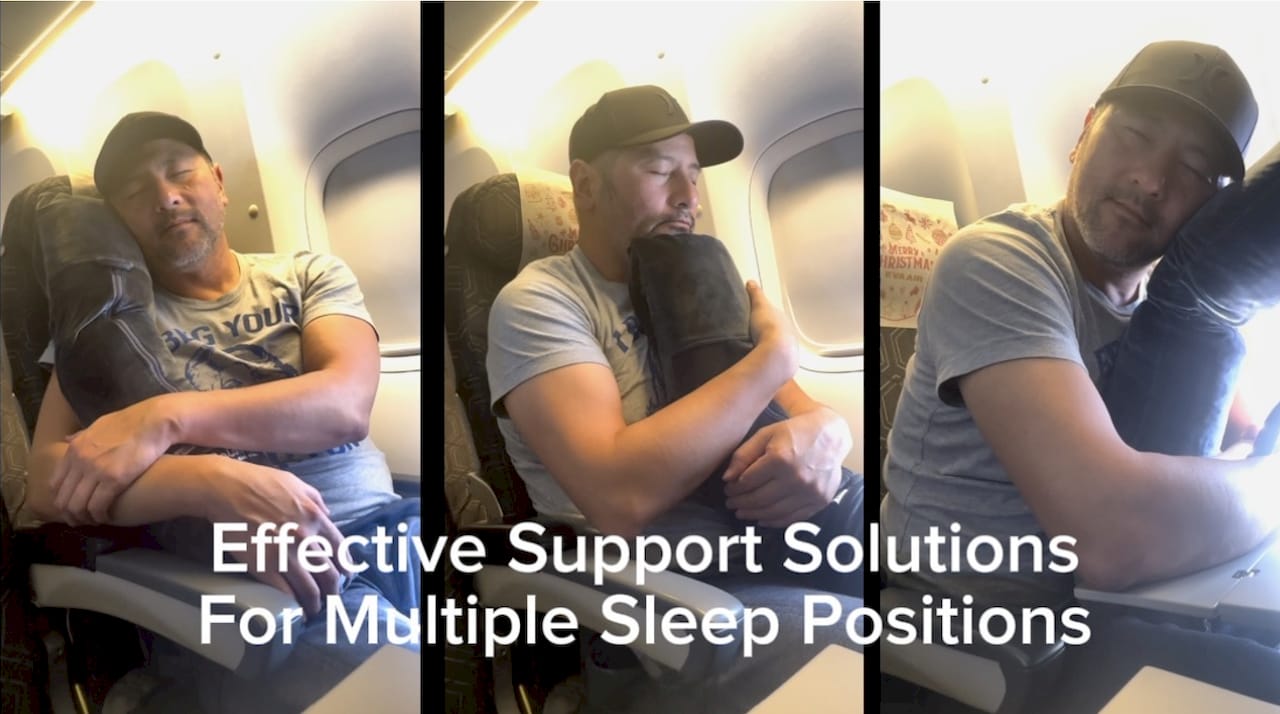
Middle and aisle seats demand creative approaches that only Bolstie can provide. The forward fold works surprisingly well: lean forward with your pillow on the tray table, resting your forehead on crossed arms. This position relieves spinal compression by distributing weight across your forearms and engaging core muscles differently than upright sitting.
For little reclined position, place Bolstie along your center front body. Slide it up and down until it feels right and rest your chin on the top edge. It’s one of the best and most innovative way to prevent the front chin drop. Then simply hug it and it stays in place. No straps. No face squeeze. No hot and sweaty… This vertical alignment prevents your head from rolling forward while maintaining open airways for easier breathing.
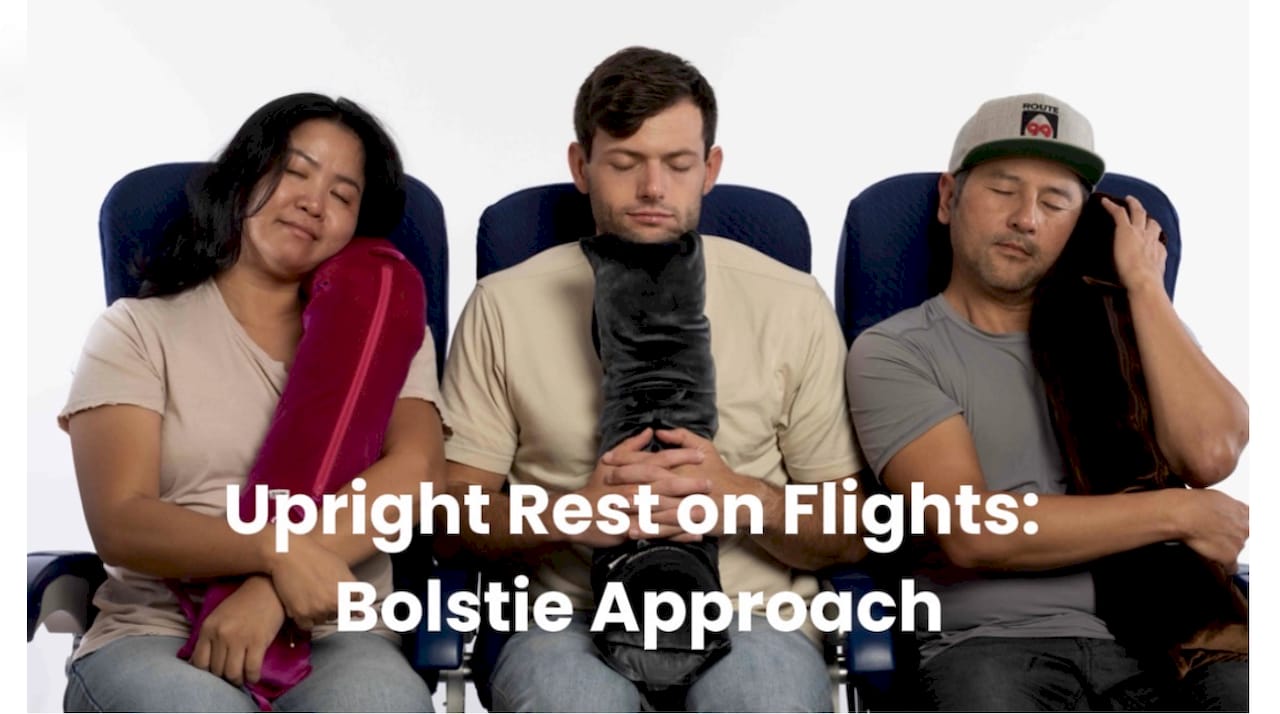
| Position | Best For | Pillow Placement | Strain Relief |
|---|---|---|---|
| Window Lean | Window seats | Between head and wall | Lateral neck support, reduces forward drop |
| Forward Fold | Any seats | Tray table down, use Bolstie as support | Spinal decompression, back stretch |
| Front Chin Drop | Any seat with little recline | Bolstie place on the center of the body and under the chin | Body alignment on your back, maintains airways |
| Side Sleep | Aisle seats | Wear Bolstie as front sling & turn body about 30 degrees in your seat | Head and upper body weight distribution and support |
Lumbar support transforms any seat into comfort. Roll a jacket , 1 bundle of clothes, or use your pillow in the small of your back to maintain natural spine curvature. This simple hack prevents the lower back collapse that creates pain after just an hour of sitting.
Follow these steps for optimal pillow positioning:
-
Recline your seat to maximum comfortable angle before positioning pillow
-
Place pillow to support the heaviest part of your head, not your neck
-
Adjust firmness by redistributing fill material if your pillow allows
-
Test the position for 5 minutes, then fine-tune before settling in
-
Reposition every 90 minutes to prevent pressure point buildup
Pro Tip: Your carry-on backpack makes an excellent footrest when placed under the seat in front of you. Elevating your feet even 3-4 inches improves circulation and reduces lower back pressure throughout the flight.
Sleeping on your side in economy becomes possible with proper pillow geometry. Position your pillow to fill the gap between your shoulder and head, creating a stable platform that prevents neck bending. This technique works best in window seats where you have wall support. In the middle or aisle seat, wear Bolstie as a front sling and turn your body about 30 degrees. Rest your head and body onto Bolstie and just relax.
Avoid these common mistakes: sitting fully upright for extended periods, crossing your legs (restricts circulation), and using only neck support without addressing torso stability. Your entire upper body needs balanced support, not just isolated neck cushioning. Space-saving travel pillows that support multiple body points deliver better results than single-purpose neck wraps.
Verifying comfort: troubleshooting common mistakes and maximizing rest
Incorrect pillow fit remains the most common comfort saboteur. If you wake with neck stiffness despite using a travel pillow, the support geometry doesn’t match your body dimensions. Some travelers prefer soft adjustable pillows while others need rigid structures. Testing multiple styles before committing to one for long-haul flights prevents mid-trip regret.
Pillow firmness creates a delicate balance. Too rigid and the pillow limits natural movement, forcing your neck into fixed angles that become uncomfortable over time. Too soft and the pillow compresses under your head’s weight, offering no meaningful support. Quality adjustable pillows let you modify firmness by redistributing internal fill or adjusting straps.
Watch for these warning signs of inadequate support:
-
Waking every 10-15 minutes to reposition
-
Numbness or tingling in shoulders or arms
-
Headache developing during or after the flight
-
Jaw tension or teeth clenching while trying to sleep
-
Inability to maintain any position for more than 20 minutes
Lumbar support requires periodic adjustment during flights over 4 hours. Your lower back muscles fatigue at different rates than upper body muscles, so the rolled jacket that felt perfect at takeoff may need repositioning by mid-flight. Stand and stretch briefly every 90 minutes to reset your posture and identify new pressure points.
Body awareness prevents small discomforts from becoming major problems. Pay attention when you first notice strain rather than waiting until pain forces a position change. Early repositioning takes 30 seconds, while recovering from accumulated strain can ruin hours of potential rest.
Layering comfort strategies produces better results than relying on a single solution. Combine optimal seat selection with proper pillow placement and lumbar support. Add loose, breathable clothing and light snacks to maintain stable blood sugar. Your backpack serves double duty as a footrest to improve circulation.
Pro Tip: Avoid overhydrating before and during flights. Excess fluid intake forces frequent bathroom trips that disrupt sleep cycles and require climbing over seatmates. Sip water moderately to stay comfortable without creating unnecessary interruptions.
Sleeping comfortably on planes demands attention to your body’s feedback signals. If a position stops working, change it immediately rather than enduring discomfort. Ergonomic travel pillows give you flexibility to experiment until you find what works for your unique body geometry and sleeping style.
Remember that great support allows your muscles to relax completely, which gives your mind permission to quiet down. Without proper physical comfort, mental relaxation remains impossible no matter how tired you feel.
Enhance your economy travel comfort with Bolstie travel pillows
The techniques in this guide work best with pillows designed specifically for economy class constraints. Bolstie travel pillows support your head, jaw, chest, and upper torso together, stabilizing your body’s natural diagonal resting position without neck wrapping or restrictive designs. When empty, they compress small. Filled with clothing, they become firm structured supports that double as packing cylinders.
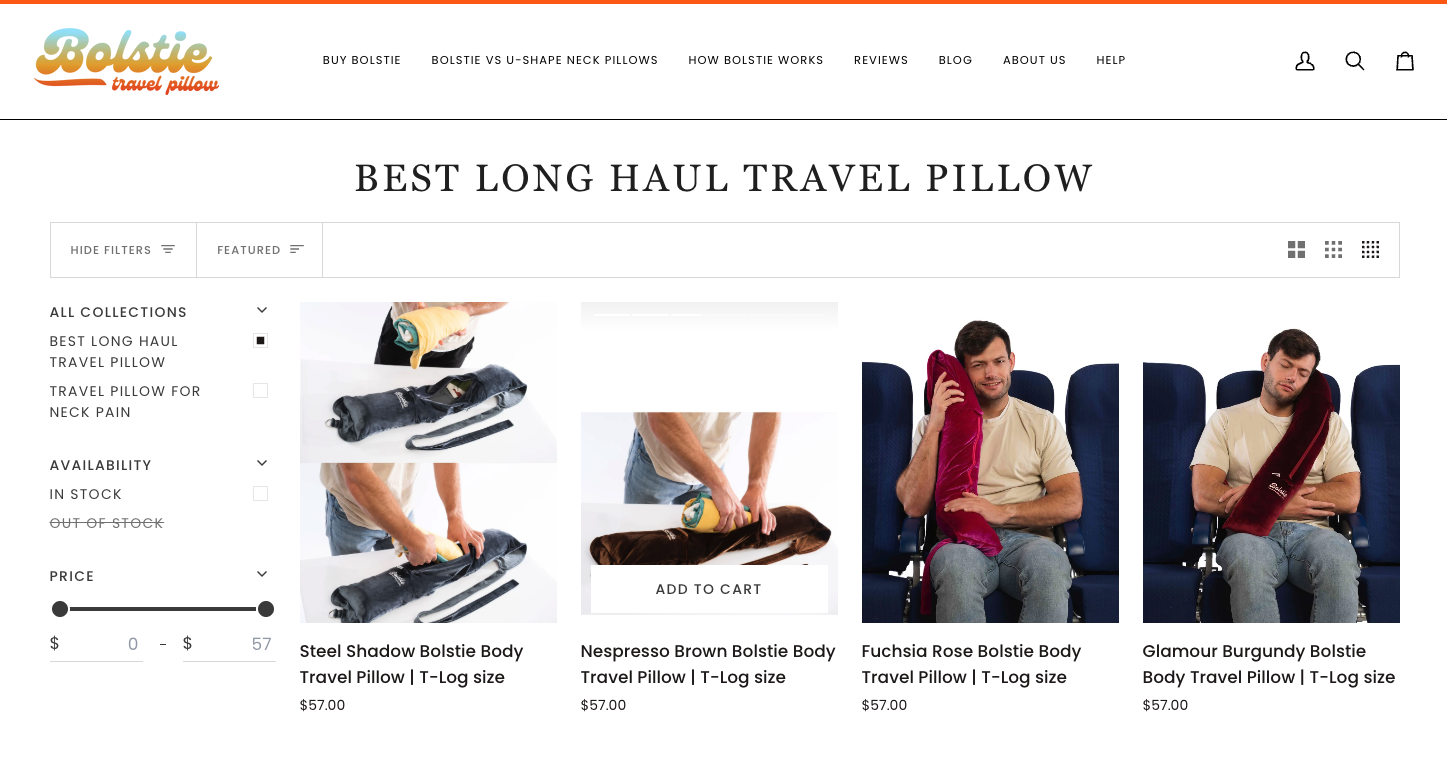
This dual-purpose design saves carry-on space while delivering the support geometry you need for window lean, side sleeping, and upright rest positions. Bolstie pillows allow airflow and prevent heat buildup during long flights, addressing the overheating problem that plagues traditional neck wraps. Explore Bolstie’s long-haul travel pillows to find the right fit for your travel style, and review our complete economy flyers guide for additional comfort strategies.
FAQ
What is the best pillow for economy class travel?
Adjustable, compact pillows like BCOZZY or Bolstie offer the best support and versatility for economy constraints. These designs adapt to multiple sleeping positions without occupying excessive carry-on space. Test pillow firmness and fit against your body type before committing to ensure the support geometry matches your frame. Support pillows designed for economy travel should compress when not in use but provide firm support when positioned correctly.
How can I prevent neck strain on long economy flights?
Use adjustable pillows to support your head during seat recline, avoiding fully upright sitting for extended periods. Upright posture increases spinal disc pressure 140% compared to standing, so even modest recline reduces strain significantly. Position your pillow to support your head’s weight rather than wrapping your neck, and reposition every 90 minutes to prevent pressure point buildup. Review these comfort tips for long flights for comprehensive strain prevention strategies.
Are window seats better for sleeping in economy class?
Window seats allow leaning against the cabin wall for superior lateral neck support compared to middle or aisle positions. Window seats in rows 6-20 provide the best combination of wall support and minimal disturbance from other passengers. You control your own recline without worrying about the person behind you, and you won’t be disturbed by seatmates needing bathroom access. The wall creates a stable anchor point for pillow placement that middle and aisle seats cannot replicate. Learn more about sleeping comfortably on planes regardless of seat assignment.
How often should I reposition during long flights?
Reposition every 90 minutes to prevent pressure point buildup and maintain circulation. Stand briefly to stretch and reset your posture, then adjust pillow placement and lumbar support as needed. Your body’s comfort needs change throughout the flight as muscles fatigue at different rates, so the position that worked perfectly at takeoff may need modification by mid-flight. Pay attention to early discomfort signals rather than waiting until pain forces a change.
Recommended
-
6 Travel Comfort Tips for Economy-Class Flights in 2026 – BOLSTIE TRAVEL PILLOW
-
How to Sleep Comfortably While Traveling in Economy Class – BOLSTIE TRAVEL PILLOW
-
Minimize travel discomfort for economy flyers: 2026 guide – BOLSTIE TRAVEL PILLOW
-
Packing cylinder pillow guide for economy-class sleep – BOLSTIE TRAVEL PILLOW
-
How to optimize travel for health and longevity in Greece – Longevity Travel

