

Economy-class travel doesn’t have to mean accepting neck pain as inevitable. Research shows that approximately one-third of air travelers experience neck or back discomfort during flights, primarily due to forward head posture and inadequate seat support. The good news? Understanding the biomechanical causes behind travel neck pain and implementing targeted solutions can dramatically reduce or eliminate discomfort, even in cramped economy seating. This guide reveals what triggers neck strain during flights and provides practical, space-saving strategies to keep you comfortable from takeoff to landing.
Table of Contents
Key takeaways
| Point | Details |
| Forward head posture causes pain | Leaning your head forward adds significant gravitational load on neck muscles, leading to fatigue and discomfort during flights. |
| Economy seats worsen the problem | Limited recline angles and poorly positioned headrests fail to support neutral spine alignment in most passengers. |
| Ergonomic travel pillows help | Space-saving designs with head/body support and adjustable pillows maintain proper neck position without adding carry-on bulk. |
| Posture adjustments matter | Regular micro-movements and conscious head alignment reduce muscle strain throughout your journey. |
| Prevention beats treatment | Combining proper gear with smart positioning prevents neck pain rather than just managing it after it starts. |
Understanding what causes travel neck pain
The human head weighs between 10 and 12 pounds but you don’t feel it when positioned neutrally over the spine. When you tilt your head forward, even slightly, the effective weight increases dramatically due to leverage and gravitational forces. Forward head posture increases gravitational load on neck muscles by creating mechanical disadvantage, forcing small cervical muscles to work continuously just to hold your head upright.
This becomes particularly problematic during air travel. Most economy headrest already pushes passengers heads in a forward head position while sleeping, reading, or watching screens. Your neck muscles enter a state of sustained contraction, never fully relaxing. Over hours of flight time, this constant tension leads to muscle fatigue, stiffness, and the characteristic aching pain many travelers experience.
Several specific factors compound this biomechanical challenge:
-
Prolonged static postures prevent normal muscle recovery cycles
-
Limited movement space restricts natural position changes
-
Sleep attempts in upright positions create awkward neck angles
-
Device use encourages downward head tilting
The relationship between posture and pain isn’t just theoretical. Studies consistently demonstrate that maintaining neutral spinal alignment reduces muscle activation levels and delays the onset of discomfort. When your ear aligns vertically over your shoulder, neck muscles work minimally. Shift that alignment forward by just a few inches, and muscle effort multiplies.
“The cervical spine is designed for mobility, not prolonged static loading. Economy seating forces passengers into positions that violate basic ergonomic principles, creating predictable patterns of neck and upper back pain.”
Many travelers don’t recognize poor posture and neck pain connections until symptoms become severe. The gradual onset masks the cause-effect relationship. You board feeling fine, adopt a slightly forward head position, and hours later wonder why your neck feels locked and painful. Understanding this mechanism is the first step toward prevention.
How economy-class seating affects your neck health
Airline seat design prioritizes space efficiency and cost reduction over passenger comfort. Economy seats typically offer 28 to 32 inches of pitch (the distance between seat rows) and limited recline angles, usually between 2 and 4 inches of backward movement. These constraints create an environment where maintaining proper posture becomes nearly impossible for many body types.
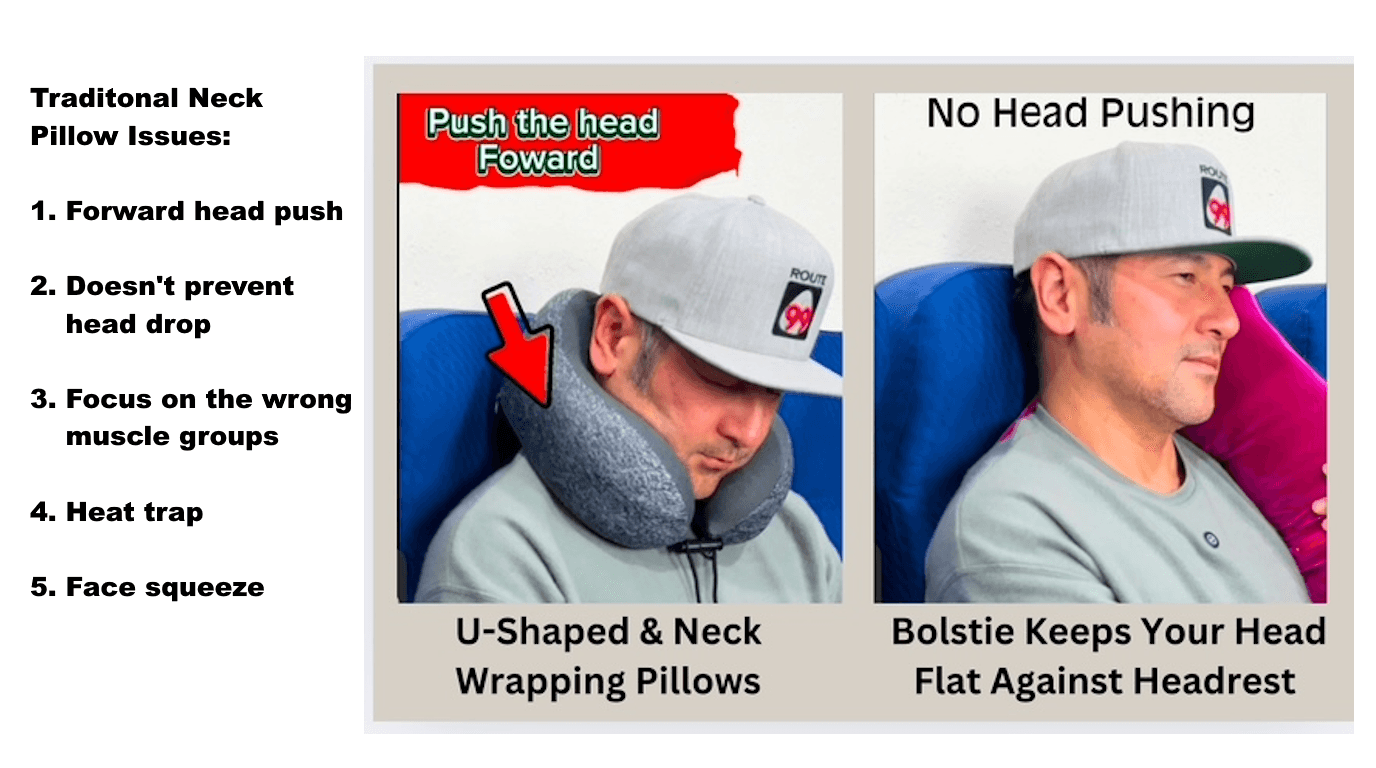
Headrest positioning presents a major challenge. Most economy headrests , when in an upright position, actually pushes the head forward. Wearing a wrap around neck pillow only adds bulkiness to the bck neck and pushes the head even further forward. You see on the problem compounds. Then you have the side wings on many headrests, designed to prevent lateral head movement, often create pressure points rather than comfortable support.
Economy seats exacerbate neck muscle fatigue through several design limitations. The seat back angle rarely matches the natural lumbar curve, forcing passengers to either sit bolt upright or slump forward. Cushioning compresses unevenly over time, creating pressure points that encourage position shifting. Armrest heights and widths limit comfortable arm positioning, which affects shoulder and neck alignment.
| Feature | Economy Reality | Ergonomic Ideal | | — | — | | Recline angle | 2-4 inches | 15-20 degrees | | Headrest adjustability | Fixed or limited | Height and angle adjustable | | Lumbar support | Minimal or absent | Adjustable depth and height | | Seat cushion | Thin, firm | Contoured, pressure-distributing | | Armrest position | Fixed, often low | Height and width adjustable |
The mismatch between seat design and human anatomy becomes more pronounced on longer flights. During the first hour, most passengers can maintain reasonable posture through conscious effort. As fatigue sets in, bodies naturally seek the path of least resistance, which in economy seating usually means slouching or tilting the head forward for support.
Pro Tip: Before settling in, adjust your seat to its maximum recline (even if minimal), position the headrest as high as possible if adjustable, and use your jacket or a small bag as makeshift lumbar support to improve your baseline posture.
The confined space also limits your ability to make natural postural adjustments. In normal sitting environments, people unconsciously shift position every few minutes. Economy seating restricts these micro-movements, forcing sustained muscle contractions that accelerate fatigue. When you can’t easily stand or stretch, these static loads compound over time.
Understanding these limitations helps you compensate strategically. You can’t change the seat design, but you can bring tools and techniques that work within these constraints to support better neck positioning and reduce strain throughout your flight.
Effective travel gear solutions for neck comfort in economy class
The right travel pillow makes a measurable difference in maintaining neutral neck alignment during flights. Unlike traditional U-shaped pillows that often push the head forward or provide inadequate support, newer designs focus on stabilizing the head in a natural position without adding excessive bulk to your carry-on.
Three standout options demonstrate different approaches to compact, effective neck support:
-
Trtl Pillow uses a rigid internal support structure wrapped in soft fleece, functioning like a scarf-brace but customers complain about it being hard to breathe, it gets too hot, and your head still tilts pass 20 degrees to the side.
-
Ostrichpillow Go combines memory foam with a unique chin-supporting design but in reality the head still falls forward and to the sides , plus the heat trap around the neck
-
BCOZZY offers adjustable positioning with its bendable design, allowing you to customize support for side sleeping or upright rest, but again, n reality the head still falls forward and to the sides , plus the heat trap around the neck
These moderately space-saving neck pillows share key characteristics that make them a problem for economy travel. They all fail at doing the one thing they were designed for. They do not keep the head up and stabilized. They may look different but they all functions like traditional pillows, which have the same flawed design. No one talks about this issue.
| Pillow | Packed Size | Support Type | Weight | Washability | User Rating | | — | — | — | — | — | | Trtl Pillow | 6x4x3 inches | Rigid scarf-brace | 5.6 oz | Machine washable cover | 4.3/5 | | Ostrichpillow Go | 8x6x4 inches | Memory foam with chin support | 7.2 oz | Hand wash only | 4.1/5 | | BCOZZY | 10x8x5 inches | Adjustable wrap | 8.8 oz | Machine washable | 4.4/5 | | Bolstie | 30x6x6 inches | Full torso support | 12 oz | Machine washable | 4.6/5 |
Choosing the right pillow depends on your sleeping style and space priorities. Side sleepers benefit from designs like Bolstie that adjust to support lateral head positioning. Upright sleepers need firm support that prevents forward collapse.
Proper use maximizes effectiveness. Position the pillow before you feel tired, not after neck pain starts. Adjust placement so your head rests in neutral alignment, with your ear over your shoulder when viewed from the side. If you feel pressure points or your head tilting forward, readjust the pillow height or angle.
Pro Tip: Test your travel pillow at home in a dining chair before your flight to identify the optimal positioning and ensure it provides the support you need without causing new pressure points.
Beyond pillows, consider complementary accessories. A small lumbar cushion improves overall spinal alignment, reducing compensatory neck strain. Compression socks maintain circulation, reducing the need for frequent position changes that disrupt neck support. An eye mask and earplugs help you relax more completely, allowing neck muscles to release tension.
The key is selecting gear that addresses neck support solutions specific to your needs while fitting within economy-class space constraints. Understanding types of travel neck support helps you make informed choices. Research shows that benefits of neck-free travel pillows include reduced heat buildup and improved breathing comfort compared to traditional wrap-around designs.
Practical posture tips to reduce neck pain on flights
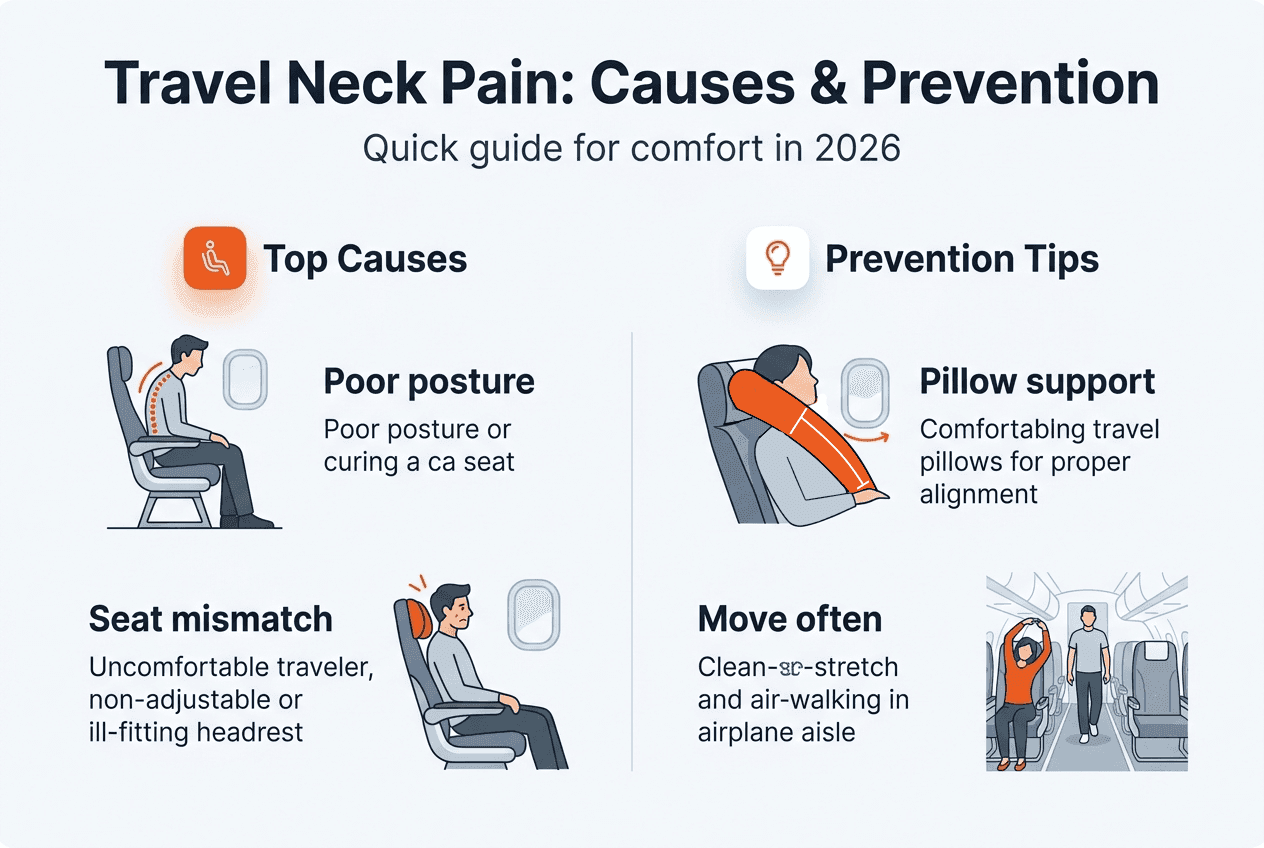
Even the best travel pillow can’t fully compensate for poor posture habits. Implementing conscious positioning strategies throughout your flight significantly reduces neck strain and prevents the muscle fatigue that leads to pain.
-
Establish neutral alignment before takeoff by sitting back fully in your seat, positioning your headrest at maximum height, and checking that your ears align over your shoulders when relaxed.
-
Set movement reminders every 30 minutes using your phone or watch to prompt gentle neck rolls, shoulder shrugs, and subtle position shifts that prevent muscle stiffness.
-
Avoid crossing your legs for extended periods because this tilts your pelvis, creating compensatory curves up the spine that affect neck positioning.
-
Position screens at eye level by holding devices higher or using seat-back entertainment rather than looking down at your lap, which creates sustained forward head posture.
-
Stand and walk during cruise whenever the seatbelt sign is off, even if just to the lavatory, to reset your posture and allow full muscle relaxation.
-
Use strategic breathing by taking five deep breaths every hour, which naturally straightens your spine and reminds you to check your head position.
The timing of these interventions matters. Good posture dramatically reduces neck and back pain prevalence when maintained consistently, but waiting until pain starts makes correction more difficult. Muscles that have been contracting for hours resist relaxation and position changes.
Sleeping presents special challenges. If you doze off without proper support, your head will drop forward or to the side, creating acute neck strain. Always position your travel pillow before closing your eyes, even for brief naps. If you wake with your head in an awkward position, immediately straighten up and do gentle neck stretches to prevent muscle spasms from setting in.
Pro Tip: Download a simple interval timer app and set it to vibrate every 25 minutes as a subtle reminder to check your posture and make micro-adjustments before stiffness develops.
Your arm and hand positions also affect neck alignment. Resting your elbow on the armrest with your hand supporting your chin creates sustained neck flexion. Instead, keep arms relaxed at your sides or folded loosely in your lap. If reading, bring the book or device up to eye level rather than bending your neck down.
These strategies work best when combined with appropriate gear. A quality travel pillow maintains positioning during sleep, while conscious posture habits protect you during waking hours. Together, they create comprehensive protection against the factors that cause travel neck pain. Learning to say goodbye to neck pain on flights requires both the right tools and consistent technique.
Explore the best travel pillows for lasting neck comfort
After understanding what causes neck pain and how to prevent it, you need reliable gear that delivers on these principles. Bolstie’s travel pillow collection offers economy travelers a practical solution that addresses the core biomechanical challenges of upright sleep.
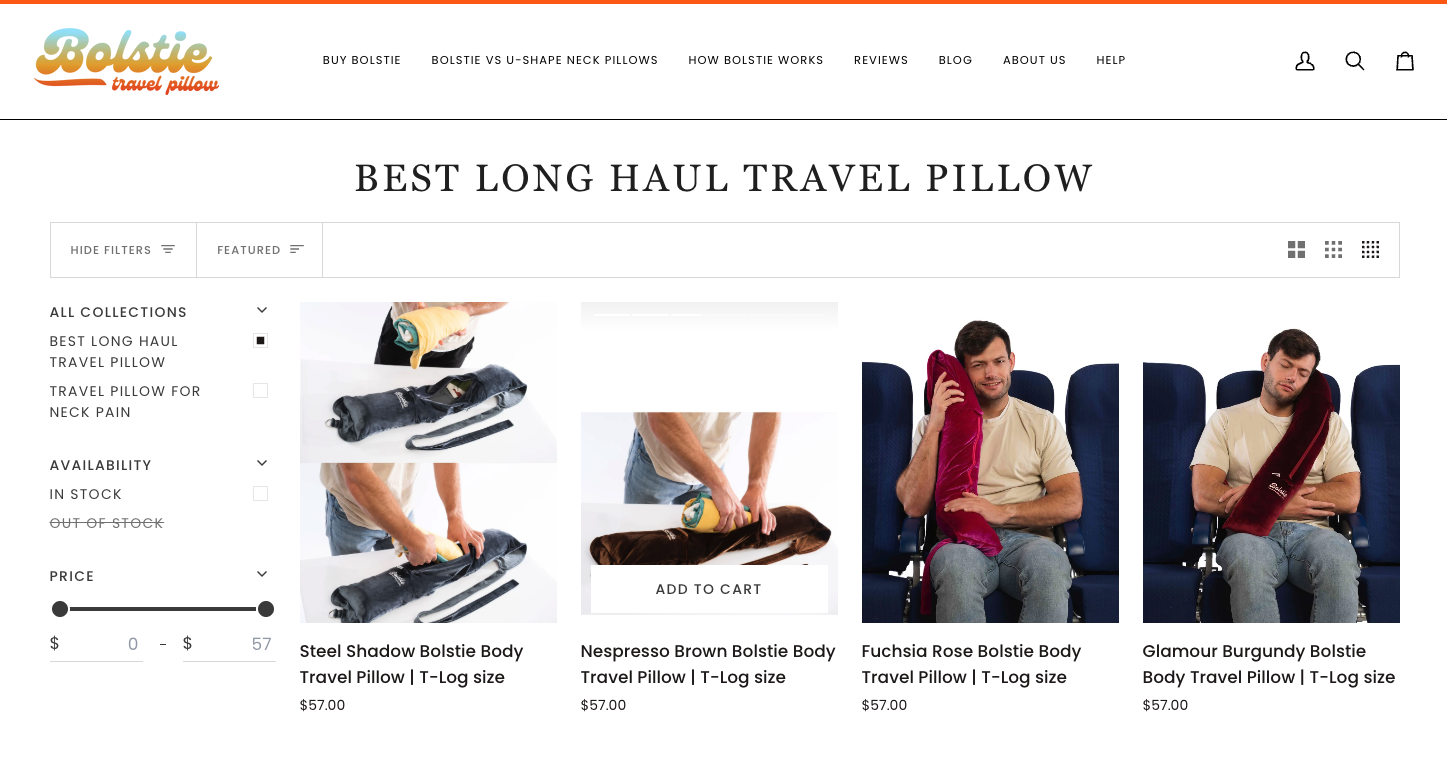
Unlike traditional neck pillows that wrap around and often push your head forward, Bolstie’s design supports your natural diagonal resting position by stabilizing your head, jaw, chest, and upper torso together. This prevents forward head drop without restricting airflow or creating heat buildup around your neck. The pillow doubles as a packing cylinder, compressing down when empty and providing firm support when filled with clothing, helping you save precious carry-on space.
Thousands of economy-class travelers have discovered that proper support doesn’t require upgrading seats or carrying bulky gear. The neck support solutions available in 2026 focus on working with your body’s natural mechanics rather than forcing uncomfortable positions. Recent studies confirm that travel pillows significantly reduce neck pain when designed with proper ergonomic principles.
Whether you’re a frequent flyer, planning a long-haul journey, or simply tired of arriving at your destination with a stiff, aching neck, exploring purpose-built travel comfort solutions can transform your flying experience. Visit the collection to find the option that fits your travel style and carry-on constraints.
Frequently asked questions
What are the main causes of travel neck pain on planes?
Forward head posture creates the primary biomechanical stress, multiplying the effective weight your neck muscles must support from 10-12 pounds to significantly more. Economy seat design compounds this by offering minimal recline, poorly positioned headrests, and inadequate lumbar support that encourages slouching. Prolonged static positioning without natural movement breaks prevents muscle recovery, leading to fatigue and pain. Attempting to sleep upright without proper support causes acute neck strain as your head drops forward or sideways.
Can neck pillows really prevent neck pain during long flights?
Yes, when properly designed and correctly positioned, travel pillows maintain neutral head alignment and prevent the forward collapse that causes muscle strain. The key is choosing pillows that support rather than push your head, and positioning them before fatigue sets in. Traditional U-shaped pillows often fail because they push the head forward or provide inadequate support. Newer designs like scarf-braces, chin-support styles, and full-torso options address these limitations. Research and user experience consistently show that appropriate travel pillows reduce neck pain when combined with conscious posture habits.
What are the best travel pillows for economy-class flyers?
Space-saving designs that provide firm support without excessive bulk work best for economy constraints. Trtl’s scarf-brace design offers rigid support in a compact package. Ostrichpillow Go uses memory foam with chin support to prevent forward head drop. BCOZZY provides adjustable positioning for different sleeping styles. Bolstie’s collection of travel pillows offers full torso support that maintains natural diagonal resting positions while doubling as a space-saving packing solution. Understanding different types of travel neck support helps you select the option that matches your sleeping style and space priorities.
How can I maintain good posture on a cramped airplane seat?
Start by maximizing your seat’s limited adjustability, reclining fully and positioning the headrest as high as possible. Use a small lumbar support (even a rolled jacket) to maintain your spine’s natural curve. Set regular reminders to check that your ears align over your shoulders, not forward. Take standing breaks whenever the seatbelt sign is off, even brief walks to the lavatory. Avoid looking down at devices by bringing screens to eye level. Position your travel pillow before you feel tired to maintain support during sleep. These combined strategies help you eliminate neck pain on flights despite economy seating limitations.
Recommended
-
Travel Pillows Cut Neck Pain by 65%: Health Guide 2026 – BOLSTIE TRAVEL PILLOW
-
Why neck support fails on planes and how to fix it in 2026 – BOLSTIE TRAVEL PILLOW
-
The Truth About Travel Neck Pain (And Why Bolstie Solves It) – BOLSTIE TRAVEL PILLOW
-
The Biggest Hidden Cause Of Neck Pain Mid-Flight — Poor Posture – BOLSTIE TRAVEL PILLOW
-
Travel seating guide for lightweight, comfortable gear – Sitpack

