

Long flights in economy class test your patience and body. Cramped seats, stiff necks, and poor circulation turn travel into an ordeal rather than an adventure. This guide delivers a practical, science-backed plan to transform your flight experience. You’ll learn how to select the best seats, pack efficiently, dress for comfort, maintain circulation, and optimize sleep. Each step builds on research and real-world testing to help you arrive refreshed instead of exhausted.
Table of Contents
Key Takeaways
| Point | Details |
|---|---|
| Seat choice affects comfort | Choosing the right seat can add space and reduce back strain on long flights. |
| Aisle seats for long trips | Aisle seats help movement and access on long flights, improving circulation and flexibility. |
| Pack Solution | Stuffable travel pillow reduce packing volume while keeping items organized and accessible while doubling as a travel pillow |
| Wear bulkiest items aboard | Wear your bulkiest clothing and footwear during the flight to save luggage space. |
Step 1: optimize seat selection for maximum comfort
Your seat determines whether you’ll arrive cramped or comfortable. Exit row or bulkhead seats offer 35-38 inches legroom compared to standard economy’s 30-32 inches. That extra space lets you stretch your legs, shift positions, and reduce pressure on your lower back during long flights.
Location matters beyond legroom. Seats near lavatories suffer constant traffic and noise. Passengers queuing for bathrooms bump your armrest every few minutes, disrupting rest. Galley-adjacent seats face similar problems with crew activity and food cart movement. Non-reclining seats, typically in the last row, force you to sit upright for the entire flight while passengers ahead recline into your space.
Seat selection tools like SeatGuru reveal aircraft-specific layouts before booking. These platforms show which seats have restricted legroom, missing windows, or limited recline. Some airlines charge $20-75 for premium economy seats with extra space, but the investment pays off on flights exceeding six hours.
| Seat type | Pitch (inches) | Pros | Cons | Typical cost |
|---|---|---|---|---|
| Standard economy | 30-32 | Free, multiple options | Limited legroom, cramped | Included |
| Exit row | 35-38 | Extra legroom, easier movement | Responsibility requirements, may not recline | $30-75 |
| Bulkhead | 35-37 | Extra legroom, no forward recline impact | No under-seat storage, bassinet noise | $30-60 |
| Premium economy | 34-38 | More space, better recline | Higher cost, limited availability | $100-300 |
Window seats support side sleeping and eliminate aisle disruptions. Aisle seats provide easier bathroom access and stretching opportunities. For flights over eight hours, aisle seats win because movement matters more than uninterrupted rest. Your body needs regular position changes to maintain circulation.
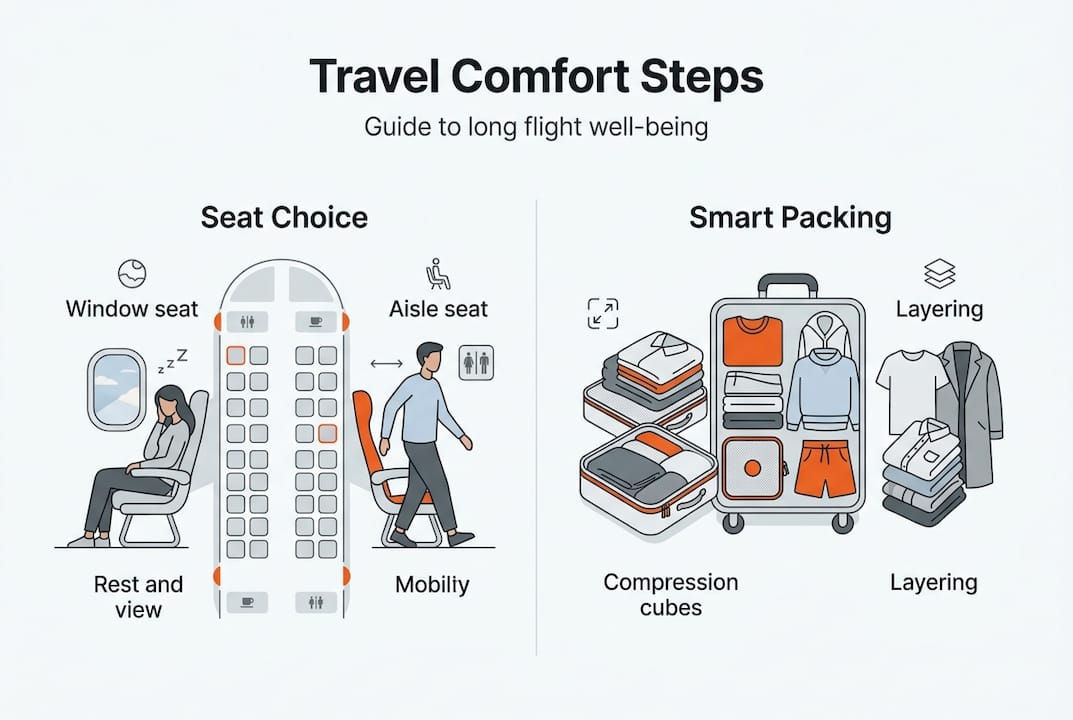
Pro Tip: Book seats 24-48 hours after initial flight release when airlines load their seating charts. You’ll see the full aircraft layout and grab prime spots before they’re assigned or purchased.
Balancing comfort with budget requires strategy. If you’re traveling with a companion, book a window and aisle seat in a three-seat row. Middle seats fill last, so you might score extra space. If someone does book the middle, they’ll gladly swap for your aisle or window. When selecting your travel pillow selection, consider how your seat choice affects your sleeping position and neck support needs.
Step 2: pack smartly to save space and stay organized
Efficient packing transforms your travel experience by reducing stress and maximizing carry-on space. Compression cubes may seem efficient for keeping items organized and accessible, but they actually take up more space then they claim. I suggest rolling clothes instead of folding creates fewer wrinkles and fits more items into tight spaces.
If compression cubes are your thing, they work differently than vacuum bags. Cubes use zippers to compress contents while maintaining accessibility. You can open one cube without disturbing others. Vacuum bags achieve maximum compression but require re-sealing after each access and can create deep wrinkles in delicate fabrics. For week-long trips, cubes offer the better balance.
Organization beats volume when you need specific items mid-flight. Dedicate one cube to toiletries, another to electronics and chargers, and a third to clothing layers. This system lets you grab what you need without unpacking your entire bag in a cramped airplane bathroom or seat area.
| Method | Volume reduction | Wrinkle risk | Accessibility | Best for |
|---|---|---|---|---|
| Compression cubes | 30-40% | Low to moderate | High | Regular access items |
| Vacuum bags | 70-80% | High | Low | Long-term storage |
| Rolling technique | 60-70% | Very low | High | Wrinkle-free fabrics |
| Traditional folding | 0-10% | Moderate | Moderate | Structured garments |
Wear your bulkiest items during the flight. Put on your heaviest shoes, thickest jacket, and largest sweater before boarding. This strategy saves precious luggage space for items you can’t wear simultaneously. Your body becomes additional storage that doesn’t count toward weight limits.
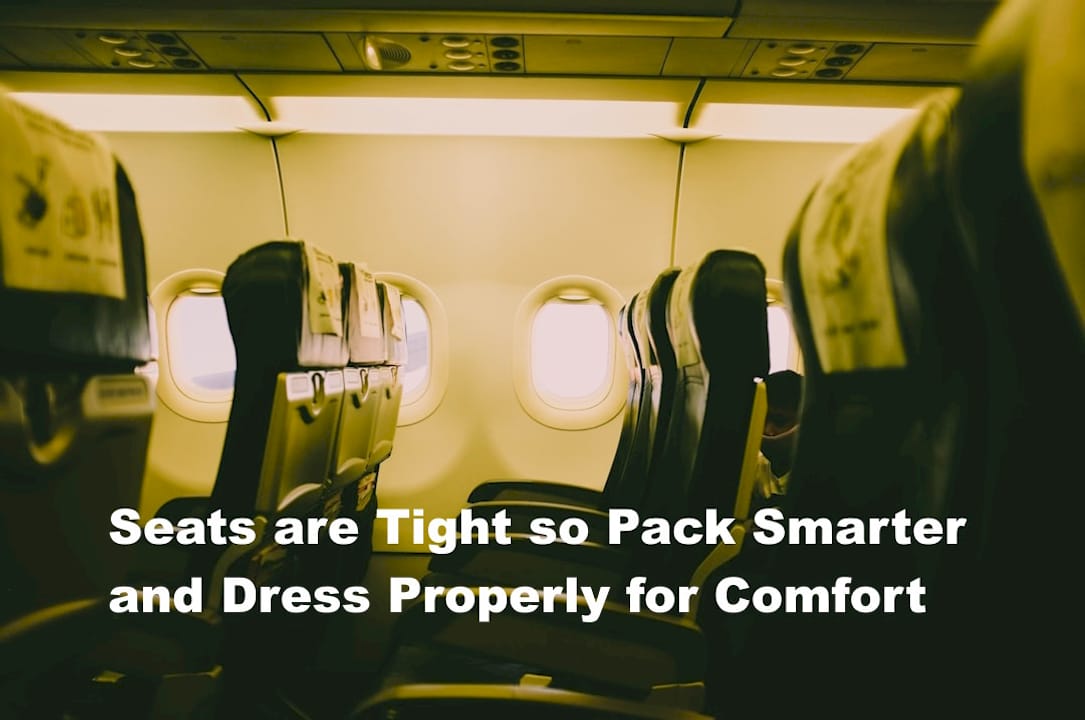
Layering your packing creates stability. Place heavier items like shoes at the bottom near wheels. Fill shoes with socks or small accessories to use every cubic inch. Roll softer clothing items and pack them around rigid objects. This technique prevents items from shifting during transit and protects fragile contents.
Pro Tip: Pack a collapsible water bottle inside your packing cubes before departure. Once through security, fill it at water fountains to stay hydrated without buying overpriced airport beverages. The empty bottle takes almost no space.
Smart packing extends to personal items. A small backpack fitting under the seat ahead holds flight essentials like neck pillows, tablets, snacks, and medications. Keep this bag separate from your overhead luggage so you never need to stand and retrieve items mid-flight. Check out more travel comfort solutions that complement efficient packing strategies.
Step 3: dress and equip yourself for comfort and health
Your clothing and accessories directly impact circulation, temperature regulation, and overall comfort during long flights. Dress in loose, breathable layers that accommodate cabin temperature fluctuations. Planes typically maintain 65-75°F, but temperatures vary by section and flight phase.
Compression socks deserve special attention. Wearing compression socks reduces DVT risk by 60% by promoting blood flow from your lower legs back to your heart. Choose knee-high socks with 15-20 mmHg compression for flights. Higher compression levels require medical supervision and can feel uncomfortably tight for healthy travelers.
Neck support makes or breaks your sleep quality. Pillows like TRTL or Cabeau may seen popular through ads and social but real customers complains say otherwise. . U-shaped designs are the worse as they compress under head weight and offer minimal stabilization, leading to head drops that jolt you awake. Structured head and body pillow maintain their shape and support your neck’s natural curve.
Research shows that 80% of travelers report neck pain after flights over four hours. Structured neck pillows reduce this pain by 25-30% compared to makeshift solutions or no support. The right pillow design prevents your head from dropping forward during sleep, which causes the sudden jerking motion that disrupts rest.
Essential comfort accessories for long flights:
-
Compression socks (15-20 mmHg) for circulation
-
Structured head and body pillow designed for upright sleeping
-
Eye mask to block cabin lighting and passenger screens
-
Foam earplugs or noise-canceling headphones
-
Moisturizing lip balm for dry cabin air
-
Hand sanitizer for hygiene in shared spaces
Temperature management requires planning. Cabins run cold during overnight flights when crew dims lights and many passengers sleep. Bring a lightweight scarf or shawl that packs small but provides warmth. Avoid cotton fabrics that trap moisture and choose synthetic blends or merino wool that wick sweat and regulate temperature.
Footwear affects comfort more than most travelers realize. Wear slip-on shoes that you can remove easily during flight. Your feet swell at altitude, and tight shoes become painful after several hours. Bringing a spare pair of socks lets you refresh mid-flight and feels surprisingly rejuvenating.
Pro Tip: Choose pillows specifically designed for upright rest rather than bed sleeping. Your sleeping position in an airplane seat requires different support angles. The best long haul neck pillow stabilizes your head without forcing unnatural neck angles that cause stiffness.
Step 4: stay active and hydrated to maintain circulation
Sitting motionless for hours creates serious health risks. DVT risk reaches 1 in 500 on long-haul flights, but performing exercises every 1-2 hours significantly boosts circulation and reduces clot formation. Your body needs movement to pump blood through veins that lack the muscular walls of arteries.
Board your flight already hydrated. Drink 16-20 ounces of water in the two hours before departure. Cabin air humidity drops to 10-20%, far below the comfortable 40-60% range. This extreme dryness pulls moisture from your respiratory system, skin, and mucous membranes. Dehydration thickens blood and compounds circulation problems from prolonged sitting.
Bring a collapsible water bottle through security and fill it at fountains near your gate. Flight attendants appreciate fewer beverage requests, and you’ll drink more when water sits within reach. Aim for 8 ounces per hour of flight time. Avoid excessive caffeine and alcohol, which act as diuretics and worsen dehydration.
Simple exercises you can perform discreetly in your seat:
-
Ankle circles: Rotate each foot 10 times clockwise, then counterclockwise
-
Foot pumps: Flex feet up and down 20 times to activate calf muscles
-
Knee lifts: Raise each knee toward your chest 10 times
-
Calf raises: Lift heels off the floor while keeping toes down, hold 5 seconds
-
Shoulder rolls: Circle shoulders backward 10 times to release upper body tension
-
Neck stretches: Gently tilt head side to side, holding each stretch 10 seconds
Avoid crossing your legs for extended periods. This position compresses veins and restricts blood flow, particularly behind your knees. Keep both feet flat on the floor or footrest. If you must cross your legs for comfort, switch sides every 15-20 minutes.
Walk the aisle every two hours when safe. A brief walk to the lavatory and back activates large leg muscles and gets blood moving. Time these walks during beverage service gaps when you won’t block crew members or carts.
Pro Tip: Set a recurring timer on your phone or smartwatch for every 90 minutes. When it vibrates, perform a quick set of ankle circles and foot pumps without leaving your seat. This habit becomes automatic after one or two flights. Combine these practices with other economy flight comfort tips for maximum benefit.
Step 5: optimize sleep to enhance post-flight recovery
Sleep strategy determines whether you arrive energized or exhausted. Proper sleep strategies improve post-flight well-being by 40-60% compared to haphazard rest attempts. Align your sleep schedule with your destination time zone rather than your departure zone.
For eastward flights crossing multiple time zones, stay awake during daylight hours at your destination even if you’re tired. Sleep only when locals sleep. This approach resets your circadian rhythm faster than gradual adjustment. Westward flights prove easier because delaying sleep feels more natural than forcing early sleep.
Pillow shape influences muscle activity and sleep quality significantly. Cylindrical pillows work best as they adjust to your body and in any sleep positons, especially for side sleepers, supporting the space between your shoulder and head. Unlike neck-only pillows, they help to maintaining neutral body alignment. Structured pillows reduce muscle activity needed to hold your head upright, letting you relax completely.
Your body fights to stay upright when unsupported, creating micro-movements that prevent deep sleep. Quality neck support eliminates these unconscious corrections. You’ll notice fewer instances of jerking awake when your head starts to drop.
Habits that promote better in-flight sleep:
-
Dim your screen brightness or avoid screens 30 minutes before attempting sleep
-
Use an eye mask to block ambient cabin lighting and passenger devices
-
Insert earplugs or use noise-canceling headphones with white noise
-
Recline your seat fully if possible without impacting the passenger behind you
-
Adjust air vents to create gentle airflow across your face
-
Avoid large meals immediately before sleep attempts
Cabin lighting follows departure time zones initially, then shifts toward destination zones. This transition helps some passengers but confuses others. Control your light exposure with an eye mask rather than relying on cabin lighting schedules. Darkness triggers melatonin production regardless of actual time.
Temperature affects sleep quality as much as light. Most people sleep better in cooler environments. Adjust your overhead air vent to create a gentle breeze. Layer clothing so you can add or remove pieces without fully waking.
Pro Tip: Take a mild sleep aid like melatonin only on flights exceeding eight hours and only if you have at least six hours for sleep. Shorter sleep windows leave you groggy upon arrival. Time your dose for when you want to sleep at your destination, not when you board. Learn more about how to sleep comfortably on planes with research-backed techniques.
Explore Bolstie’s best long haul travel pillows
You’ve learned the strategies that transform uncomfortable flights into manageable journeys. Now equip yourself with tools designed specifically for economy-class comfort. Bolstie creates ergonomic travel pillows that support your body’s natural resting position without bulk or complicated adjustments.
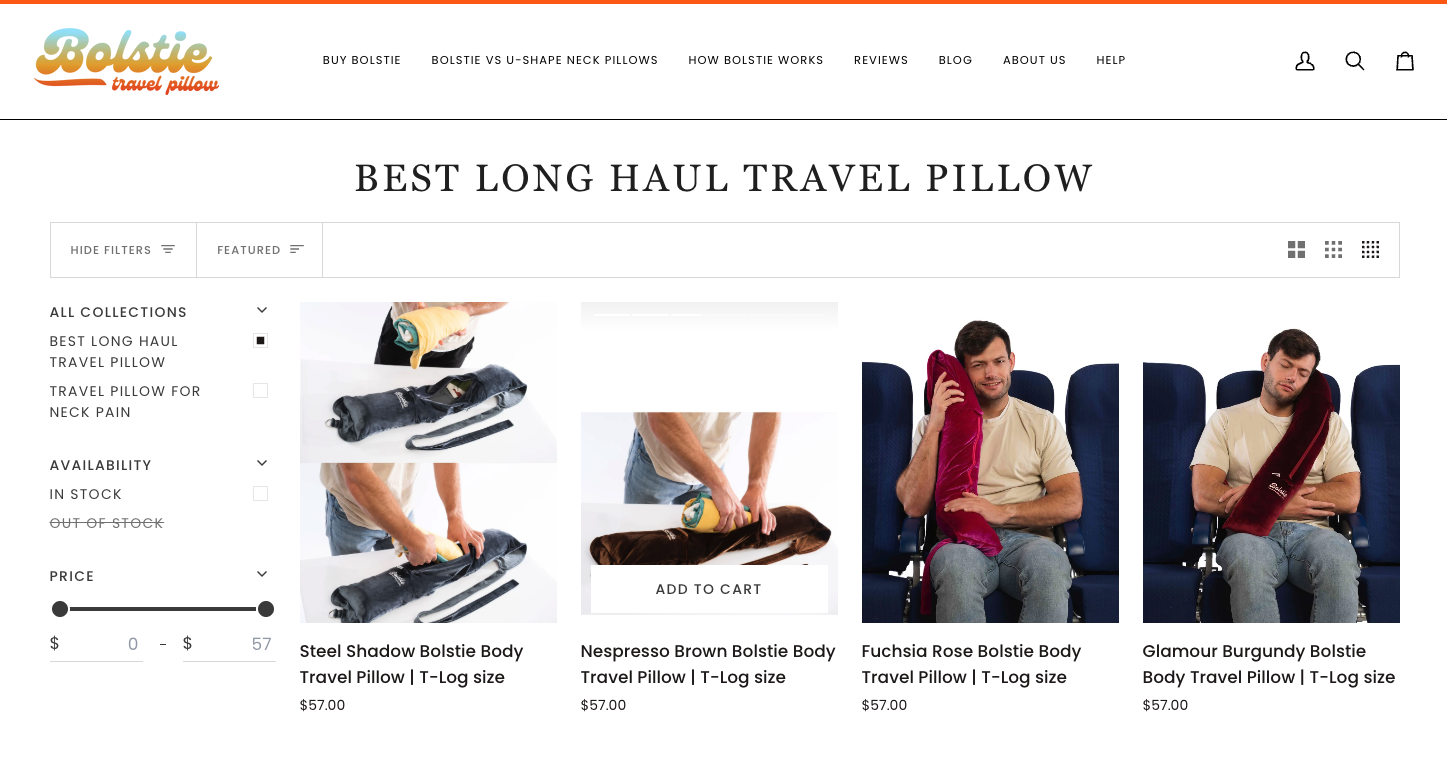
Bolstie pillows reduce neck pain by up to 30% through structured support validated by sleep science research. Unlike traditional U-shaped pillows that compress and shift, Bolstie maintains firm support throughout your flight. The design prevents forward head drops that jolt you awake, letting you achieve deeper rest in an upright position.
Key features that matter for long flights:
-
Adjustable firmness by filling with your own clothing
-
Machine-washable covers for easy cleaning
-
Compact design that compresses for packing
-
Supports head, jaw, chest, and upper torso together
-
Allows airflow to reduce heat buildup
Visit Bolstie’s collection to find the right pillow for your travel needs. Each product combines the comfort strategies you’ve learned here with practical design that fits economy-class constraints. Upgrade your sleep quality without upgrading your seat.
FAQ
How to choose the best seat for comfort on long flights?
Select bulkhead or exit row seats for maximum legroom, gaining 35-38 inches versus standard 30-32 inches. Avoid seats near lavatories where constant passenger traffic disrupts rest, and skip non-reclining seats in the last row. Use tools like SeatGuru to compare aircraft layouts before booking.
What packing tips help save space and reduce wrinkles?
Use compression packing cubes to reduce luggage volume by 50-70% while maintaining organization. Roll clothes instead of folding them to minimize wrinkles and maximize space efficiency. Wear your bulkiest items during the flight to save precious carry-on room.
How can I prevent neck pain during economy flights?
Bring a structured neck pillow specifically designed for upright sleeping positions rather than bed rest. Avoid basic U-shaped pillows that compress under head weight and provide minimal stabilization. Research shows structured pillows reduce neck pain by 25-30% on flights over four hours. Check this travel pillow selection guide for detailed recommendations.
What exercises help maintain circulation on long-haul flights?
Perform ankle circles, foot pumps, knee lifts, and calf raises every 1-2 hours to boost blood flow. Avoid crossing your legs for extended periods as this compresses veins behind your knees. Stay hydrated with 8 ounces of water per flight hour and walk the aisle every two hours when safe.
Recommended
-
Packing checklist for long flights: comfort essentials – BOLSTIE TRAVEL PILLOW
-
Step by step travel comfort: 50% less stress & neck strain – BOLSTIE TRAVEL PILLOW
-
How to survive long plane flights: comfort tips 2026 – BOLSTIE TRAVEL PILLOW
-
Minimize travel discomfort for economy flyers: 2026 guide – BOLSTIE TRAVEL PILLOW

