

TL;DR:
- Packing light reduces costs, stress, and logistical issues during family travel.
- Organizing kits and choosing the right bags streamline packing and access.
- Prioritizing essentials and using disciplined packing tactics ensure smooth trips with kids.
You’re hauling three overstuffed suitcases, a stroller, a diaper bag that weighs more than your toddler, and a carry-on that won’t close. Sound familiar? ✈️ Most families arrive at the airport already exhausted before their trip has even begun, and overpacking is often the silent culprit. The good news is that there are real, proven strategies that let you travel light without leaving behind anything your family genuinely needs. This guide walks you through every step, from building smart kit systems to choosing the right bags, so your next family trip starts with energy instead of stress.
Table of Contents
- Why packing light matters for families
- Build your family travel kit system
- Choose the right bags and smart organizers
- Disciplined packing: Must-have items versus nice-to-haves
- Mistakes to avoid and troubleshooting on the go
- Our take: Why family travel packing “minimalism” is not one-size-fits-all
- Make every journey lighter (and comfier)
- Frequently asked questions
Key Takeaways
| Point | Details |
|---|---|
| Kit-based packing works | Dividing items into family, child, and survival kits keeps travel organized and stress-free. |
| Compartmentalize everything | Suitcases with zippered sections prevent chaos and speed up access to family essentials. |
| Prioritize carry-on items | Always pack what you need for 48 hours in the cabin to handle delays or lost checked bags. |
| Discipline limits baggage | Only check necessary bulky items; keep comfort and hygiene at the center of your packing decisions. |
| No one-size-fits-all rule | Family packing success depends on unique needs—balance minimalism and real comfort. |
Why packing light matters for families
Let’s be honest: packing light feels counterintuitive when you’re traveling with kids. More stuff feels like more safety. But the reality is that every extra bag creates a new problem to solve, a new item to track, and a new fee to pay.
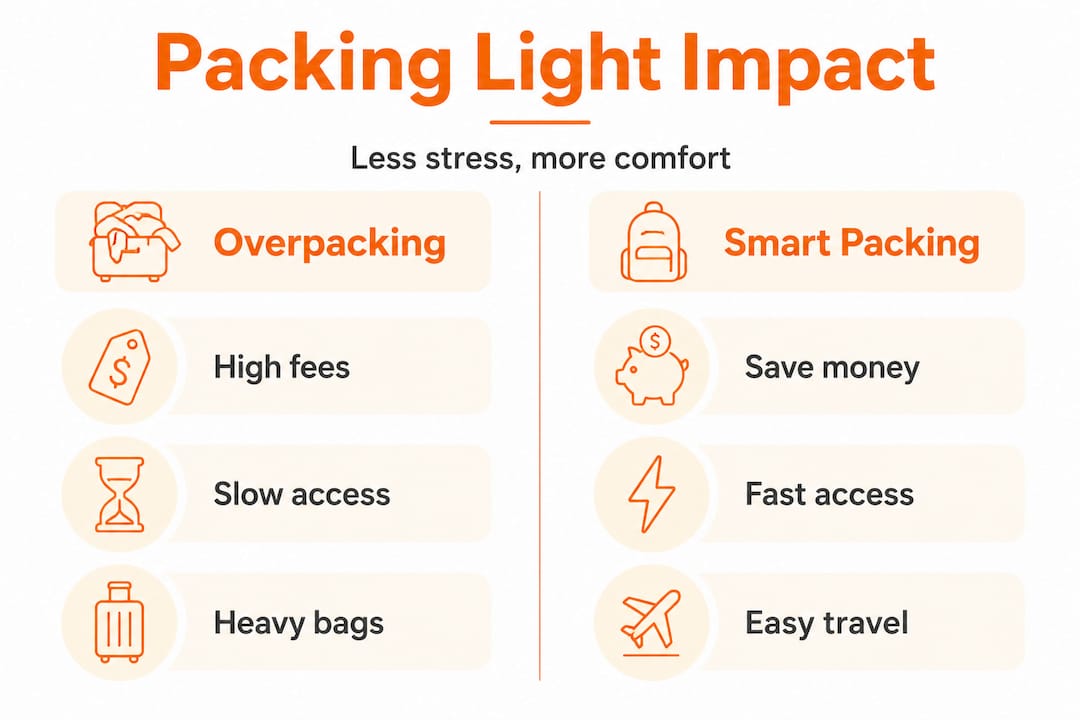
Airline baggage fees have climbed steadily, with many carriers now charging between $35 and $75 per checked bag each way. For a family of four on a round trip, that can easily add $300 to your travel budget before you’ve bought a single souvenir. And that’s assuming nothing gets lost or delayed. Avoiding lost luggage and extra fees becomes far more likely when you reduce what you’re checking in the first place.
Beyond money, overpacking creates a logistics nightmare with kids in tow. Children need quick access to snacks, medicines, wipes, and comfort items at unpredictable moments. When those items are buried under four pairs of “just in case” shoes, a meltdown becomes a certainty.
Here’s what packing light actually does for families: it reduces costs and logistical headaches, especially when you’re dealing with the beautiful unpredictability of children. When you can move quickly through terminals, fit everything in an overhead bin, and know exactly where everything is, travel feels manageable. Even joyful.
Benefits of packing light with kids:
- Faster check-in and security lines
- No waiting at baggage carousels
- Lower or zero baggage fees
- Less physical strain on parents
- Easier navigation through crowded airports, trains, and transit
- Quicker access to essentials during a child’s urgent moment
Many destinations also offer laundry facilities or have accessible stores for basics. You don’t need seven outfits per child for a week-long trip. Three or four versatile pieces plus access to a washing machine is genuinely enough. Check packing essentials for families to see how real travelers are cutting their load without cutting corners.
“The best thing that happened to our family travel was the day we stopped packing ‘what ifs’ and started packing ‘what we actually use every single day.’” — A seasoned family traveler
Build your family travel kit system
Here’s the strategy shift that changes everything: stop thinking of packing as “putting stuff in a bag” and start thinking of it as building a system. The kit method, as outlined by experienced family packing planners, uses three distinct kits to keep you organized and resilient, even if your checked bag is delayed.
The three-kit family travel system:
-
Family core kit: Passports, travel documents, first aid basics (thermometer, pain reliever, allergy meds, bandages), device chargers, universal toiletries (sunscreen, toothpaste, hand sanitizer), and group snacks. One shared kit that any adult can grab and go.
-
Per-kid kits: Each child gets their own small bag or pouch with three to four daily outfits, one comfort item (stuffed animal, small blanket), a pair of lightweight shoes, and age-appropriate activities (coloring book, small puzzle, downloaded tablet content). Keep it their responsibility if they’re old enough. It builds ownership and reduces the “where is my thing?” spiral.
-
Carry-on survival kit: This is your insurance policy. Pack 48 hours of essentials for every family member: medications, snacks, phone chargers, one spare outfit per child, all irreplaceable items (jewelry, documents, sentimental items). If your checked bags disappear for two days, you won’t panic.
Using this systematic packing approach for families means you’re never searching for a pacifier at 30,000 feet or digging through a bag for a child’s inhaler in a crowded terminal.
Comparison: Unstructured packing vs. kit system
| Factor | Unstructured packing | Kit system |
|---|---|---|
| Time to find an item | 2-5 minutes | Under 30 seconds |
| Bag delay impact | Catastrophic | Manageable |
| Repacking ease | Stressful | Straightforward |
| Child independence | Low | Grows with age |
| Overpacking risk | High | Low to moderate |
Pro Tip: Use a different color bag or pouch for each kit. The green bag is first aid. The blue bag is snacks and entertainment. The yellow bag is documents and chargers. Color coding removes thinking, and when you’re sleep-deprived at 5am, that matters more than you’d expect.
Check the minimal clothing checklist if you’re unsure how to trim down clothing across multiple people without leaving anyone short.
Choose the right bags and smart organizers
Your bags either work for you or against you. It’s that simple. The wrong luggage makes even a perfectly curated kit feel chaotic.
What to look for in family travel bags:
- Multiple zippered compartments that keep clothes, shoes, and dirty laundry separated
- Lightweight construction (a heavy empty bag just eats into your weight allowance)
- Compressible materials for layering or storage when bags are partially full
- Smooth, reliable wheels and comfortable carry handles for parents hauling multiple bags
According to research on organized family packing, compartmentalized and zippered luggage is what actually keeps families organized during travel, not just at home before the trip. The key word there is during. Your bag needs to hold up to being opened and rummaged through twenty times a day across multiple days of travel.
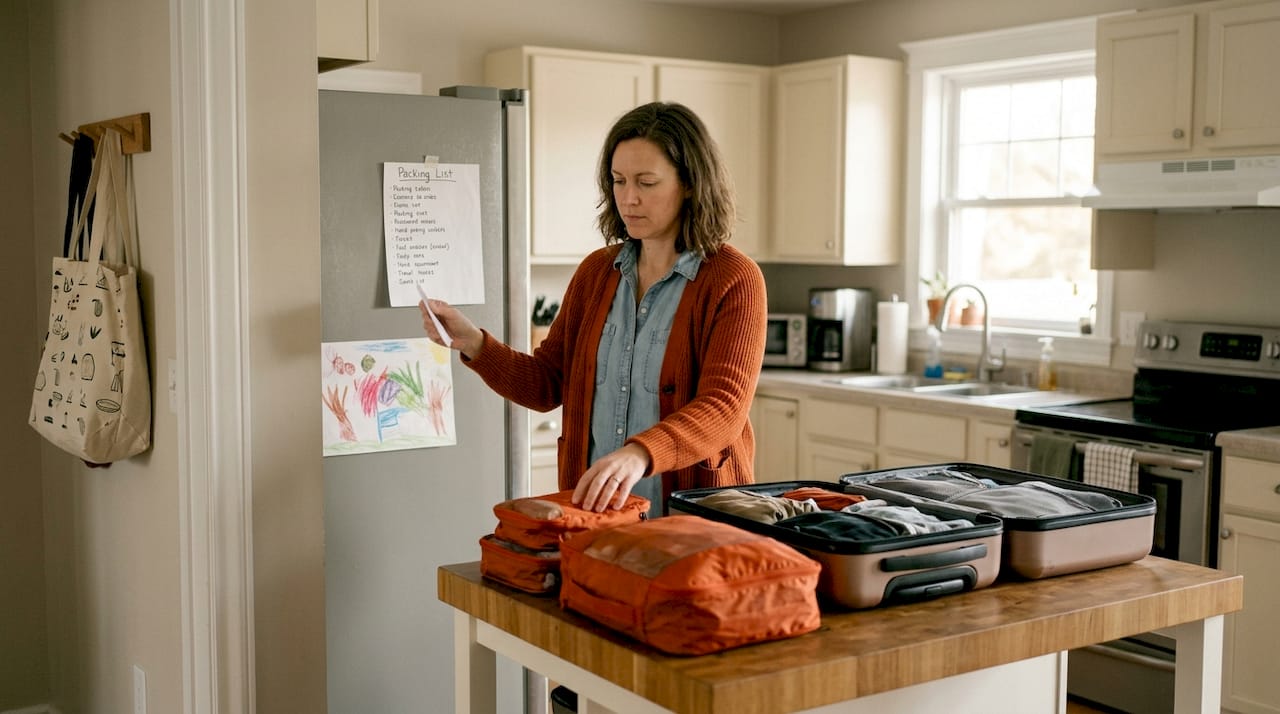
Standard packing cubes are popular, but they come with a real limitation: they often compress everything into one undifferentiated mass when stuffed in a suitcase. This approach gives the illusion of organization. True containment for family packing means everything has a designated space that is fast to reach and easy to return.
Pro Tip: Look into alternatives to standard packing cubes that offer firmer structure and faster access. For families with kids in diapers or with medical needs, speed of access is everything.
Organizer features worth prioritizing:
- Wet/dry separation for swimwear and soiled clothing
- External quick-access pocket for snacks and wipes
- Mesh windows so you can see contents without opening
- Compression zippers to reduce bulk without losing structure
One often-overlooked option for families: a structured travel pillow that doubles as a packing cylinder. When you fill it with soft clothing, it becomes a firm, supportive pillow. When you arrive at your destination, you unpack it and use it for rest. Zero wasted space. ❤️
Disciplined packing: Must-have items versus nice-to-haves
This is where most families stall out. You’ve built your kits and chosen your bags. Now comes the hard part: deciding what actually earns a spot in those bags.
Carry-on essentials for families (non-negotiable):
- Diapers and wipes (enough for 24-48 hours plus buffer)
- All medications (prescription and over-the-counter)
- Snacks that your kids will actually eat under stress
- Spare outfit for every child (at minimum, one for parents too)
- Comfort items for sleep: a small, familiar stuffed animal or blanket
- Entertainment: tablet preloaded with shows and games, downloaded offline
Parents who check a bag for bulky items can still minimize what’s checked by keeping these carry-on essentials intact. The rule of thumb: if losing it for 48 hours would derail your trip, it lives in your carry-on, not in a checked suitcase.
For the checked bag, you’re looking at bulk items that can’t compress: car seats if not available at the destination, seasonal gear (snow boots, ski layers), or large quantities of specialty formula or medical supplies. Everything else? Reconsider it.
Families with younger children often need a hybrid checked and carry-on strategy, and that’s completely fine. But laundry access at your destination can dramatically reduce how much clothing you need to carry in either bag. A mid-trip wash cycle means you can pack for four days even on a ten-day trip.
“You don’t need to pack everything your kids might want. You need to pack what they’ll definitely need and what you need to stay calm.” — Family travel community wisdom
The tough calls usually involve duplicate items. Two strollers, backup shoes for every outfit, three different types of sunscreen. Ask yourself: is this a backup, or is it anxiety in bag form? Most of the time, you can borrow, buy, or do without at the destination. Check tips for luggage discipline for real-world examples of families who’ve learned to make the cut.
Pro Tip: Do a “test pack” two days before your trip, then walk away. Come back 24 hours later and remove anything you forgot was even in the bag. If it wasn’t memorable, it’s not essential. See how this applies to checked versus carry-on decisions for a helpful practical breakdown.
Looking for a structured packing checklist that covers comfort essentials for long flights with kids? That resource is worth bookmarking before your next trip.
Mistakes to avoid and troubleshooting on the go
Even the best-planned family trips hit snags. The goal isn’t a perfect trip. It’s a recoverable one.
Common overpacking mistakes families make:
- Packing “just in case” items that could easily be purchased at the destination
- Duplicating items across multiple bags (three tubes of toothpaste, two first aid kits)
- Treating entertainment as infinite (kids need variety, not volume)
- Ignoring destination laundry options and packing for every possible day
- Putting critical items in checked bags instead of the carry-on
Optimizing your carry-on becomes especially important when some volume is simply unavoidable. Diapers, formula, and specialized gear take up space, but you can offset that by being ruthless about what clothing and duplicates you include elsewhere.
When things go wrong mid-trip (and sometimes they will), staying calm depends on your recovery system. Spill on your only clean outfit? That’s why every child has a spare in the carry-on. Delayed bag? Your 48-hour survival kit covers you. Bored kids during a long layover? Offline content and one or two surprise snacks go a long way.
“The most important thing we’ve learned is to plan for disruption, not just the itinerary.”
Pro Tip: Keep a small resealable bag in your carry-on with travel-size laundry detergent sheets. Lightweight and flat, they let you wash a few items in a hotel sink on longer trips, buying you two or three extra days of clothing without adding bulk.
Clear kit separation is your daily defense against chaos. When meds, snacks, entertainment, and documents all live in the same bag, you waste minutes that matter during time-sensitive travel moments. See how smart solutions for overpacking can also improve how you handle delays and unexpected detours.
Our take: Why family travel packing “minimalism” is not one-size-fits-all
Here’s an honest truth we don’t see shared enough: the ultralight travel advice you read in solo travel blogs does not translate cleanly to family travel, especially with babies or toddlers.
“Pack everything in a personal item” makes perfect sense when you’re a solo adult on a weekend trip. It makes almost no sense when you’re traveling with a nursing infant, a potty-training toddler, and a six-year-old who needs a specific brand of cereal to avoid a meltdown at altitude. The context is completely different, and pretending otherwise just makes parents feel like they’re failing at something they’re actually navigating beautifully.
What we’ve learned is that organizational systems matter far more than shaving every ounce. A family that packs 45 pounds in a fully organized, accessible, well-thought-out set of bags will have a smoother trip than a family that packs 30 pounds in a chaotic pile of totes and backpacks. Speed of access and hygiene separation are the real metrics that define a successful family packing strategy.
True packing success isn’t about achieving some minimalist ideal. It’s about balancing packing light with genuine comfort for every member of your family. It’s about arriving and recovering quickly, keeping the kids fed and rested, and not spending the first two hours of every travel day in a frustrated search through disorganized luggage.
Give yourself permission to have a slightly heavier bag that functions beautifully over a lighter bag that creates daily stress. The goal is family harmony on the road. ❤️
Make every journey lighter (and comfier)
You’ve now got the strategies: the kit system, the right bags, the disciplined must-have list, and the recovery plan. But smart packing alone doesn’t guarantee a comfortable journey for everyone in the family. Rest matters too, especially on long-haul flights and overnight travel.
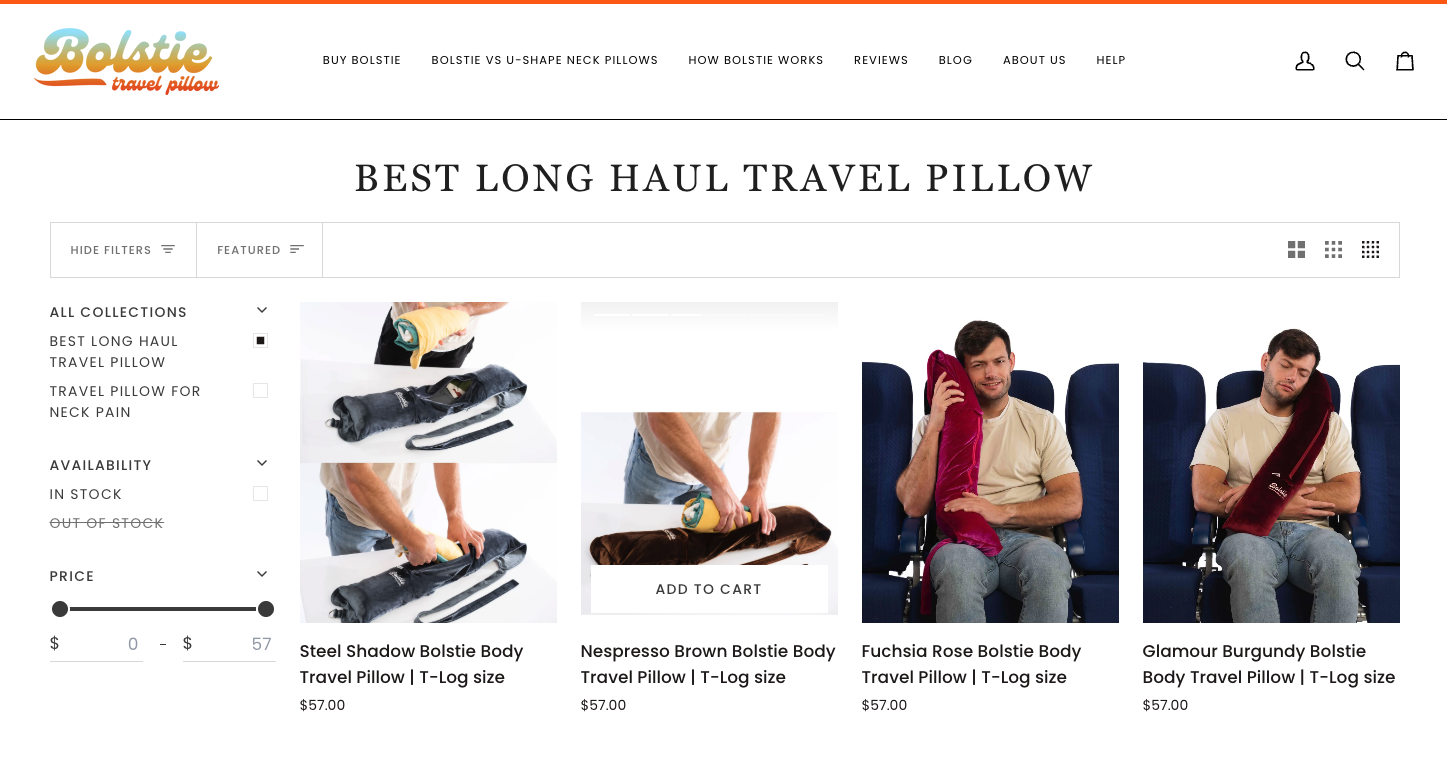
That’s where Bolstie comes in. Our Bolstie travel pillow is built specifically for economy-class travelers who need real support without adding bulk to an already-full bag. Fill it with a layer of soft clothing and it becomes a firm, structured pillow that supports your whole upper body, not just your neck. Empty it at your destination and it compresses down to almost nothing. It’s a comfort tool and a packing tool in one. Read more about how packing light and comfort can coexist with the right gear in your bag.
Frequently asked questions
How much clothing should each family member pack for a trip?
Aim for three to five versatile outfits per person, adjusting for destination activities and laundry access. Laundry at your destination can significantly reduce how much clothing you actually need to carry.
What items should always go in the carry-on when traveling with kids?
Include essentials for 48 hours: medications, snacks, wipes, a comfort item, and one spare outfit per child. Your carry-on survival kit is your family’s safety net if checked bags are delayed.
Are packing cubes necessary for organizing kids’ belongings?
They help, but zippered and compartmentalized luggage sections offer faster access and better hygiene separation than standard cubes. Compartmentalized family luggage is more practical for on-the-go needs with children.
Is it realistic to travel carry-on only with babies or toddlers?
For most families with infants, a hybrid approach works best: carry-on for essentials and a checked bag for bulky gear. Bulk infant items like car seats and large diaper supplies often require checking a bag, but disciplined packing keeps that checked load to a minimum.
Recommended
- Packing for Overnight Travel: Stress-Free Comfort Guide – BOLSTIE TRAVEL PILLOW
- How to Travel Light Without Sacrificing Comfort—The Bolstie Way – BOLSTIE TRAVEL PILLOW
- Travel comfort trends: space-saving solutions for long-haul flights – BOLSTIE TRAVEL PILLOW
- How to Pack Light and Travel Smarter with Bolstie – BOLSTIE TRAVEL PILLOW
- 7 Chic Essentials for Effortlessly Stylish Summer Travel Clothes
- How to Travel With Dresses: Easy Tips for Special Events - DressMeUpNY

