

TL;DR:
- Forward head posture during travel significantly increases neck muscle load and pain risk.
- Movement, hydration, and proper support are more effective than static posture correction alone.
- Chronic vulnerabilities and prolonged static sitting heighten the risk of serious neck injury.
One in three travelers deals with neck or back pain during a trip, and more than half wake up mid-journey because their head has fallen forward. ✈️ Most people blame the seat or assume a better pillow would fix everything. But the real story is more layered than that. Neck strain during travel isn’t just about comfort gear — it’s about what your body does (and stops doing) over hours of sitting still. This guide breaks down the actual mechanics behind travel neck pain and gives you real, actionable steps to finally enjoy a restful journey.
Table of Contents
- The hidden mechanics of neck strain in travel
- Why posture and immobility matter more than you think
- Other travel triggers: Dehydration, vibration, and awkward sleep
- Who is most at risk and when to worry
- Expert-backed prevention: Small changes, big relief
- Why most advice on travel neck pain misses the mark
- How the right pillow makes all the difference on your next trip
- Frequently asked questions
Key Takeaways
| Point | Details |
|---|---|
| Posture isn’t everything | It’s immobility and muscle fatigue, not just ‘bad posture,’ that trigger most travel neck strain. |
| Small changes work | Frequent position changes and hydration dramatically cut pain risk on any trip. |
| Awkward sleep multiplies risk | Napping with poor support or bracing during turbulence heavily strains neck muscles. |
| Pillows help, but only when designed right | Not all travel pillows are equal—choose support that actually matches your needs. |
The hidden mechanics of neck strain in travel
Let’s start with a fact that surprises most people. Your head weighs roughly 10 to 12 pounds when it rests directly over your spine. That’s manageable. But the moment your head tilts even slightly forward, the effective gravitational load on your neck muscles can jump to 40 or more pounds. Think about that for a second. The simple act of dozing in an airplane seat triples or quadruples the mechanical stress on your neck.
Economy seats weren’t designed for sleeping. They were designed for sitting upright during a short ride. When you’re on a six-hour overnight flight and exhaustion kicks in, your body starts to drift. Your chin drops. Your shoulders round forward. And suddenly your neck muscles are working overtime just to hold your head from falling completely forward. That’s the hidden cause of neck pain that most travelers never think about.
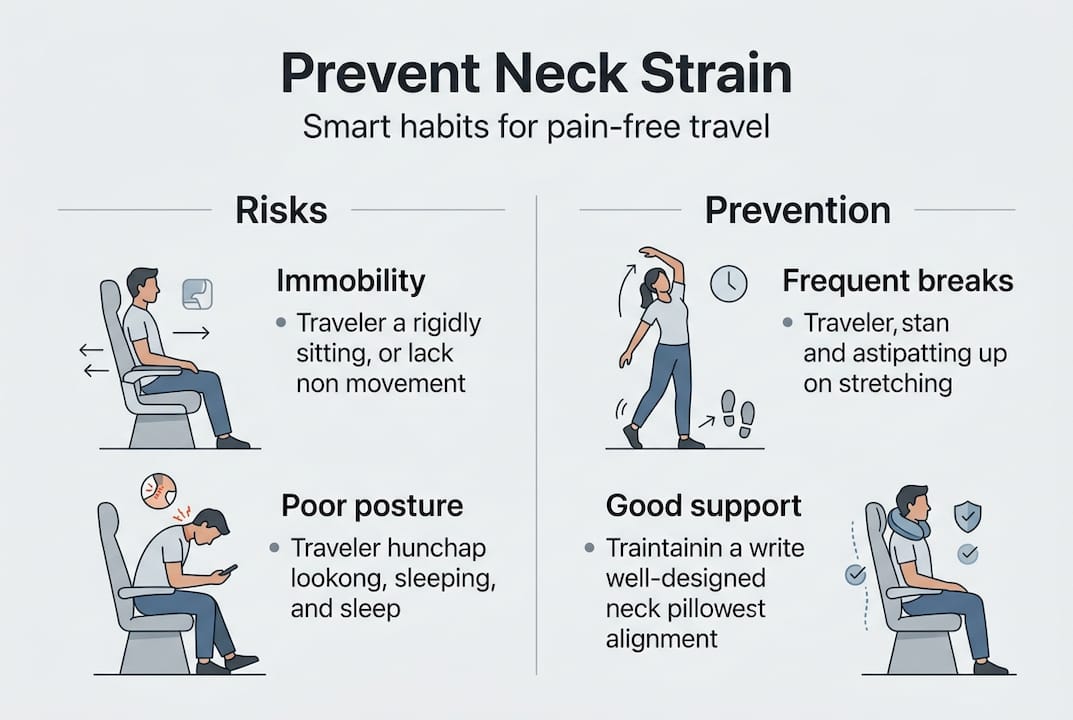
Here’s a look at how forward head position changes the load on your cervical spine:
| Head tilt angle | Approximate neck load |
|---|---|
| 0° (neutral) | 10–12 lbs |
| 15° forward | ~27 lbs |
| 30° forward | ~40 lbs |
| 45° forward | ~49 lbs |
| 60° forward | ~60 lbs |
And one in three travelers reports experiencing neck or back pain during journeys, with over half waking up because their neck gave out mid-doze. That’s not a coincidence. That’s physics meeting a poorly supported body.
“Prolonged static posture in economy seats creates the perfect storm for forward head posture, and it’s the sustained gravitational load, not just the position itself, that exhausts the surrounding muscles over time.”
The key word there is sustained. A brief forward tilt is no big deal. But hours of it, with no movement, is where the real damage happens.
Why posture and immobility matter more than you think
Now that you know the anatomy of neck strain, it’s crucial to realize the role your habits play. Most travelers try to fix the problem by sitting up straighter. But after 20 minutes, fatigue sets in, and the body drifts back into that rounded, forward position. This is completely normal. Muscle fatigue from sustained contraction without micro-movements means conscious posture correction fails over time, no matter how disciplined you are.

Here’s the counterintuitive truth: movement matters more than posture. A slightly imperfect position that you shift out of regularly causes far less strain than a “perfectly aligned” position held rigidly for hours. The body needs circulation. It needs variation. Static holding is exhausting for muscles, even when the position looks correct.
Compare two common travel positions:
| Position | Description | Neck strain risk |
|---|---|---|
| Rigid upright | Sitting tall, not moving, no lumbar support | High (muscle fatigue builds fast) |
| Slightly reclined + lumbar support | Mild recline with lower back support, head supported | Low to moderate |
| Head drooping forward, no support | Classic dozing position, chin toward chest | Very high |
| Supported diagonal rest | Upper torso and head supported together | Low |
Forward head posture adds 10 lbs of pressure per inch of forward displacement, which explains why even small drifts in position compound into serious discomfort. And because the causes of travel neck pain go deeper than most people realize, the solution has to be more than just “sit up straight.”
Here are movements and micro-breaks that genuinely help reduce pain in-flight:
- Chin tucks: Gently pull your chin straight back (not down) to realign your head over your spine. Hold 5 seconds, repeat 10 times.
- Shoulder rolls: Roll both shoulders backward in slow circles to release trapezius tension.
- Side neck stretches: Tilt one ear toward your shoulder gently. Hold 15 to 20 seconds per side.
- Seated torso twist: Rotate your upper body slowly left and right to break up spinal stiffness.
- Stand and walk: Even 60 seconds in the aisle once per hour makes a real difference.
Pro Tip: Set a phone alarm every 45 minutes as a reminder to do a quick 60-second movement routine. It sounds small, but it dramatically reduces how stiff you feel when you land. ❤️
Other travel triggers: Dehydration, vibration, and awkward sleep
While posture is important, real-world travel throws several more challenges into the mix. One of the most underestimated factors on long flights is dehydration. Airplane cabin air typically hovers around 10 to 20% humidity, far lower than the 30 to 60% most people live in at home. That dry air pulls moisture from your body. And when tissues dry out, dehydration reduces muscle flexibility and joint lubrication, making your neck muscles stiffer and more prone to strain.
Then there’s the issue of turbulence and sleep. When your body suddenly braces against a bump mid-doze, you’re triggering an unconscious muscle contraction in the upper trapezius and shoulder region. Awkward sleep positions and turbulence bracing cause exactly this kind of upper shoulder strain, especially when your head is unsupported and free to jolt with the plane.
Cars and trains add their own wrinkle. Sustained driving tension, asymmetric sitting, and the constant low-level vibration from road or rail contact create compounding strain on the cervical spine and surrounding muscles. Road trippers who drive for five or six hours often arrive feeling as wrecked as long-haul flyers, even without leaving their seat.
Here’s a step-by-step approach to address each of these triggers in practice:
- Hydrate proactively: Drink at least 8 oz of water for every hour of flight time. Avoid excess alcohol and caffeine, both of which accelerate dehydration.
- Use a neck-safe support: Choose a pillow that prevents your head from dropping forward or jolting to the side during turbulence. Check out this travel pillows health guide for more detailed guidance.
- Warm up your neck before boarding: A simple 5-minute stretch routine before you sit down primes your muscles for sustained posture demands.
- Brace consciously during turbulence: When you feel bumps, avoid tensing your shoulders. Instead, press your back into the seat and let the seatback absorb the movement.
- Adjust your car seat angle: For road trips, make sure your head rest contacts the back of your head, not your neck. Adjust lumbar support to keep your lower back from collapsing.
- Stop and move every 90 minutes on road trips: Get out of the car, walk, and do a quick stretch. Sustained vibration is especially taxing on the joints.
If neck pain is already a chronic issue for you, it’s worth exploring neck pain treatment options with a professional before your next trip.
Pro Tip: Carry a reusable water bottle through security and refill it before boarding. It makes consistent hydration effortless and free on most flights.
Who is most at risk and when to worry
Most travelers will recover from neck strain quickly, but not everyone is in the clear. Some people carry pre-existing vulnerabilities that make travel neck strain more serious. Pre-existing issues like weak stabilizing muscles and limited thoracic mobility make certain travelers significantly more susceptible to injury from even short journeys.
Common risk factors include:
- Previous neck or shoulder injuries: Scar tissue and muscle imbalances leave some travelers starting from a deficit before they even board.
- Sedentary lifestyle: Desk workers often have chronically tight hip flexors and rounded shoulders that amplify forward head posture during travel.
- Age over 50: Natural changes in spinal disc hydration and joint flexibility increase strain risk significantly.
- Limited thoracic mobility: When the middle and upper back can’t move well, the neck compensates and bears more load.
- Chronic forward head posture: If you already spend hours looking at a screen with poor alignment, travel just magnifies what’s already there.
If you fall into one of these categories, exploring neck support alternatives that address full upper body positioning rather than just the neck alone is a smart first step.
But also know the red flags. These symptoms mean it’s time to see a professional, not just sleep it off:
- Pain that doesn’t improve after 48 to 72 hours of rest
- Numbness, tingling, or weakness in the arms or hands
- Pain that radiates from the neck down into the shoulder blade or arm
- Severe stiffness that makes turning your head nearly impossible
- Headaches that follow your neck pain consistently
Most post-travel neck soreness fades within a day or two. If yours doesn’t, please don’t wait it out indefinitely. That kind of pain is your body asking for real help.
Expert-backed prevention: Small changes, big relief
If you’re in the high-risk category or just want to travel more comfortably, these researcher-backed recommendations can genuinely change your next journey. The good news is that none of them require a business class upgrade or expensive gear.
- Move every 30 to 60 minutes: Frequent position changes are one of the single most effective strategies for reducing cumulative neck strain. Set that alarm. Use the restroom as an excuse to walk. Make it a habit.
- Support your lumbar region first: Your lower back position determines your upper back and neck position. A small rolled-up jacket or lumbar cushion behind your lower back creates a posture chain that reduces neck strain automatically.
- Hydrate consistently: Not once, not when you’re thirsty. Consistently, throughout the flight. Your joints and muscles depend on it.
- Choose support that addresses the whole upper body: A neck-free pillow design that supports the chest and jaw together prevents the head-drop cycle better than a traditional wrap-around pillow.
- Use a window seat strategically: When you can, choose a window seat. You get a wall to lean against, which naturally reduces lateral head drop and gives your neck muscles a genuine break.
- Avoid sleeping with your head unsupported: This sounds obvious, but so many travelers use their phone or read until they fall asleep naturally, head drooping forward. Set yourself up before you doze. Pillow in place, seat slightly reclined, lumbar supported.
Pro Tip: Before your next flight, spend 5 minutes doing neck and shoulder stretches in the airport gate area. Your muscles will be warmer and more ready for sustained sitting, which means less stiffness when you land.
Why most advice on travel neck pain misses the mark
Here’s an opinion worth sharing plainly: the travel comfort industry focuses way too much on what you buy and way too little on what you do.
Most articles about travel neck pain end with a product recommendation. Buy a better pillow. Upgrade your seat. Use a neck brace. And sure, the right support gear can genuinely help, especially a design that works with your body’s natural resting position rather than forcing your neck into a foam collar. We’ll be the first to say that. But gear alone is not the answer.
The real insight from the evidence is this: movement is the most powerful tool you have. Not perfect posture. Not the best pillow on the market. Movement. The body was never designed to sit perfectly still for eight hours. It wants to shift, adjust, circulate, and breathe. When you deny it that, pain follows. Every time.
What also gets missed is the importance of preparation. Most travelers think about comfort only after they’re already stiff. But the state of your body before you board matters enormously. Tight muscles get tighter in a cramped seat. Dehydrated joints lose lubrication faster. If you understand why neck support fails before you even think about solutions, you’ll make smarter choices at every step.
The bottom line? Treat comfort as a system, not a product. Movement plus hydration plus the right support, used together, is what actually works. Any single fix by itself will disappoint you.
How the right pillow makes all the difference on your next trip
Understanding the mechanics of neck strain puts you ahead of the vast majority of travelers. But knowledge only helps when you act on it. 😊

At Bolstie, we designed our travel pillow specifically around the body-first principles in this guide. Instead of wrapping around your neck and adding pressure, the Bolstie supports your chest, jaw, and upper torso together so your head naturally stays upright without muscle effort. It works with your body’s diagonal resting position, not against it. And because it doubles as a packing cylinder when filled with your own clothing, you’re saving luggage space and carry-on bulk at the same time. If you’re ready to experience the difference that real body-geometry support makes, explore the full range at Bolstie’s travel pillow collection and find the option that fits your travel style.
Frequently asked questions
Why does my neck hurt more after a long flight compared to short trips?
Long flights dramatically extend the time your neck muscles are under static load and prolonged static posture increases gravitational strain far beyond what a short trip creates. Add in accumulated dehydration and fewer movement breaks, and the compounding effect becomes significant.
Do travel pillows really reduce neck pain while flying?
Yes, when designed correctly. According to research, travel pillows cut neck pain by up to 65% when they support alignment and prevent head drop rather than just wrapping the neck.
How can I prevent neck stiffness on long bus or car rides?
Stop every 90 minutes to walk and stretch, drink water consistently, and adjust your headrest so it contacts the back of your skull. Vibration and asymmetric posture from sustained driving compound stiffness fast, so frequent breaks matter more than most drivers realize.
When should I see a doctor about post-travel neck pain?
See a professional if pain lasts longer than 72 hours, spreads into your arm, or causes numbness or weakness. Persistent pain may indicate dysfunction that requires physical therapy or chiropractic care rather than rest alone.
Recommended
- What causes travel neck pain and how to prevent it – BOLSTIE TRAVEL PILLOW
- Why Travel Pillows Cause Neck Pain in Economy – BOLSTIE TRAVEL PILLOW
- The Truth About Travel Neck Pain (And Why Bolstie Solves It) – BOLSTIE TRAVEL PILLOW
- Neck Support Alternatives Explained: Why Neck-Only Solutions Don’t Wor – BOLSTIE TRAVEL PILLOW

