

TL;DR:
- Most travel neck pillows are designed for lying flat, not supporting upright seated sleep.
- Proper support requires addressing whole upper body stabilization, not just the neck.
- Tailoring support to your posture, sleep style, and body improves comfort and reduces neck pain.
You pack the carry-on, you grab the neck pillow off the hook by the door, and you head to the airport feeling prepared. But somewhere over the Atlantic, your head drops forward for the fifth time, your neck aches, and you realize that little foam horseshoe isn’t doing much of anything. ✈️ Sound familiar? You’re not alone. Most neck support solutions sold to travelers today fail in the exact conditions they’re meant for. This article breaks down why that happens, what actually works, and how you can finally get some real rest in economy class without waking up feeling like you wrestled the overhead bin.
Table of Contents
- Common reasons neck support fails during travel
- How travel posture and pillow mechanics impact support
- Alternatives to neck-only support for long-haul comfort
- How to choose and use neck support for maximum comfort
- What most travelers get wrong about neck support
- Explore proven neck support solutions for your next journey
- Frequently asked questions
Key Takeaways
| Point | Details |
|---|---|
| Fit matters most | Neck support fails when pillow shape and mechanics don’t match your travel posture. |
| Alternatives work better | Hybrid and body support solutions outperform neck-only designs for long flights. |
| Posture impacts comfort | Upright or varied sleeping positions demand personalized support, not one-size-fits-all. |
| Expert-backed selection | Travel pillows cut neck pain by 65% when chosen based on trip and user needs. |
Common reasons neck support fails during travel
With the problem set, let’s break down why neck support fails so often.
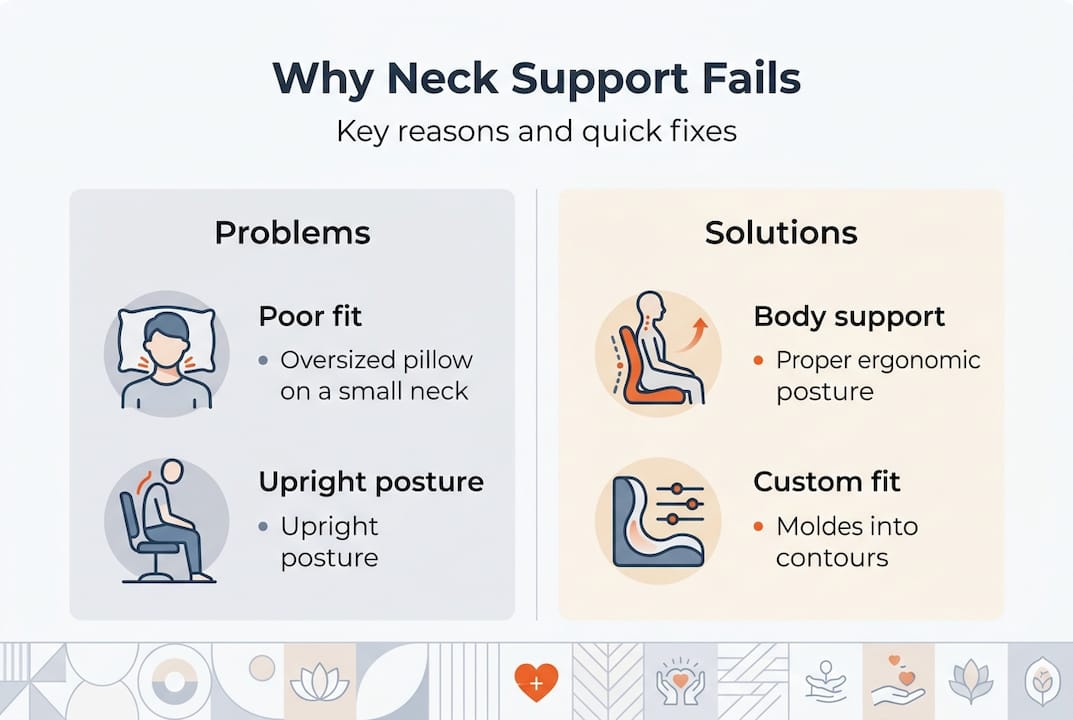
Here’s the honest truth: most travel neck pillows are designed for a type of sleep that doesn’t actually happen on planes. They’re shaped for someone lying flat or close to it, not for an upright seat with a fixed headrest and zero personal space. The result is a product that looks reasonable at home but falls apart the moment you actually need it at 35,000 feet.
Neck pillows fail to deliver expected comfort due to poor fit and a lack of upright support. That sentence alone explains a lot. But let’s get more specific about what goes wrong.
Design flaws that let you down at altitude
The classic U-shaped pillow is everywhere. It wraps around the back of your neck and rests against your shoulders. But in an economy seat, your head isn’t centered and still. You drift sideways. You tilt forward. You jerk awake. The pillow doesn’t account for any of that movement, so it ends up fighting your body instead of working with it.
Here’s what typically goes wrong:
- Shape mismatch: The pillow is shaped for symmetrical support, but real sleep in a seat is almost never symmetrical.
- Fill compression: Memory foam and synthetic fill compress under head weight, losing firmness within an hour.
- No chin or jaw support: Without something catching the chin, the head drops forward repeatedly, stressing the neck.
- Heat buildup: Foam pillows trap warmth against the neck, making long wear uncomfortable and sweaty.
- Size issues: One-size-fits-all designs don’t account for the wide range of neck sizes, shoulder widths, or seat configurations.
The causes of neck pain during travel go deeper than just pillow design. Sitting upright for hours in a fixed position reduces blood flow, tightens the muscles in your upper back and shoulders, and puts your cervical spine (the bones in your neck) under constant, low-level strain.
“Sleep quality drops 54% with improper neck support during travel.” That’s not a minor inconvenience. That’s arriving at your destination exhausted, stiff, and running on empty before your trip even begins.
Managing chronic neck pain tips from physical therapists consistently point to sustained neutral spine alignment as the key to pain prevention. Most travel pillows simply don’t achieve that in a seated position.
The bottom line? The product isn’t bad because it’s cheap. It’s bad because it was designed without understanding how people actually sleep upright. And until that changes, travelers keep waking up sore. ❤️
How travel posture and pillow mechanics impact support
Design isn’t the only challenge. Posture matters too.
Even a well-made pillow can fail you if it doesn’t match the way your body naturally wants to rest. And in economy class, your body doesn’t have many options. You’re reclined maybe 10 degrees, your arms are on armrests (if you’re lucky), and your head is somewhere between perfectly upright and slumped forward at an uncomfortable angle.
Upright vs. relaxed: the posture gap
When we’re truly relaxed and resting, our bodies naturally want to lean at an angle. Not straight up. Not fully horizontal. Diagonally. That’s why people on long flights tend to lean toward the window or toward the aisle. They’re trying to find a surface to rest against, because the body needs something to stabilize against.
A structured pillow can work well when fit and sleeping position match the intended mechanics. The keyword there is match. Most pillows are built for a center-supported upright position. But most people don’t sleep that way.
Here’s a quick comparison of how different approaches line up:
| Sleeping position | Neck pillow fit | Comfort outcome |
|---|---|---|
| Straight upright | U-shaped pillow | Moderate, limited duration |
| Leaning to window | U-shaped pillow | Poor, pillow shifts |
| Diagonal lean | Hybrid/body support | Good, posture maintained |
| Forward tilt | Chin-rest design | Moderate, uncomfortable long term |
| Reclined 30+ degrees | Flat or wrap pillow | Best, but rare in economy |
The mechanics of fill, shape, and support zones
A pillow does more than just cushion. It needs to distribute load, stabilize movement, and maintain that support for hours. That’s actually a complex job. Most travel pillows are designed with one support zone: the back of the neck. But effective rest in a seat requires support in multiple areas, including the jaw, the side of the head, the chest, and even the upper torso.
For upright rest solutions, the most effective approaches involve designs that support the whole upper body rather than isolating the neck. When your torso is stabilized, your neck doesn’t have to work as hard to hold your head in place.
Here’s how to adjust your setup for better results:
- Position the pillow before you sit back, not after.
- Lean slightly toward your dominant shoulder to find your natural rest angle.
- Adjust the pillow so it contacts your jaw or chin slightly, not just the back of your neck.
- Use the headrest wings (if available) in addition to your pillow, not instead of it.
- Try leaning toward the window even slightly to let gravity assist rather than fight your rest.
Pro Tip: Rotate or reposition your pillow every 90 minutes to release pressure buildup and maintain fresh support contact points. This small habit dramatically reduces stiffness on very long flights.
Alternatives to neck-only support for long-haul comfort
If neck-only pillows fail, what options do travelers have?
Quite a few, actually. And some of them are genuinely better at solving the real problem, which is keeping your whole upper body supported and relaxed for hours on end.
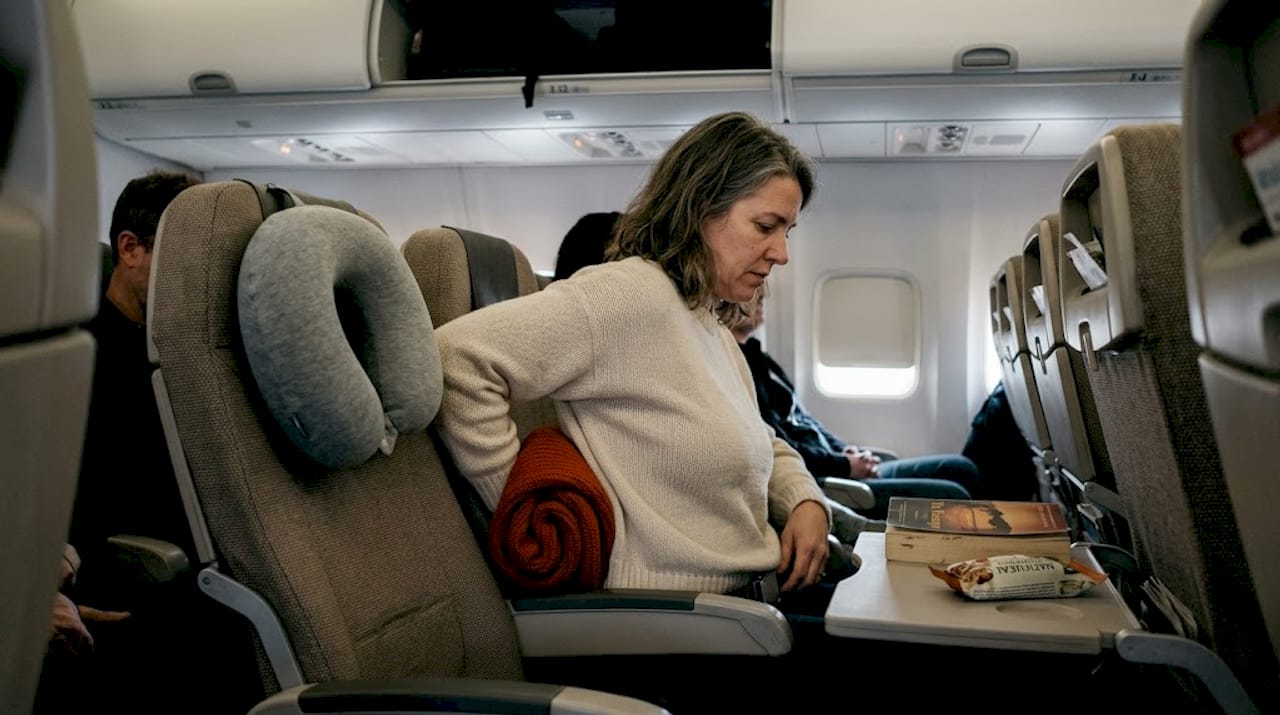
Neck-only solutions often fail in ways that body support and hybrid designs simply don’t. The reason is physics, really. When only your neck is supported, every other part of your upper body still has to work to stay in position. Your muscles stay contracted. You don’t truly rest.
Comparing your main options
Let’s look at how different support types perform side by side:
| Support type | Coverage area | Best for | Main limitation |
|---|---|---|---|
| Standard U-pillow | Neck only | Short flights | Head drop, heat, poor fit |
| Chin-rest pillow | Neck and chin | Napping upright | Uncomfortable for long wear |
| Hybrid pillow | Neck, jaw, chest | Long-haul flights | Bulkier, but worth it |
| Body/torso support | Full upper body | Overnight flights | Takes more space |
| Clothing-filled pillow | Neck, jaw, chest | Space-conscious packers | Needs setup |
The difference in outcomes is real. Compare this to neck vs body support research, which consistently shows better sleep continuity and lower reported discomfort with broader support coverage.
What actually performs on long-haul routes
From travelers who log serious air miles, the recurring feedback is clear:
- Hybrid designs that support the jaw and neck reduce head drop dramatically.
- Pillows that also contact the chest help the whole upper body stay in alignment.
- Adjustable fill is a game-changer because it lets you customize firmness for your body.
- Breathable materials make an enormous difference on flights over six hours.
If you’re traveling with kids, getting the right support is even more important. Children fall asleep easily but need something to lean against that won’t shift or collapse. Soft, adaptable fill structures tend to work better for smaller bodies.
For broader travel wellness tips, staying hydrated, stretching your legs every hour or two, and keeping your feet slightly elevated all complement whatever pillow you’re using. Comfort is a system, not just one product.
Also worth exploring are the types of neck support available today, which have expanded well beyond the classic foam horseshoe into genuinely innovative territory.
Pro Tip: On overnight long-haul flights, prioritize support width over compactness. A slightly larger pillow that covers more of your upper torso will almost always deliver better rest than a compact one that only wraps your neck.
How to choose and use neck support for maximum comfort
Now, let’s apply what we know to find neck support that actually delivers.
The good news is that travel pillows can cut neck pain by up to 65% when they’re matched correctly to the user and the trip. That’s a huge difference. But the key phrase there is “matched correctly.” Generic, one-size-fits-all buying decisions are exactly why most travelers feel let down.
A step-by-step approach to choosing right
- Assess your sleep style first. Do you lean sideways, forward, or try to stay upright? Your natural drift tells you what kind of support you actually need.
- Consider trip length. Flights under three hours need basic cushioning. Overnight or long-haul flights need real structural support.
- Check the support zones. A good pillow should contact your neck, jaw, and ideally your upper chest. If it only touches the back of your neck, it’s not enough.
- Test the firmness. Squeeze the pillow. Does it bounce back fully? Fill compression is the number one reason pillows fail after the first hour.
- Think about packability. A pillow you’ll actually bring is better than a perfect pillow left at home because it’s too bulky.
- Read reviews from your type of traveler. Economy class feedback is completely different from business class feedback. Filter accordingly.
For parents and family travelers ❤️
Buying for the whole family adds a layer of complexity. Here’s what to keep in mind:
- Kids need softer, smaller fill volumes. Adult firmness levels can be uncomfortable for children.
- Look for pillows with adjustable fill so each person can customize their fit.
- Packable designs that collapse flat are a lifesaver when you’re managing bags, strollers, and carry-ons for a family.
- Older kids (12+) tend to prefer the same support zones as adults, especially jaw support.
The smarter travel solutions aren’t always the most expensive ones. They’re the ones designed with real travel constraints in mind: limited space, varied bodies, hours of continuous use, and the unpredictability of economy seating.
Pro Tip: Before your next trip, spend ten minutes at home sitting upright in a firm chair and mimicking your airplane position. Note where your head naturally wants to drop. That’s the support zone you need to prioritize in any pillow you choose.
Custom fit really does beat generic shapes every single time. Your body has a specific rest angle, a specific neck length, and a specific shoulder width. A pillow built around your actual geometry will always outperform one built around an average.
What most travelers get wrong about neck support
Here’s something worth saying plainly: the problem isn’t that neck pillows are universally useless. It’s that travelers buy them the same way they buy a bottle of water at the airport. Quickly, without much thought, based on habit or what looks familiar.
Not all neck support fails. Some solutions genuinely excel when they’re tailored to your posture, your trip length, and your body mechanics. The failure isn’t always in the product. Sometimes it’s in the mismatch between what you bought and how you actually travel.
We see this pattern constantly: someone buys a well-reviewed pillow, uses it wrong, and concludes that neck pillows don’t work. But what actually happened is they didn’t match the pillow’s mechanics to their sleeping posture. That’s a fixable problem, and it starts with awareness.
The real principle here is simple: comfort begins with individual assessment, not product hype. Before you add something to your cart, ask yourself whether it was designed for how you sleep, not how the average person sleeps in a stock photo.
The travelers who finally crack the comfort code on economy flights share one thing in common. They stopped looking for a universal solution and started paying attention to their own body’s signals. Fixing neck support is genuinely possible, but it takes that one extra minute of honest self-assessment before you buy.
Explore proven neck support solutions for your next journey
You now know why neck support fails, what posture has to do with it, and how to choose something that actually fits your body and your trip. The next step is finding a product built around those principles.

At Bolstie, we designed our travel pillows specifically for economy-class reality: upright seats, limited space, and hours of continuous use. The Bolstie pillow supports your head, jaw, and upper torso together, not just your neck in isolation. It also doubles as a packing cylinder when filled with your clothing, so it earns its space in your carry-on every single time. Browse the full shop for long-haul travel pillows or check out our premium neck pillow to find the right fit for your next journey. ✈️
Frequently asked questions
Why do traditional neck pillows often fail on airplanes?
Traditional neck pillows fail mostly due to poor posture alignment, as they don’t accommodate upright rest or varied sleeping positions in economy seating, leading to repeated head drop and discomfort.
Can certain travel pillow designs help reduce neck pain?
Yes, structured or hybrid pillows matched to your posture and trip can cut neck pain by as much as 65% for economy flyers, making design and fit the most critical factors.
What alternatives exist if neck-only support fails?
Body support, hybrid pillows, and clothing-filled adjustable designs are proven alternatives, as neck-only solutions often fail to maintain comfort during long-haul travel where full upper-body stability is needed.
How do I choose the best neck support for my family?
Assess each person’s natural sleep angle, test firmness levels, and prioritize support zones for both adults and kids, because matching the pillow to the user is the single biggest factor in whether it actually works.
Recommended
- Neck Support Alternatives Explained: Why Neck-Only Solutions Don’t Wor – BOLSTIE TRAVEL PILLOW
- Why neck support fails on planes and how to fix it in 2026 – BOLSTIE TRAVEL PILLOW
- Why Neck Pillows Fail – Impact on Travel Comfort – BOLSTIE TRAVEL PILLOW
- Why Avoid Neck-Only Pillows for Travel Comfort – BOLSTIE TRAVEL PILLOW

