

TL;DR:
- Gravity and seat design cause head droop during upright sleep, requiring structured support.
- Brace-style pillows that resist forward head movement are most effective for long flights.
- Small adjustments and proper setup improve sleep quality more than gear or hacks.
You’re finally asleep. Then your head drops. That sudden, jerky lurch forward jolts you awake, and you’re right back to square one, stiff-necked and frustrated. ✈️ If you’ve flown economy even once, you know exactly what that feels like. It’s one of the most common complaints among long-haul travelers, and yet most of the advice out there either misses the mark or points you toward gear that doesn’t actually hold your head up when you need it most. This guide walks you through the real reasons it happens, the tools that genuinely help, and a clear, step-by-step setup so you can finally rest on your next flight.
Table of Contents
- Understand why your head falls forward during plane sleep
- Essential tools: What you need to stop head droop on flights
- How to set up your seat and support for the safest upright sleep
- Troubleshooting: What to do if your head still bobs or support fails
- The uncomfortable truth about sleeping upright on planes
- Find your perfect neck support for the next flight
- Frequently asked questions
Key Takeaways
| Point | Details |
|---|---|
| Structured support works | A brace-like travel pillow is the most reliable way to stop head droop in economy class. |
| Avoid unsafe fixes | Never use your seatbelt or unsafe posture hacks to prop up your head on planes. |
| Proper setup matters | How you position your pillow and adjust your seat can make or break your upright sleep comfort. |
| Test and troubleshoot | Always check your setup each time you change posture or seat position. |
Understand why your head falls forward during plane sleep
Now that you know what to expect, let’s break down why the problem happens and what makes it worse.
Here’s the simple truth: your body was not designed to sleep sitting upright. At home, you sleep flat, and gravity works with you. On a plane, gravity pulls your head forward and down the moment your neck muscles relax. That’s not a design flaw in you — it’s just physics working against an awkward position.
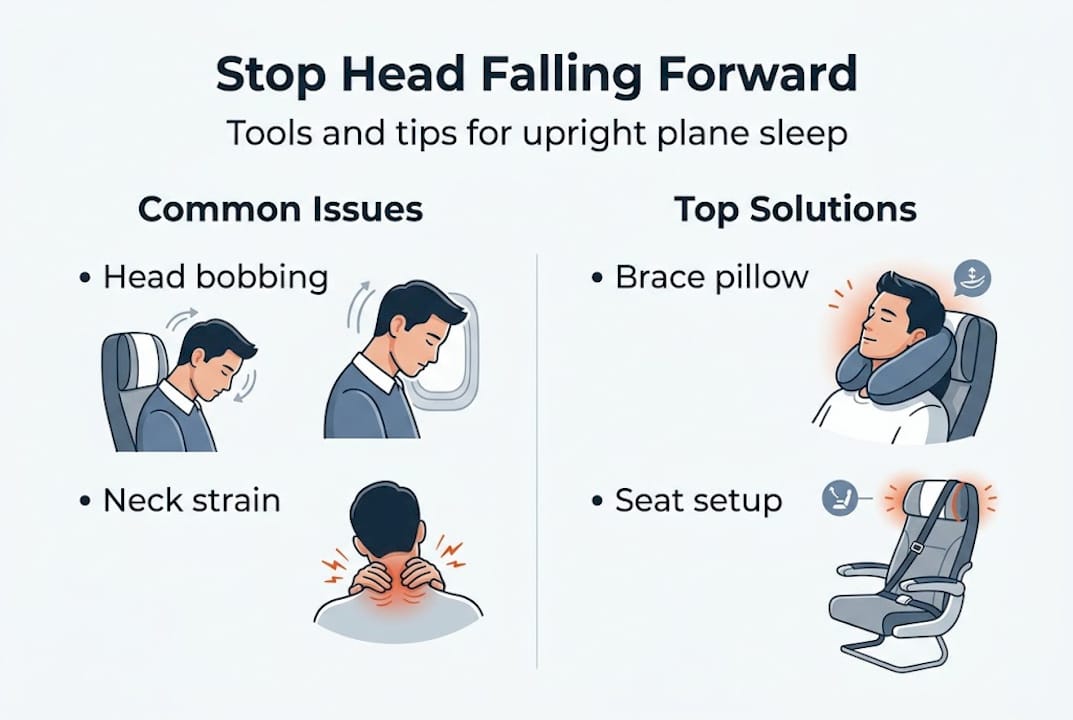
The muscles in your neck and upper back are constantly working to hold your head up when you’re awake. Your head weighs roughly 10 to 12 pounds, which doesn’t sound like much until those muscles get tired. On a long flight, fatigue sets in, muscle tone drops, and your head starts to drift. Economy seats make this worse because the seat backs are relatively upright, offer minimal head support, and give your body no natural resting angle.
Most travelers reach for a classic U-shaped neck pillow at this point, hoping it will solve the problem. It usually doesn’t. Here’s why: a soft foam ring supports the sides and back of your neck, but it does almost nothing to stop the forward motion of your head. Your head can still roll forward right over the top of it.
Understanding why neck support fails on planes helps you stop chasing the wrong solutions. The issue is geometry, not just softness. Research on pillow shape and neck activation confirms that pillow content and shape change how neck muscles respond during sleep, and upright sleeping needs a completely different geometry than side or back sleeping.
Common DIY fixes travelers try, and why they fall short:
- Wrapping a jacket around your neck: Soft and unstructured; your head pushes right through it
- Leaning on the window: Works sometimes, but not on every flight or every seat position
- Stacking airline blankets: Provides no resistance to forward head movement
- Crossing your arms and resting your chin: Strains your shoulders and wrists within minutes
- Reclining the seat all the way: Angers the passenger behind you and still doesn’t stop the bob
“The position of upright sleep is biomechanically unique. Gravity vector, muscle fatigue, and seat geometry combine to create a support problem that generic pillows simply aren’t built to address.” — Pillow biomechanics research
If you want to understand the types of travel neck support available and how they compare, it helps to first accept this: the solution has to physically resist the forward motion of your head, not just cushion it.
Essential tools: What you need to stop head droop on flights
Understanding the problem points you toward the right tools. Here’s what experts and seasoned travelers recommend.
Not all travel pillows are equal. The difference between waking up rested and waking up with a stiff neck often comes down to one key factor: structure. A pillow that collapses under pressure is just a comfort accessory. A pillow that holds its shape and braces your head is a functional support tool.
According to Wirecutter’s Trtl pillow review, structured brace-like pillows are designed to act as a physical stop that reduces forward head collapse for upright sleepers. That’s a meaningful distinction. These pillows work because they brace against your chest, shoulder, or jaw rather than simply wrapping your neck.
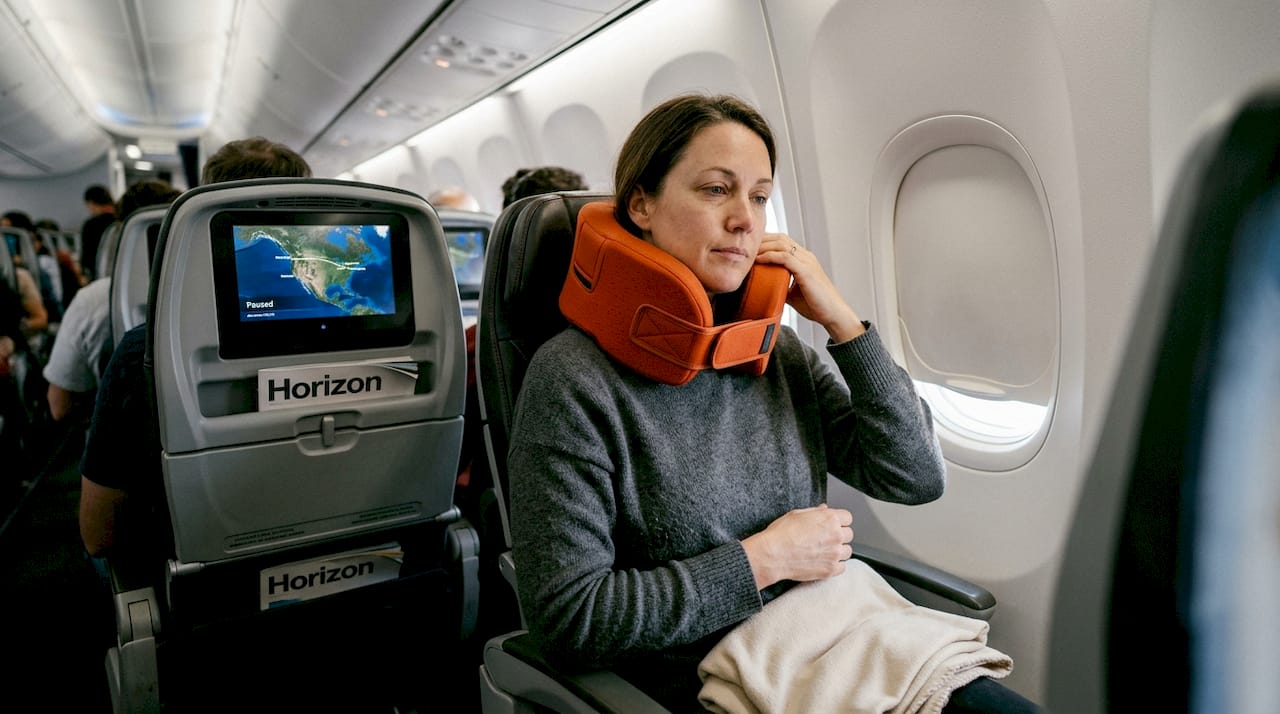
Here’s a side-by-side comparison of the main options available:
| Pillow type | Forward head resistance | Comfort for long flights | Packability |
|---|---|---|---|
| Classic U-shape (foam) | Low | Medium | Bulky |
| Inflatable U-shape | Low to medium | Low to medium | Good |
| Brace-style (Trtl, Bolstie) | High | High | Excellent |
| Headrest strap pillow | Medium | Medium | Good |
| DIY (jacket, blanket) | Very low | Low | N/A |
For step-by-step travel pillow selection, start with the question: “Does this physically stop my head from moving forward?” If the answer is no, move on.
Beyond the pillow itself, a few lightweight additions round out a solid sleep kit:
- Eye mask: Blocks cabin light during day flights and helps signal your brain to rest
- Earplugs or noise-canceling earbuds: Reduces engine noise, which is tiring even when you don’t realize it
- Compression socks: Supports circulation on flights over five hours
- Lip balm and water bottle: Dry cabin air disrupts sleep; staying hydrated helps
Pro Tip: Pack your sleep kit in the seat pocket in front of you before takeoff, not buried in your overhead bag. When the lights go down, you’ll want everything within reach without waking your neighbor. ❤️
For a curated breakdown of the best neck pillows for long flights, look for options that specifically mention “forward head support” or “brace-style” in their design description.
How to set up your seat and support for the safest upright sleep
With your tools ready, it’s time to optimize your seat and secure proper support for restful, safe upright sleep.
Getting comfortable on a plane isn’t just about what you bring. It’s about how you set it up. A great pillow in the wrong position does very little. Here’s a step-by-step process that works for most economy seats:
- Settle in before takeoff. Once you’re seated and your carry-on is stowed, set up your sleep area immediately. Put your eye mask, earplugs, and pillow within easy reach.
- Check your seat’s recline. A slight recline of even 10 to 15 degrees can dramatically reduce the angle of gravity pulling your head forward. Recline as soon as the flight crew allows.
- Position your pillow for vertical bracing. Place your brace-style pillow so it contacts your chin or jaw, not just your neck. The goal is to give your head a surface to rest on top of, not just alongside.
- Adjust for your natural lean. If you naturally lean left or right, position the pillow to support that side. Don’t fight your body’s instinct; work with it.
- Double-check placement after every posture shift. If you wake up briefly, reposition the pillow before going back to sleep. Small adjustments matter a lot.
Here’s a critical safety note that many articles skip over: avoid using your seatbelt strapped around your legs or torso to lock in your posture, as it is unsafe during turbulence and emergencies, and may also restrict circulation. The seatbelt is a safety device. Use it as one.
You can also reference general long-haul flight comfort tips to layer additional strategies on top of your sleep setup.
“Small, intentional adjustments before you fall asleep — not grand gear purchases — often make the biggest difference in how well you rest on a long flight.” — Experienced frequent flyer wisdom
For deeper guidance, the upright sleeping tips resource walks you through body positioning across different seat types. And if you’re starting from scratch, the full comfortable plane sleeping guide covers everything from clothing to hydration.
Pro Tip: If you have a window seat, lean your pillow between your head and the cabin wall for extra lateral support. The wall acts as a third contact point and dramatically reduces side-to-side rolling.
One more thing worth knowing: studies on passenger fatigue during overnight flights suggest that broken sleep is significantly more exhausting than no sleep at all. So the goal isn’t just to doze; it’s to reduce interruptions. A well-placed support reduces jolting, which means fewer wake-ups, which means better overall rest.
Troubleshooting: What to do if your head still bobs or support fails
Even with preparation, you might run into issues mid-flight. Here’s how to spot and solve them fast.
Sometimes you do everything right and your head still drops. It happens. Here’s how to diagnose and fix common problems quickly so you’re not fighting your gear for the rest of the flight.
Problem: The pillow slides or shifts when you move. Most brace-style pillows rely on contact and friction to maintain position. If yours keeps sliding, try wearing a light layer on top to add surface grip, or reposition it slightly higher or lower on your chest. A pillow that keeps moving is usually positioned too loosely.
Problem: Support works at first but fades as you shift. This is especially common with headrest strap pillows, where performance depends heavily on seat geometry. If the seat reclines or your posture shifts, the anchor point moves and the pillow loses its effectiveness. In this case, check the strap tension every time you adjust your recline.
Problem: Brace-style pillow works in one position but not another. Some travelers like to alternate between resting forward and leaning to one side. Brace and wrap-style pillows are less effective if you switch positions often, because their design depends on maintaining consistent contact. If you’re a multi-position sleeper, you may need a more flexible or adjustable support option.
Here’s a quick comparison of common mid-flight problems and fixes:
| Problem | Likely cause | Quick fix |
|---|---|---|
| Head still drops forward | Pillow not bracing chin or jaw | Reposition higher; contact chin |
| Neck sore on one side | Pillow leaning too far off-center | Recenter and rebalance pillow |
| Pillow slides down chest | No grip or poor contact | Add a light jacket layer for friction |
| Headrest strap slips | Seat recline changed anchor point | Re-tighten strap after any recline |
| Nothing works | Wrong seat position or pillow type | Try the window lean or switch products |
Helpful backup strategies include:
- Request a different seat (window seats are generally best for sleeping upright)
- Ask for an extra blanket to wedge between you and your armrest for lateral support
- Fold your tray table down and rest your arms on it to shift some head weight forward intentionally
For inspiration on innovative travel pillow design insights, it helps to understand that the best products are built around body geometry first, not aesthetics.
“No product is one-size-fits-all for upright sleep. Real comfort comes from matching your sleep style to the right support geometry — and being willing to adjust mid-flight.” — Travel comfort expert perspective
For a look at what’s changing in the category, travel pillow design trends in 2026 shows how far structured support has come. And if you’re also working on reducing what you carry, this packing light guide is worth a read before your next trip.
The uncomfortable truth about sleeping upright on planes
Once you’ve tried these troubleshooting steps, it’s worth sitting with a more honest take on what’s truly possible in the air.
Here it is, plainly: no pillow, no hack, and no travel product will replicate sleeping in your own bed. Economy seats weren’t designed for sleep. They were designed for sitting. The best you can do — and this is genuinely achievable — is to make upright sleep functional rather than perfect.
We’ve seen a lot of viral travel tricks that promise effortless sleep on planes. The jacket cocoon. The inflatable foot hammock. The seatbelt posture lock. Most of them are impractical, some are unsafe, and almost none of them hold up past the first two hours. What actually works is simpler and less exciting: structured support, realistic expectations, and small adjustments.
The travelers who consistently sleep well on long flights aren’t the ones with the most gear. They’re the ones who understand their own sleep tendencies and choose tools that match them. If you always lean left, find a pillow that supports your left side. If you need silence to sleep, prioritize earplugs over a fancier pillow.
Focusing on real-world sleep comfort means accepting the constraints of economy travel and working within them, not against them. Safety and ergonomics first. Gimmicks and shortcuts last.
Find your perfect neck support for the next flight
Ready to put these practical tips into action? The right structured pillow makes all the difference when you’re sitting upright for eight or more hours. ✈️

At Bolstie Travel Pillow, we built our products specifically for economy travelers who need real support, not just cushioning. Our approach is different: instead of wrapping your neck, Bolstie stabilizes your head, jaw, chest, and upper torso together, working with your body’s natural resting angle. It compresses small when empty and firms up when you fill it with your own clothing, which means it doubles as a packing tool and saves carry-on space. Browse the full range of best long-haul travel pillows and find the one that fits how you actually sleep.
Frequently asked questions
What is the safest way to keep my head upright while sleeping on a plane?
Use a structured, brace-style neck support pillow that physically contacts your chin or jaw, and always keep your seatbelt fastened normally across your lap. Strapping the seatbelt around your legs to lock your posture is unsafe during turbulence and emergencies.
Are U-shaped pillows effective for stopping your head falling forward?
Not really. U-shaped pillows cushion the sides of your neck but don’t prevent forward head movement. Structured, brace-like pillows are specifically designed to act as a physical stop and are far more effective for upright sleepers.
Can I use a scarf or jacket as a head support?
A scarf or jacket can add warmth and a little cushion, but soft materials rarely provide enough structure to stop your head from dropping forward. Specialized structured supports are far more reliable for actual head stabilization on long flights.
Can travel pillows cause neck pain if used incorrectly?
Yes, they absolutely can. A pillow placed in the wrong position or with the wrong geometry can increase neck muscle strain rather than relieve it. Pillow shape and content directly impact how your neck muscles activate during sleep, so positioning and fit matter as much as the product itself.
Recommended
- How to Sleep Comfortably on Planes for Long Flights – BOLSTIE TRAVEL PILLOW
- Expert Guide to Upright Rest on Flights: Bolstie Approach – BOLSTIE TRAVEL PILLOW
- Why Avoid Neck-Based Travel Pillows When Flying – BOLSTIE TRAVEL PILLOW
- The Biggest Hidden Cause Of Neck Pain Mid-Flight — Poor Posture – BOLSTIE TRAVEL PILLOW

