

TL;DR:
- Proper gear like structured pillows, noise-canceling headphones, and eye masks can improve in-flight sleep.
- Adjusting your position with slight recline and lumbar support helps create a sustainable resting posture.
- Short, restorative naps and realistic expectations are key to making the most of middle seat sleep.
You drew the short straw. The middle seat. No window to lean against, no aisle to stretch into, just two strangers on either side and a long flight ahead. It feels like the universe is personally testing you. But here’s the thing: restful sleep in the middle seat is genuinely achievable. It just takes the right gear, the right positioning, and a few smart habits. This guide walks you through everything, step by step, so you can actually rest instead of just surviving until landing. ❤️
Table of Contents
- What you need: gear and essentials checklist
- Step-by-step: how to position yourself for real rest
- Block out the cabin: mastering your sleep environment
- Sleep aids, snacks, and habits that actually help
- The uncomfortable truth about sleeping in the middle seat
- Upgrade your middle seat sleep with the right pillow
- Frequently asked questions
Key Takeaways
| Point | Details |
|---|---|
| Choose the right gear | A structured neck pillow and sensory blockers make the biggest difference for middle seat sleep. |
| Perfect your setup | Slight seat recline, lumbar support, and proper body positioning support restful sleep. |
| Control your environment | Block out light and noise and manage temperature for the best chance to rest. |
| Smart habits matter | Eat carb-heavy meals, avoid alcohol, and consider safe, doctor-approved sleep aids for better results. |
What you need: gear and essentials checklist
Now that you know restful sleep is possible, start by ensuring you have the right essentials before you even board.
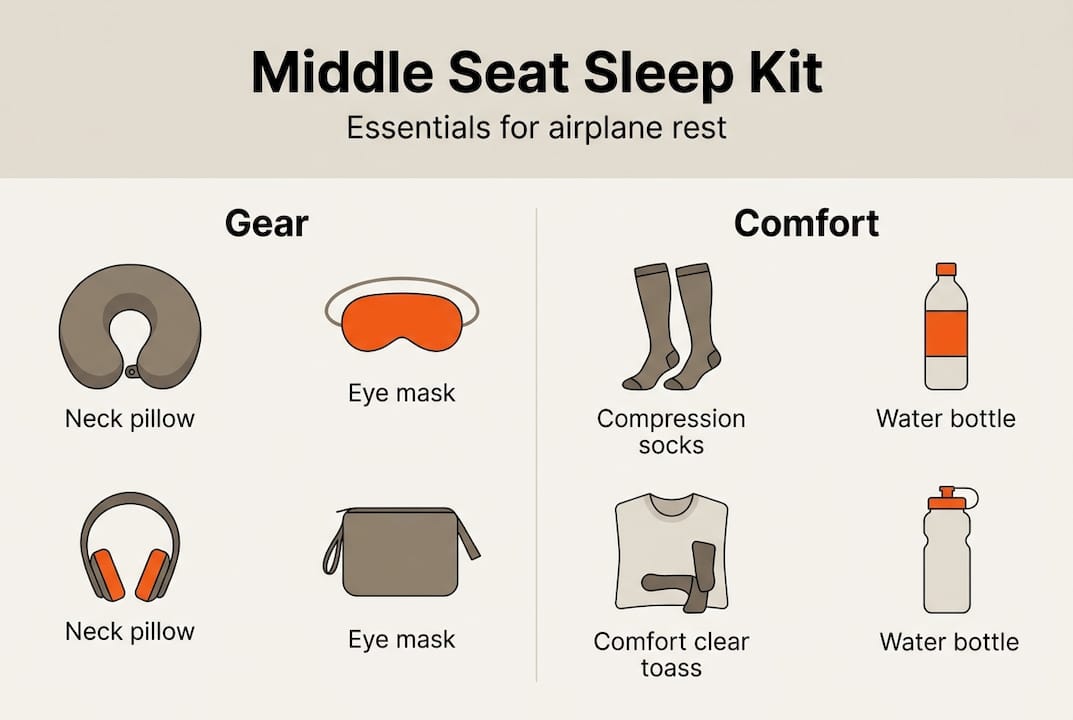
The middle seat is uniquely challenging because you have no wall to lean on and no natural anchor for your head. That makes your gear choices more important here than anywhere else on the plane. Packing smart is the first real step toward rest.
Here’s what belongs in your carry-on sleep kit:
- Structured travel pillow (not a U-shaped pillow that collapses under your head’s weight)
- Noise-canceling headphones or earplugs
- Contoured eye mask that blocks light without pressing on your eyes
- Lightweight layers like a packable hoodie or travel blanket
- Compression socks to keep circulation moving on long flights
- Reusable water bottle to stay hydrated throughout the flight
A supportive neck pillow prevents head bobbing and maintains alignment when you have no wall to lean on. That’s the single most important piece of gear for middle seat travelers. A U-shaped pillow might look familiar, but it often collapses forward under the weight of your head. A structured pillow, one that holds its shape, keeps your neck in a neutral position for hours.
You’ll also want to wear layers and compression socks and carry a water bottle to manage cabin dryness and temperature swings. Cabin humidity often drops below 20%, which is drier than most deserts. Staying hydrated keeps your body comfortable enough to actually relax.
| Gear item | Why it matters | Middle seat priority |
|---|---|---|
| Structured travel pillow | Prevents head drop without a wall | Essential |
| Noise-canceling headphones | Blocks engine and cabin noise | Essential |
| Eye mask | Eliminates light from windows and screens | High |
| Compression socks | Reduces leg fatigue and swelling | High |
| Layers/blanket | Manages unpredictable cabin temperature | Medium |
| Reusable water bottle | Fights dehydration and dry air | Medium |
For space-smart sleep tips and detailed pillow recommendations, it’s worth reading up before you pack. Choosing gear that doubles as packing tools (like a pillow that fills with your clothing) means you’re not sacrificing luggage space just to sleep better.
Pro Tip: Claim both armrests before takeoff. Middle seat passengers are generally understood to have priority on both armrests. It’s an unwritten rule of air travel. Use them confidently and early. For more on packing light for travel, a minimalist approach actually makes your sleep setup easier to manage.
Step-by-step: how to position yourself for real rest
With your sleep gear sorted, follow these steps to turn a cramped seat into a genuine rest spot.
Positioning is everything in the middle seat. Without a wall, your body has no natural anchor, so you have to create one through deliberate setup. Think of it as building a small personal sleep environment within 18 inches of seat width.
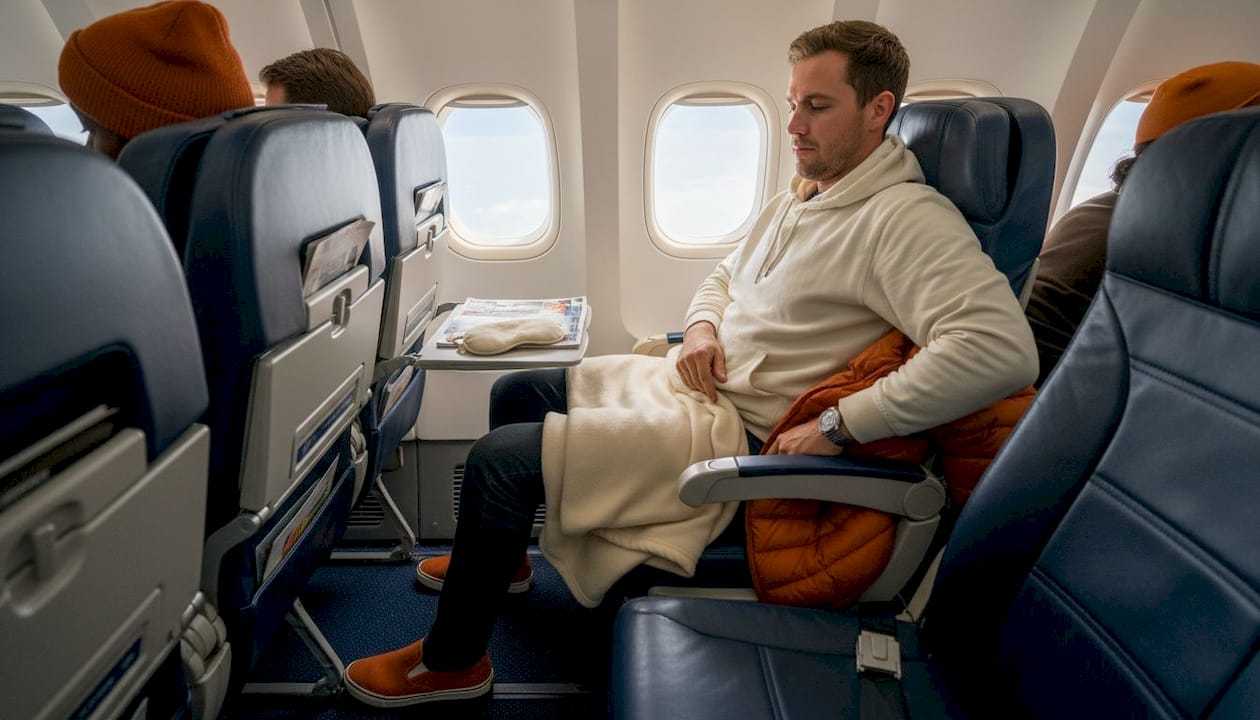
Step 1: Settle your feet and hips first. Place both feet flat on the floor, hip-width apart. Avoid crossing your legs, which cuts off circulation and creates pressure points over time. If the seat has a footrest, use it.
Step 2: Sit back fully against the seat. Your lower back should contact the seat back. If there’s a gap, fold a jacket and tuck it behind your lumbar region (the curve of your lower back). This small adjustment reduces back fatigue significantly on flights over four hours.
Step 3: Recline slightly. A recline of 15 to 30 degrees reduces pressure points and improves breathing for upright sleep. Full upright is actually harder on your body than a slight lean. Be mindful of the passenger behind you, especially during meal service.
Step 4: Position your pillow and head. Place your structured pillow so it supports your head, jaw, and upper chest together, not just your neck. Let your head rest naturally at a slight forward angle rather than forcing it back. This is where most travelers go wrong: they push their head back into the headrest and wonder why their neck aches.
Step 5: Rest your arms on the armrests. Keep your elbows bent and your forearms resting, not gripping. Tension in your arms travels straight to your shoulders and neck.
“The goal isn’t to find a perfect sleeping position. It’s to find a sustainable one. Even 20 minutes of genuine rest beats two hours of restless shifting.” — Bolstie Travel Team
| Support tool | Best for | Limitation |
|---|---|---|
| Structured travel pillow | Upright head and neck support | Needs correct placement |
| U-shaped pillow | Light dozing with aisle/window | Collapses under head weight |
| Rolled jacket | Lumbar support | Bulky, not always available |
| Tray table with pillow | Forward-leaning rest | Puts pressure on abdomen |
For a deeper look at sleeping comfortably on long flights and tips on side-sleeping in economy, those guides are worth a read before your next long-haul trip.
Block out the cabin: mastering your sleep environment
Once you’re physically comfortable, the next crucial step is to isolate yourself from the cabin environment.
Here’s something most travelers underestimate: sensory management matters more than seat position when it comes to actually falling asleep. You can have perfect posture and still stay wide awake because of a crying baby, a bright screen two rows up, or the cold air blasting from the overhead vent.
Using noise-canceling headphones and an eye mask blocks light and noise to create a personal sleep cocoon. That phrase, “sleep cocoon,” is exactly the right way to think about it. Your goal is to make your 18 inches of seat feel like a separate, quiet space.
Here’s how to build that cocoon effectively:
- Put on noise-canceling headphones before the cabin gets loud, ideally during boarding
- Play white noise, brown noise, or ambient sleep sounds rather than music with lyrics
- Fit your eye mask snugly but not tightly, it should block light without pressing on your eyelids
- Adjust the overhead air vent to blow gently toward your face rather than directly on your neck
- Use a light layer or travel blanket to regulate body temperature, since cabins often get cold mid-flight
- Avoid looking at your phone screen for at least 20 minutes before you try to sleep
Research consistently shows that light and noise disruption are the top two barriers to in-flight sleep. Addressing both together is far more effective than tackling one alone.
Stat to know: Travelers who use both an eye mask and noise-canceling headphones together report significantly better sleep quality than those using either tool alone. The combination effect is real.
Pro Tip: Try a simple mindfulness breathing technique before sleeping. Breathe in for four counts, hold for four, out for four. Repeat five times. It activates your parasympathetic nervous system (the “rest and digest” mode) and signals your body that it’s safe to relax. It works even in a noisy cabin.
For more economy travel comfort tips that go beyond the basics, there’s a lot you can do before you even step on the plane.
Sleep aids, snacks, and habits that actually help
Setting your environment only works if your internal clock and habits support sleep.
This is where a lot of travelers fall short. They pack the right gear, set up their seat perfectly, and then drink two glasses of wine and a coffee, wondering why they can’t sleep. What you put in your body in the hours before and during your flight has a direct impact on your ability to rest.
Supplements worth considering:
Melatonin at 0.5 to 5mg, timed to your destination’s sleep window, can help your body adjust its circadian rhythm (your internal 24-hour clock). Magnesium is another natural option that promotes muscle relaxation. Always consult your doctor before using either, especially if you take other medications.
What to eat and drink:
- Choose carbohydrate-rich meals like pasta or rice, which promote drowsiness by boosting serotonin
- Drink water consistently throughout the flight, at least one cup per hour
- Avoid alcohol entirely: it fragments sleep and leaves you feeling worse at landing
- Limit caffeine to the first two hours of the flight only
- Skip heavy, fatty foods that cause bloating and discomfort in pressurized cabins
Habits that support in-flight sleep:
- Adjust your watch to your destination’s time zone at boarding and start thinking in that time frame
- Eat and sleep according to destination time, not departure time, on flights over six hours
- Avoid screens for 20 to 30 minutes before your planned sleep window
- Keep your seat belt loosely fastened and visible so flight attendants don’t need to wake you for turbulence checks
For more on comfortably sleeping in economy and how foods and sleep habits interact, both are worth bookmarking for your pre-flight prep.
Quick troubleshooting:
- Can’t fall asleep? Try the breathing technique from the previous section and remove any tight clothing or accessories.
- Waking up frequently? Check that your pillow hasn’t shifted and that your neck is still supported.
- Feeling too cold? Use your blanket as a wrap rather than a lap cover for better warmth.
Pro Tip: Eat your in-flight meal, then immediately set up your sleep environment. The post-meal drowsiness window is real and short. Don’t waste it scrolling your phone.
The uncomfortable truth about sleeping in the middle seat
Let’s be honest about something most travel articles won’t say out loud: the middle seat is genuinely hard to sleep in, and no amount of gear fully fixes that. The science of in-flight sleep in economy is limited, and most advice is based on general sleep principles rather than controlled studies on airplane seating.
What we know from experience and from what sources agree on is that with the right aids, most travelers can realistically achieve two to four hours of restful sleep on a long-haul flight. Not eight hours. Not deep, restorative sleep. But genuine rest that makes a real difference in how you feel on arrival.
The travelers who sleep best in the middle seat are not the ones who found a magic trick. They’re the ones who adjusted their expectations, prioritized rest over perfection, and leaned into short, restorative naps rather than chasing a full sleep cycle. A 90-minute nap in the middle seat is a win. Treat it like one.
Check out our economy sleep guide for a broader look at how to approach long-haul rest without upgrading your seat.
The biggest mistake I see? Travelers who spend the whole flight fighting their situation instead of working with it. Accept the constraints. Set up your space. Rest when you can. Your body will thank you on the other side.
Upgrade your middle seat sleep with the right pillow
All the techniques above are supported (or undermined) by having the right tools.
The single biggest upgrade you can make to your middle seat experience is switching to a structured travel pillow designed for upright sleep. Not a U-shaped pillow that collapses. Not a neck wrap that traps heat. A pillow that supports your head, jaw, and upper torso together so your body can actually relax.
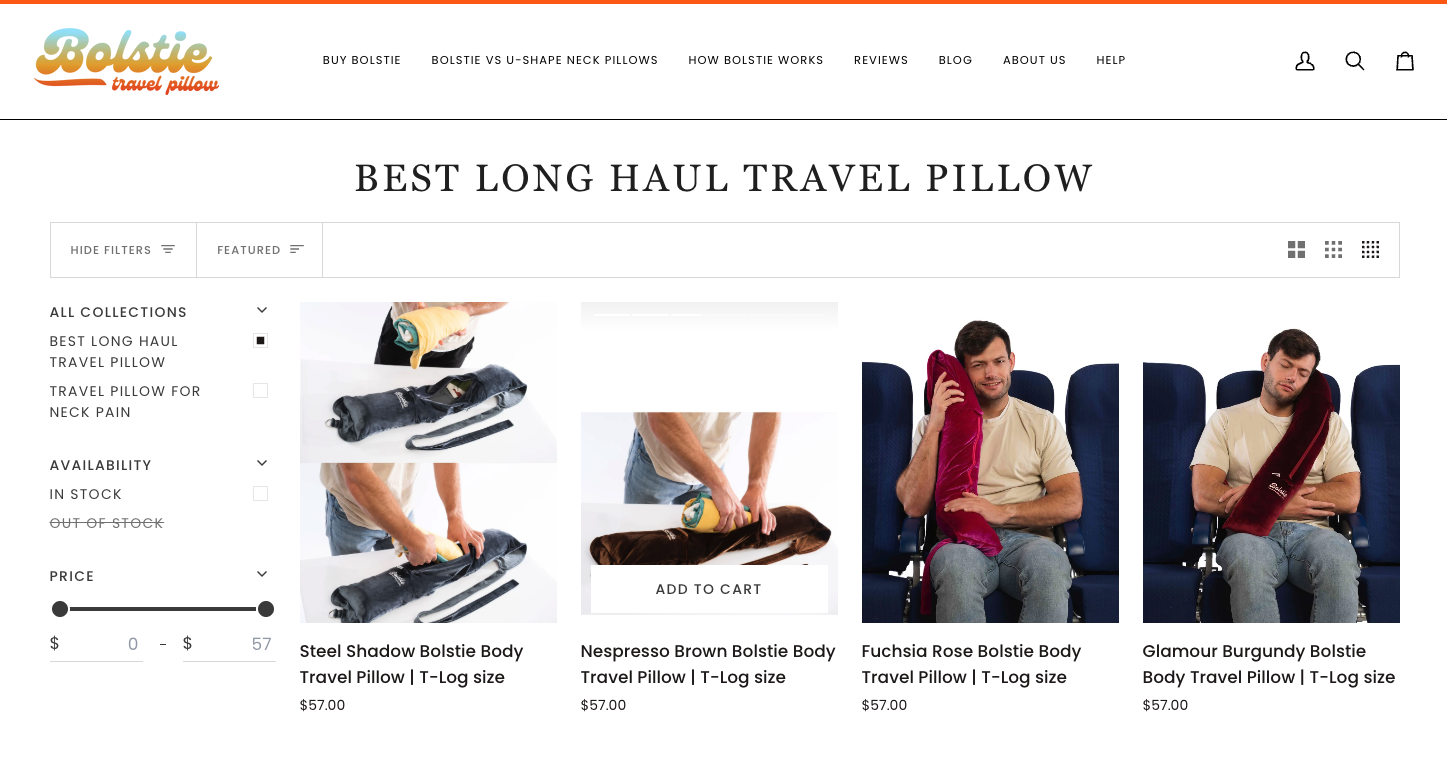
At Bolstie, we built our travel pillow specifically for this problem. It supports your natural diagonal resting position without wrapping around your neck or adding bulk to your bag. When it’s empty, it packs down small. When it’s filled with your clothing, it becomes a firm, structured support pillow that also doubles as a packing cylinder. Comfort and space savings in one. Explore our full range at bolstietravelpillow.com and see what a difference the right pillow makes. ✈️
Frequently asked questions
What type of travel pillow works best for the airplane middle seat?
Structured travel pillows outperform U-shaped designs in the middle seat because structured pillows like Trtl or Cabeau provide real upright support without a wall to lean on. Look for a pillow that holds its shape under the weight of your head.
How many hours can you realistically sleep in an airplane middle seat?
With the right gear and sensory management, most travelers achieve two to four hours of restful sleep on long-haul flights. Setting realistic expectations and focusing on short naps makes a big difference.
Is it better to recline or sit upright for sleeping in a middle seat?
A slight recline of 15 to 30 degrees with lumbar support is generally the most comfortable position for upright sleep, reducing pressure points and improving breathing compared to sitting fully upright.
What food or drinks help you sleep better on a plane?
Carbohydrate-rich meals promote drowsiness and you should avoid alcohol since it fragments sleep, and limit caffeine to the early part of your flight. Staying hydrated with water throughout the flight also helps your body relax.
Are natural or supplement sleep aids safe to use in-flight?
Melatonin and magnesium can support circadian adjustment and muscle relaxation during flights, but you should always consult your doctor before using either, especially alongside other medications.
Recommended
- How to Sleep Comfortably on Planes for Long Flights – BOLSTIE TRAVEL PILLOW
- Space-smart tips for comfortable economy class sleep – BOLSTIE TRAVEL PILLOW
- How to survive long plane flights: comfort tips 2026 – BOLSTIE TRAVEL PILLOW
- How I Sleep on My Side in a Plane Seat, Even in Basic Economy – BOLSTIE TRAVEL PILLOW

