

TL;DR:
Seat selection over the wing and away from galleys improves sleep quality.
Adjusting posture and using lightweight support tools reduces discomfort and neck strain.
Accessories like compression socks, eye masks, and temperature control enhance rest.
Getting real rest in a cramped economy seat challenges even the most seasoned travelers. You board with good intentions, settle into that narrow seat, and within an hour your neck is at an odd angle, your back aches, and sleep feels like a distant dream. But here’s the thing: a few overlooked choices and simple gear tweaks can dramatically change your inflight experience. This guide walks you through practical, research-backed strategies for sleeping better in economy without hauling bulky accessories or spending a fortune. Small adjustments, big results. ✈️
Table of Contents
-
Optimize circulation: Smart accessories and habits for restful sleep
-
Creating a sleep-friendly environment: Light, sound, and temperature hacks
-
Why most sleep tips for economy class miss the real pain points
Key Takeaways
| Point | Details |
|---|---|
| Choose seats wisely | Picking the right seat can dramatically reduce noise, turbulence, and interruptions to sleep. |
| Support your spine | A small recline and lumbar roll with a travel pillow keep back and neck pain at bay. |
| Stay comfortable with small accessories | Compression socks, eye masks, and footrests boost rest without taking up much bag space. |
| Control your sleep environment | Manage light, sound, and temperature with smart inflight hacks for deeper, healthier rest. |
How to pick your seat for the best sleep
With the challenge established, the logical first step is to control what you can before you even board: your seat location. Where you sit shapes almost everything about your sleep quality, from how much turbulence you feel to how often you’re woken up by noise.
Not all economy seats are created equal. Some put you right next to the galley, where flight attendants prep meals at 2 a.m. Others sit above the engines, where vibration is constant. Choosing wisely before you board is one of the highest-leverage moves you can make.
Here are the seats worth targeting:
-
Over the wing: Less turbulence and a more stable ride
-
Five rows from the front or back of economy: Quieter, away from galleys and bathrooms
-
Window seat: Gives you a wall to lean against and control over the window shade
-
Avoid exit rows: Seats often don’t recline, which kills any chance of a comfortable rest
-
Avoid seats near bathrooms or galleys: Foot traffic and noise are constant
Pro Tip: Use SeatGuru or a similar seat map app when you book, and check in online as early as possible to grab your preferred spot. Seat availability changes fast on long-haul routes.
“The seats over the wing tend to have less turbulence, and sitting away from the galley and bathrooms makes a real difference in how much you’re disturbed during the flight.” — Flight attendant insight on inflight noise and turbulence
Once you’ve locked in your seat, you’ve already done more than most passengers. Learning how to sleep comfortably while traveling starts with this kind of intentional planning. For more ideas on making economy work in your favor, check out these economy class comfort tips before your next trip.
Set up your space: Minimizing discomfort and neck strain
Once you’ve chosen your spot, setting up your seat area smartly can make the most of even a cramped space. The difference between arriving refreshed and arriving with a stiff neck often comes down to a few simple adjustments you make in the first 20 minutes after boarding.
Here’s a step-by-step setup that actually works:
-
Recline your seat to 100-120 degrees. Upright economy seating increases spinal disc pressure by 140% compared to standing. Even a small recline dramatically reduces that strain.
-
Create a lumbar roll. Fold a jacket or scarf and tuck it into the curve of your lower back. This keeps your spine from collapsing into a C-shape, which is one of the main causes of back pain on long flights.
-
Use a neck pillow that allows side flex. A rigid U-shape pillow forces your head into one position. Look for something that lets your head naturally shift while still providing support.
-
Keep your feet flat on the floor. Dangling feet cut off circulation. If you’re shorter, use your carry-on bag under your feet as a makeshift footrest.
Two common mistakes travelers make: leaning on the tray table and slouching forward. Avoid the tray table as a headrest because it puts direct pressure on nerves in your forearms and forces your neck into an unnatural forward position. And slouching might feel comfortable for a few minutes, but it compounds spinal pressure over hours.
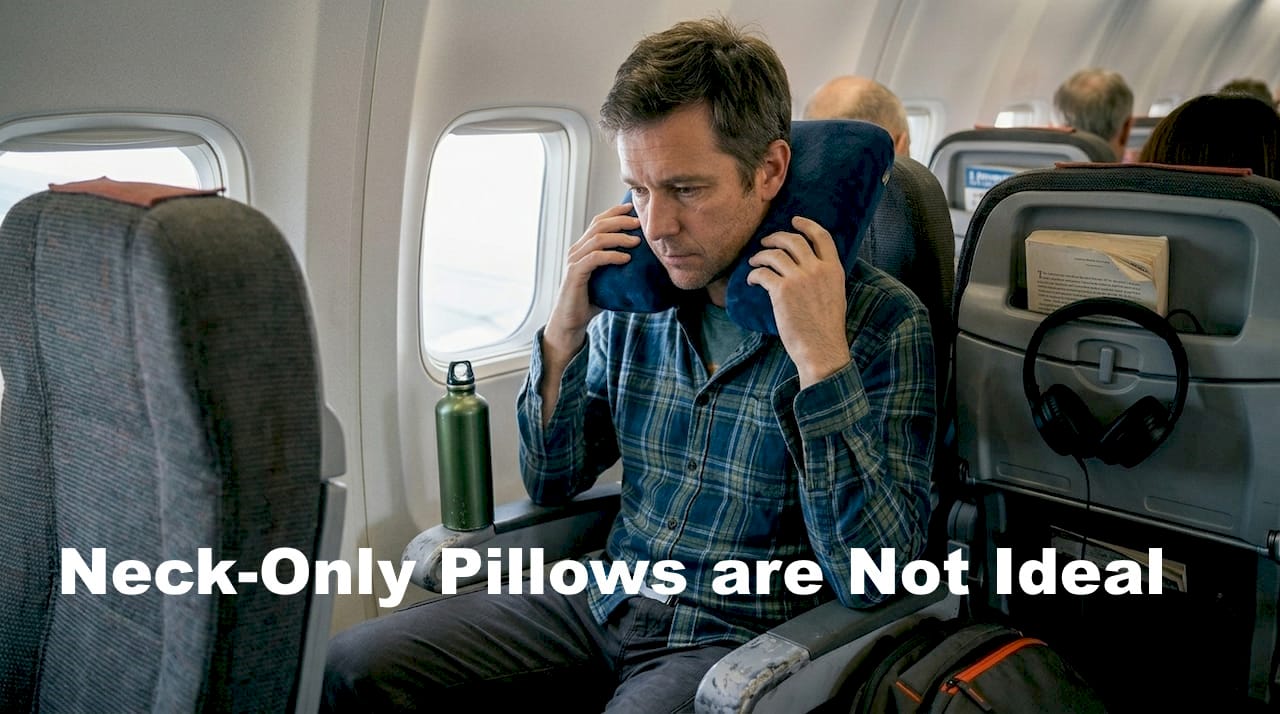
Pro Tip: A neck pillow that only wraps around the back of your neck without squeezing the front allows airflow and reduces heat buildup, which makes a real difference on a six-hour-plus flight.
If neck pain is something you regularly deal with on flights, it’s worth reading more about how to prevent travel neck pain before you travel. A solid economy class comfort guide can also help you build a full pre-flight routine.
Optimize circulation: Smart accessories and habits for restful sleep
A comfortable position is only part of the equation. What you bring with you can help fight the common discomforts of long flights, especially the kind that creep up slowly: swollen ankles, stiff legs, and that heavy, foggy feeling that comes from poor circulation.
Circulation matters more than most travelers realize. Sitting still for hours slows blood flow, which can cause swelling and, in more serious cases, deep vein thrombosis (DVT). Compression socks and foot elevation prevent DVT and swelling while improving overall circulation, which directly supports better rest.
Here are the lightweight accessories worth packing:
-
Compression socks: Knee-high options significantly reduce swelling risk on flights over four hours
-
Inflatable footrest: Elevates your feet and reduces leg fatigue without adding much weight
-
Reusable water bottle: Staying hydrated keeps your body functioning well and reduces fatigue
-
Eye mask: Blocks cabin light, which disrupts your body’s sleep signals
| Accessory | Weight | Primary purpose | Effectiveness |
|---|---|---|---|
| Compression socks | ~60g | Circulation, swelling prevention | Medium |
| Inflatable footrest | ~120g | Leg elevation, comfort | Medium-High |
| Eye mask | ~20g | Light blocking | High |
| Reusable water bottle | ~180g | Hydration | High |
Statistic callout: Knee-high compression socks have been shown to significantly reduce the risk of travel-related swelling and blood clots on long-haul flights, making them one of the highest-value, lowest-weight items you can pack.
For more gear ideas, our long haul comfort tips cover what frequent flyers actually use. And if you want a full breakdown of what to bring and what to skip, the minimize discomfort guide is a great next read. ❤️
Creating a sleep-friendly environment: Light, sound, and temperature hacks
Besides posture and gear, tweaking your surroundings can tip the scales between tossing and truly resting. The cabin environment works against you by default: overhead lights stay on longer than you’d like, engine noise hums constantly, and the temperature swings between too warm and too cold.
Here’s what actually helps:
-
Blackout eye mask: Even dim cabin lighting disrupts melatonin production, the hormone that signals your body to sleep
-
Noise-canceling headphones or foam earplugs: Engine noise alone can sit above 85 decibels on some aircraft
-
Layered clothing: Cabin temperatures vary widely and change throughout the flight, so layers let you adjust without relying on the airline blanket
-
Request a blanket early: They run out fast, and a light cover helps regulate body temperature for sleep
Research on pilot rest patterns confirms that noise below 35dB, temperatures between 17-28°C, and darkness are the three critical environmental factors for quality sleep, even in non-ideal settings like aircraft.
| Environmental aid | Weight | Best for | Utility |
|---|---|---|---|
| Blackout eye mask | ~20g | Light blocking | High |
| Foam earplugs | ~10g | Noise reduction | Medium |
| Noise-canceling headphones | ~200-300g | Noise + audio | Very High |
| Lightweight scarf/blanket | ~100g | Temperature control | High |
The combination of darkness and reduced noise is genuinely powerful. Even if you can’t fully sleep, giving your nervous system a quieter, darker environment allows real rest. Our plane sleep guide goes deeper on this, and if you’re curious about the science behind resting upright, the upright sleep benefits article is worth a look.
Why most sleep tips for economy class miss the real pain points
Here’s something I’ve noticed: most travel sleep guides lead with the same advice. Buy a neck pillow. Bring a blanket. Take a sleep aid. And while none of that is wrong, it skips the part that actually matters most: how you set up your body and your space.
Standard U-shape neck pillows are overrated for long flights. They force your head into a fixed position, build up heat, and often collapse under the weight of your head anyway. Thick blankets take up half your carry-on. And sleep aids can leave you groggy for hours after landing.
What experienced economy travelers actually rely on is a combination of precise seat selection, small posture adjustments, and lightweight gear that works with the body instead of against it. A rolled-up jacket for lumbar support costs nothing. Choosing the right seat takes five minutes. A well-designed neck pillow that supports your whole upper torso rather than just squeezing your neck changes everything.
The real insight is this: comfort in economy isn’t about adding more stuff. It’s about making smarter choices with less. Our step-by-step comfort guide is built around exactly that philosophy.
Take your next flight from sleepless to restful
Armed with these actionable strategies, the right accessories can multiply your sleep comfort on any flight. Every tip in this guide works better when your gear is designed around the same principles: lightweight, space-efficient, and body-first. ✈️
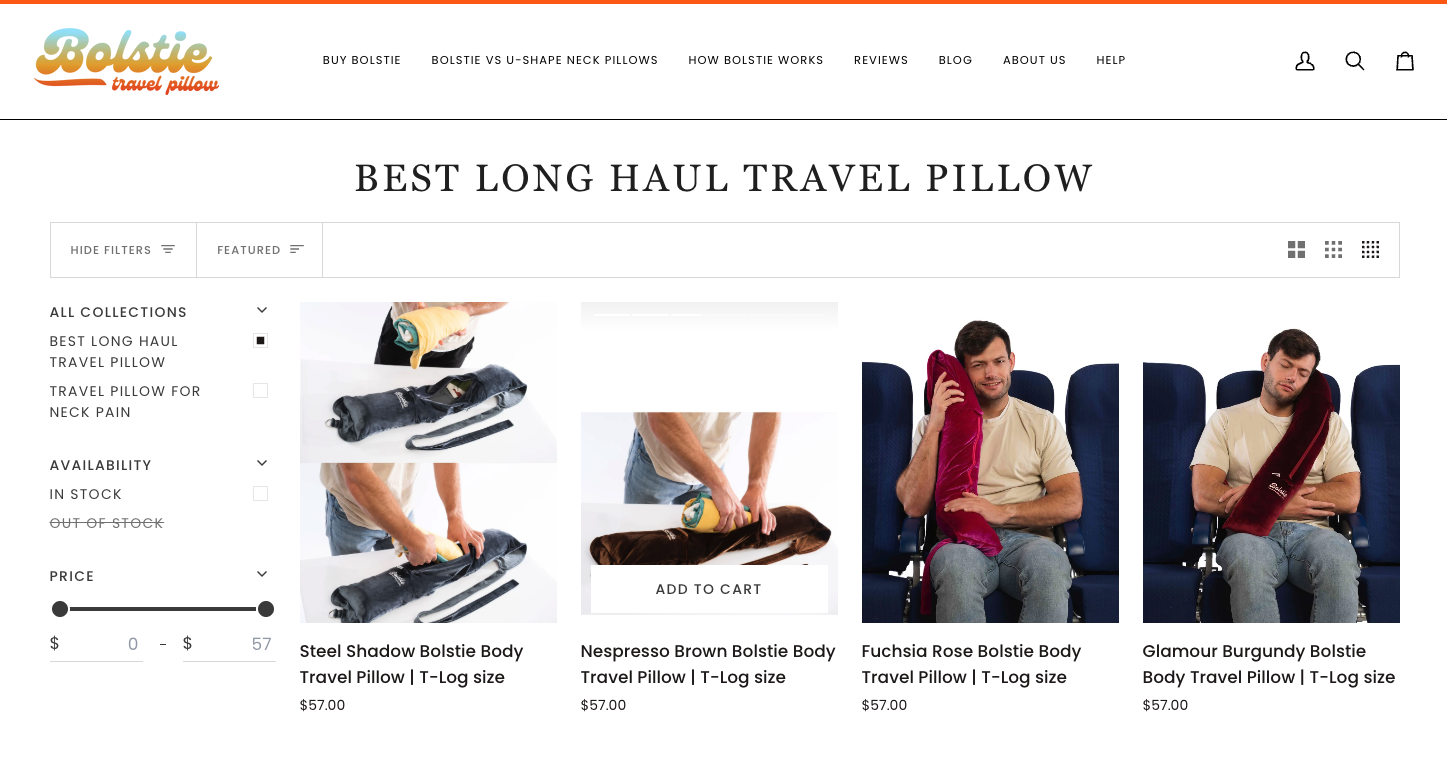
At Bolstie, we built our best neck travel pillow collection specifically for economy-class travelers who are done compromising on rest. Our flagship design doubles as a travel pillow stuffed with clothes, so it saves carry-on space while giving you firm, structured support for your head, jaw, and upper torso. No bulk. No wasted space. Just better sleep, starting with your next flight.
Frequently asked questions
What is the best position for sleeping in economy class?
A slightly reclined position of 100-120 degrees with lumbar support and a neck pillow typically reduces spinal strain and promotes restful sleep. Upright economy seating increases disc pressure by 140% compared to standing, so even a small recline makes a meaningful difference.
Do compression socks really help prevent swelling on long flights?
Yes, compression socks improve circulation and reduce the risk of swelling and blood clots during long flights. Pairing them with foot elevation using an inflatable footrest or your carry-on bag makes them even more effective.
Which economy seat is quietest for sleeping?
Seats over the wing and about five rows from the front or back of economy are typically the quietest, keeping you away from galley noise and bathroom traffic.
How can I reduce neck pain during economy class sleep?
Use a supportive neck pillow, avoid leaning on the tray table, and add lumbar support with a rolled-up jacket. Avoiding the tray table as a headrest is especially important since it pinches nerves and forces your neck into an unnatural forward position.
Recommended
-
6 Travel Comfort Tips for Economy-Class Flights in 2026 – BOLSTIE TRAVEL PILLOW
-
How to Sleep Comfortably While Traveling in Economy Class – BOLSTIE TRAVEL PILLOW
-
Economy class travel comfort guide for better sleep 2026 – BOLSTIE TRAVEL PILLOW
-
The Stomach Sleeper’s Secret for Reclaiming Your Comfort in Economy Cl – BOLSTIE TRAVEL PILLOW

