

You’ve been there. You board your overnight flight, settle into your economy seat, and realize you forgot your neck pillow. Or worse, you packed it so deep in your bag that digging it out means disturbing three seatmates. By the time you land, you’re stiff, exhausted, and missing half the items that could have made the trip bearable. The truth is, many travelers struggle to sleep or stay comfortable on overnight economy trips due to lack of preparation. This guide walks you through a simple, step-by-step packing process designed specifically for economy travelers who want to arrive rested, organized, and ready to go without adding bulk or cost.
Table of Contents
Key Takeaways
| Point | Details |
|---|---|
| Pack smart essentials | Bring only comfort-focused items that fit easily into a carry-on or personal bag. |
| Follow a packing sequence | Lay out, layer, and review every item so nothing is forgotten right before your trip. |
| Space-saving matters | Roll clothing, use packing cubes, and choose compact comfort solutions to maximize room. |
| Prioritize comfort | Keep sleep and relaxation aids within reach to improve rest on overnight journeys. |
| Correct mistakes easily | Quickly adapt if you forget something by improvising or buying on the go. |
What you need to pack for overnight travel
Now that you know why smart packing matters, let’s start with the core items every economy traveler should bring. The goal is maximum comfort with minimum bulk. You don’t need a suitcase full of gadgets. You need the right essentials in the right places.
Start with your comfort kit. A travel pillow is non-negotiable. Choose one that’s compact, supportive, and easy to access. Add a sleep mask, earplugs or noise-canceling headphones, and a lightweight blanket or scarf. These items take up minimal space but transform your ability to rest upright.
Next, pack your toiletries. Keep them compact and TSA-compliant if you’re flying. A toothbrush, toothpaste, face wipes, and lip balm fit easily in a small pouch. Don’t forget hand sanitizer and any medications you might need. Pro Tip: Decant liquids into travel-size containers to save space and avoid spills.
Clothing layers are critical. Planes, trains, and buses can swing from freezing to stuffy in minutes. Pack a hoodie or cardigan you can easily remove or add. Compression socks help with circulation on long trips. A fresh shirt for arrival makes you feel human again.
Chargers and electronics round out your essentials. Bring a portable battery, charging cables, and adapters if you’re traveling internationally. Keep these in an exterior pocket for quick access during layovers or delays.
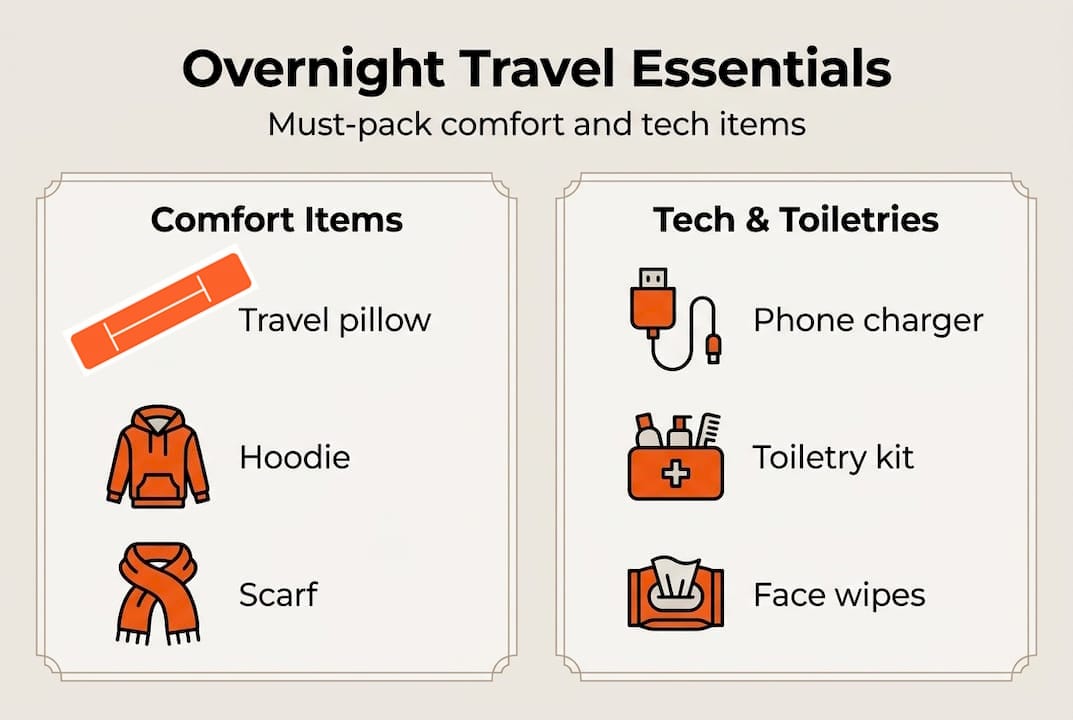
Here’s a quick reference table to help you visualize what to pack and why:
| Item | Purpose | Pack Size |
|---|---|---|
| Travel pillow | Neck and upper body support | Small to medium |
| Sleep mask | Block light for better rest | Tiny |
| Earplugs/headphones | Reduce noise distractions | Small |
| Compact toiletries | Freshen up on arrival | Small pouch |
| Extra layers | Temperature regulation | Medium |
| Chargers/battery | Keep devices powered | Small |
| Compression socks | Improve circulation | Tiny |
Research shows that a well-planned comfort essentials kit reduces traveler stress and neck strain significantly. When you know exactly what you need and where it is, you spend less time fumbling and more time resting.
Quick-grab comfort items you should always have within reach:
-
Travel pillow (top of bag)
-
Sleep mask and earplugs
-
Water bottle (empty through security, fill after)
-
Snacks (protein bars, nuts, dried fruit)
-
Lip balm and hand sanitizer
-
Phone charger and portable battery
If you’re traveling by bus or train instead of air, you have slightly more flexibility with liquids and sharp objects, but the core packing checklist essentials remain the same. Prioritize comfort, accessibility, and space efficiency no matter your mode of transport. Your travel comfort essentials should work for you, not against you.
Step by step packing process for overnight travel
With your essentials selected, it’s time to pack efficiently. Here’s a foolproof sequence you can follow every time you travel overnight. This process ensures nothing gets forgotten and your comfort items stay accessible.
-
Lay out everything first. Before you pack a single item, spread out your essentials on your bed or table. This visual inventory helps you spot gaps and avoid overpacking. Check your list against the table above.
-
Roll your clothing. Rolling saves space and reduces wrinkles. Start with heavier items like jeans or hoodies, then move to lighter layers. Place rolled clothing at the bottom of your bag to create a stable base.
-
Organize your comfort kit. Group your travel pillow, sleep mask, earplugs, and any relaxation aids together. If your pillow is packable, compress it and place it near the top of your bag or in an exterior pocket. If it’s bulkier, clip it to the outside of your bag for easy access.
-
Position chargers and electronics strategically. Tuck your portable battery and cables into a side pocket or the top compartment of your bag. You’ll want these within arm’s reach during your trip, especially if you’re charging devices mid-flight or during a layover.
-
Do a final check. Before you zip up, mentally walk through your trip. Do you have everything for comfort, hygiene, and connectivity? Is your most-used gear accessible? Can you reach your water bottle, snacks, and pillow without unpacking half your bag?
Following an organized, sequential packing process helps minimize forgotten items and maximize comfort. When you pack the same way every time, it becomes second nature. You stop forgetting things because your hands remember the routine.
Pro Tip: Use packing cubes to separate clothing from comfort items and toiletries. This keeps everything organized and makes it easy to find what you need without digging. Always pack your neck pillow on the outside or in easy reach. You’ll use it the moment you sit down, so don’t bury it.
If you’re flying, double-check airline carry-on rules before you leave. Most economy tickets allow one personal item and one carry-on, but size and weight limits vary. Knowing the rules helps you pack smarter and avoid last-minute repacking at the gate. For more on step by step traveler comfort, focus on the sequence that works for your travel style and stick with it.
Space-saving strategies for maximum comfort
Once you start packing, using space wisely makes all the difference, whether you’re maximizing a small carry-on or looking for vital comfort. Economy travel means limited space, so every inch counts. The good news? You can pack light and still bring everything you need for a comfortable trip.
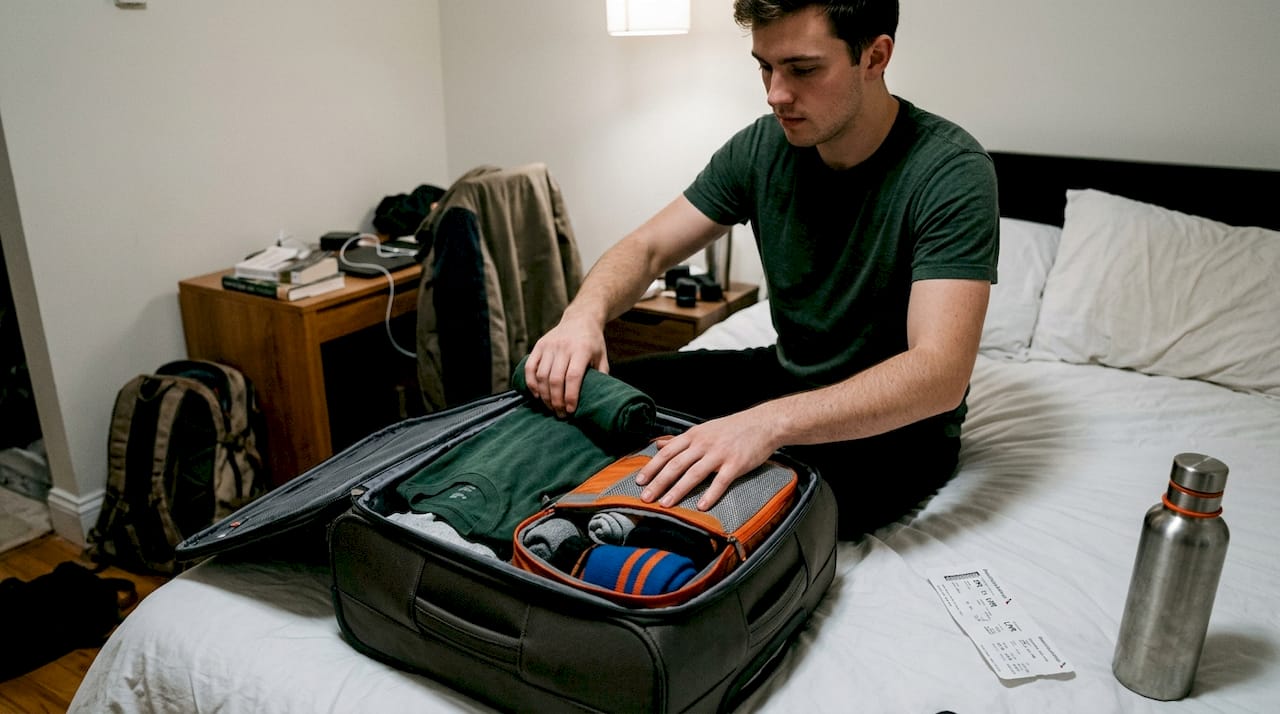
Let’s compare standard packing methods with space-saving techniques:
| Standard Packing | Not as efficient space-saving |
|---|---|
| Roll clothing into bundles | Roll clothing tightly |
| Loose items in bag | Use packing cubes, waste of space |
| Head & body support pillow | Packable, compressible pillow |
| Multiple single-use items | Multi-use items (hoodie as blanket) |
| Toiletries in full-size bottles | Decanted into travel containers |
The difference is dramatic. Rolling your clothes instead of folding them can save up to 30% of your bag space. Packing cubes compress soft items and keep everything organized but still not as efficient as rolling your clothes tightly. And choosing small, packable travel pillows offers essential comfort without taking up extra space.
Items you should always keep within reach:
-
Travel pillow (exterior pocket or clipped on)
-
Headphones or earplugs
-
Snacks and water bottle
-
Charger and portable battery
-
Boarding pass and ID
-
Lip balm and hand sanitizer
Pro Tip: Choose multi-use items whenever possible. A cozy hoodie doubles as a blanket or lumbar support. A hoodie becomes a makeshift pillow if needed. Your jacket can cover your legs when the cabin gets cold. Thinking creatively about your gear means you carry less but gain more flexibility.
A packable pillow fits efficiently into any bag and expands when you need it. Some designs even let you fill them with clothing, turning your packed clothes into a firm support pillow. This approach saves space and gives you a customized comfort tool that adapts to your needs. For more ideas, check out this travel comfort checklist and explore upright sleeping tips that work with minimal gear.
Comfort tricks for sleeping and relaxing overnight
Packing right is important, but the comfort you create with those items determines whether you actually relax overnight. Let’s cover how to maximize rest with your gear. These strategies address the most common struggles of sleeping upright in economy class.
Actions to take before and during your trip for better rest:
-
Hydrate well before boarding, but avoid excessive liquids right before sleep
-
Wear comfortable, loose-fitting clothing with layers you can adjust
-
Do simple stretches before boarding to loosen tight muscles
-
Position your travel pillow to support your head, neck, and upper body
-
Use a sleep mask and earplugs to block light and noise
-
Recline your seat slightly if space allows, and adjust your pillow accordingly
-
Set a gentle alarm if you need to wake for a connection
Here’s what sleep experts say about overnight travel comfort:
Simple comfort upgrades such as travel pillows, footrests, and simplified outfits significantly improve rest in economy class. Small changes in how you prepare and position yourself can mean the difference between arriving exhausted or refreshed.
Sleep experts also recommend adjusting travel routines and gear for overnight journeys to boost rest. Your body craves routine, even in unfamiliar environments. Creating a mini bedtime ritual, like putting on your sleep mask, using lip balm, and adjusting your pillow, signals to your brain that it’s time to rest.
Short routines for relaxation during your trip:
-
Listen to calming music or a sleep podcast
-
Practice slow, deep breathing for five minutes
-
Close the window shade to reduce visual stimulation
-
Use a foot hammock or rest your feet on your bag to improve circulation
-
Avoid screens for at least 30 minutes before you want to sleep
Don’t be afraid to try new comfort strategies. Compact support pillows, footrests, and even compression socks can transform your experience. The key is finding what works for your body and your travel style. For more targeted advice, explore these sleep comfortably tips and red-eye comfort tips designed specifically for economy travelers.
Common mistakes and troubleshooting
Even the best plans can go sideways. Here’s how to dodge typical mistakes and what to do if you hit a snag. Knowing the most common packing errors helps you avoid them, and having a backup plan reduces stress when things don’t go perfectly.
Most common mistakes travelers make:
- Overpacking. Bringing too much creates bulk, makes your bag heavy, and leaves no room for comfort items. Stick to your essentials list and resist the urge to pack
Recommended
-
Step by step travel comfort: 50% less stress & neck strain – BOLSTIE TRAVEL PILLOW
-
Travel Pillow Packing Guide: Boost Sleep Comfort 40% – BOLSTIE TRAVEL PILLOW
-
Packing checklist for long flights: comfort essentials – BOLSTIE TRAVEL PILLOW
-
Step by step traveler comfort guide for long flights – BOLSTIE TRAVEL PILLOW

