

Most economy travelers pack a travel pillow as an afterthought. It gets stuffed into an overhead bin, forgotten until hour six, and then it barely helps anyway. But here’s what’s interesting: packable pillows reduce neck muscle activity by up to 25% during long flights, and they compress small enough to slip into any carry-on without sacrificing an inch of clothing space. This guide covers why they work, what the research says, how to pick the right one, and what to watch out for before you buy. ✈️
Table of Contents
-
The science behind packable pillows: proven ergonomic benefits
-
Limitations and alternatives: Not all pillows fit every traveler
-
How to choose the right packable pillow for your travel style
Key Takeaways
| Point | Details |
|---|---|
| Reduces neck fatigue | Packable pillows cut neck muscle activity by up to 25% for less pain and better sleep. |
| Saves luggage space | Stuffable designs compress up to 80%, easily fitting inside small carry-ons. |
| Improves long-haul comfort | Real-world tests show travelers rest longer and arrive more refreshed with ergonomic options. |
| Not one-size-fits-all | Some may need alternative pillow types for special comfort, support, or temperature needs. |
| Smart selection matters | Choosing the right pillow for your sleep style and travel routine ensures maximum benefit. |
The overlooked discomfort of economy travel
Let’s be honest about economy seating. The seat reclines maybe two inches. The headrest hits you in the wrong spot. And after a few hours, your neck starts doing that slow, painful forward drop that jolts you awake every time you finally drift off. It’s exhausting in the most literal sense.
The problem isn’t just the seat. It’s that most travel pillows weren’t designed for upright sleeping. Traditional U-shaped neck pillows wrap around the neck and feel supportive at first, but they don’t stop your head from falling forward. They also take up serious luggage space, which is a real issue when you’re trying to keep everything in a carry-on.
Here are the most common discomforts economy travelers deal with on long-haul flights:
-
Neck cramps from unsupported forward head drop
-
Restless, broken sleep from shifting positions constantly
-
Stiff upper back from sitting upright for hours
-
Packing frustration from bulky pillows eating carry-on space
-
Heat buildup from foam or fabric wrapping around the neck
For cutting travel neck pain, the pillow design matters more than most people realize. And economy travel comfort doesn’t have to mean upgrading your seat.
“After a 14-hour flight, I had zero neck pain. That’s never happened before.” — expert reviewer testing a well-designed travel pillow on a long-haul route
That kind of result isn’t luck. It comes from choosing a pillow that actually supports the way your body wants to rest when seated upright. Now that we’ve established why traditional travel setups leave many flyers sleep-deprived, let’s examine what packable pillows offer that sets them apart.
What makes a pillow ‘packable’?
A packable pillow is specifically engineered to compress down to a fraction of its full size, then expand back to a supportive shape when you need it. That’s the core idea. But the execution varies a lot depending on the fill material and construction.
Memory foam models are popular because they compress up to 60% of their original size, which is genuinely impressive for something that feels substantial when expanded. Inflatable options go even smaller but require a bit of setup. Compressible fiber fills land somewhere in the middle, offering a softer feel with decent packability. Unfortunately with memory foam, high compression also mean less support.
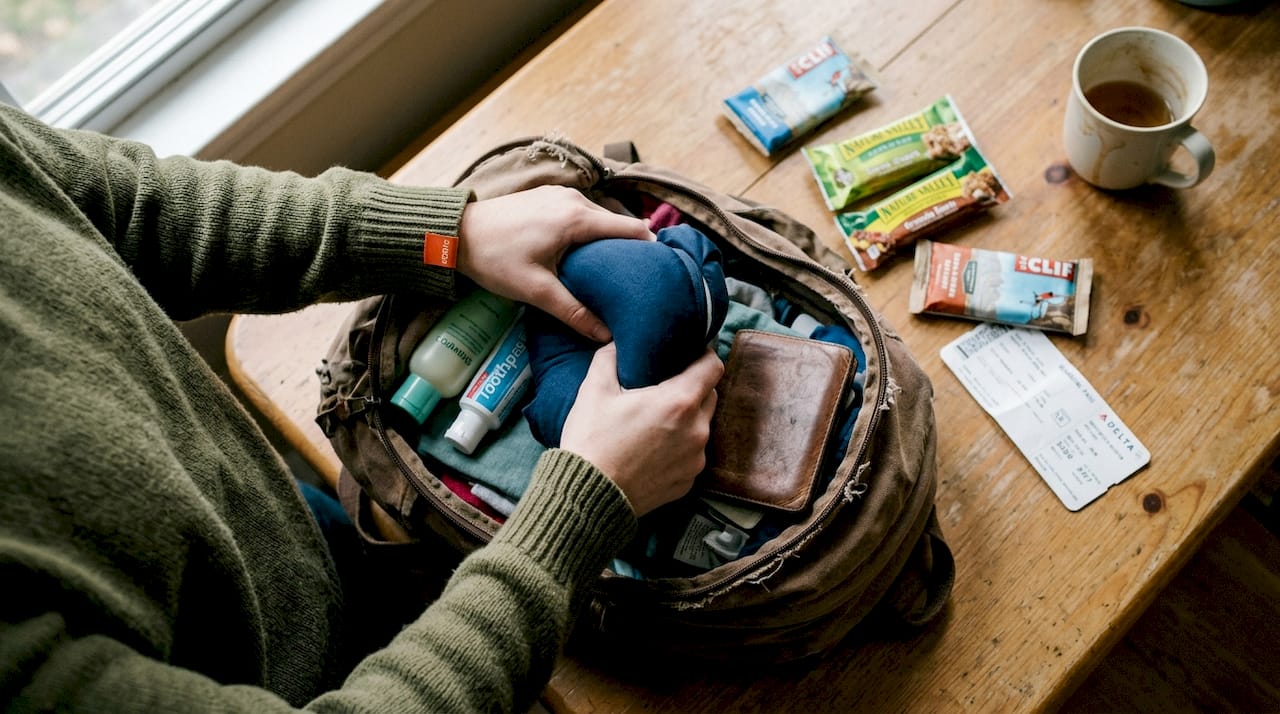
Here’s how packable pillows compare to standard travel pillows side by side:
| Feature | Packable pillow | Standard travel pillow |
|---|---|---|
| Packed size | Fits in a water bottle pocket | Takes up a full bag section |
| Weight | Under 0.5 lbs typically | 0.5 to 1.5 lbs |
| Support type | Upright and multi-position | Primarily neck wrap |
| Portability | Carry-on friendly | Often gate-checked or clipped outside |
| Durability | High with quality materials | Varies widely |
Key attributes to look for in a truly packable pillow:
-
Rapid compression with a stuff sack or built-in compression system
-
Lightweight construction under 12 ounces
-
Multi-shape options that support different sleep positions
-
Breathable outer fabric to reduce heat buildup
Space-saving travel pillows have come a long way in the last few years. And pillow selection for long flights is worth thinking through carefully before your next trip. Frommer’s top pillow tests confirm that the best options balance packed size with real ergonomic support.
Pro Tip: Always check a pillow’s packed dimensions, not just its expanded size. A pillow that looks compact in photos might still be the size of a football when compressed. Measure your carry-on’s smallest pocket before you buy.
With a clear sense of what packable pillows are and how they’re built for travel, let’s explore why they’re more than a convenience.
The science behind packable pillows: proven ergonomic benefits
This is where it gets genuinely interesting. It’s not just about comfort preferences. There’s real data on what happens to your neck muscles when you sleep upright without proper support.
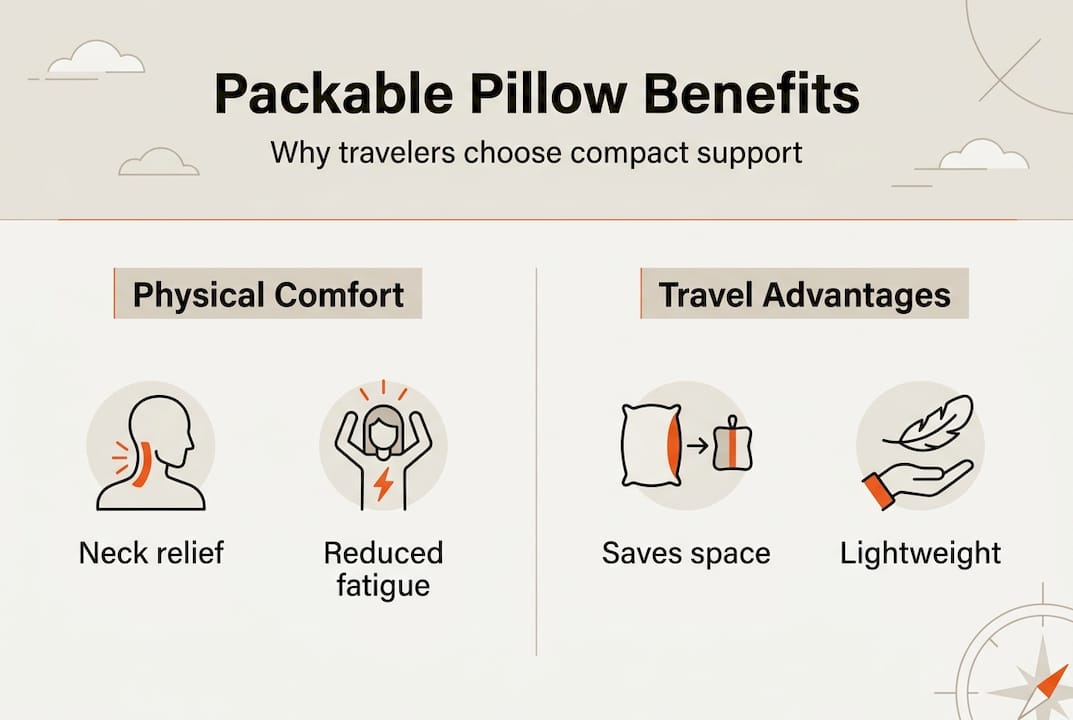
Research published in a peer-reviewed journal found that cylindrical pillow shapes reduce upper trapezius muscle activity significantly during upright seated rest. The upper trapezius is the muscle that runs from your neck to your shoulder, and it’s the one that screams at you after a long flight. Less activation means less fatigue.
Here’s a simplified look at what the data shows:
| Condition | Neck muscle activity | Comfort rating |
|---|---|---|
| No pillow, upright seat | High | Low |
| Standard U-shaped pillow | Moderate | Moderate |
| Packable cylindrical pillow | Reduced by up to 25% | High |
That 25% reduction in neck muscle activity is significant. It’s the difference between arriving stiff and arriving functional. For ergonomics in travel comfort, the shape of the pillow matters as much as the material.
“The right pillow supports a neutral spine position, reducing cumulative muscle strain over a multi-hour flight and allowing the body to actually rest rather than brace.”
For upright rest on planes, the goal is to stop your muscles from working overtime just to keep your head up. A well-designed packable pillow does exactly that. Armed with these science-backed advantages, it’s important to consider what real frequent travelers experience in practice.
Real-world results: Tester feedback and user stories
Research is one thing. But what do actual travelers say after a 13-hour flight?
The results are pretty consistent across expert reviews and user reports. Testers who used high-quality packable pillows on long-haul routes reported meaningful improvements in sleep quality and comfort. One reviewer noted sleeping for 8 hours on a 13.5-hour flight, which is remarkable for economy class. Another reported zero neck pain after a 14-hour route.
In structured testing, top packable pillows scored as high as PACES 46 out of 50 in support and portability evaluations. PACES is a comfort assessment scale used in travel product testing. A score that high is rare.
Here’s what travelers consistently report gaining from a good packable pillow:
-
Longer, less interrupted sleep during overnight and long-haul flights
-
Reduced neck and shoulder stiffness on arrival
-
Less jet lag thanks to better in-flight rest
-
Easy storage in a bag pocket or under the seat
-
No more clipping a bulky pillow to the outside of a bag
For tips on upright sleep, the pillow is just one piece, but it’s often the most impactful one. The Trtl travel pillow is one example that reviewers praise for its lightweight brace-style support.
Pro Tip: Think about how you naturally fall asleep on a plane. Do you lean forward, to the side, or try to stay upright? Choose a pillow design that matches your instinct. A rigid brace works best for upright sleepers, while a softer wrap suits side-leaners.
While most travelers see major improvement, some edge cases remain where packable pillows may not be the ideal solution.
Limitations and alternatives: Not all pillows fit every traveler
We want to be honest here. Packable pillows are excellent for most travelers, but they’re not perfect for everyone. Knowing the limitations helps you make a smarter choice.
Common drawbacks to be aware of:
-
Some designs feel rigid and take time to break in
-
Foam models can trap heat, which is uncomfortable for warm sleepers
-
Adjustment mid-flight can be tricky with certain fastener systems
-
Lumbar support is rarely addressed by neck-focused designs
-
Smaller packed sizes sometimes mean less fill and less support
“Feather pillows squash down beautifully and feel luxurious, but they don’t offer the structured support that upright economy seating demands.” — frequent traveler insight
If you run hot, look for pillows with mesh panels or open-cell foam that allows airflow. If lumbar support is your priority, consider a multi-use compressible pillow that can be repositioned behind your lower back. For upright sleeping benefits, a pillow that supports the torso as well as the neck makes a real difference.
For a detailed comparison of brace-style versus wrap-style options, the Trtl vs Infinity review breaks down the tradeoffs clearly. Understanding both the strengths and caveats of packable options, the next step is applying these lessons.
How to choose the right packable pillow for your travel style
Choosing the right pillow doesn’t have to be complicated. Here’s a straightforward process that works:
-
Identify your sleep position. Do you sleep upright, lean to one side, or rest your chin on your chest? This determines whether you need a brace, a wrap, or a chest-support design.
-
Check packed dimensions. Measure your carry-on’s available space and compare it to the pillow’s compressed size before buying.
-
Consider fill material. Memory foam offers firm support. Compressible fiber is softer. Inflatable is the most packable but requires setup.
-
Look at the shape. Cylindrical and torso-support designs outperform basic U-shapes for upright economy seating based on ergonomic research.
-
Test it if possible. Sit upright in a chair and simulate your flight position. Does the pillow keep your head from dropping forward?
-
Check the return policy. Comfort is personal. A good return window lets you test it on a real trip without risk.
-
Prioritize adjustable fasteners. A pillow that can be tightened or loosened mid-flight gives you flexibility as your comfort needs change.
Research from Cabeau Evolution S3 testing confirms that success depends heavily on sleep style. Rigid braces deliver upright stability, while softer wraps work better for side-leaners but may need repositioning. For a full breakdown of travel pillow selection steps, we’ve put together a detailed guide. And if you’re comparing materials, this travel pillow material comparison is worth a read.
Pro Tip: Prioritize models with adjustable fasteners or straps that attach to the seat. In economy, your seat doesn’t recline much, so a pillow that stays in place without you holding it is a game-changer.
Armed with this selection checklist, you’re equipped to upgrade your in-flight sleep and overall travel comfort. ❤️
Find your perfect packable travel pillow
If you’ve made it this far, you already know more about packable travel pillows than most frequent flyers. You know what the research says, what real testers experienced, and what to look for when choosing one. Now it’s about finding the right fit for your next trip.
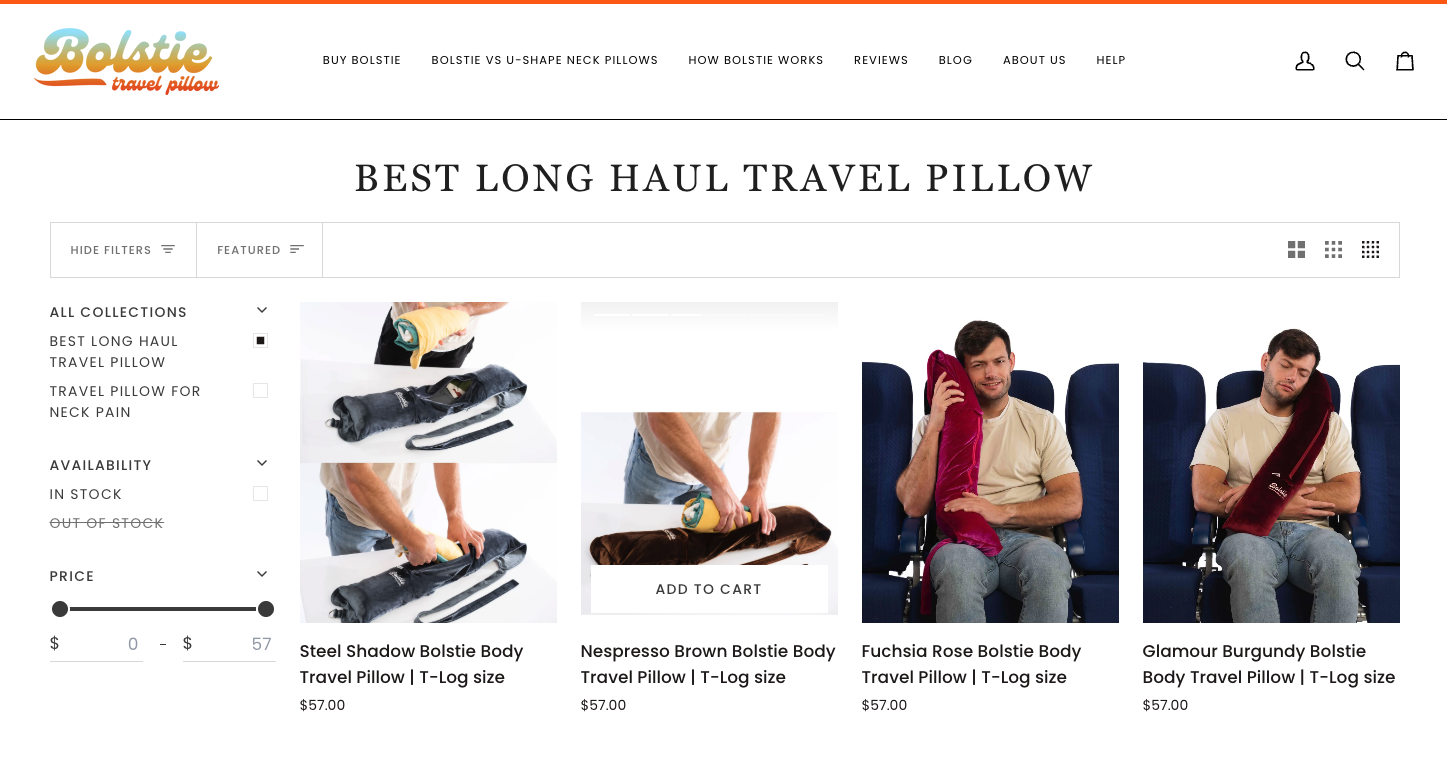
At Bolstie, we designed our travel pillow specifically for economy-class travelers who are tired of arriving stiff, sleep-deprived, and frustrated. Our pillow supports the head, jaw, chest, and upper torso together, working with your body’s natural resting position instead of fighting it. And when you’re not using it, it compresses down and doubles as a packing cylinder for your clothes, saving carry-on space without sacrificing comfort. Ready to rest better on your next flight? Shop top-rated neck pillows and find the option that fits your travel style.
Frequently asked questions
Are packable travel pillows comfortable for all-night flights?
Most travelers find that high-quality packable pillows provide noticeably better comfort than airline-provided alternatives, especially on overnight routes. Expert reviews confirm improved sleep quality on long-haul flights across multiple independent tests.
What materials are best for packable travel pillows?
Memory foam and compressible fiber are the most popular choices for balancing comfort and packability. Memory foam models compress up to 60% of their original size, making them genuinely carry-on friendly.
Can a packable pillow really fit in a small carry-on?
Yes, most quality packable pillows compress to roughly one third of their expanded size. They compress significantly enough to fit in a side pocket or under a seat without taking up clothing space.
Do packable pillows help with jet lag?
Better in-flight sleep directly reduces how hard jet lag hits you on arrival. Improved sleep quality from a well-chosen pillow is one of the most practical ways to arrive feeling more human.
Do all packable pillows offer good neck support?
Support levels vary significantly by design. Rigid braces offer upright stability for forward-facing sleepers, while softer wraps suit side-leaners but may shift during longer flights.
Recommended
-
Packing cylinder pillow guide for economy-class sleep – BOLSTIE TRAVEL PILLOW
-
How to pack cylinder pillows for economy-class comfort – BOLSTIE TRAVEL PILLOW
-
Benefits of compressible travel pillows for economy comfort – BOLSTIE TRAVEL PILLOW
-
Travel pillow trends: Top innovations for economy flyers 2026 – BOLSTIE TRAVEL PILLOW

