

You land after a 10-hour flight, and the first thing you do is reach for your neck. It’s stiff, it aches, and you feel more exhausted than when you boarded. Sound familiar? Upright sleeping causes neck strain due to gravity pulling your head forward and the seat offering almost no lateral support. The good news? With the right strategy, the right gear, and a few smart habits, you can actually rest in economy. This guide walks you through everything, step by step, so your next flight feels a whole lot different. ✈️
Table of Contents
Key Takeaways
| Point | Details |
|---|---|
| Ergonomic support is crucial | Structured, packable travel pillows dramatically reduce pain and boost sleep quality upright. |
| Seat choice matters | Window seats and correct positions can improve sleep by up to 73% compared to middle or aisle seats. |
| Incremental gains add up | Proper gear, posture, and simple accessories each provide small improvements that together create great rest. |
| No single setup works for all | Experiment with different pillows and positions to find what works best for you and your needs. |
Why upright sleep support matters for flyers
Let’s be honest about what economy class actually gives you. A seat that reclines maybe a few degrees, a headrest that doesn’t quite reach your head, and roughly 18 inches of personal space. That’s it. Upright sleeping in economy leads to neck strain and is genuinely sub-optimal for spinal alignment, because your head weighs around 10 to 12 pounds and gravity never takes a break.
When your head drops forward or tilts to one side, the muscles in your neck and upper back have to work overtime just to hold it up. Over a long flight, that constant tension builds into real pain. It’s not just discomfort either. Poor sleep upright means you arrive fatigued, foggy, and less ready for whatever comes next, whether that’s a business meeting or a family vacation.
Here’s what most economy travelers deal with on long-haul flights:
-
Neck ache from unsupported head movement
-
Interrupted sleep from jolting awake every time the head drops
-
Shoulder tension from bracing against the seat
-
Fatigue on arrival that lingers for hours or even days
-
Overheating from bulky pillows that trap warmth
The benefits of upright sleep are real when you have the right support in place. In fact, travel pillows can cut neck pain by 60 to 65% for economy flyers. That’s not a small improvement. That’s the difference between arriving wrecked and arriving ready.
Stat to know: Travelers in window seats report 73% better sleep duration compared to middle or aisle seats on long-haul flights.
Now that you know how common and impactful these struggles are, let’s get ready with what you’ll need to set yourself up for upright sleep success.
What you need: Essential tools for upright sleep
Getting comfortable in economy isn’t about luck. It’s about preparation. The right tools make a measurable difference, and the best part is that most of them pack down small enough to fit in your personal item.
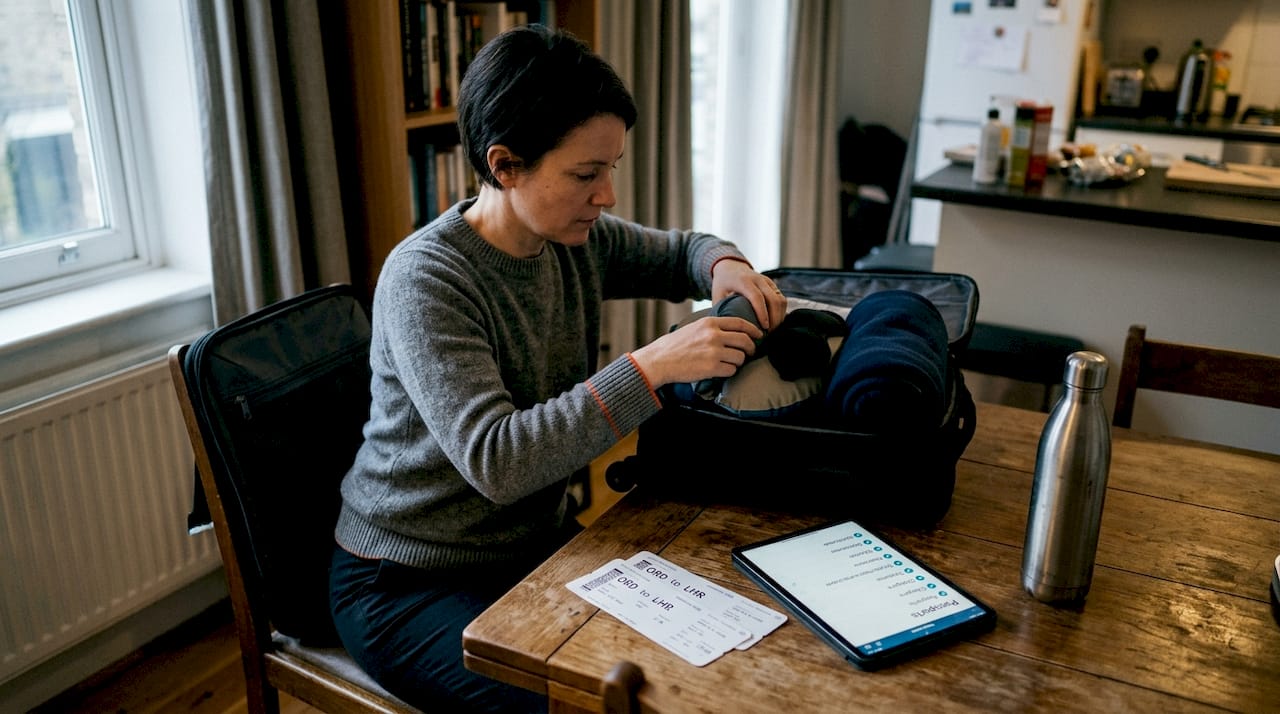
When it comes to pillows, not all travel pillows are created equal. Best-reviewed travel pillows like the Trtl, Cabeau Evolution S3, and Ostrichpillow Go all share one thing: they are neck-only support that do not prevent your head from falling forward or to the sides. There are quite a lot of reviews full of complaints.
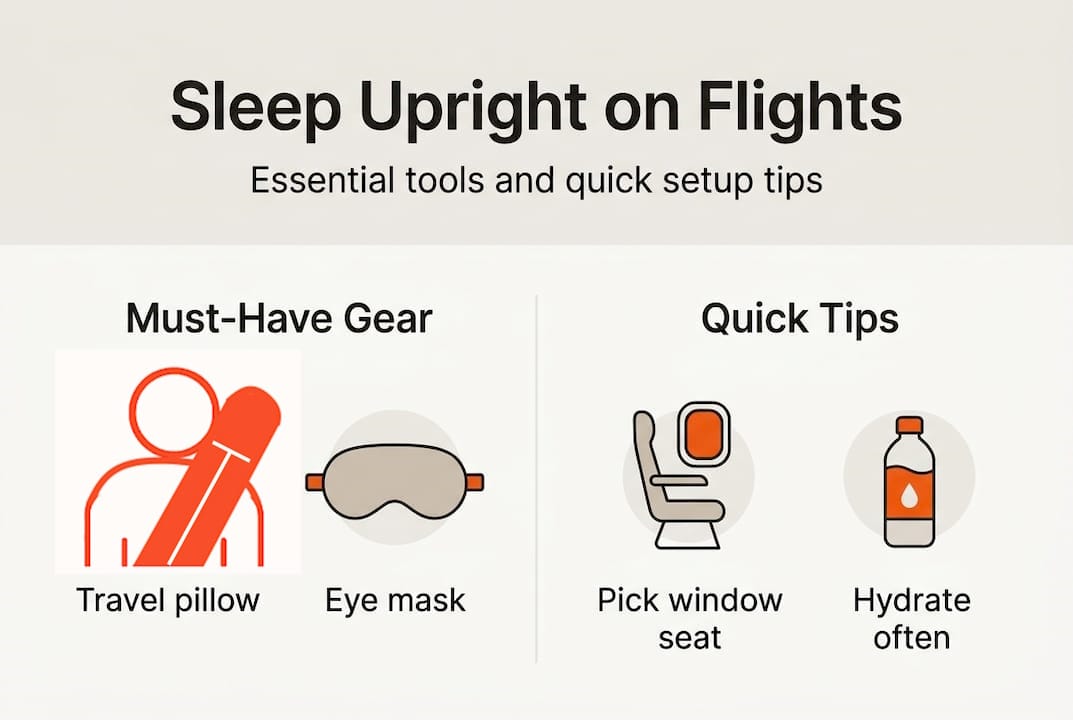
Beyond the pillow, a few accessories go a long way toward helping you sleep comfortably in economy:
-
Eye mask to block cabin light and signal your brain it’s rest time
-
Earplugs or noise-canceling headphones to reduce engine noise and chatter
-
Compression socks to improve circulation and reduce leg fatigue
-
Light scarf or hoodie for warmth and as a makeshift lumbar roll
Seat selection also matters more than most people realize. Window seats over the wings are the best choice for sleep because you have a wall to lean against, less foot traffic disturbing you, and a more stable ride. Avoid the rear of the plane and bulkhead rows where possible.
Here’s a quick reference table for your upright sleep toolkit:
| Item | Compactness | Purpose |
|---|---|---|
| Structured travel pillow | High | Head, jaw, and chin support |
| Eye mask | Very high | Light blocking, sleep signaling |
| Earplugs | Very high | Noise reduction |
| Compression socks | Medium | Circulation and leg comfort |
| Light scarf or hoodie | Medium | Warmth and lumbar support |
| Noise-canceling headphones | Low to medium | Deep noise reduction |
Pro Tip: Prioritize items that fit in your personal bag and take less than 60 seconds to set up once you’re seated. If it’s a hassle to use, you won’t use it. Check out our upright sleeping guide for more gear recommendations.
With your must-have tools ready, let’s walk through the best posture and setup for upright sleep.
Step-by-step upright sleep setup in economy
Having the right gear is only half the equation. How you set it up matters just as much. Follow these steps before you try to sleep, and you’ll give yourself the best possible chance at real rest.
-
Choose your seat wisely. Book a window seat over the wings when you can. This gives you a wall to lean against and a smoother ride.
-
Stow your bag strategically. Keep your sleep kit (pillow, mask, earplugs) in the seat pocket or under the seat in front of you for easy access.
-
Set up your pillow before takeoff. Don’t wait until you’re already tired and fumbling in the dark. Get your pillow positioned while the lights are still on.
-
Recline your seat slightly. Even a small recline helps. Optimal upright sleep is achieved with a 15 to 20-degree recline and a diagonal lean toward the window or headrest.
-
Establish your posture. Lean diagonally with lumbar support at your lower back. Keep your chin supported by your pillow so your head doesn’t drop forward.
-
Layer your accessories. Put on your eye mask, insert your earplugs, and pull your scarf or hoodie over your shoulders for warmth.
One thing worth knowing: economy seat recline is rarely more than 8 degrees, while ideal ergonomic sleep actually requires a 30 to 45-degree angle. That gap is real, and it’s why posture and pillow placement matter so much. You’re working with what you have, so every degree of improvement counts.
Pro Tip: If the airline doesn’t provide a lumbar pillow, roll up a light jacket or scarf and tuck it behind your lower back. It sounds simple, but it genuinely reduces the strain that travels up your spine to your neck. Check our upright sleep tips for more posture hacks.
“No pillow eliminates all limitations. Focus on incremental comfort wins, not perfection.”
Also, remember to hydrate. Cabin air is extremely dry, and dehydration makes fatigue and muscle tension worse. Drink water every 60 to 90 minutes, and get up to stretch when you can. Your body will thank you on arrival. See our full economy class sleep comfort guide for more detail.
Even with the right steps, travelers often hit common problems. Let’s troubleshoot so you avoid classic mistakes.
Common mistakes and troubleshooting upright sleep
Even well-prepared travelers make errors that undermine their rest. Here are the most common ones and how to fix them.
Common issues to watch for:
-
Head flop: Your head drops forward or sideways when you drift off. This usually means your pillow isn’t providing enough chin or jaw support.
-
Pillow slippage: The pillow shifts out of position during sleep. Look for designs with a secure fit or attachment points.
-
Overheating: Bulky foam pillows trap heat around your neck. Choose breathable materials or designs that don’t wrap fully around the neck.
-
Restlessness in middle seats: No wall to lean against makes diagonal positioning harder.
One of the biggest decisions is pillow type. Here’s how the two main styles compare:
| Feature | U-shaped pillow | Structured frame pillow |
|---|---|---|
| Head support | Basic, can push head forward | Holds head in neutral position |
| Packability | Bulky | Compact to medium |
| Chin/jaw support | None | Yes, in most designs |
| Best for | Short naps, aisle seats | Long-haul, window seats |
| Overheating risk | Higher | Lower (open designs) |
U-shaped pillows can actually push your head forward, worsening posture rather than helping it. Structured frame designs hold the head in a neutral position, which is what you actually need for real rest.
For middle seat travelers, the forward fold position (leaning forward onto a tray table pillow) or bracing against the armrest can work. If you have chronic neck issues, a brace-type support pillow is a better fit than a standard wrap. For parents traveling with kids, consider that children often sleep more easily, so focus your setup on your own comfort first. Learn more about travel neck pain prevention for specific situations.
“No device works for everyone. Experiment with setups to find your sweet spot.”
Once you’ve found your ideal setup and sidestepped classic errors, here’s how to know it’s working and how to fine-tune for even greater comfort.
How to tell if your upright sleep support is working
So how do you actually know if your setup is doing its job? There are some clear signs to look for, and a few signals that tell you it’s time to adjust.
Reliable signs your support is working:
-
You wake up without neck pain or stiffness
-
Your head stays in position without jolting you awake
-
You feel genuinely refreshed, not just less tired
-
Your mood and focus on arrival are noticeably better
Travelers who use proper gear report 40 to 60% improvement in sleep quality, and some report up to 8 hours of restful sleep on long-haul flights with brace-like pillow designs. That’s a real outcome, not a marketing claim.
Here’s a simple checklist to track your progress flight by flight:
| Improvement area | What to look for | When to adjust |
|---|---|---|
| Neck pain | No ache on arrival | Pillow position or type |
| Sleep depth | Sleeping in stretches of 20+ minutes | Add lumbar support or eye mask |
| Head stability | No forward drop during sleep | Switch to structured frame pillow |
| Mood on arrival | Feeling alert and ready | Hydration and movement breaks |
| Overall fatigue | Less exhaustion post-flight | Full setup review |
If you’re still waking up with aches, your pillow is sliding, or you can’t sleep for more than 15 to 20 minutes at a stretch, something in your setup needs to change. Start with pillow type, then posture, then accessories. Small adjustments add up fast. Explore more about upright rest improvements to keep refining your approach.
You’ve now got the knowledge and expert strategies for upright sleep. For even more support, see what products can help you go the extra mile.
Find your perfect upright sleep solution
Knowledge is powerful, but the right gear makes it real. ❤️ If you’ve been struggling with neck pain, restless flights, or arriving exhausted, the missing piece is often a pillow that actually supports your whole upper body, not just your neck.

The best long-haul travel pillow supports your head, jaw, and chest together, working with your body’s natural diagonal resting position instead of fighting it. Bolstie Travel Pillow is designed specifically for economy travelers who want real rest without adding bulk to their bag. It compresses small when empty and doubles as a packing cylinder when filled with clothing, so you save space and sleep better at the same time. Read more about the upright sleeping benefits and find the right fit for your next trip.
Frequently asked questions
What is the best position for sleeping upright on a plane?
A slightly reclined, diagonal body position with chin and jaw support is best for preventing neck strain. A 15 to 20-degree recline combined with a diagonal lean toward the window gives you the most stable and comfortable setup.
Are U-shaped travel pillows effective for upright sleep?
U-shaped pillows offer basic support but often push your head forward, which can actually worsen posture. Structured pillows like Trtl or Cabeau provide better alignment and keep your head in a neutral position.
Do travel pillows help with neck pain on long flights?
Yes, and the difference is significant. Ergonomic travel pillows can reduce neck pain by up to 65% for upright sleepers in economy, making them one of the most impactful investments for frequent flyers.
Which accessories improve upright sleep on flights?
Beyond a good pillow, the most effective additions are eye masks, earplugs, and compression socks. Flight attendants recommend combining these with a window seat for the best overall sleep experience in economy.
Recommended
-
Benefits of upright sleep on flights for economy travelers – BOLSTIE TRAVEL PILLOW
-
Benefits of upright sleeping on planes for economy class – BOLSTIE TRAVEL PILLOW
-
How to Sleep Comfortably While Traveling in Economy Class – BOLSTIE TRAVEL PILLOW
-
Economy class travel comfort guide for better sleep 2026 – BOLSTIE TRAVEL PILLOW

